
[Mastering Culinary English: A Step-by-Step Baking Lesson]-[How to bake a cake in English]
📋 Summary
Enhancing English Fluency Through Culinary Arts
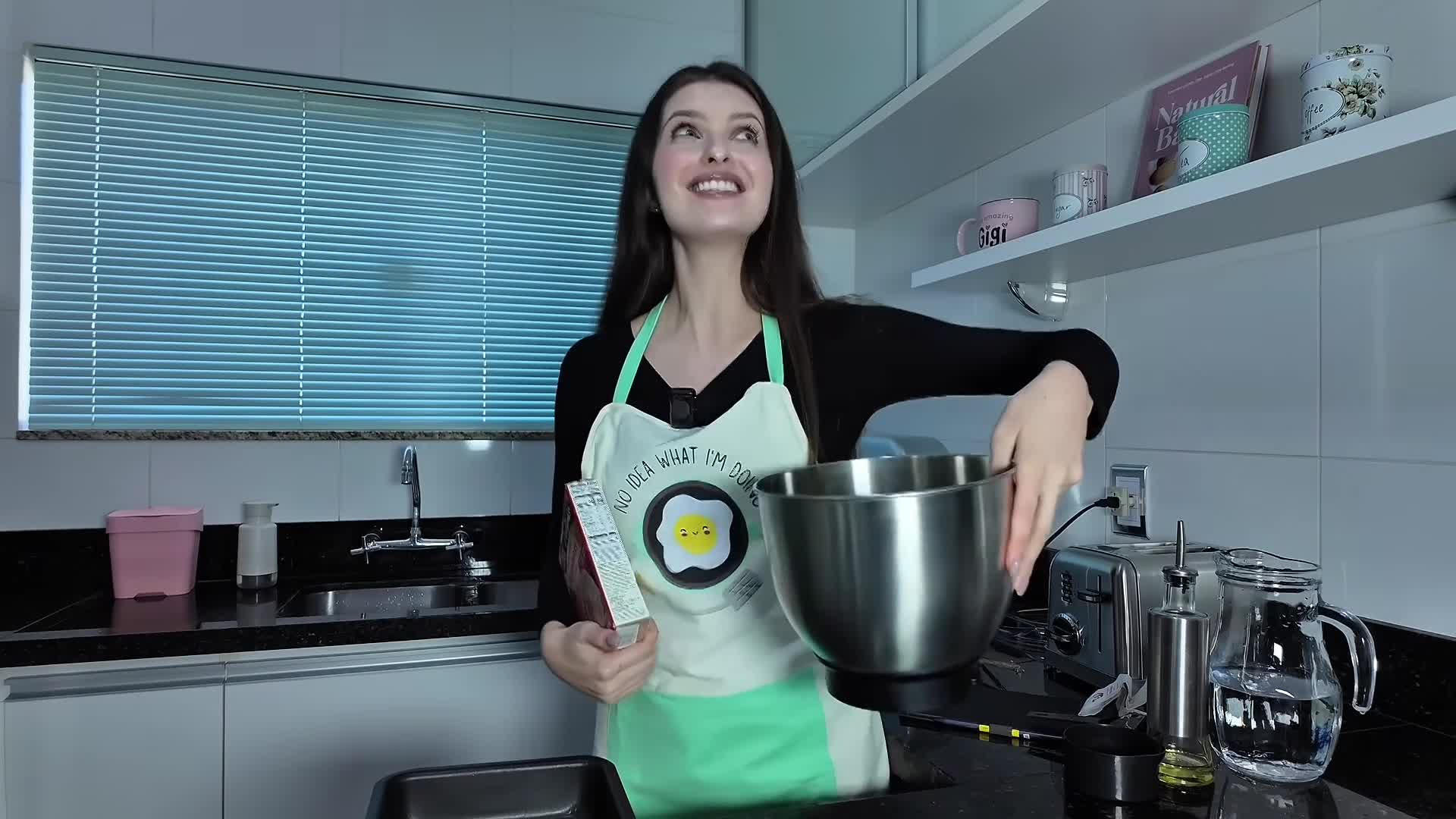
Learning a language is often most effective when integrated into practical, real-world activities. In this podcast, Giovanna demonstrates how to improve English proficiency by following a recipe for a strawberry cake. Through this interactive baking session, the dialogue highlights common linguistic pitfalls and provides precise vocabulary for kitchen procedures.
Precision in Vocabulary: Beyond Common Misconceptions
A significant portion of the lesson focuses on correcting common word choices that, while understandable, are contextually inaccurate.
- Crack vs. Break: When preparing eggs, the instructor clarifies that while "break" refers to something being "fully damaged, snapped or in pieces" (like a plate or a bone), the correct verb for eggs is "crack."
- Recipe vs. Receipt: A common mistake for learners is confusing these two terms. The podcast emphasizes that a "recipe" contains the "instructions for making the cake," whereas a "receipt" is specifically a "document showing proof of payment."
- Batter vs. Mass: After mixing the ingredients, the mixture is referred to as "batter." Giovanna explains that "mass" is incorrect in this context, as it usually refers to "the weight of something" or a religious service, whereas "batter" describes the "wet mixture you get after mixing all the ingredients."
- Oven Mitts vs. Gloves: When handling hot items, the instructor points out that the protective gear used in the kitchen are "oven mitts," not just general "gloves."
Essential Baking Terminology
Throughout the process, the host introduces specific culinary verbs and nouns essential for any kitchen environment:
- Grease the pan: The act of preparing the pan to ensure the cake does not stick.
- Stand mixer: A mixer that "stands by itself," used for blending the cake mix, oil, and water.
- Preheat: The process of heating the oven before the cake is placed inside.
- Frosting vs. Topping: The instructor distinguishes between "frosting" (thick spreads like whipped cream) and the broader term "topping," which covers "anything that goes on top of the cake."
Grammatical Nuances and Phrasing
Beyond vocabulary, the podcast addresses structural aspects of English communication:
- Temperature Scales: The distinction between "Fahrenheit" (used in the US) and "Celsius" is highlighted, noting that 350°F is roughly equivalent to 180°C.
- Quantifying Time: A key correction is made regarding the phrase "some minutes." Giovanna explains that "some minutes" is not an accurate amount of time for a recipe; instead, one should ask, "How long should we bake it for?" to get a specific duration.
- Prepositional Accuracy: When discussing the application of frosting, the instructor notes that using the verb "put" requires a preposition. Saying "put the frosting on the cake" is grammatically necessary, though the transitive verb "frost the cake" serves as a more concise alternative.
Conclusion: Practical Application
The lesson concludes by reinforcing that language learning is a continuous process of refinement. By utilizing tools like the iFlytek AI Note Air 2 to track steps and manage notes, students can streamline their learning experience. Whether describing food as "yummy," "tasty," or "delicious," the core takeaway is that contextual practice—such as baking—provides a natural and memorable framework for mastering English vocabulary and syntax.
Deep Learning with ListenLeap


