
[The Art of Mourning: Analyzing Alfred Lord Tennyson’s 'Break, Break, Break']-[How Tennyson Grieves In Poetry]
📋 Summary
The Architecture of Grief: Tennyson and the Persistence of Loss
Alfred Lord Tennyson is frequently characterized as the "great English poet of grief." While this is a title that "nobody really wants," his mastery of the subject was forged through the profound personal loss of his dear friend, Arthur Henry Hallam. Their relationship, which began at Cambridge in 1828, was a catalyst for both Tennyson’s personal development and his literary trajectory. Hallam, who recognized Tennyson’s "genius" early on, became his most dedicated advocate, famously predicting that "young lovers of the beautiful and the true" would one day make a "faithful pilgrimage" to honor Tennyson’s work.
The Catalyst: The Death of Arthur Henry Hallam
In September 1833, Hallam’s sudden death in Vienna—caused by a burst blood vessel in his brain at the age of 22—shattered Tennyson. The poet’s subsequent body of work serves as a monumental attempt to process this void. While his magnum opus, the 3,000-line elegy In Memoriam A.H.H., represents his most expansive exploration of mourning, the poem "Break, Break, Break" (written in 1835) offers a more concentrated, visceral look at the nature of loss.
The Paradox of Inarticulateness
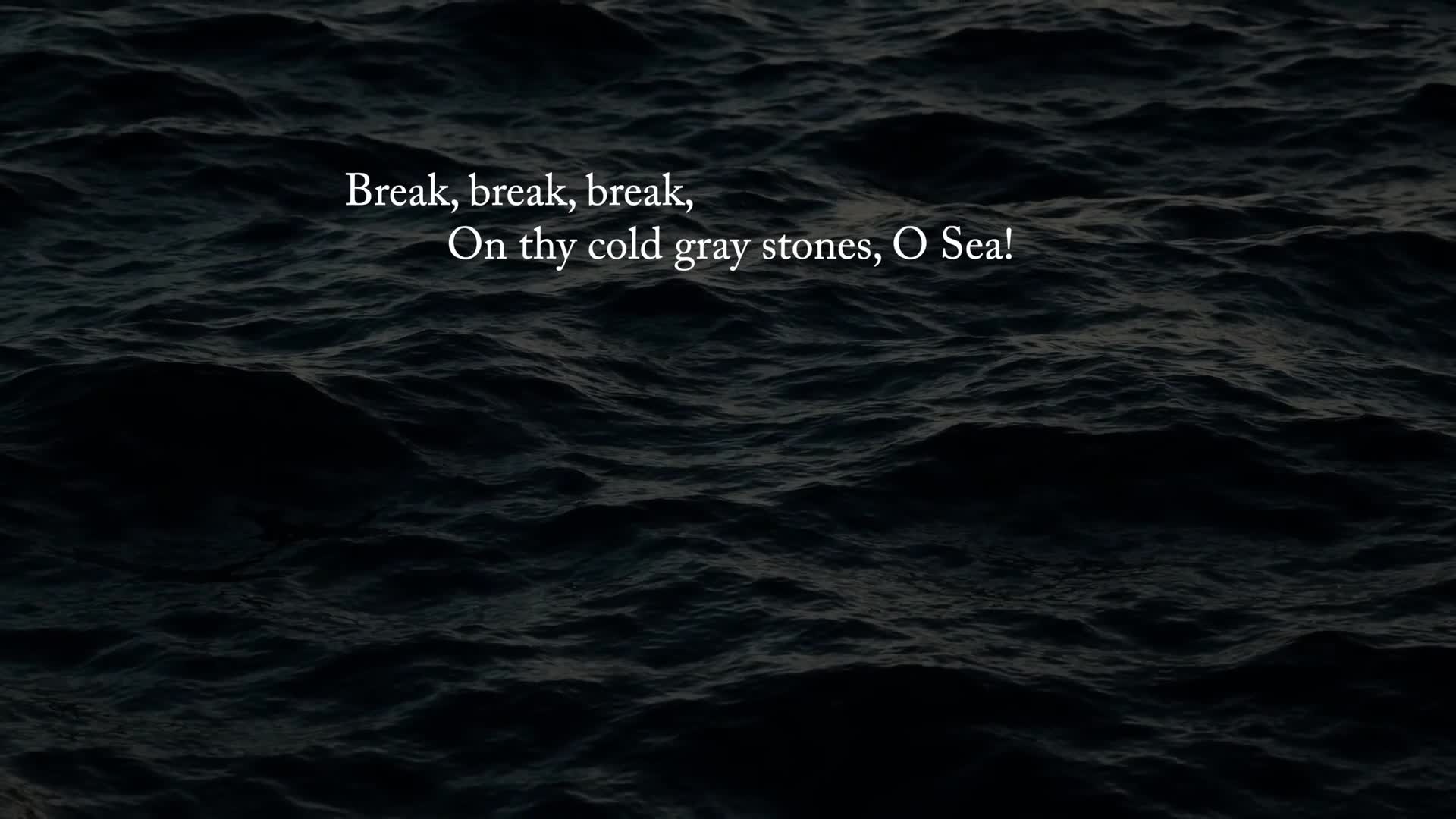
"Break, Break, Break" is defined by its "brevity," which the speaker uses as a source of power. The opening lines highlight a central tension: the speaker’s desire to "utter the thoughts that arise in me" versus the reality that his grief is so overwhelming it renders him "inarticulate." The imagery of the sea, with waves crashing against "cold gray stones," evokes the stark, unforgiving nature of "gravestones." The irony, as noted in the analysis, is that this account of being unable to speak is itself "highly articulate," proving that Tennyson could transform raw, internal suffering into profound literary form.
The Indifference of the Living
In the middle stanzas, the speaker observes a world that continues in blissful ignorance of his internal collapse. By contrasting his desolation with the "fisherman's boy," the "sailor lad," and the "stately ships," Tennyson creates a deliberate progression of human life:
- Childhood (the boy at play)
- Youth (the singing sailor)
- Adulthood (the ships heading to a "haven")
This progression toward a "haven" (a term that subtly evokes "heaven") highlights the speaker's isolation. While the world moves toward its destination, the speaker remains anchored to his loss, haunted by the "vanished hand" and the "sound of a voice that is still."
The Finality of the "Dead Day"
The poem concludes with a bleak reflection on time: "the tender grace of a day that is dead will never come back to me." This phrase casts a retrospective shadow over the entire poem. The joyous scenes of the youth and the ships are recontextualized as future memories—inevitable "vanished hands" and "still voices."
Ultimately, Tennyson’s work suggests that grief is an "incessant reaching for something that's not there." Even though he was left to mourn when his friend's life was cut short, Tennyson succeeded in giving "form to the thoughts that arise in all who grieve." As he once observed, when the thing on which love "throve falls off," the lover is "left alone." Tennyson’s poetry serves as the enduring vessel for that loneliness, ensuring that while the "day that is dead" never returns, its memory remains permanently etched in the landscape of literature.

Deep Learning with ListenLeap


