hip surgery in November of 2024.
Her UnitedHealthcare nurse, Crystal, checked on her.
We do a routine call after surgery, and I could tell that she was struggling.
Deborah needed help.
My infection markers were through the roof.
And Crystal knew what to do.
I called the hospital and said, she's coming in.
And got Deborah the help she needed.
Crystal and UnitedHealthcare saved my life.
Hear more stories like Deborah's at UHC.com.
Benefits, features, and or devices vary by plant area.
Limitation and exclusions apply.
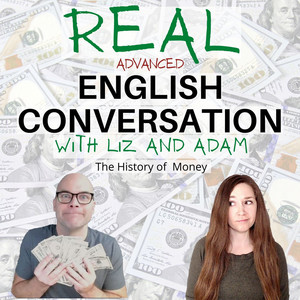
Hello, and welcome to a real conversation between two native English speakers.
I'm Liz Wade, and this is Adam Navis.
Hi, Adam.
Hello, Liz.
How are you doing today, Adam?
I'm doing fine, thank you.
Well, that's good.
We are here to talk about something that Some people just don't really want to talk about anyway, but some people love talking about, and that is money.
Money, money, money.
This is actually a very interesting conversation because around the world, people talk about money and feel comfortable talking about money at different levels.
Yes, it's true.
So if you are in the U.S., people do not really like talking about money.
Well, in vague terms, they do, but not about their own money.
Like you would never I would never ask you like, Adam, how much money do you make?
Yeah, but in other places, that's an OK question.
Like it's right right, exactly so.
But we're not going to talk about that sort of stuff, about money.
We are going to talk about the history of money.
So how did we get here, where we exchanged this paper For goods?
Yeah, well, and maybe not even paper anymore.
Yeah, or transfer numbers over the internet.
And so we are here to talk about the history of money.
We hope you stick around.
If you would like to see this program as you read along, because you haven't seen it yet, you can go to our website at wwwspotlightenglishcom.
You can also listen and follow along on YouTube if that's not where you're already watching us.
We'll also link that program in the little eye that's up here somewhere, and you can do that.
And if you are on a podcast, of course, you can follow the link to visit our website or YouTube.
If you are on YouTube, I really encourage you to check out the button below that says Join and to become a member.
You get a couple perks that way, and there are a couple different levels.
You can get PDFs of scripts that you can always keep.
You can mark them up and things like that.
And, of course, if you're on our website, You can also get our scripts delivered to you by email.
Every Monday the script comes, the link to the audio comes and you have no excuses for great English practice.
And each of those is a little bit of a different cost.
But yeah, we think it's a great value and we think it's a great help.
And we hear that it's a great help from people who have done that.
So if you're on YouTube, give us a like subscribe, hit the little bell so you never miss any of our videos.
And now, let's get down to business.
Let's get down to business.
Adam.
Yeah.
So I love this program because everyone uses money.
That's right.
And it's not just we use money, but we use money.
I don't say we don't think about money, but we just assume it's part of everyone's life.
Right.
And you think like well, how did we get to this point where I have this little plastic card and I plug it into an ATM, a bank machine, and then it gives me like paperback.
And then you take that paper and you give it to someone and they give you food or they give you a piece of clothing.
It's weird.
So I love this program because it really tells us like, how did we get here in a really quick and simple version, right?
So this first kind of money that we had was not actually money.
It was like bartering.
So trading.
So let's talk about bartering because people might not know what that word means.
Let's say I've got a chicken and you want my chicken, or I have two chickens, you want my chicken.
You might think of, uh well, you might have something i want, right.
Right like, maybe i have uh vegetables, yeah.
So i say carrots and potatoes, i say my chicken is worth, my chicken is worth five potatoes, or something like that.
We, we agree on a rate and we just we trade yeah, And everybody has the things that they have, but they can barter them for other things.
So that was the first sort of money, right?
And that's different for every person.
All of those things are different for different people.
And what happens if you don't have anything?
What happens if all of my potatoes and carrots like got drowned because there was a huge rain and there's none left?
Yeah.
And you can't save your potatoes year after year.
Right.
For a year when you, you do have.
So there's obviously some problems with bartering.
So then we move on to proto money, and this is things like like Adam I have like this container of very beautiful shells.
I will give you four of my shells for your chicken.
Right.
Did you take that?
Well, I would have to know.
I mean, sometimes I would think that they're beautiful and I might have value, but I might also be able to take those shells and then travel to a different city and exchange them, because I don't want to take my chickens.
Every time I take my chickens on the road, they get sick and they're noisy.
But if I can just take shells...
And then I can exchange them for spices or something like that.
I love this world we've created where we're bartering shells, my chickens and your potatoes.
Who knew?
We're moving through history.
We're moving through history together.
Yeah, so then we've got this proto-money.
And I think that lasts quite a long time, actually.
Because the first coins come in Egypt, right?
Right.
And that is I guess.
I mean, I don't know exactly how that came about, but maybe the Egyptians were like you guys these shells like they still break, but we can make metal into these little circles.
And it's maybe like this metal that we, that not everybody can get.
So it has some value.
So, uh, yeah, let's make these coins.
And then the first person who's like I want to put my face on a coin so that people are like they always think of me is Alexander the Great.
Oh, man.
Alexander the Great.
Why not?
Yeah.
Well, that's maybe why he's called Alexander the Great.
Right.
Instead of like Alexander the OK.
Maybe he was just Alex.
And he's like, you know what?
People don't know me.
I'm going to put that on the coin.
Yeah, exactly.
People will start calling me. yo, guys, I'm your leader.
Which, of course, a lot of people have used money as a way to celebrate people, whether they're kings or queens of, leaders of countries or important people through history have been featured on money.
But I think most clearly because we should note that money very quickly once you start doing that, If I'm the leader of one country and I put my face on a coin and you're the leader of, you know Lissadonia, you might not accept the money that I make, right?
I'm like, no, no, no.
I only want money with my own face on it.
Exactly.
You want money with your own face.
So you make your coins.
I make my coins.
And of course we know in the world there's lots of different kinds of money right, you know currencies.
Many different countries have their own currency, which is the value of the money that's used there.
Right.
So so we go from these, we've got all these coins, and then um, I think that spreads to different places, right?
We even have an example in the program about, uh, what is it?
Queen Victoria who puts her, uh, face.
No, it's Maria Teresa from, um, Oh, where?
Austria.
Yes, thank you.
In Austria and she puts her face on a coin and it's even still used until 1924 in some places, which is pretty incredible.
So, but people are like hauling around these bags of coins.
They finally figured out how they're going to, you know, use them in different systems or different countries.
But they're like, These coins, they're so heavy.
Right, because they're made of metal and metal is a very heavy thing.
100 pounds of metal.
So they decide to make paper money.
Yeah.
Which I can see that's a lot easier to carry around, right?
Right.
Like 100 bills.
Yeah.
100 paper monies.
Right.
Are a lot lighter to carry than 100 coins.
Well and this is where I think the idea of money gets really interesting because you say okay, we're going to take this heavy 1 coin and instead of traveling around with it, we're going to put it away.
And instead we're going to take a, we're going to take a piece of paper like this and say it represents one gold coin, for instance,
Yeah.
But then eventually people are like, you know what?
We can just make more of these.
So let's just make more.
And do we need to have coins?
No, no.
We're just going to make more.
And we are simplifying economic theory.
Oh, for sure.
But also, we're not.
People just do that.
And we all agree that that piece of paper means that it is worth this much.
Right okay so, adam.
Then then we get to the point where we're like okay, i don't actually want to keep all of my pieces of paper that are worth so much in my house or, you know, in my pockets, so i'm going to store them in a bank, yep.
But then i want to be able to like, give someone this money yeah, without actually having to go to the bank.
Right, so then now what i have is a check, And even this is old now right,
People don't do checks that much.
Yeah.
So I write and I say, this check is to Adam.
It's for $20.
And I sign my name on it.
And then I give it to you.
Right.
And you go to your bank.
And you give that check to your bank.
And your bank is like, hey, other bank.
Hey, Liz's bank.
We need $20.
And my bank gives it to your bank.
And your bank gives it to you.
Yeah.
But then we go a step further.
The next step is the next step is well, I don't want to have.
What if I don't have?
I ran out of checks and I don't know.
I don't have a pen with me and I don't have a stamp to put on an envelope to mail my check to you.
I want to be able to go into a store and just make a decision right there.
And so we get credit cards and bank cards that simply take all the that phone call of bank calling bank.
Put it in a computer and You plug it in beep boop boop, pull it out or swipe it.
I guess.
I mean, there's been different ways of doing it, but it was just Definitely always the beep boop, boops.
Beep, boop, boop.
And then you can just, And obviously, if you're watching this today and you are probably under 25 years old, you are sitting there thinking who are these old people?
What's a check?
What's a check?
Why would you send a piece of paper to someone?
What's a stamp?
I've never sent a piece of mail in my life.
Anyway, we know that you're probably already you're watching this and you're already thinking about where we're going to go in our conversation.
Like you can tell, we were going to talk about credit cards and we're going to talk about virtual currencies in a second.
But just stay with us.
Stay with us and keep watching this, because it's fascinating about how people agree upon what's valuable and how this thing works.
Or even how that transfer works.
Like, why can I pick up my phone and just like even over Facebook, send you $5, right?
Or over Venmo or Cash App, or Or that.
We have people who are watching this right now who are members of this YouTube channel and support this channel for a couple dollars, but live on the other side of the world.
Right, right.
How does that work?
I don't know.
It is really amazing.
Yeah.
This is like you talked about like the whole like economic reasons for things earlier.
Like that's not really how my brain works.
So like for me, it's all like, wow, this is all magic.
Yeah.
I think it's really interesting.
And, of course, let's just move toward talking about Bitcoin and Ethereum and all these virtual currencies.
That is even a whole other layer of complexity.
And we won't talk about what virtual currencies are, but if you're watching this, I'm assuming you've heard of some of the big ones.
We do, and not to interrupt you, Adam, we do have a program about Bitcoin.
That's right.
So if you wanted to, if you're watching this and you are wondering, like, what is Bitcoin anyway?
Visit the link.
I'll link it in this video and in the description.
And you can go there and just get a really quick overview, a quick summary of what Bitcoin is.
So go ahead, Adam.
So it is a in my brain, it is a currency that is not associated with a country.
It's not associated with, linked to any other thing, like like gold or silver or some of the traditional things.
And so and there's again in that Bitcoin program, it talks about how it stays safe.
But of course, there there it's.
It's all what we, I mean all of these things we're talking about.
Is you agree there's value in this?
I agree there's value in this.
And it's about efficiency in some ways, right?
Like I don't have to carry my chickens and you don't have to carry your potatoes around.
Finding new ways of being efficient.
But when this happens, there's also problems as well.
Like I know that virtual currencies have raised the level of kidnapping around the world.
Oh, sheesh.
I know, right?
Let's not go there.
But it does create problems as well.
Well, even access to it, right?
People who already have a lot of money are going to have better access to getting Bitcoin in the first place.
So it's theoretically...
Accessible to everybody in the world, but it's not really do you have any Bitcoin Liz?
I don't, I don't, I.
I will say I have a neighbor who does a little Bitcoin And another neighbor who has done Bitcoin for a couple years, but for me, I just It's.
I don't know if it's too risky or if it's just like I don't want to wade into something that I don't understand.
Yeah, that's probably, but I just I'm not.
Yeah, I don't have any to you.
I no.
I mean, the closest thing we have is we have some, uh retirement investments that we've tried to, and i don't really understand those.
Yeah, but those are the thing that seems safe, or you just have to do, i don't know.
Yeah um, so this is so let us know.
If you're, if you are uh into virtual currencies or bitcoin, put it in the comment below about if you think they're a good idea.
Are they a good idea?
Are they going to be around for a long time?
And what kind of Bitcoin or virtual currency do you think is good?
Please don't market if you're like trying to sell anyone on virtual currency.
Yeah, we're not doing that.
But just let us know in the comments.
Sorry.
But I would love to know, because I know that our listeners, our viewers have a wide variety of interests.
Like I know some of them must be economists.
So if you are someone who studies this, please, I love to learn.
I'd love to hear more about it in the comments or or whatever.
So yeah, feel free to leave us a comment or, you know, don't leave a comment like you guys are so old.
Nobody knows what a check is.
We know we know we're old.
Yeah, everybody knows that.
But yeah, I would love to hear what you have to think.
If you haven't seen this, or seen or heard this program yet The History of Money I really encourage you to go to our website.
Again, it's www.spotlightenglish.com.
You can check it out on our YouTube channel as well, and wherever you get your podcasts if you prefer just to listen.
And so until next time, we hope you listen, watch, practice, and learn.
Spotlight out.
UnitedHealthcare nurse Crystal checked in on a patient.
We do a routine call after surgery, and I could tell in her voice that she was struggling.
Crystal knew she needed help.
I knew that this is very serious.
This is like septic.
This is life-threatening.
And she knew just what to do.
And I called the hospital and said, she's coming in, here are her labs.
And got her the help she needed.
I see my role at UnitedHealthcare as a life-saving role.
Hear more stories like Crystal's at UHC.com.
Benefits, features, and or devices vary by plan area.
Limitation and exclusions apply.