
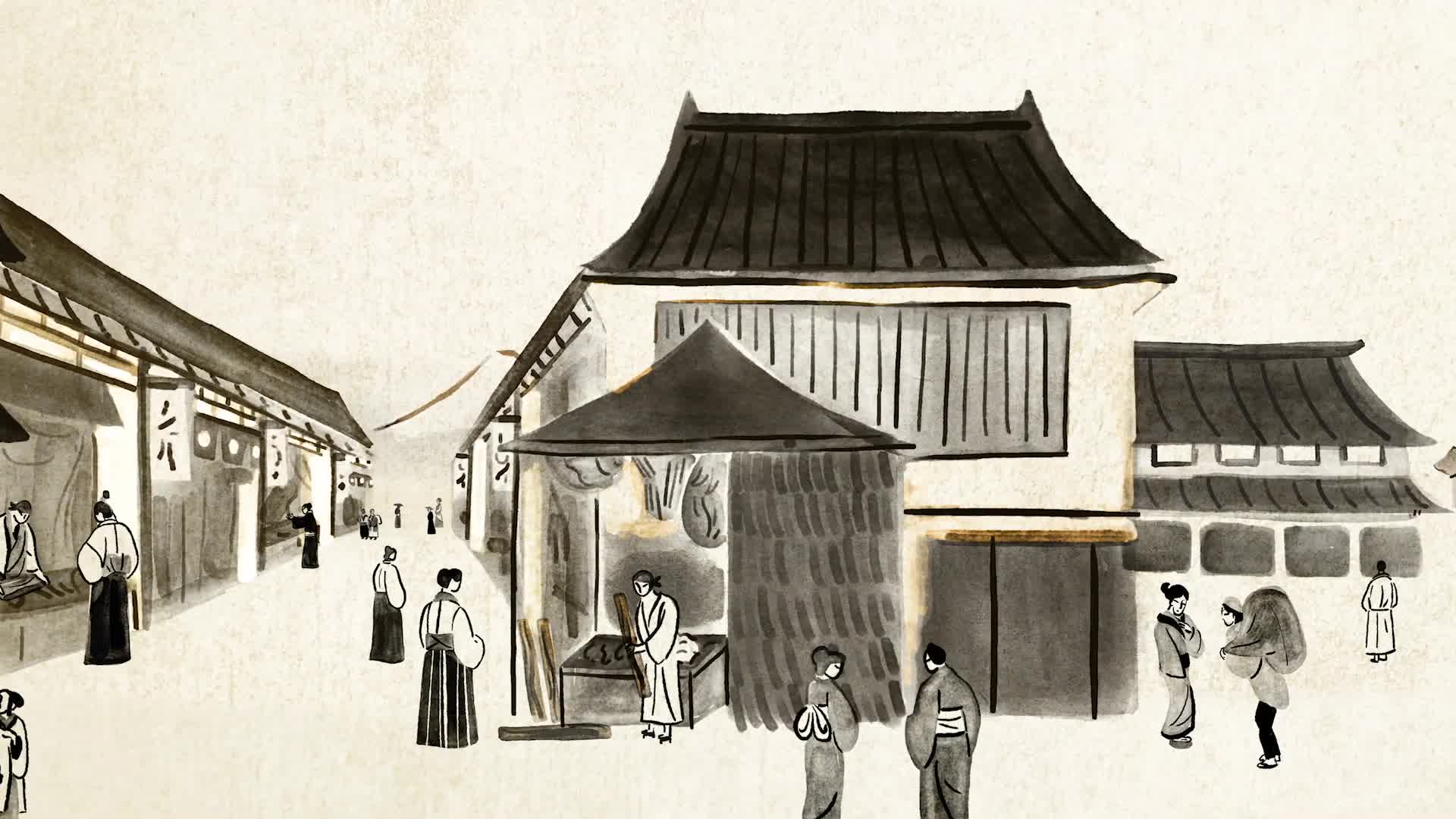
[The Edo Transformation: Lessons from History’s Most Sustainable City]-[How Japan saved its biggest city from collapse - Roman Krznaric]
📋 Summary
The Edo Model: A Blueprint for Circular Sustainability
Four centuries ago, Edo—modern-day Tokyo—stood at a critical crossroads. Despite being one of the world's largest cities with a population nearing one million, it faced imminent "ecological collapse." Decades of "intense logging" had triggered "massive deforestation," leading to severe erosion, flooding, and a looming food crisis. Yet, through a radical shift in policy and cultural values, Edo transformed into one of the most efficient and sustainable urban centers in human history.
The Tokugawa Reforms and the Isolationist Catalyst
The transition began in 1600 when Tokugawa Ieyasu unified Japan, ushering in the "Tokugawa shogunate." Faced with the threat of foreign influence, the shoguns enacted a policy of isolation, banning foreign traders and restricting travel. This geopolitical move necessitated a radical economic pivot: Japan had to become self-sufficient. By "increasing internal production while decreasing consumption and waste," the shogunate fostered an environment where resource scarcity was managed through ingenuity rather than expansion.
The Philosophy of 'Motainai' and Resource Management
Central to this transformation was the Buddhist concept of "motainai," a philosophy emphasizing the avoidance of waste and finding satisfaction in "just enough." This mindset permeated every layer of Edo society:
- Reforestation and Timber Rationing: To combat environmental degradation, the shogunate implemented "sprawling reforestation programs" and required villagers to plant millions of trees. Construction became standardized, utilizing "wooden components that could be disassembled and reused" to mitigate timber demand.
- The Circular Economy: Industries emerged specifically to eliminate waste. Agricultural byproducts like "rice straw" were repurposed for rope and packaging, while "candle wax drippings" were carefully collected and remolded. Even human waste was systematically repurposed as fertilizer, closing the nutrient loop.
Cultural Innovation Through Repair
The Edo period proved that sustainability fosters, rather than hinders, creativity. Household items were treated with extreme longevity:
- Textile Upcycling: Kimonos were mended repeatedly until the fabric was too frayed, at which point they were repurposed into "futons," then "diapers or cleaning cloths," and finally used as fuel. This lifecycle reflects the tradition of "boro," where cloth fragments were sewn into intricate, multi-generational garments.
- The Art of Kintsugi: Artisans elevated the concept of repair through "kintsugi," the practice of fixing broken ceramics with gold lacquer, turning fractures into aesthetic features rather than signs of obsolescence.
The Paradox of the Tokugawa Era
While Edo serves as a masterclass in sustainability, the narrative is not without its "flaws." The era was defined by "harsh authoritarian rule" and a rigid feudal structure. The peasant population suffered under the "nengu," a crippling rice tax demanded by regional lords or "daimō." By the mid-19th century, systemic issues such as "rising inflation" and mounting external military pressure—notably from the United States—eventually forced Japan to end its isolation, leading to the collapse of the shogunate.
A Lesson for the Modern Era
Today, with only "7% of the global economy" operating circularly, the history of Edo offers a profound lesson. It demonstrates that societies can thrive by prioritizing the "repair" of what is broken rather than discarding it. Edo’s transformation from a city on the brink of ruin to a "thriving cultural epicenter" proves that resourcefulness is not a limitation, but a pathway to resilience. By viewing our limited resources as assets to be cherished, we might yet harness modern technology to build a more sustainable and beautiful future.
Deep Learning with ListenLeap


