This message comes from Capital One.
Capital One offers checking accounts with no fees or minimums.
What's in your wallet?
Terms apply.
See CapitalOne.com slash bank for details.
Hey, it's Mary Childs.
Before we start the show today, we want to shout out some Planet Money listeners and importantly, recent NPR donors.
Like Brad from Virginia, who says, NPR is the final frontier of unbiased, real journalism.
Thank you, Brad, represent Virginia.
And then there's E Katarina from New York who writes quote I love Planet Money podcasts and I learn so much from it because hard concepts are explained in the simplest way possible.
Thank you, Ekaterina.
That is exactly what we're trying to do.
And finally, Gary from Utah, who says, Planet Money is the greatest podcast of all time.
Okay.
Thank you, Gary.
Wow.
That's an honor.
We sincerely appreciate all of the kind words and support, especially this year.
As you may have heard as of October 1st, NPR is now operating without federal funding.
That is the first time in our more than 50-year history.
So if you value Planet Money maybe like Brad, for the quality of our journalism, or like Ekaterina because of how we break down economic concepts, maybe we've helped you make a smart decision, or we're just entertaining and you like our show.
If you value what we do, please help us keep doing it by signing up for NPR+.
It's a simple recurring donation that gets you perks to NPR's podcasts. and bonus episodes.
So if you've already joined, thank you.
And if not, just go to plus.npr.org.
Okay, on to the show.
This is Planet Money from NPR.
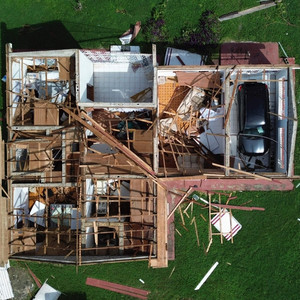
A few weeks ago, Faval Williams drove across Jamaica to the west side of the island to see the damage with her own eyes.
She was headed to where the worst hurricane in her country's history had made landfall.
When she got there, there was a lady and she says, come with me.
Let me show you.
This is where my house used to be.
And you go, where?
It's like, right here.
There was nothing in the space.
It was all gone.
You saw persons just sitting and looking off into the distance, wondering what's next.
For Fayval, for all Jamaicans, this is unfortunately a familiar scene after hurricanes.
Only Hurricane Melissa was worse.
It was a Category 5, winds of 185 miles per hour.
And now people were adding up what they had lost, trying to figure out how they would get it back.
I found myself just hugging people, assuring them that the government would take steps to help them to rebuild.
And Fayval, she is the government.
She's actually Jamaica's minister of finance.
So she knew that Jamaica had been preparing for exactly this kind of catastrophe, preparing so that the country could pay to rebuild the roads, to rebuild people's homes.
And to do that, Jamaica had some financial tricks up its sleeve.
We are in the belt, the hurricane belt.
There isn't much we can do to change that.
But what we can do is to take the steps to ensure that we have access to financing.
In particular, she was thinking about this one kind of unusual financial maneuver that Jamaica was experimenting with.
It was a wager.
Yeah, the country of Jamaica had made a big bet, an actual bet on hurricanes.
Hello and welcome to Planet Money.
I'm Jeff Guo.
And I'm Waylon Wong.
A few years ago the Jamaican government went all around the world saying to investors we bet we're going to have a pretty big hurricane in the next couple of years.
You want to take the other side of that bet?
Basically, if there's no hurricane, you investors get your money back and more.
But if there is a hurricane, a big enough hurricane, the Jamaican government gets to keep your money and use it to pay for rebuilding.
This kind of financial wager is called a catastrophe bond.
And the market for catastrophe has gotten really hot lately.
Today on the show the story of where catastrophe bonds come from, why they've gotten so popular and how they are changing the way insurance works for Jamaica and for all of us.
This message comes from Vanguard.
Capturing value in the bond market is not easy.
That's why Vanguard offers a suite of over 80 institutional quality bond funds, actively managed by a 200-person global team of sector specialists, analysts and traders.
They're designed for financial advisors looking to give their clients consistent results year in and year out.
See the record at Vanguard.com slash audio.
All investing is subject to risk.
Vanguard Marketing Corporation, distributor.
Catastrophe bonds are like the ultimate form of insurance because, if you think about it, that's what insurance is.
It's a bet involving potentially bad outcomes, whether that's a car crash or a house burning down or a Category 5 hurricane.
But with catastrophe bonds.
Instead of an insurance company making the payout when things go south, it's investors people making bets against an earthquake hitting Japan or a wildfire sweeping through California.
And the story of how betting on natural disasters became a market.
A big, thriving market really starts with this one person.
My name is Karen Clark.
People have actually called Karen an icon.
Do you accept that title?
I guess so.
Karen is this computer stats whiz.
She specializes in the math of catastrophes.
Her job is to calculate the risk of extreme and rare disasters.
She was one of the first to predict how much damage they might cause and how much the rebuilding would cost.
I've been doing it for a long time, since 1987.
But I do like to remind people I was a child prodigy and started when I was 10.
Just so you can, that's a joke.
I believed it.
Okay, so Karen might not have been a child genius, but she was way ahead of her time.
In grad school, when she was what 12, she studied how to run simulations on these cutting-edge machines that people were calling computers.
That landed her a job at an insurance company where her bosses asked her to apply her skills to the problem of hurricanes.
You see, for insurance companies, hurricanes are a special headache.
Standard insurance works great for covering your typical day-to-day risks, like if a pipe bursts and floods the basement.
Insurance companies can handle all that.
What's much harder for them to handle are the big once-in-a-generation catastrophes, like when a Category 5 hurricane tears through a city and suddenly everybody needs to rebuild their homes.
A disaster like that can overwhelm a single insurance company.
Which is why your insurance company will actually buy insurance for itself.
Insurance for insurance companies is called reinsurance.
Most insurance companies will take out reinsurance policies to protect them in case of natural disasters like earthquakes or hurricanes.
Why is it called reinsurance?
That, I can't answer that.
Why is it not like insurance squared?
Well, it's even more complicated because there are actually entities called retrocessionaires that reinsurers also reinsure.
OK, so back in the 1980s, while she was working for that insurance company, Karen was looking into this complicated system of insurance and reinsurance and re-reinsurance.
And she realized that when it came to major catastrophes like hurricanes, the whole market was still mostly operating based on guesswork.
The insurance companies weren't really sure how much hurricane insurance they actually needed to buy from the reinsurers.
And the reinsurance companies.
They weren't really sure how much to charge for that hurricane insurance.
There was not much science underlying those decisions.
There was not much analysis.
This is where it was really rule of thumb.
But Karen's like, no, no, no, there's actually a smarter way to do this.
We can use computers to simulate thousands of different disaster scenarios.
Plug in data about things like how homes in an area are built and how much they'll cost to repair.
That'll give us a much clearer picture of the actual risks here.
And Karen is so convinced of this that she soon starts her own one-person company to build and license these computer models to the insurance industry.
Now, at the time, a lot of hurricane reinsurance came from this one place.
It's called Lloyd's of London.
And the folks at Lloyd's, they're kind of famous for selling, you know, unusual kinds of insurance.
Like they're the ones who insured Bruce Springsteen's voice and also David Beckham's legs.
And Karen gets this huge opportunity.
She gets a meeting with them to show off her hurricane model.
So she makes the pilgrimage to their London headquarters.
She flies across the pond, lugging her newfangled portable computer along with her.
Then a portable computer weighed like 35 pounds or something, you know, carting this thing in.
Putting it up, I had maybe 100 British men sitting in the audience that had never seen one of these before.
Not only that, you haven't heard anything yet.
I was a woman coming in, an American woman, and I was seven months pregnant at the time.
No.
Yes.
And so I waddled in, pulling this computer and started showing them how they were going to do better by using this little computer model.
The men at Lloyd's, they are skeptical.
They were polite, you know, but there wasn't really any discussion.
Maybe some were falling asleep, but... The room was dead.
You know, I'm pretty thick skinned.
So I was like, at least most of them were still awake at the end.
One problem was that Karen's models they were saying something scary that the whole industry was vastly underestimating the risk of hurricanes.
So it wasn't just the folks at Lloyd's who were skeptical.
A lot of people were.
Until something happened that grabbed everyone's attention.
The year was 1992.
In 1992, Karen and her team were tracking this hurricane that had suddenly gotten very strong, very fast.
It was a Category 5, 160 mile per hour winds.
The name was Hurricane Andrew, and it was headed for Miami.
So Andrew made landfall at 5 a.m. on Monday morning.
And we're running the model to see what the losses could be.
And we're getting these big numbers.
Karen's company had a handful of clients at the time who were paying her to predict how much damage this was all going to cause.
And I was a little nervous about it, but we faxed out to our clients at 9 am that the losses could exceed 13 billion.
And the phone started ringing.
No one believed it.
And again, this is British.
They're like, I'll bet you five quid.
It won't be more than $5 billion.
Karen says everybody in the industry.
They were predicting at worst this is a 7 billion hurricane.
But not $13 billion.
No way.
Six months later, the industry has tabulated the losses.
It was $15 billion.
That's right.
In the end, Karen's model was pretty close to the mark.
That was the turning point.
And then the whole industry became believers in the model.
I would say six months after Hurricane Andrew.
Did you get any like apology faxes saying like, sorry, we doubted you?
No, but more than that, we got a lot of signups.
That was better than apologies.
A lot more customers.
Exactly.
And now that the whole industry was paying attention to Karen's models, insurance companies realized holy cow, we have not been buying enough insurance for our insurance.
If hurricanes are going to be this bad, we're going to need a lot more reinsurance.
And at the same time the reinsurers, like the folks at Lloyd's, they were realizing oh no, this hurricane, reinsurance is actually a really dangerous market to be in.
You know, holy cow.
And probably they weren't thinking cow.
We've really been underestimating this risk and we need to charge a lot more for it.
So the price for reinsurance went through the roof.
But even with those higher prices, there still wasn't enough reinsurance to go around.
By the late 90s, the whole insurance industry was facing this shortage of reinsurance.
This is when the insurance companies get an idea.
They're like, if we can't get enough reinsurance from Lloyd's of London, maybe we could also go around them.
You know, go straight to Wall Street.
There's a whole world of investors out there.
Maybe some of them might want to get in on this catastrophe reinsurance game.
And, And this.
This is the defining moment, not just for Karen but for the whole insurance industry, because this is the moment when the catastrophe bond is born.
A catastrophe bond is basically a way for insurance companies to sidestep the reinsurance industry, to get reinsurance not from reinsurance companies, but from a much broader pool of people, from investors.
It really was an amazing innovation and it was very exciting, I will say for me personally.
You know, it couldn't have happened without, you know, my model.
And here we should take a minute to explain how these catastrophe bonds, or cat bonds, actually work from the point of view of the investors.
Basically, it's like making a loan to the insurance company.
Investors might put up 200 million and the insurance company hangs on to that money for a couple of years.
And in the meantime, pays the investors a bunch of interest.
Then after a couple years, the investors get their original 200 million back, plus all of that interest.
That is, unless a big enough hurricane strikes sometime during those couple of years.
In that case, the investors don't get their money back.
The insurance company gets to keep that 200 million and use it to cover people who are rebuilding their houses.
So with cat bonds, the investors are taking on a major risk.
They could lose all their money with one big catastrophe.
This is where Karen's models come in.
Her models made this market for cat bonds possible, because they could show investors exactly what risks they were taking on.
I had to fly all around the world Tokyo Frankfurt, London again and be sitting in these smoke-filled rooms to explain to investors how the models work and convincing them that they wanted to invest in these cap bonds.
For a long time, not that many investors were interested in catastrophe bonds.
Because even if you believed Karen's models, you were still literally betting on hurricanes and natural disasters.
These risks were a little too exotic for most of the starched shirts on Wall Street.
But for some investors, the weirdness of cat bonds, that was kind of their appeal.
Back in the 2000s, Ethan Powell was a manager at a multi-billion dollar investment firm based in Dallas, Texas.
You know, Texas is the Wild West, so we were always a little bit on the cusp of what we were willing to invest in.
And Ethan's firm specialized in what are called alternative investments, like buying out people's life insurance policies or betting on the future sales of some life-saving drug.
And they were also early investors in catastrophe bonds, bought millions of dollars worth of them.
And there's one big reason why investors like Ethan chase these kinds of alternative investments.
In fact, it's a very traditional reason.
The goal is diversification.
You know, don't put all your eggs into one basket.
Actually, Ethan, of course, has this alternative metaphor.
Maybe instead of having all chicken eggs, you have one ostrich egg and it ends up being harder and not breaking easily in the event that the basket falls right.
For some people, diversification might mean OK.
Instead of putting all of our savings into Apple stock, maybe we'll buy some IBM stock or McDonald's stock.
Maybe we'll buy a little piece of every company in the S&P 500.
But Ethan is like, well, what if there's a recession?
All those stocks might go down all at the same time.
So for Ethan, a really good alternative investment is something that is so unrelated to the rest of the economy where, even if the entire stock market crashes, at least your alternative investments are doing OK.
This is why some people really like catastrophe bonds, because they tend to be so uncorrelated with your other investments.
You know, the profits or losses at Microsoft and McDonald's have very little to do with chances that say, a typhoon will or won't hit the Philippines next year.
In a world of interesting alternatives.
It is my belief Cat Bond is the lion king of them all right.
It is sitting on top of the mountain.
Yeah, the Cat Bond stands alone.
So diversification is one reason why investors like Ethan put money into Cat Bonds.
But another big reason is that Cat Bonds are also kind of lucrative.
And Ethan says, when you put cat bonds side by side with corporate bonds that are similarly risky, some cat bonds will pay you a lot more interest.
Between 2 and 3 percent more on the yield relative to the corporate rating.
So in finance terms, 2 to 3 percent, that's a lot.
Yeah, for a fixed income instrument, it is.
When Ethan first got into cat bonds in the 2000s, the market was tiny.
Over the past couple years, they have exploded into an almost 60 billion market, and one that is still growing exponentially.
For investors, cat bonds are kind of becoming mainstream.
You're seeing huge public pension systems buying them up, which means the interest from cat bonds is helping to fund the retirement of like school teachers in Arkansas and public employees in Virginia.
At the same time, more and more insurance companies are turning to cat bonds to solve one of their big problems right now, which is climate change.
The research says that hurricanes are getting more intense, wildfires are becoming more frequent.
In high-risk places like California and Florida, a lot of insurance companies are pulling out.
They're like, this is too much risk for us.
So right now in Florida, for instance, hundreds of thousands of people can only get their home insurance through the state.
Florida runs this nonprofit insurance company called Citizens that insures some of the riskiest homes in Florida because they have to
And while Citizens used to buy a lot of traditional hurricane reinsurance from places like Lloyd's, now it gets most of its hurricane coverage through cat bonds, because they can get a better deal from investors.
And so investors like Ethan are helping citizens provide insurance to people living in risky areas.
Ethan's firm owns some of those cat bonds from citizens.
The latest ones pay investors between 8 and 13 percent interest.
And he knows that if a big hurricane hits Florida, he's going to lose his investment.
And he kind of likes that part.
Your financial outcome is tied to hurricanes and natural disasters, but your capital is playing a role in society.
This is the role, right?
Ethan says at least what money he loses on cat bonds will go toward rebuilding people's homes.
Cat bonds actually have this kind of do-goodery reputation in the finance world.
And it almost sounds too good to be true, right?
Like cat bond investors are supposedly making these big profits, but also they are helping people rebuild in the wake of a catastrophe.
After the break, we talked to someone who tried to take the idea one step further.
He thought, what if cat bonds could help people suffering from Ebola?
This message comes from LinkedIn ads.
One of the hardest parts about B2B marketing is reaching the right audience.
That's why you need LinkedIn ads.
You can target your buyers by job title, company, role, seniority, and skills.
All the professionals you need to reach in one place.
Get a $250 credit on your next campaign so you can try it yourself.
Just go to linkedin.com slash NPR pod.
That's linkedin.com slash NPR pod.
Terms and conditions apply.
Only on LinkedIn ads.
This message comes from NPR sponsor Adobe.
Introducing the all-new Adobe Acrobat Studio, now with AI-powered PDF spaces.
Need to turn 100 pages of market research into five insights with a click?
Templates for a sales proposal that'll close that deal?
Or an AI specialist to tailor the tone of your market report?
You can do all that with the all-new Adobe Acrobat Studio.
Learn more at adobe.com slash do that with Acrobat.
This message comes from ServiceNow.
People should do the creative work they actually want to do, not boring busy work.
Now, with AI agents built into the ServiceNow platform, you can automate millions of repetitive tasks in every corner of your business IT, HR and more.
So your people can focus on the work that they want to do.
That's putting AI agents to work for people.
It's your turn.
Get started at servicenow.com slash AI dash agents.
Here at Planet Money, there's a thing that we like to say okay, that I like to say, which is that humanity's greatest invention is insurance.
Think about it.
Insurance is basically a technology to transfer risk from one person to another, from one place to another, from me to my insurance company, from my insurance company to a reinsurance company.
Catastrophe bonds are kind of the next evolution of that.
They let insurance companies take some of the risks they're facing the risk of a giant hurricane or earthquake and transfer those risks onto a crowd of investors around the world.
And we're starting to see more and more unusual types of risk getting packaged and put onto the market, like cat bonds for terrorism risk or cyber attacks.
I think probably the most complex I've ever worked on was our pandemic transaction.
Yeah.
Yeah.
I mean, why not even a cat bond for a worldwide pandemic?
Michael Bennett works on these kinds of creative financial ideas at the World Bank.
There's actually a fancy Wall Street term for getting creative.
It's called structured finance.
And Michael actually got his start at a bunch of those fancy Wall Street firms.
Very thick carpets.
You'd walk down and you wouldn't hear yourself at all.
How thick are the carpets at the World Bank?
Yeah, no carpets.
We can't afford carpets.
So you can hear your shoes clicking on the linoleum at the World Bank.
Yeah, yeah.
At the World Bank, the goal is not to make money.
It is to fight poverty.
And about 10 years ago, the largest Ebola outbreak in history occurred in West Africa.
More than 10,000 people died.
Michael and his colleagues were sitting in that not-so-cushy office in DC thinking what we really need is some kind of international pandemic insurance so that poorer countries could get some help.
So in 2016, he and his team came up with a creative new use for catastrophe bonds to share the risk of pandemics.
They basically went around designing their own custom pandemic insurance policy.
And so we came up with a list of six disease types which were believed by the medical experts to be most likely to cause a significant global type pandemic.
At the top of that list of threats was, of course, Ebola.
Also on the list was pandemic influenza, like the type that swept through the world right after World War I, as well, as you know, a couple other types of viruses.
The World Bank went around to investors asking them hey, do you want to bet against a pandemic caused by one of these six types of viruses?
Okay, so of course they didn't literally say that, but that's the essence of what a cat bond is.
And the World Bank ended up raising more than $300 million worth of these new pandemic cat bonds.
So investors agreed that if a global pandemic happened in the next few years, some or all of those 300 million would go to the World Bank to help developing countries.
And in the meantime the World Bank would be paying them a decent amount of interest, like tens of millions of dollars a year.
People thought this is an extremely innovative way to use the cap on market.
No one had ever done it before.
The World Bank's first ever pandemic bond was set to last for three years, starting in 2017.
By 2019.
Some people were criticizing the World Bank for this deal, because here these investors were making fat profits.
And what were the chances even that there would be a worldwide pandemic that could trigger this bond?
One famous economist called the whole thing an embarrassing mistake.
But then came the winter of 2020.
And we all know what happened in 2020.
The coronavirus.
And coronaviruses were one of the six viruses covered by the World Bank's pandemic bond.
And by April, it was official.
The bond triggered.
The international investors lost their money.
Hundreds of millions of their dollars went to the World Bank to fund COVID-19 relief efforts in some of the poorest countries in the world.
Well, I mean, you never feel great about a trigger in this market because it means something really catastrophic is occurring.
You know, it's the same with any insurance you buy, right?
You don't buy life insurance hoping you die the next day, or you don't insure your house, really rooting for a fire.
I think all insurance is, you know, you're putting it in place hoping you never use it.
Nowadays, entire nations are turning to cat bonds to protect them from the risk of natural disasters.
Michael and his team at the World Bank kind of pioneered the idea.
They've been helping countries design their own catastrophe bonds.
They've worked with the governments of Mexico, Chile, and Colombia, the Philippines.
These are all countries that face serious risks from hurricanes and earthquakes, but who also have fairly developed economies, like in Jamaica.
About five years ago, Jamaican officials were shopping around for some more advanced financial tools to protect themselves from hurricanes.
Back then Fable Williams wasn't yet the minister of finance, but she was a top official and she remembers the conversations.
We all realize that hurricanes are inevitable and we can't just sit here and hope to, you know, go hat in hand afterwards seeking support that we had to be proactive.
In 2021, Jamaica worked with the World Bank to offer its very first catastrophe bond to international investors.
Now the way they're designed.
The government only gets a payout if a really serious hurricane passes over Jamaica.
There are actually specific meteorological requirements.
The bond documents have this map of Jamaica divided up by a grid.
And for the bond to trigger, there has to be at least this amount of air pressure in this part of the grid.
And Jamaica's hurricane bonds, they have had their critics because they're not cheap.
Last year, Jamaica issued $150 million worth of these bonds.
And Fayval says they have to pay their investors about 7% interest.
That's more than $10 million a year.
And the chances of the bond actually triggering are pretty low.
Take Hurricane Beryl last summer.
It hit the southern coast of Jamaica with Category 4 winds, causing an estimated 995 million of damage.
But the Jamaican catastrophe bond still didn't trigger.
After Hurricane Beryl, people had a lot of questions for Fayval's predecessor, the previous minister of finance, Nigel Clark.
He was the one who originally set up the bond.
And they were asking him, like, why are we paying millions for insurance that doesn't pay out?
And I recall Minister Clark coming to Parliament.
So this is the grid, if you look on the screen.
With the map, with the grid.
And each of those squares or triangles corresponds to a centralized air pressure.
Minister Clark, explaining to the Parliament and, by extension, the people of Jamaica, this catastrophe bond, why it didn't trigger.
By time it went through that southern grid, The air pressure was 959, just outside of the threshold.
Minister Clark saying just because it didn't trigger is no reason not to continue to have it.
It's an insurance policy.
Fayvil's predecessor explained that for smaller hurricanes, Jamaica has a whole portfolio of other financial safety nets.
It has multiple rainy day funds, emergency loan agreements, other types of insurance.
These cat bonds?
They're designed only to cover those rare, once-in-a-generation hurricanes.
If we were to try to have insurance cover everything, it would be far too expensive.
So when Jamaica went to the market with its catastrophe bonds, the country knew what it was buying.
It knew how much interest it would have to pay investors and how much insurance it wanted.
And that it would only pay out if there was a hurricane the size of, well, the one that came next.
This year, Hurricane Melissa was like the definition of that once-in-a-generation hurricane.
Within a week and a half, the cat bond officially triggered.
And Favol says she was surprised at how tuned in the whole country was.
It was on the tongues of everyone.
There were all kinds of interviews on radio and so on, articles written in the paper.
Everybody was talking about it.
Who never knew about a cat bond knew about it then.
Thanks to its cat bond, Jamaica is going to get $150 million.
In fact, the money just hit the country's bank accounts this week.
I am hoping that investors globally will see this as a market to support, because behind the dollars are people, real people with lives who would not have anything else to help them.
And here we are now having resources to help us with the reconstruction.
You know, as this market for catastrophe grows, as catastrophe bonds become more and more mainstream, what it's doing is making the market for insurance bigger and hopefully, more competitive.
So the more investors who get into cat bonds, then if markets work like they're supposed to, the better rates that countries like Jamaica can get.
And the better rates insurance companies can get on the reinsurance they need.
Right now the price of reinsurance is actually going down, in part because of competition from cat bonds.
The whole point of cat bonds is to share risk with people outside of the traditional insurance markets.
And as the weather gets more and more chaotic, as the risk of catastrophe grows, it's maybe not a bad idea to find more and more ways to share that risk.
Planet Money Plus supporters get this and every episode without any sponsor messages.
They get bonus episodes but, more importantly, they're supporting this journalism you are hearing right now directly, which means we can rely less on sponsors or anyone.
Sign up at plus.npr.org slash planet money.
This episode was produced by Willow Rubin and edited by Marianne McHugh.
It was engineered by Jimmy Keeley and Kweisi Lee.
Fact-checking by Sierra Juarez and Vito Emanuel.
Alex Goldmark is our executive producer.
Additional audio today from PBC Jamaica.
I'm Jeff Guo.
And I'm Waylon Wong.
This is NPR.
Thanks for listening.