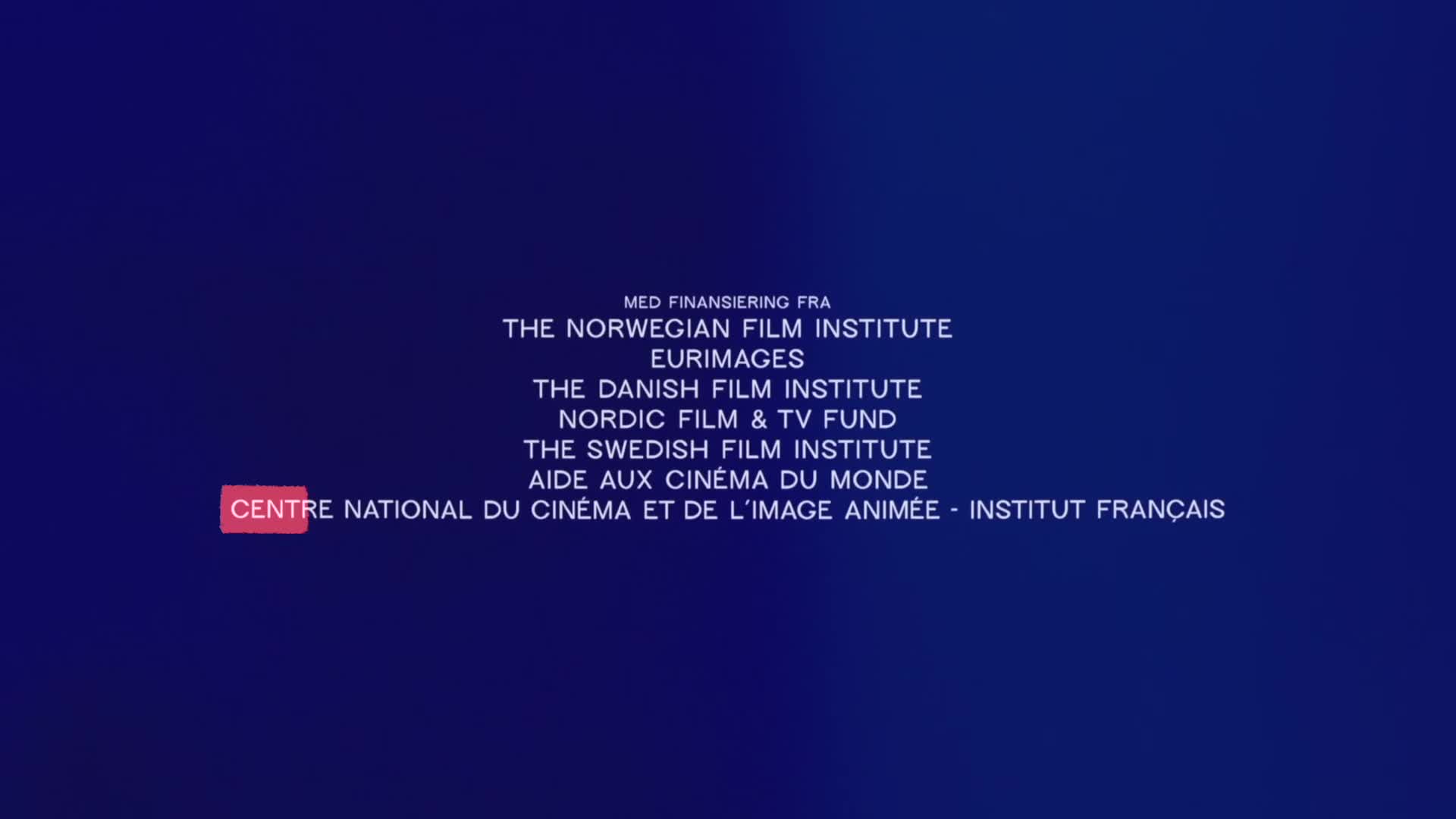
If you pay attention to the opening credits of French movies, you're very likely to see the same name again and again.
This one, the National Center for Cinema and the Moving Image, or the CNC.
The CNC is fundamentally different from all the producers, distributors and financiers you see at the beginning of American films.
The US simply has no equivalent to it.
See, all these are private for-profit corporations.
The French CNC is a publicly owned government agency.
For decades, it sat at the center of cinema in France, affecting every layer of the industry there.
It represents a radical alternative to the economic model of US filmmaking, but Americans basically know nothing about how it works.
Well, at least I didn't.
And when I got curious, I found it hard to find a breakdown of the French system in English.
I did some digging, some translation, and I think I understand the basics now.
And I want to share that with you because I believe the French system is the missing piece of this conversation we have about the state of the movies.
But I'll get back to that.
The first thing to understand is that the CNC helps to fund movies, TV and other digital creation in France at all levels of the process, from pre-production to exhibition.
The two big questions that come from this are where does the CNC get its money and where exactly does that money go?
Thankfully, these questions are easy to answer because the CNC releases a bilan or balance sheet of its activities every year, itemized and comprehensive an overview of the health of the French film industry.
And already here's a major difference from the US, where private companies from different sectors have no obligation to release precise figures, let alone combine them in a handy document for public consumption.
The CNC collects revenue in three ways.
The first is from a tax on cinema admissions.
10.7% of every movie ticket sold in France, whether the movie is French or not, goes to the CNC.
In 2022, that amounted to 118 million euros on 152 million tickets.
The second source of revenue is a tax on TV providers.
Established in the mid-80s, when cinema attendance across Europe was in decline.
The TV tax made up for the losses in the movie ticket tax, and then some.
In less than five years, the TV contributions exceeded ticket contributions and never looked back.
In 2022, this tax came to 469 million euros for the CNC.
The third source of revenue is a tax on physical media DVDs and Blu-rays, video on demand and French streaming platforms.
This amounted to 127 million euros in 2022.
All these taxes go directly to the CNC and not into the general coffers of the French government.
They're taxes on the industry, for the industry, taxes that collected a whopping 714 million euros in revenue in 2022.
To put that in perspective, that's four times larger than the 2022 budget of the National Endowment of the Arts in the States for a country that's five times smaller in population.
So where does all that money go?
Well, right back into the movies.
And not just the movies.
It breaks down like this.
43 of the support account in 2022 went toward cinema, 39 went to TV and streaming and 18 went toward a selection of other initiatives, including support for video game creation, immersive audio visual works, VFX studios, preservation of old films and more.
For this video, I'm going to focus on just the portion that went to cinema.
Okay, so you're a French film producer and you want to draw on these funds.
Well, there are two ways you can do that.
Automatic aid and selective aid.
You can think of automatic aid as a credit account for returning filmmakers.
When you make a movie, it contributes to the system and, in turn, earns you credits based on its success.
Credits which you can then cash in on your next movie and so on and so on.
In this way, the automatic aid is less like a subsidy and more like a reinvestment of funds that rewards box office success.
Selective Aid, on the other hand, is awarded via the advance on receipts, often to first-time directors.
It's meant to be paid back if the film becomes profitable, but few of these films actually make enough money to do that, so it's effectively a grant.
Critics say this lack of commercial success argues against this program.
But That's the point of the advance on receipts to support an independent cinema that is bold in terms of market standards and that can't find its financial balance without public assistance.
This is such a crucial point.
In the US film industry, there's only one metric to judge movies, commercial success.
Without participation by the state, there can be no other metric.
The market determines everything.
That's obviously true for Hollywood, but it's also true for American independent cinema.
Ask any indie producer, investors want to see a return.
Maybe a handful, are purely philanthropic, like family and friends, but philanthropy is no substitute for public action, and those investments are usually pretty small.
In 2019, across 53 projects, the average advance for first-time directors was €480,000.
Now the CNC doesn't fully fund films, but that kind of leg up gives lots of new filmmakers a chance that they otherwise wouldn't get, as well as the creative license to make something without the pressure to aim for a broad-based box office hit.
But the CNC does more than just give money for production.
After all, the movies themselves are only one part of the cinema ecosystem.
Once made, they need to be distributed, exhibited, and, of course, watched.
The CNC supports all these facets of the industry.
Every year, for example, it awards millions of euros for the maintenance and renovation of theaters, especially those that show arthouse films, and makes sure these theaters exist in communities, large and small, across the country, so everyone has easy access to a diversity of movies.
The CNC also invests in cinema education, working to add film literacy classes to the curriculums of young students, regularly taking them out to the local theater, with an aim to inspire in new generations a love for all kinds of movies, not just those that giant corporations have millions of dollars to promote.
You know, I actually think that these initiatives are just as valuable as support for production.
To maintain a healthy cinema, it's important to think of the industry holistically.
In America, when we talk about the state of cinema, I think we often just focus on the movies.
But Even great films get lost when there's nowhere to see them for anyone who doesn't live in a big city, when we're conditioned from an early age to see only certain kinds of movie in the theater.
Now, does the CNC have problems?
Yes, lots of problems.
All the problems you'd expect from a large bureaucracy.
Sluggishness, red tape, waste controversies over who gets to choose what films get money.
It's a system that has constantly needed to be tweaked as the industry changes, as it had to do when TV arrived, and then physical media and now streaming, which it's still trying to figure out.
This isn't a video about comparing the American system to the French system.
I actually think that comparison doesn't really make sense.
The two systems are too interwoven.
They can't be separated.
The French program of subsidies and quotas was established in large part to fight against Hollywood dominance after the World Wars and what it perceived as American cultural imperialism.
In the quote-unquote free market.
France didn't stand a chance.
Neither did any other country, with the exception of maybe India, which is why so many nations subsidize their cinema too.
Actually, in the last 20 years or so, the US has begun to subsidize its own movies in a big way in the form of tax credits, which is just a perfectly American way to use public funds for market ends.
Those subsidies notwithstanding, it's almost impossible to imagine a CNC-like agency in the States.
The American sensibility is just too allergic to that kind of socialist enterprise.
But I do think it's important to know how other systems can and do work.
For all its issues, the French approach to film financing is envied throughout the world.
Its commitment to diverse, challenging cinema is unparalleled, and its investment in the entire cinema ecosystem has helped to create a public of devoted filmgoers, people who want to go out to the movie theater and have a wide range of experiences there.
I guess it's no surprise.
France, after all, is where cinema was born.
They should be proud of the work they've done to keep it alive.
Hey everybody, welcome to 2024 and thank you so much for watching.
This episode was brought to you by Squarespace.
If you don't know, Squarespace is the all-in-one website platform for entrepreneurs to stand out and succeed online.
Whether you're just starting out or managing a growing brand, Squarespace makes it easy to create a beautiful website, engage with your audience and sell anything from products to content to time.
All in one place, all on your terms.
Their templates are flexible, their blogging tools are super easy to use and Squarespace provides you with all the analytics you need to iterate and grow your business.
Head over to squarespacecom for a free trial and when you're ready to launch that site, go to squarespacecom.
Slash nerdwriter for 10 off your first purchase.
Thanks guys, see you next time.