This message comes from Discover, accepted at 99 % of places that take credit cards nationwide.
If you don't think so, maybe it's time to face facts.
You're stuck in the past. Based on the February 2024 Nielsen Report.
More at discover .com slash credit card. This is Planet Money from NPR.
There is this thing that you hear all the time, that flying used to be so much better than it is now.
Right. Like, yeah, you got food, the seats were bigger.
Like, I know all this, but come on.
Was it really that fancy?
And then we heard about a place where we could see for ourselves what it could have been like.
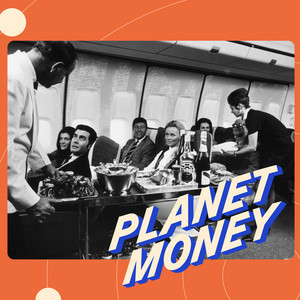
The exhibit here is what it was like to fly.
We met up with Bob Vanderlinden, a longtime curator at the Smithsonian Air and Space Museum in Washington, D .C.
And he's showing us an exhibit from the 50s and 60s, from what some people call the golden age of travel.
And the real star of this exhibit is a massive chunk of a decommissioned American Airlines plane from that time period.
So are we, are we allowed to, like, go on this thing?
Yes, you can. Oh, I thought we were just going to go right next to it.
Oh, no, no, no, no. I'm going to make some, make this fun for you.
Bob walks us up some stairs through a door and oh, my goodness.
Look at all the wood paneling.
Well, it's very fancy.
Oh, my. Wow. Wow. A few things really stand out to us.
Like the windows are huge and they're covered by these cloth embroidered curtains.
Oh, and the seats, Erica, the seats are so wide, like a fancy movie theater.
And they have this upholstery that we just, we can't stop rubbing up and down.
It's so unbelievable.
The armrests are wide enough that you could both actually put your elbows on them.
You could do some armrest sharing, I'm sure.
Here, actually, Bob, here, do it.
You want to test with me?
See if we can both, Harry, come on.
Let's see. I think we could...
Let me see. I'm seeing it.
Nudge you a little bit.
But it's not just that the planes were more spacious.
Back then, the airlines would go out of their way to compete with each other on amenities.
Right. Like the plane we were on, it had a lounge in the back.
You might get a six -course meal or a fancy cocktail included.
Plus all kinds of other perks, like custom playing cards delivered in a fancy case, Yeah.
And, you know, as we get into the 70s, the amenities got ridiculous.
Airlines even had meat carving stations.
So flight attendants would roll the meat right up to you and carve it up right there in front of you at your seat.
But perhaps the pinnacle of all amenities was...
They had a piano bar.
An honest to God piano. An honest to God piano. Yes, it was a lightweight piano. Still a piano. Which I understand sounded terrible.
But a piano bar on a plane, nonetheless.
Yes, and why? Why did all this seemingly great stuff, the piano bar, the meat carving station, the cigarettes and fancy cases, why did all this seemingly great stuff go away?
Hello and welcome to Planet Money.
I'm Erika Barris. And I'm Kenny Malone.
Most of the inconveniences that we think about when we fly can be traced back to this, like, one moment in American airline history when the industry was deregulated.
Today on the show, how flying went from a super luxurious experience to a bargain basement scramble.
We'll meet feuding CEOs who reshaped the entire airline industry into what we see today.
We've got the rise of the original budget airlines, one of the first frequent flyer programs, and we hear the case that flying is in some ways better than it's ever been.
Support for NPR and the following message come from LinkedIn ads.
One of the hardest parts about B2B marketing is reaching the right audience.
When you want to reach the right professionals, use LinkedIn ads.
LinkedIn has grown to a network of over 1 billion professionals.
Target buyers by job title, industry, company, role, seniority, skills, company revenue.
All the professionals you need to reach in one place.
Get a $100 credit on your next campaign.
Just go to linkedin .com slash money.
Terms and conditions apply only on LinkedIn ads.
This message comes from Capital One.
Your business requires commercial banking solutions that prioritize your long -term success.
With Capital One, get a full suite of financial products and services tailored to meet your needs today and goals for tomorrow.
Learn more at CapitalOne .com slash commercial.
Member FDIC. Today, we're exploring this thing that people always complain about, how flying used to be one way and how it is very different now.
Some would even say it is very bad.
But, but, look, there's a lot more to this.
It is, I might argue, more like an epic fable that is best told in five chapters, beginning with chapter one, the way things were.
As commercial flight became common in the late 1940s, the government was not so sure about this new technology.
The U .S. government wanted control of this emerging industry that seemed both scary but also incredibly useful.
So the government was very involved.
And this is what people refer to as the regulated era of air travel.
The government regulated how many national airline companies were allowed to exist, where they were allowed to fly, and also the government set the price on what those airlines could charge passengers.
But if that sounds, I don't know, incredibly annoying for air carriers, it actually wasn't.
No, no. For starters, the government subsidized some of these flights.
Plus, the existing national airlines were the airlines.
They did not have to worry about new competition.
But, you know, those companies were competing with each other.
And because these prices were regulated, the airlines had to compete on services.
Hence, you know, the piano bars, meat carving stations, etc. For customers, this obviously ruled if you could afford to fly.
Right. Flying back then was incredibly expensive.
Like, the regulated era of flying, it was for the rich, fancy folk.
It was very enamoring and it was exotic.
Don Burr grew up during this era and he was obsessed with the idea of flying.
You know, because it was pretty new and people who did fly were always kind of—it was kind of the jet set type stuff.
Don's family did not have airplane money.
Most families did not.
And when Don grew up, he decided he wanted to change how all of that worked.
Which brings us to chapter two of this story.
Deregulation cometh.
By the 1970s, Don was an executive at a small airline in Texas.
And he was convinced that all this regulation was generally bad for the everyday passenger.
in charge. Yeah, Don wondered what would happen if the government decided to get rid of all these interventions and release the airlines into the free market.
They would have to compete on prices for the first time.
Could it then be be cheap enough for everyone to fly?
And so in the mid 1970s, Don started to try and get lawmakers on board with this vision.
We went to Washington Washington repeatedly.
Oh, really? Yeah. Over and over and over to lobby people for deregulation.
We say, you know, it would make it so much easier to provide really good, solid transportation if we didn't have the heavy hand the government always telling us what we could and couldn't do.
So we lobbied and lobbied and lobbied.
And lobbied and lobbied and lobbied.
But this was a real battle.
Because remember, a lot of the players in the airline industry benefited from the current system.
The major airlines were opposed to deregulation because they were fearful that deregulation would let people like us fly competitively in their markets.
And there was one famously outspoken person fighting to keep things the way they were.
This guy named Bob Crandall.
Well, he was pretty much a character, Bob Crandall.
Crandall was an executive at American Airlines.
And like, just to let you know how seriously this guy wanted to keep things the way they were, we found this quote from him that I think we could barely even read on air, but give it a try, Erica.
Okay, yeah. Bob Crandall reportedly said, back in the 1970s to a Senate staffer, you beep an academic pinhead.
You don't know beep.
You can't deregulate this industry.
You're going to wreck it.
You don't know a beep thing.
Of course, Bob Crandall did not say beep.
He said other words there.
But look, the existing airlines were fighting an uphill battle on this because over a number of years, deregulation had actually become a consumer rights issue.
There was an economist named Alfred Kahn.
There was the Democratic Senator Ted Kennedy and famous consumer rights advocate Ralph Nader, all among those arguing that flying needed to be democratized.
Deregulation, they argued, would let more airline companies compete, which would mean lower fares and more options for customers, so more kinds of people could actually fly.
Now, to be clear, the government would still regulate safety stuff, plane standards, maintenance, licensing for pilots, that kind of thing.
Yeah. And in 1978, Congress overwhelmingly and bipartisanly voted to stop controlling fares and routes and let new companies into the national air carrier game.
It was a huge deal.
The president has a stack of bills from Congress to be signed, and one of them is very important to the airline companies.
The bill abolishes most of the federal regulations applied to airlines.
And this brings us to chapter three, the People's Airline.
Now, without the government regulating the market, new companies were allowed to try their hand at becoming a national airline.
One of the early newcomers was created by none other than the Texas airline executive who lobbied so hard for deregulation, Don Burr.
We were all about people.
So that's where our name came from, People Express.
gross. The idea was for People Express to keep costs so low that anyone could afford to fly on it.
A budget airline. First step, starting a new budget airline.
Where is the most budget place to operate the airline from?
One of Don's employees did some research and came back with the perfect spot, Newark, New Jersey.
And I said, what? Newark?
Wait a minute. That place is not doing very well.
There are more seagulls there than aircraft. But Newark was close to millions and millions of people and had an unused terminal.
We moved in what was called the old North Terminal, which is old, broken down, and that's what we moved into because it was cheap.
Next, Don went to Germany and bought three used Boeing 737 airplanes, and then he started changing those airplanes.
Out came the spacious first class seats, in went more regular people seats.
They also got rid of like the big old galley, the part of the plane where meal and drink carts sit, room for even more seats.
And they also changed the seat pitch, which, also known as, just shrink in the leg room.
And in the end, Don says, We took those planes from 90 seats to 118 seats.
30 % more plane seats.
More seats meant they could charge lower fares.
Don also wanted to experiment with what passengers would and would not be willing to pay for on these flights.
Our concept was everybody wants to get from A to B.
They don't go on an airplane to get food.
If you were hungry, they'd sell you something called a snack pack.
If you wanted to check a bag, they would charge you.
In other words, people express, kind of invented in the 1980s, the practice of charging us separately for every single part of the flying experience.
That sounds a lot like my airplane experience today.
Well, please don't compare us to spirit.
it. I have a feeling you probably get that a lot, huh?
Yeah. Yeah, we do, because we were the first airline to unbundle the product.
And the concept there is you pay for what you get.
So, when People Express opened up for air travel in 1981, the extras were à la carte, but the fares were extraordinarily low.
And the airline was an immediate hit.
People were excited because now all of a sudden people that rode buses, drove cars, etc. could get on a plane and go have dinner somewhere for $19.
The cost of everything is going up.
But thanks to People Express Airlines, the cost of going up is going down.
People Express, they grew and grew and soon they were the fifth biggest airline.
Don thought those old legacy airlines didn't care what he was doing because he was going for customers that they hadn't dreamed existed or really cared about.
But those airlines did care a lot, including American Airlines.
Which brings us to Chapter 4.
American Airlines strikes back or you beep in academic pinheads, you don't know beep.
You may recall the sometimes foul -mouthed American Airlines executive who was fighting deregulation.
Well, Don gets word that that guy has been talking about Don's airline, People Express.
Bob Crandall's quoted saying, we're going to kill People Express.
We're going to put them right out of business.
And that was really, yeah, that was at our peak kind of growth, expansion, excitement.
What did you think when you saw that?
I thought he was great.
He said he's going to put us right out of business.
So I thought, no, how's he going to do that?
Now, we figured we needed to hear what this battle was like for American Airlines straight from the source.
My name is Robert Crandall.
I was president, chairman and chief executive officer of American Airlines from 1985 to 1998.
That seems like a very big deal.
Yeah, I thought it was a big deal.
Yep. Bob Crandall himself.
And he says you better believe he was paying attention to this new competition.
He was like, we can take a page from their cost -cutting playbook, but we can do it better.
We started selling half the seats on every flight for the same price that People Express was charging.
You're kidding. So you were just going right head -to -head with them.
Well, of course. Let the cost cutting begin.
Bob looked at how he could further shave costs off of the American Airlines experience.
And some of these changes seemed relatively small.
Like at one point, Bob realized that if he eliminated one olive from their onboard salad, it would save the airline $40 ,000 a year.
So, bam, he did that.
There's no magic to cost cutting, kiddo.
You simply go through every line item on the budget.
Did anyone miss the olive?
I don't think so. Well, it depends how much you like olives.
Kiddos. But it wasn't just cost -cutting.
Under Bob, American Airlines also started doing these innovations to also try to be more efficient.
So he hired a team of mathematicians to figure out exactly how many people they needed at every airport, every minute of the day.
He adopted this emerging system called hub and spoke, where the airline flies passengers in from all over to a single hub, then scrambles them up into other planes, which does mean fuller planes for the airline, but more transfers for passengers.
He also set up the very first successful frequent flyer mile system.
The purpose was to induce everybody that took a trip to take every trip on America because they wanted the miles.
Yeah, building brand loyalty and tying it to other incentives.
But the biggest innovation was this system.
It sort of seems obvious now.
But in the past, everyone used to pay the same prices for tickets.
But under a new thing implemented by Bob, the ticket prices would vary based on lots of things, including how far in advance a customer booked a flight.
Was this your idea?
Yes. That was my individual idea.
idea. It didn't make any sense to sell everything for a fixed price.
As Bob is working on all of this, Don is trying to keep growing his new bare bones budget airline, People Express.
But they are not varying ticket price.
They don't do hub and spoke.
And they don't have a frequent flyer mile program.
And Don remembers specifically the moment American Airlines took a shot at People Express.
American takes out double spread ads in papers all over the country saying you no longer have to buy on People Express.
They instantly in that ad were advertising prices at or below ours in all the markets we were in.
And not just that. People on American would still get some perks, you know, meals, checked bags and and all those bells and whistles and customers.
Customers, they do what they do.
They went for the prices American was offering.
Over at People Express, Don remembers the moment he knew he was in trouble.
When my mother called me and said she was taking American somewhere for Thanksgiving, I thought, oh man, that really tells you where we're at.
Your own mother. Yeah, my own mother, yeah.
So, she says she got a better price on American.
Not great for Don. But great for passengers.
Great for Dawn's mom.
Great for Dawn's mom.
Yes, good for her. Now, this moment in travel where prices were coming down, but, like, perks were not entirely disappearing, it was an important moment.
And sure, an olive was disappearing here and there, but people were still getting a salad.
Heck, even budget old People Express had buttery soft leather seats.
Like, that's what budget was like then.
This is when flying hit the sweet spot for passengers, but it wouldn't last. Why?
That is after the break.
Empower your wins at dell .com slash win.
Okay, so at one point after deregulation, we apparently had it all.
Fares were lowering, passengers still got perks.
Yeah, not piano bars or whatever, but they still got good service.
There were still some amenities.
Yeah, which brings us to our final chapter, the modern flight experience.
The aircraft isn't at the gate when it's supposed to be on the gate.
So the departure time gets pushed back.
This is MIT economist Nancy Rose.
She spent decades studying how the airline industry works and doesn't work.
And then they have to get a new crew to fly.
And, you know, by the time I finally get on the plane and it wasn't cleaned appropriately and they took my bag from me because I couldn't put it in the overhead, when I go to the baggage claim, it's not there.
Sounds like we've been on the same flight.
That's me every time.
Now, obviously, there are things outside of the control of airlines.
Security protocols, air traffic infrastructure, weather.
But a lot of the modern headaches have to do with the changes that happened in the aftermath of deregulation.
By the mid -1980s, all the old airlines were trying to compete with the upstarts like People Express.
But it didn't last, because the big, established legacy airlines simply had deeper pockets.
The upstarts couldn't keep up with the competition, and eventually… What you saw in the kind of mid to late 80s was emerging consolidation, where many of these entrants either failed or were acquired by existing carriers.
Yeah, in just a few years, there were more than a dozen mergers, including People Express.
People Express became part of Continental, which then became part of United.
You know, it was a period where the Department of Transportation, rather than the Department of Justice, the antitrust division, had authority over mergers.
And I'd like to say the DOT never saw an airline merger it didn't like.
Deregulation was supposed to increase the number of players in the field.
But today, there are actually fewer national airlines than there were before deregulation.
American, United, Delta, Southwest own nearly 70 percent of the market.
And we should mention that Delta has been a sponsor of NPR.
And even though the airlines technically compete with each other, there is this feeling that they don't really compete, that the major airlines don't really lower prices, they don't really enter each other's markets, not in a competitive way, at least. It's this understanding of our mutual interdependence and this sense that, you know, if I soften my competition, you'll soften yours and we'll all be able to charge higher prices.
Higher prices. However, Nancy says, the big thing that keeps prices low is a second wave of budget and low -cost airlines that started growing in the 2000s, like Spirit and JetBlue.
We need these kind of smaller carriers who want to grow, who want to go in and take share from the majors because they're the ones that are keeping the price pressure on.
Yeah, love it or hate it, Spirit and Allegiant and Frontier are part of the reason flight prices are so low.
Tickets cost about half as much today as they did in 1980, adjusted for inflation.
And in fact, that has created problems of its own.
More people fly than ever, which creates some of the logistics problems we complain about, not to mention carbon emissions.
But if part of the original idea of deregulation was to democratize flying, that part has worked.
Now, almost 90 percent of Americans have flown.
And probably an equal percentage of us have complained about how flying isn't a luxury anymore.
But, but, Erica, perhaps that is more on us.
In theory, I want to sit on a plane with a piano bar.
But the reality is I do not want to spend piano bar money.
I want to just get on a plane and spend as little as possible and get to where I want to go.
I think that is exactly the point, Erica.
So I'm the problem.
Or the solution. I think there are just a lot of air travelers who value the ability to get to a destination quickly but don't value all the perks that, you know, you might have had before.
So in the end, we have fewer national airlines than we had before deregulation.
but prices are lower and more of us fly.
So we went back to Don and asked him, is this the future you imagined pre deregulation?
On the basis of the care and feeding of you when you're trying to make a very complicated, difficult, stressful trip, it's not nowhere near what it used to be.
But I think in terms of the cost of the ticket between A and B, you never had it so good.
you can get all over the world for people expressed prices now and so at that on that basis it's great you know erica we said at the beginning that that this was like an epic fable and and fables are supposed to have a moral at the end and i don't know it it does seem more nuanced than just careful what you wish for or something like that yeah maybe this is a bigger moral about the trade -offs that come with the economy as a whole.
Like, we embrace an ethos of deregulation.
It meant that things became cheaper.
And also, then, they started to feel cheaper.
That is the trade -off.
Yes, but, but think of what was gained.
We all have something to complain about now.
Next week, Planet Money Summer School is back in session.
We are going to take you on a wild ride through the economic history of the world, from ancient civilizations to the birth of the modern economy.
And we'll start with the deepest question of all.
What is money? Money is mysterious.
Money is mysterious.
Money works best, I think, if we don't actually think about why it's working.
If we all sort of stopped and thought about, hold on, what are we doing here?
The whole thing would just kind of come crashing down around our heads.
Watch out for falling knowledge.
Grab your hard hats and your notebooks.
New economic history lessons every Wednesday until Labor Day.
This episode was produced by Emma Peasley with an assist from James Sneed, and it was edited by Emily Siner.
Sophia Shukana helped with recording, engineering by Gilly Moon.
Alex Goldmark is our executive producer.
A very, very, very special thanks this week to Janet Bednarik, Henry Hartevelt, Carrie Tan, and Ganesh Cicharaman.
I'm Erica Barris. I'm Kenny Malone.
This is NPR. Thanks for listening.
This message comes from NPR sponsor Informatica.
Everybody's ready for AI except your data.
Informatica offers the only end -to -end AI -powered platform that connects, manages, and unifies your data across virtually any multi -cloud hybrid environment.
Informatica accelerates your AI readiness and scale at a pace that allows you to pay for only what you use without compromise.
Get your data ready for AI at informatica .com slash AI.
Informatica, where data and AI come to life.
This message comes from NPR sponsor Shopify, the commerce platform behind millions of businesses around the world and 10 % of all e -commerce in the U .S. Get started with your own design studio.
Sign up for your $1 per month trial at shopify .com slash NPR.