We're looking at two economies struggling from the effects of war.
I can't afford going to the restaurants as often as I used to.
It's World Business Report from the BBC World Service.
I'm Rahul Tandon.
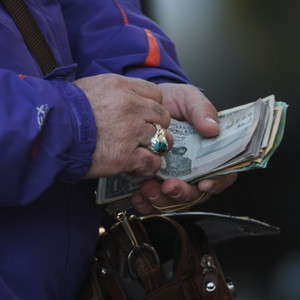
Syria has introduced new banknotes.
Russia has increased taxes.
But is that enough to boost their economies?
And we'll hear from a key advisor to New York's new mayor.
Is he really going to be able to tax the rich?
We'll take you to New York in about 10 minutes time.
But let's start in Syria, with the moment that the country unveiled new currency notes which it's hoped will help restore faith in its beleaguered economy.
Those notes actually came into circulation on the 1st of January and they will replace the notes that have been in circulation under the Assad regime.
The new banknotes feature pictures of farm products grown in Syria, such as roses, wheat and olives.
They may look better, but the value of the Syrian pound has plunged since the start of the civil war in 2011.
Our international editor Jeremy Bowen says the lack of money is a huge challenge for the economy.
They don't have to live in fear.
They can try and sort things out a bit, go back to where they've been staying, try and prepare for the final big move.
But it still looks war-torn, I have to say.
While they have made a lot of progress since the Assad regime fell, the fact is there is a huge lack of money.
And I spoke to a man who had been a commander and he said the rebuilding that's been done has been done by individuals, by families themselves.
Along with the new bank note, two zeros will be cut from the face value of the previous note.
So an old 1,000 Syrian pound note becomes 10 pounds.
But how will this change things for the economy?
Najee Choy is the chair of the Syrian International Chamber of Commerce.
My personal view about it.
During the last few years of the Assad regime, there were a lot of money being printed and put on the market because every end of the month the dollar used to jump, you know, because no one trusted the Syrian currency.
And in fact I've heard it several times from people saying that they don't know the quantity of Syrian money which has been printed previously.
So, in fact, the change in the currency is going first of all, to give more control to the Central Bank of Syria about the quantity of money which is really on the market, because they control it.
That is important.
Then why such a long transition?
Wouldn't it have been best to almost say, look, we're going to do this much quicker than 90 days?
I think they need sometimes to get used to it.
It's quite common to give time for people to change their money.
It is common, but other countries have done it overnight.
India did it, didn't they, when they demonetized and brought in a new currency.
So it is possible to do it more quickly.
It is possible, but I think they wanted to give a certain period of adaptation to people.
I don't know why they gave three months so far, actually.
You made a very good point there about the huge amount of money in circulation.
And many of us have seen those pictures, haven't we?
Of Syrians carrying bags full of cash because the currency has devalued so much in the last few years.
How will this change that?
Won't it be that people will still trust the dollar, the US dollar, more than their local currency?
Let's put it this way.
In the last few months, I think, or even since the revolution has started, we practically had two currencies in the market.
You know that for sometimes people were not able to withdraw money from the banks.
And the market.
The cash market was more moving towards dollars because it became too much to carry all this money.
Will this help draw money into Syria, do you think?
Will there be more faith in the banking system there?
Yes, I think so.
I mean, the banking system in Syria has never been such a big banking system.
However, it represents, let's say, a starting point for big banks when they want to come.
The size of investment required in Syria are huge.
And I don't think the local banks could be could give the answer for it.
But if the economy is going to develop and if Syrians outside and there are many of them still want to put their money back into the country, they have to have faith in the currency, don't they?
They do.
In my own opinion, a lot of people for a certain period of time are going to keep dollars, you know.
And that's the problem.
How do you change that?
I mean, changing the currency will help a little bit but, as you've admitted there, a lot of people will still keep dollars.
Yes and no, because at the end of the day, all people are going to get their salary in Syrian pound, even the private sector, whatever you agree with your employee on a level, but you are paying him in Syrian currency.
And after.
We shouldn't forget that we have a lot of Syrian diaspora who are now sending their money through a kind of semi-official channel, which didn't happen before.
Give us an oversight, as somebody who is in touch with many people inside Syria, of where you think the economy is at this point in time and how big the challenge lies ahead to rebuild it still.
2025 was very difficult for everybody.
People.
They didn't have enough money, so power of spending was very limited and However, with the government starting to increase the salary of the public sector, you know that they have doubled the salary and certain position in the government has been multiplied by three and four.
They are better positioned.
So the wheel started to move, perhaps not at the speed we expected it to happen.
That interview with Najib got us thinking about countries rebuilding their economies after a war or when they're during a war.
We're going to focus on Russia in a few minutes' time.
What is the best course of action to get that economy growing again?
That's something I put to Ryan Finity, America's defense reporter for Flight Global.
The number one lesson from economics history modern economics history anyway is that the countries that thrive are the ones that invest in their people, in their population.
Looking kind of in the post-war period around the world, the countries that have recovered well were not primarily focused on exporting natural resources.
These are all countries that chose to invest in high-skill manufacturing, technical research, developing kind of value-added sectors to the economy, investing in education for their people healthcare, improving Living conditions, you know, sanitation and basic infrastructure.
Those are kind of the things that underpin any successful economy.
Picking up on that point.
When you say a country, as it comes out of a war, needs to invest in its people and you gave some good examples there the difficulty is sometimes access to those funds.
And that's going to be the problem for Syria, isn't it?
Getting access to the capital it needs for the investment that you're talking about.
But I think Syria does have a couple of advantages in that regard.
They do have oil reserves.
So that's an easy source of hard currency coming in, whether you use that to invest in rebuilding Syria infrastructure housing, power generation, sanitation or you use it more as a hard currency reserve to backstop your new domestic currency.
You know, those are both avenues that the government could pursue using oil money.
I think maybe even more importantly than oil revenue because there's plenty of oil rich countries that are poor and politically dysfunctional is that Syria does seem to have some powerful allies now, namely the United States.
We just saw in November the Syrian president was in the White House visiting Donald Trump.
That's a very powerful friend to have when it comes to getting any kind of economic political security support.
We're going to hear from Russia in a minute or so.
But I want to get your thoughts on that.
We talked about Syria country trying to rebuild its economy after coming out of a civil war.
Russia is still involved in a war.
And that is a problem for economies as well, because it's a big drain on an economy.
So often they need to raise taxes, don't they?
To try and keep the money flowing in for the war effort.
Yeah, I mean, wars are famously a boom for economies as well, right?
Like, Wars are not necessarily bad for the economy, but there are some serious structural headwinds that Russia's dealing with.
Obviously, the depletion of your working-age population is a problem.
There's also this kind of interesting phenomenon called Dutch disease, where if you have a really lucrative single industry in an economy it sort of attracts all of the resources and the labor and the investment to the detriment of the rest of the economy.
And if that goes on for long enough, you basically become uncompetitive and unviable in every other sector.
And Russia has that with its defense industry.
Let's pick up on some of those points that Ryan has made there, because it's nearly four years since Russia invaded Ukraine.
We, of course, have followed the economies of both countries closely here on Well Business Report.
As you'd expect during a walk there's been a significant increase in defence spending.
In Russia.
That's put pressure on the economy, which is dealing with rising inflation, seeing prices rise for businesses and consumers.
Indeed, the prices have been growing in Moscow recently.
I'm talking about restaurants and bars.
Sometimes the portions are growing smaller.
For example, the sausages have become 20% smaller for one brand.
It's totally outrageous.
I can't afford going to the restaurants as often as I used to.
I stopped buying takeaway coffee because it's quite expensive now.
And I spent 25% more at the beauty salon for my haircut and highlights this September.
So those people not happy there.
One way Moscow is looking to bring in more money is through increasing tax, specifically value-added tax or VAT.
That rose by 2% today, the 1st of January.
The BBC's Victoria Holland has been looking at this tax and also speaking with businesses.
On one hand, the country is facing high prices on imports for many items white goods, spare parts for cars, clothes and gadgets.
And, on the other hand, the economy, despite the sanctions, was showing economic growth, mostly by military spending, of course, high energy prices and, in some cases, a successful reconfiguration of disrupted supply chains.
Inflation figures were high, peaking at 104 in March, but it's slowing down to below 6 in December.
The central bank has cut the K rate from 20% to 16% to try encourage spending.
So it looks like the inflation is slowing down, but in reality the cost of living and sanctions is hitting many people.
Victoria, you are obviously from Russia.
You spend a lot of time speaking to people in Russia and you travel to Russia as well.
Tell us what you're hearing, what you saw last time you were there.
During my last trip in Moscow, I noticed that prices in supermarket increased.
The simple food basket which I usually buy in my local supermarket it's like milk vegetables, bread and chicken cost me three times more than it was before.
And it was surprising.
When I took it to my friends, to my father, they all noticed it.
So as you're saying there, people already struggling.
Now we have these extra taxes, which is going to make life even harder for them.
Tell us a bit more about these taxes.
Yes basically, this will boost price rises on most goods and services and leave ordinary Russians out of pocket.
Some economists say the rise of VAT will give the Russian Treasury an extra 1 trillion rubles, over 10 billion each year.
But most businesses, including restaurants or hair salons, will pass the tax hikes directly on the consumers customers who are already stretched due to the surge in inflation.
I've talked to Pavel Kostyrenko, a Russian restaurant owner from Moscow.
The result is obvious.
The result is clear.
Restaurants won't see increased profits.
On the contrary, their margins will be eroded.
Currently, a lot of restaurants are already closed for good.
And it's not just newcomers closing, but the city's super-restaurateurs with restaurants in prime locations across the capital.
No one wants to raise prices and pay ridiculous rents, but that's the mood everyone's in.
Fascinating to hear what Pavel was saying there, but he's not the only business that you've been speaking to.
Tell us who else you've been talking to.
Yes, I was talking to Lialia Sadykova.
She's a president of Beauty Industry Association.
She mentioned me that in private social media groups many business owners said they are planning to close or sell the business.
First of all, it's important to understand that 70 of businesses will have to deal with new tax limits, meaning the tax rate will increase, depending on the region, from 30 to 80 times.
For our business, this is a complete disaster.
According to our latest survey, about 40 of business owners have already put their business up for sale and leave the market because they won't be able to pay rent.
Clearly very difficult times.
So we've got this VAT increase now.
Why are we seeing it now?
It seems the easiest way to fill up a hole in the budget is to increase taxes.
In this case, VAT.
Yep, that is what has happened in Russia at the start of the new year.
World Business Report's Victoria Holland there bringing us some voices that you rarely get to hear.
You are with World Business Report and the BBC World Service.
The start of a new year and the start of a new era for New York City because it has a new mayor.
My fellow New Yorkers.
Today begins a new era.
I stand before you, moved by the privilege of taking this sacred oath, humbled by the faith that you have placed in me.
That was Zoran Mamdani, eloquent as ever, addressing New Yorkers for the first time as the city's 112th mayor at his inauguration a few hours ago.
But not everyone is a fan.
Steve is a New Yorker who spoke earlier today to the BBC World Service.
He's the first communist mayor that we're going to have.
We'll see how we'll do.
A lot of younger people are excited about him, right, where he's promised free buses and low rents.
But he's going to have to start to govern, right?
The promises always sound easier than the actual delivering.
So we're going to see.
Patrick Gaspard is an advisor to Zoran Mamdani and is a member of his inaugural committee.
And I'm delighted to say he joins us now.
Patrick.
Fair to say, there was a huge amount of excitement in New York following the election of Zoran Mamdani.
I'm sure you've experienced that as well.
And a lot of it is about affordability, isn't it?
Well, thanks for having me on.
Happy New Year to you and your audience.
A lot of it is certainly about affordability, but it's also about belonging.
I was there today, freezing amongst tens of thousands of New Yorkers who came out to express themselves, not to just hear the new mayor, but to express themselves, their aspirations, their hopes for their community and for their city and for their nation as well, and to be heard and to feel absolutely seen, as they are, at a time when our federal government poses a real threat to hardworking immigrants and where the cost of living has really run away from average families.
So lots of hope out there today.
But the real work has already started, with the new mayor signing aggressive executive orders on affordable housing.
And standing up a task force that will protect tenants on day one.
So, you know, there's the old saying that you campaign in poetry and you govern in prose.
I think that this new mayor is already governing with the jackhammer of democracy.
Well, let us see how that prose is.
I mean, I'm sure the federal government, Donald Trump would say when it comes to the measures he's taking on immigration, he's removing people who shouldn't be in the country.
Can you for our listeners, Patrick?
My nephew was just over from New York and he was telling me about the affordability problems that many people are facing there.
Just sum it up for you.
How difficult is it for some people in New York?
You know, I think it's incredibly difficult for many people in America now.
I would take you back to the pandemic, which in many instances was the great reveal.
We had people who were firmly in the middle class who suddenly were seen to be incredibly precarious.
Food insecurity became a real issue.
Housing always an issue.
And the inability to have social mobility, which was acute before the pandemic occurred, was really exposed in extraordinary ways during it.
We are still in a post pandemic United States, post pandemic world.
There are temporary stopgap measures that all of our governments put in place to help with recovery.
But we have not done the things to move from recovery to true resilience.
So if you're a New Yorker, You're spending a great percentage of your income on housing that in some instances, can be substandard and not putting you in a position to have any equity in this society.
There are too many young people who can't move out of their parents' homes to go start their own families.
And many others who are on the outside looking into the space of true opportunity to gain jobs, that where you can get a living wage.
So all of that is present.
Yeah, it's very difficult.
One of the problems facing the mayor is how much power does he actually have to bring in some of those changes that you're talking about?
Patrick, have a listen to this.
This is Joe Anuta, senior reporter at Politico.
You know, a lot of his stuff, unfortunately for him, is decided in the state.
So it's really this is going to come down to how good his politics are dealing with the governor and the state legislature.
And he's got to do this immediately.
The budget starts this spring.
And if he doesn't get some sort of chunk of success, he's going to wait a whole year for another bite at it.
And that is one of the big challenges.
Not everything is under his control here.
Yeah, but you know something?
Not only does the mayor understand that, but the well over 1 million New Yorkers who voted for him understand that as well.
But will they be patient?
They understand it now, but if they don't see change, you know what it's like.
Well yeah, i know.
Look, i've worked in local government, i've worked in federal government, i've worked in international spaces and yes, there's a, there's a pace of change that people are always impatient for.
But there's also a savvy and a sophistication that exists amongst our voters that we just don't give them enough credit for.
I will tell you, standing out there today and hearing the chants going down the canyon of heroes on Broadway every single time there was mention of affordability, and to hear that crowd saying tax the rich because they feel that we live in a moment where we don't have a more broadly shared prosperity in our society.
The governor of New York, Kathy Hochul, who is a very, very savvy leader, was there today, present.
She's formed a partnership with the new mayor of New York and I expect that they'll work together at the hip to take on these challenges in housing and public transportation and in child care as well.
Child care is something that is not enough attention is paid to in the UK or in the United States.
And being able to increase the capacity of average families to get that care will will change workforce penetration issues for men and women alike.
It's a big deal.
It is a big deal.
Patrick, go and get a bit warmer.
Thank you so much for joining us from the cold of New York there and industries in the likes of Cincinnati, Ohio and Knoxville Tennessee.
Over the last year, our North America technology correspondent, Lily Jamali, has been looking into these efforts to spread the wealth, starting where we were just talking about, in New York State.
Buffalo is one of these emerging hubs that is cited by the Brookings Institution in their report.
It's a Rust Belt city.
They're trying to revive the local economy, and they see tech as one way to do that.
I spoke with Daphne Pariser, who has started a company there called Huron AI.
Her company is one of five startups that got a million dollars through technology, something called 43 North.
This is a tech incubator in Buffalo.
The state of New York is their main financial backer.
So what her company does is they take data that companies already have, helps them digitize it if it's not done so yet, if it's on paper, for example.
And then she helps them pull useful analytics from that data.
So this is her second company.
She's told me she has spent time in San Francisco mostly to raise money, but that there's something to be said for being a bigger fish in a smaller pond.
So her incubator has given her a lot of support and almost immediately got her plugged into a community of mentors and potentially customers.
Here's what she told me being able to have really significant personal connections to some of these companies that hopefully we'll end up partnering with and could help us in our trajectory long term, I think, is for me one of the huge highlights of being here.
And when you talk there about these tech incubators, it's really interesting to hear what she had to say there.
Just explain to our listeners what they are, because they have been crucial, haven't they, for the tech industry, not just with AI.
But they predate AI, don't they?
That's right.
I mean, a lot of places have them and they offer support to these emerging startups.
And one of the things that the researchers at Brookings talked about in their report on the geography of AI is how important it is for these emerging hubs, these cities interested in growing their tech ecosystem, to create a foundation for these founders, these incubator programs.
Admittedly, they can be hard to scale up, but they are definitely useful for places like Buffalo.
So when I visited 43 North the incubator in Buffalo, it was a very welcoming place in an albeit very cold city, at least when I was visiting.
I watched a training session for these incoming founders, two of which are AI startups.
They offer marketing support.
They Already.
Dr Pariser's company has already hired at least four people from the city of Buffalo, including a couple of programs programmers from the major university in town, the University of Buffalo.
And on top of that, Christian Gaddis from 43 North told me it's a priority to also make incoming founders feel at home.
Here's what he told me.
We also kind of introduced them to Buffalo with a few quality of life events, showing them that we're really more than chicken wings and snow.
So hopefully they fall in love with Buffalo and they want to grow their team here and they have a presence here in the future.
So that regional development is really important.
But let's be honest about this, Lily.
It's going to be difficult to move away from San Francisco and Silicon Valley.
It's unlikely we're going to be talking to Lily Jamali based in Buffalo, isn't it?
I think that's fair to say.
You know, San Francisco and Silicon Valley are still where it's at.
It's where the big money is.
It's where people come to raise money, including Dr. Pariser, who we heard from.
And it's where so much of the talent that wants to either work in AI or start their own companies flock to.
San Francisco.
We've been hearing this sort of negative narrative about the city for a couple of years now.
They have a new mayor now, Daniel Lurie, who is very much embraced by the tech community.
And people who work in the business want All these people to come to the city.
They have this little neighborhood that they call Cerebral Valley that they are sort of building out as an AI hub within the city.
It's a lot of fun, great places to eat, grab coffee and work.
And they're doing everything they can to keep that talent here and draw even more talent from all around the world.
Lily Jamali there, the 1st of January, 2026, talking about AI.
I have a feeling we talked about it a lot, didn't we?
During 2025, it is going to be one of our central themes this year as well.
That is it for the first edition of World Business Report in 2026.