care, health care. Adrian, pretty much everyone agrees, it's not going well.
US healthcare outcomes often rank near the bottom.
And of course, there have been a lot of attempts to fix this a lot of politicians proposing to overhaul the system, we should emulate what goes on around the rest of the world and guarantee healthcare to all people.
And there have also been a lot of criticisms of those attempts.
Congressional Democrats embrace crazy Bernie's socialist healthcare takeover.
That particular rhetoric, basically calling these healthcare plans socialism, it really takes off at a particular historical moment back in the 1940s.
That's right. This is the indicator from Planet Money.
I'm Adrian Ma, and we today includes a friend of the show, Sally Helm.
Hello, Adrian. I am very glad to be here.
Today on the show, we speak with a doctor and economist who's researched this history about how doctors actually helped tank single -payer health care in the 1940s and the role communism played in the fight.
$75 sponsor job credit now at Indeed .com slash indicator terms and conditions apply.
This message comes from inSperity providing HR services and technology from payroll benefits and HR compliance to talent development.
Learn more at inSperity .com slash HR Matters.
In the fall of 1944, California governor Earl Warren comes down with a kidney infection.
He's hospitalized and while he's recuperating.
he starts reflecting on just how much this treatment cost. And it cost a lot.
Marcella Alshan is an economist at Harvard and a physician herself.
She has a working paper on this.
The motivation behind Earl Warren's interest in this is much more direct, related to his own medical care issue with the kidney infection and not really realizing the high cost of medical care up until that point.
At this time, most Americans do not have health care.
They just pay for medical costs to out -of -pocket.
But now, Warren is on a personal mission to change the whole system.
In his State of the State address the following January, he announces California will be creating its own compulsory health insurance plan.
And you know who is not wild about this?
Doctors. Doctors! They're worried about being told how they can treat patients.
And they're also worried about their paychecks.
Yet in the first half of the 20th century, medicine changed a lot.
In the old days, your local doctor kind of just did everything, but medical knowledge has expanded and specialties have emerged.
And so you have the rise of the specialists.
We see their wages, their incomes rise.
Which makes sense. I mean, these specialists have really valuable skills and knowledge.
But now doctors don't want to lose that money.
And, so, they fight back… through an interest group, the California Medical Association.
These California doctors enlist the help of a company called Campaigns, Inc.
Essentially, it's the first political consulting firm in the country.
They were a husband -wife team.
Clem Whitaker Jr. and Leon Baxter.
She was a young widow who worked at the Chamber of Commerce at a local municipality.
Clem was a kind of fast -talking journalist type who'd become an atman.
Leon had been working for the Reading, California Chamber of Commerce promoting something called a water carnival.
And yet she is destined for even bigger things if that were possible.
She and Clem first end up working together on a campaign about a major public works project in California.
And by the time California Governor Earl Warren proposes his new health care law, Whitaker and Baxter are hitting their stride.
Through their various campaigns in the 1930s and 40s, they've developed a philosophy.
People do not want to think.
The quote is the average American doesn't want to be educated.
But there are ways you can interest him in a campaign that we have ever found successful.
You can put up a fight or you can put up a show.
So Whitaker and Baxter, they put up a show.
And when the California Medical Association comes to them and says, can you help us defeat this bill, they say, oh yeah.
And they kind of have an extra reason to do so.
They kind of had a little vendetta against Earl Warren.
He had used them briefly in his campaign for governor and then was turned off by some of their tactics and released them.
Yeah. Whitaker and Baxter could be pretty cutthroat.
And when it comes time to take down Earl Warren's health care bill, they give it their all.
They buy ads in more than 400 newspapers pushing against the state insurance plan proposal.
They also create pre -written postcards constituents can send to their representatives.
The postcards read, certainly we don't want to be forced to go to a state doctor.
That system is, quote, part and parcel of what our boys are fighting overseas.
In 1945, Earl Warren's bill fails by one vote.
This is a big victory for Whittaker and Baxter, but an even bigger fight is still ahead.
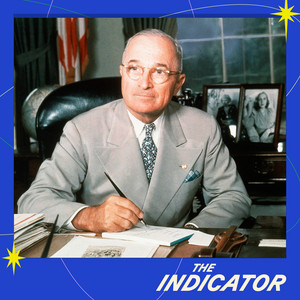
In 1948, Harry Truman is elected president.
And for the American Medical Association, this victory is a real problem.
It's a self -described Armageddon moment.
It's described in that way by the AMA president.
Because Truman has made it clear he wants government -sponsored health insurance for all.
At this point, 1948, America's closest ally, Great Britain, has just put something like this in place, the National Health Service, and Americans seem to want something similar.
When Truman first proposes this plan, it has a 60 % approval rating.
But the American Medical Association, they're ready to fight back.
And they actually take a page from California's playbook.
They hire Whitaker and Baxter.
This time for a national campaign.
Based on their own stated playbook, they're not about informing individuals.
They're going to go out and say, national health insurance, or as they call it, compulsory health insurance, is socialism.
Remember, this is right at the beginning of the Cold War, and fears of communism are really taking root in the American psyche.
So Whitaker and Baxter use this to their advantage.
They're successfully tying this health care fight to this huge ideological fight taking place across the country, making this all about freedom.
Yeah, during this campaign, Clem Whitaker tells a conference of 200 doctors, compulsory health insurance will mark the beginning of the end of free institutions in America.
Those doctors carry that message on to their patients.
The idea here is, if doctors can sell private insurance approved by the AMA, then their patients won't want Truman's Option, the national health insurance.
And remember, the whole idea of health insurance is still relatively new.
So doctors are selling to new customers, handing out pamphlets produced by Whitaker and Baxter to try to get patients to buy in.
One pamphlet is titled, The Voluntary Way is the American Way.
There's a giant bald eagle on the front.
Gotta have the eagle and the menacing slogans, you know, a message from your doctor if you want to protect yourself and your family and liberty.
Read inside this indictment of socialized medicine.
The basic tactic? Fear.
Fear is going to move people away from state -sponsored health insurance and going to increase take -up of this substitute private health insurance.
And, according to Marcella's research, it works.
She finds that exposure to the campaign made people more likely to sign up for private insurance.
And in the face of all this lobbying, the White House basically has no effective way to fight back.
Truman's proposal never even made it to a vote.
At the end of his presidency, approval of his health care plan had dwindled to just 24 percent.
Over the following decades, the AMA continues to oppose single -payer health care.
But whether doctors support it is another story.
Back in the 50s, the AMA represented about 75 % of America's doctors.
Today, it's more like 15 % of practicing physicians.
By the way, Marcella Al Sean, she is one of them, she's a member of the AMA.
And some surveys suggest a lot of American doctors today actually support single -payer healthcare.
One survey a few years back put the number at two -thirds.
So we asked the AMA for their current stance on single payer And they told us one of their guiding principles is that concentration of market power is bad for doctors and patients.
So they oppose it. And, the terms freedom of practice and freedom of choice still appear in AMA literature.
Just like Whitaker and Baxter would have wanted.
Sally, thank you so much for bringing us this story.
Adrienne, it is my pleasure.
You can hear more stories like this on Sally's podcast, History This Week, from the History channel.
We'll leave a link in the show notes.