Discussion keeps the world turning.
This is Roundtable.
You're tuned in to Roundtable.
I'm Steve Hatherly.
Today with Xingyu and Yushan.
Coming up.
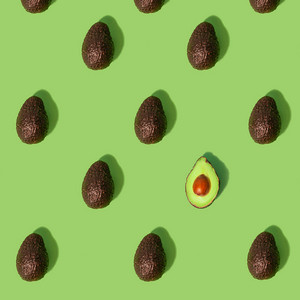
Remember when buying a perfect avocado was a special treat?
Something you'd maybe splurge on for a fancy brunch?
Well, get ready, the whole idea is getting a software update.
Across China, what people are calling fruit freedom is happening.
We're seeing once-luxury fruits become everyday staples.
We'll learn what's going on.
After that, also, do you remember when KTV was just about singing?
Not anymore.
Now it's where you can go for a serious meal.
As often As workers swap street food for private rooms, KTV's menu has become the main event.
But as the line between concert and cuisine vanishes, what's new on the menu?
And can this reinvented business model survive its own identity crisis?
Our podcast listeners, that's you, can find us at Roundtable China on Apple Podcasts.
And don't forget, we love to hear from you.
We love to hear your voice.
So send your voice notes our way with your thoughts on any of the things that we discuss here on our humble program.
Roundtable Podcast at QQ.com.
Once again, Roundtable Podcast at QQ.com.
And now...
There was a time when an avocado in your shopping cart or a box of blueberries felt luxurious.
It felt like a day at the grocery market spa.
Those days are fading.
And that's a good thing.
As China's agricultural sector continues to upgrade, netizens are calling it fruit freedom.
And it's becoming real.
Once pricey fruits are turning into everyday domestically grown treats.
And behind this change is a major price reshuffle powered by smarter tech, wider distribution networks and a booming digital supply chain.
What does it mean for us when we go to the shopping market and what does it mean for China's broader food economy?
Let's start with this.
What is fruit freedom?
That's a fun term.
In simpler terms, that means you can spend much less than you expect or than previously to get fruits that used to cost a lot more.
That's fruit freedom.
I think it first emerged, or rather it first got so popular when the Chilean cherries got kind of freed from the high label price tags, in the sense That people can buy them with almost half the price, because previously a box can cost a few hundred.
Yeah, like $200, $300.
Yeah, $200, $300.
It's like $30 to $40, $45.
Something like that.
And then two winters ago, all of a sudden you can get it within $100.
So that's how big of a difference.
About $14.
And my personal very keen observation, very recent observation, would be that I buy a lot of avocados.
First of all,
And those imported ones nowadays, if you find on Taobao and other online shopping, platforms.
The imported ones would usually cost you 60 to 70 yuan.
That's roughly $10, a bit less than that.
For one?
No, no, no.
For like four, five avocados.
And then for domesticated... I had a mini heart attack there.
I thought we were paying $10 for an avocado.
I think once upon a time when nobody in China had avocado.
Yes, sure.
Perhaps it was that expensive.
But nowadays the domesticated ones produced in Yunnan province and southern China which, of course, we'll touch upon later on, the equal same amount of avocados can cost 30 to 41, which is cutting by half.
And this is happening in places like Beijing, Guangzhou, and Shanghai.
And a lot of the once so-called noble fruits or super fruits in some cases are generally seeing a price reduction.
And this is good news for consumers.
It is.
And behind this is some policy support.
National... policy support that's kind of smoothing the path for the success of this.
Yes.
During a recent plenary meeting, China has sketched out the next development targets in its 15th five-year plan, which is a five-year development blueprint that covers 2026 to 2030.
And it is addressing the plan that the next five years period is a window of opportunity to secure strategic initiative amid intensifying global compensation.
So accelerate the development of a strong agricultural sector has been on the list as a key national strategic goal.
It's on the radar and they've been wanting to achieve it.
So how are they achieving it?
I guess, geographically speaking, there are certain regions that are perhaps more advantageous for growing things such as avocados.
And a lot of other fruits, from lychee of Xishongbanna to the dragon fruit of Dehong and the early ripening grapes of Yuanzhang in Yuxi.
Yes, I'm mentioning all different cities and counties in southern China's Yunnan province.
And that is one of the most dynamic forces in this whole wave of noble fruits coming down, bringing prices coming down to earth because Yunnan, they harvest all many of the fruits that used to sell quite expensively thanks to its provincial landscape that stretched across the tropical, subtropical and temperate climates, meaning that fruits there can really grow and ripe all year round.
Yeah, that area is on the same latitude.
Mexico is a big avocado producer, right?
Yes.
That area in China is on the same latitude.
There's a county in Yunnan called Menglian.
Yes, for Menglian, the county, some geographical latitude is the same as Mexico.
And with stable weather and great drainage system built locally, that place is becoming an ideal growing place, place for avocados.
And today, this avocado industry locally cover 120,000 mu.
That's about 80.5 square kilometers, roughly the size of Shenzhen's Fujian district.
Technology-wise.
It comes up almost every single time when we talk about growing things in regions and getting them to other parts of the country.
There are a lot of high tech upgrades that are helping with that and also helping to filter out better quality breeds, ensuring that the harvest is as good as it can be.
And that's a key to the success story here too.
Yes, nationwide I think agriculture It is embracing modern and smart technologies.
So these smart farming systems?
They give growers real time data on climate humidity And that can enable precision management and also cold chain logistics and modern storage.
They clear longstanding bottlenecks, which makes these fresh to table deliveries possible.
And also we have seen breakthroughs in breeding and research as well.
Like in Yunnan, they have this Yunnan Seed Industry Joint Laboratory, which was established in 2023.
So they have built this modern breeding system that use multi-omics, gene discovery, distant hybridization and gene editing all kinds of these high-tech technologies that can create a.
I was going to say I didn't understand any of those words.
But these are high-tech and they can create a full innovation chain from basic research to industrial incubation.
So that's pretty cool.
And you mentioned something really important earlier Steve, how the cold chain logistics and transportation is facilitating the
The fact that these fresh produce can arrive on our dinner table as soon as they do.
Because in Yunnan's blueberries case and I think we touched upon this in previous roundtable shows as well that Yunnan now is becoming a giant domestically in producing blueberry.
And the entire process, from picking and sorting to reaching the supermarket shelf, is now complete, completed within a remarkable 48 hours.
So that's how fast we're getting.
That's how fresh they are.
Yeah.
And perhaps longer of a lifetime in the refrigerator.
Yeah.
Now compare that.
If you were importing those same products, that is a huge, huge, huge reduction there.
And the amount of time that it takes to get from the farm to your belly, and this is obviously really good for customers, but it has to be good for the economy as a whole.
How does growing these fruits domestically help out in terms of rural revitalization and growth and farmer incomes?
What type of impact are we seeing there?
Rural revitalization is such a big word, but to bring it down to earth, it means that the farmers they get paid and that they get paid well, by streamlining the supply chain and the system, all of which are here to ensure the farmers see a greater share of the profit, creating a win-win scenario for everyone, especially those who pay a lot of hard work into bringing these fruits to us in such an affordable way.
So that's by establishing direct express lanes from the field right to the supermarket or to the consumers, and that intermediary losses are minimized.
And also, in the meantime, this strong linkage.
It ensures farmers increase in their income while saving citizens.
They also benefit from the fresh, affordable produce.
Perfect, a true win-win.
What's your favorite way to eat an avocado?
This morning, for example, you had an avocado this morning yeah, in preparation for today's show, not really.
It's just cut it open, slice it in pieces, put it in between your sandwich, that's it.
And and plus, there are other things in my sandwich.
So just fyi junior, any special recipes?
Me avocado, not a big fan of avocado okay okay, i'll give you a couple ones.
Um, cut the, cut the avocado in half.
Take out the pit yeah right um, don't take leave the skin.
Crack an egg and crack the egg into this, into the hole in the avocado.
Do you know what i mean?
You take out the pit yeah, and crack an egg and put it into that space where the pit used to be.
That's not enough room, so well, it overflows a little bit, but that's okay, because we're not done yet, because you're gonna, you're gonna, put it in the oven okay, so you're gonna cook that egg with the avocado in the oven.
If you have an oven, take it out.
A little salt and pepper, a little olive oil on top boom okay, here's recipe number two Cut it in half again.
Now you've got two halves.
Take out the pit.
Take a ball of mozzarella cheese and put it in the space where the pit was.
Take the other half and put it on top.
Now close it.
You're going to need some toothpicks or something like that to keep it closed.
Then you roll it in some breadcrumbs and you deep fry the breadcrumbed avocado with your melted mozzarella cheese inside.
That sounds like a very... Without the skin, right?
Without the skin in this case, yes.
I didn't say that, did I?
I didn't mention that very, very important point.
Vividly recipe share to all of us.
Thank you, chef steve.
See, i'm not just your host today, i'm your chef as well.
Uh, good stuff.
Cheaper avocados, i guess, on the way.
Um, cheaper blueberries on the way as well.
If you're a fan of those, you gotta like it.
You're listening to round table and up next, how does a full meal at a singing room sound to you?
Looking for passion?
How about fiery debate?
Want to hear about current events in China from different perspectives?
Then tune in to Roundtable, where East meets West and understanding is the goal.
You're listening to Roundtable.
I'm Steve today with Yushan and Xinyu.
In the past, office workers hunted for great food at night markets maybe, or also little tiny neighborhood hole in the wall mom and pop spots that maybe not too many people knew about.
But now many are flocking to karaoke. or KTV private singing rooms right after work.
That's because many decent-sized singing rooms have a huge variety of dishes on the menu.
People even grab a full spread first before they pick up that microphone for the first time.
KTVs in the past, they would compete on things like microphone quality.
Customers can be picky about that.
Or maybe how up-to-date their song libraries were.
But today, they're competing about the items on their food menus.
And this is a change.
It's a strategy from the KTVs.
But can it work?
What challenges exist?
It's kind of a cool thing, I suppose.
Because when you go to... I've been to a KTV many times.
KTV, if you're not familiar, by the way, it's just a singing... Karaoke.
It's a karaoke company.
You go in there, there's a ton of different rooms.
Yeah.
You pay and you can buy your beverages, and then the server will bring in your beverages and drop them off.
And I think maybe...
In the past, you could get some little snacks and stuff.
Yes, like fruit platters or chips or like melon seeds.
Popcorn chicken.
By the way, before we even discuss this, can I say something?
Yeah.
I've been to singing rooms in various countries.
These singing rooms are like they're on the International Space Station.
They are high-tech.
The screens on the wall.
They must be 120-inch televisions.
The last one i was in had a golden microphone.
Oh wow, i was blown away looking gold, or actual golden.
Well no, i'm sure it wasn't real gold.
Make it sound like it's actually gold.
No, it looked like it was real.
Yeah, very luxurious, but anyway, yes.
And nowadays ktvs, they are offering more diverse food options indeed, so it's not just beverage, but they offer like grilled items, like grilled fish, Iron Pot Stew, which is a northeastern Chinese stew cooked in a large iron pot with ingredients like meat or vegetables.
They're inside and they simmer in a savory broth.
And also, in some KTV rooms, they offer hot pots.
And I've tried one.
You had a hot pot at the karaoke?
But actually, that was originally not a karaoke, but a restaurant, a hot pot restaurant.
But they have installed these singing systems or equipments inside some of the private rooms so that you can have hot pot while singing.
Interesting.
Back in the days, I mean, KTVs are places where you order take-ins or you order delivered food.
Oh, I didn't know that was an option.
Back in the days, back in my secondary school years, when me and my classmates, we used to hang out in KTVs.
That's the only thing they allow you to get in.
They don't provide you food with food, But some will allow you to bring in food if you order it.
And on top of all that, you'll need to order some snacks and drinks with them, usually non-alcoholic drinks.
So like just Coke and juice and stuff like that.
But nowadays, like you said, Xun Yu, there are Sichuan and Chongqing style of private room.
That's kind of addressing different hot pot style and it even feature a round table not not our round table, but the table in the round shape that we are your servers that's equipped with built-in induction cooktops.
That's specifically for hot pot.
So, like you said, perhaps nowadays more and more restaurants are turning their service to the ktv side instead of ktvs offering more choices for us.
Why are they doing this?
Um, i think The main reason is for survival, because I have done the research.
And if we look at the data, I think back in 2015, we had the highest number of KTVs in China.
So that's around 120000 KTVs worldwide, nationwide market saturation a little bit, but then we have seen the decline of these ktvs, so now we only have 40 000 ktvs that survived in china.
So i think um, in the past people go to ktv just for singing.
You know, the tradition was like you, you and your friends you go, you hang out, you have dinner first and then you go to ktv.
But nowadays we have, you know, we can accomplish both things in one space, in one private spot.
So that is how KTV, they're adapting to this market to attract more younger generation.
And it's also cost effective for them too, with per person cost only in the dozens of yuan.
And KTV dining.
Now they can offer higher cost effectiveness, and that's even higher than some restaurants.
So yeah, sorry, was I interrupting you?
No, not at all.
I was just thinking... when you go to a KTV, you pay per hour, right?
You'll pay for one hour.
And then when that hour is up, then you either get another hour or you leave.
Sometimes they have this bundle or package of you can sing like two or three hours, but you can choose from when to when.
And then sometimes these package.
They include a certain like meal course that you can choose regardless.
You're still paying by the hour, kind of right.
If you are there this is my point if you're there to eat as well, you're probably spending more time in the room than simply if you go there to sing a couple of songs with your friends, Have a beer or two or something like that, and then leave.
So the obvious advantages for the company is that number one.
In the past, people were bringing in food from outside, spending money at a different company, while they're spending time at your company.
That's not good.
So they eliminate that problem.
And then maybe they get you to stay in the rooms a little bit longer and spend a little bit more money there as well.
But the thing is...
I see that a lot of well.
We mentioned the luxurious style, the hot pots and dishes and everything but a lot of these KTVs.
They're still just serving fast food and pre-cooked dishes that can quickly get microwaved and just served in front of you.
Would that what you prefer by KTV? saying that we would like to dine in KTV?
I think customers, they tend to be more tolerant of these pre-made dishes served in KTVs rather than those served in restaurants, proper restaurants.
Because when you think of KTV, it's KTV.
It's not a restaurant.
So the food served in the KTV is like a plus to the services.
Like.
You can sing, you can hang out with your friends and the dim lighting and the atmosphere, everything.
The experience is...
Like, you have that lower expectation, I can say.
Lower expectation than, say, restaurants.
Yeah, I think that's fair to say.
And maybe this is the goal for the singing rooms, but I don't know how easy it's going to be to change the perception of those rooms as a singing room first, where you can get food as opposed to going for food, and you can also sing a song.
You're kind of looking to flip your reputation there.
And I'm just not sure how easy it would be to do that.
Yeah.
And a lot of the times it's just young office workers trying to get a little bit of solitude inside a quieter room.
I think that's kind of draws the picture for some of the audience demographic here that people just want to get their own time.
And when that happens, dining a bit of fast food and microwavable lunch is acceptable for many.
Yeah, and sometimes I've heard some cases when these young workers, they go to these KTVs, they are not there to sing.
They're just to rest, to take a nap at the noon before working for the afternoon.
So, yeah.
Coming up next on Roundtable, KTV hotel rooms?
Okay.
Who knows?
Who knows?
That's not a real thing, by the way, if you're listening to that and wondering.
All right.
That's it for our time for today.
Thank you very much for being with us on Roundtable.
For Yushan and Jingyu, I'm Steve.
Have a good one.
And please do come back again next time.