This message comes from Greenlight.
Parents rank financial literacy as the number one most difficult life skill to teach. With Greenlight, the debit card and money app for families, kids learn to earn, save, and spend wisely.
Get started risk -free at greenlight .com.
You're listening to Short Wave from NPR.
Growing up, you might've learned the names of the planets Mercury, Venus, Mars, Jupiter.
But what about Beta Pictoris C?
You probably didn't learn that one.
I didn't either. That's because we only found out about it in 2019, and because it's an extrasolar planet or an exoplanet.
Well, an exoplanet is a planet, but it doesn't orbit the sun. It orbits some other star in the galaxy.
That's Joshua Nguyen.
He's an astronomer at Princeton University and an exoplanet hunter.
And the study of exoplanets is one of the newest and most exciting areas of astronomy.
It really only got going in the mid 1990s.
Scientists have found thousands of exoplanets since then by relying a little trick on gravity.
When a planet is orbiting a star, it's because the star's gravity is pulling on the planet.
But forces come in pairs, if the star is pulling on the planet, the planet has to be pulling on the star with the same force.
Compared to the planet, the star is massive.
So the pull of gravity from the planet doesn't make it move much. But nevertheless, it does cause it to move.
Basically, planets make their stars wiggle.
But we haven't always been able to directly observe this wiggle.
Our telescopes just haven't been sensitive enough to detect it.
So in the past, we've mainly used other methods instead.
And these methods...
They're very good at finding planets that have small orbits that are located close to the star, kind of like Mercury and Venus and the Earth.
But those planets are only part of the story.
Without a way to find planets far from their stars, scientists haven't been able to paint a full picture of these solar systems until now.
This new method, which is called the astrometric method, is actually best at finding distant planets, planets like Jupiter, Saturn, Uranus, and Neptune around other stars.
This new method lets us fill in the gaps of the picture, finding planets that astronomers couldn't detect before.
This is the beginning of the next big phase of exoplanet discovery.
A few years from now, we're going to be in a position to use this technique to find potentially thousands of new exoplanets, and they're going to be different from the ones that we already know about.
So, today on the show, the next phase of exoplanet discovery.
— how scientists are filling in missing pieces of a solar system puzzle, and how this search has just begun.
I'm Regina Barber and you're listening to shortwave, the science podcast from npr.
This message comes from Charles Schwab.
When it comes to managing your wealth, Schwab gives you more choices — like full service wealth management and advice when you need it.
You can also invest on your own and trade on thinkorswim.
Visit Schwab .com to learn more.
Support for NPR and the following message come from Edward Jones.
What does it mean to live a rich life?
It means brave first leaps, tearful goodbyes, and everything in between.
With over a hundred years of experience navigating the ups and downs of the market and of life, your Edward Jones financial advisor will be there to help you move ahead with confidence.
Because with all you've done to find your rich, they'll do all they can to help you keep enjoying it." Edward Jones, member SIPC.
This message comes from Charles Schwab.
When it comes to managing your wealth, Schwab gives you more choices, like full -service wealth management and advice when you need it.
You can also invest on your own and trade on thinkorswim.
Visit Schwab .com to learn more.
Okay, Josh, so to start, can you tell me how have we found exoplanets in the past?
Like what methods do we know work?
Sure. We have two main methods that have led to most of the discoveries.
As of today, there are about 5 ,800 known exoplanets.
Right. And about 4 ,000 of them come from a very clever trick which is based on eclipses.
If a planet's orbit happens to carry it directly in front of the star that it orbits, then it will block a little bit of that star's light and we can tell because the star appears to get slightly fainter for a few hours.
That's called the transit method.
We say the planet is transiting across the star.
But the transit method, while it's a wonderful technique, it has this serious problem which is that it requires a very special coincidence for the orbit to be oriented just right so that from our vantage point we see these eclipses.
Yeah. And so it misses most of the planets that are out there.
It makes me think of like a lighthouse, right?
Like if you're not at the right angle, if you were a helicopter above the lighthouse, you would not see like the beam of light hitting you, you could miss it.
That's right. So if there are aliens viewing our solar system from every possible direction, only one out of 200 of them would ever see the Earth go directly in front of the sun. Mm -hmm.
Now the second best method, and really the first one that worked in the mid -1990s, is based on sensing the motion of the star.
Mm -hmm. And we can detect the motion of the star using a trick called the Doppler effect.
Right. Now the term Doppler probably rings a bell because of a Doppler radar that's used to measure the speed of a car or the speed of raindrops falling from the sky.
It's the effect that you get whenever you have a source of waves that's moving relative to the observer and light is a wave. So if a star is moving towards us, then the light rays that it emits by the time they reach the earth appear to be shifted in their wavelength.
Right, I mean, one analogy I like to use is sound instead of light.
They're both waves, so we can do that.
The siren of a fire engine, it's going to sound different when it's coming at you versus when it passes you.
And that's the Doppler effect.
Yeah. We can actually hear those changes, like you said, if a car goes by, we hear it go, vroom.
Yeah. Now the speed of light is huge compared to the speed of sound.
It's too fast. It's too fast. Yeah.
So when we divide by the speed of light, we get this tiny undetectable effect to our eyes.
Right. But as astronomers, our whole job is to figure out how to analyze starlight very, very precisely.
So we have specialized equipment that can detect these tiny shifts in wavelength.
So you use this new method to measure how stars wiggle and it's called astrometry.
What is astrometry?
Astrometry is actually one of the oldest techniques in astronomy.
It means measuring the position of the star in the sky.
So if you can measure exactly where it is on the sky, you are doing astrometry.
Oh, wow. Okay, okay.
So it's just straight up measuring where the star is.
That's right, measuring the coordinates of the star in the sky.
Yeah, and that's what I thought we were actually measuring when I first learned about star wiggling back in the 1990s.
But you're saying that that was actually the Doppler method, and we were measuring the speed of stars rather than observing those stars move.
Right. The astrometric method is conceptually simpler.
We're just seeing the star move in the sky, wiggling back and forth.
Now we can't, we can't literally see it with our eyes these motions are way too small.
Okay okay so using this new method like what kind of planets do we expect to see?
The big difference is that the astrometric method where you're seeing the star wiggle on the sky is better at finding distant planets.
Planets with very wide orbits.
So why is that? It's because the further away the planet is from the star, the larger its orbit, and that also makes the star's orbit wider too.
And if we're trying to see the star wiggle, we want the star to be moving as far as possible.
So the wider the orbits, the better.
So why is this method possible now, when it wasn't before?
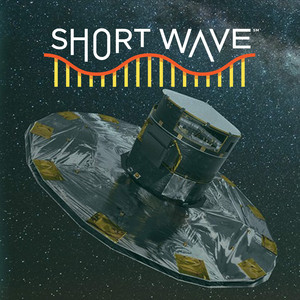
Yeah the big game changer was a European space mission called Gaia.
They launched a telescope in 2013.
It's actually two telescopes and they're pointing in different directions.
And the telescope is spinning around.
In space. In space.
So it's a spinning platform with two telescopes.
And what the telescope is doing is it's measuring the exact time at which a star crosses through the field of view of each telescope.
So, every time it rotates and sees a certain star, it clocks that moment.
And if you have billions of such measurements, then you can calculate the exact positions of all of those stars with the utmost precision.
Okay. And so, to summarize, this new method is only possible because Gaia is capable of doing these precise measurements, which in turn makes it possible to really see these wiggling stars and help us identify potential exoplanets.
And I mean, there's lots of stars out there.
You found this one exoplanet with this new method.
Like, how did you pick which stars to look at?
So the team that operates the Gaia telescope prepared a list of about 75 stars that appeared to be wiggling back and forth.
And so our idea was, OK, these appear to be new planets from the astrometric method.
Let's use the Doppler method to see if we can confirm them.
Okay. And as it turns out, most of those 75 objects are not exoplanets.
They are something else.
Yeah. So the one that we found came from a long kind of sifting through of these candidates, ruling out most of them and arriving at so far just one that we're pretty sure is an exoplanet.
In this one Exoplanet which has like since been named like Gaia4B Can you talk a little bit more about that planet?
Like what do we know about it?
Sure. It is an unusually massive planet.
It's almost 12 times the mass of Jupiter.
So you might call it a super Jupiter.
Yeah, I do like those.
It's orbiting around its star every 571 days.
What?! It's lower in mass, and redder, and less luminous than the sun, and it is located about 240 light -years away.
That's so close! It's pretty close by galactic standards.
Yeah, for me, as someone who studied galaxies that were hundreds of millions of light -years away, but I also love Jupiter, so super Jupiters sound incredible.
All of this Gaia data just sounds so awesome.
The Gaia mission actually just ended.
Yeah, it ran for more than 10 years, diligently collecting data and measuring the locations of all these billion or so stars.
But eventually, all good things must come to an end.
It ran out of fuel and it won't be conducting any more observations.
But there's all this data that we haven't even looked at yet, right?
Exactly. Yeah, so about a year and a half, maybe two years from now, we're gonna have a much larger set of data that they're busy processing right now, and that should lead to the detection of at least hundreds and probably thousands of new exoplanets.
So, tell me more about how using astrometry is going to basically give us a more complete picture.
Why do you think it's important for people to know more about these other solar systems, these other planets around other stars?
Well, imagine what it would be like if we didn't know about Jupiter, or Saturn, or Uranus or Neptune in our own solar system.
We would have a really incomplete picture of what's going on around the sun, and we want to have the same kind of complete knowledge of exoplanetary systems. We want to know about the little planets, the big planets, the nearby planets to the star and the more distant planets so that we can see what are the relationships between them, What are the patterns that hold in those systems and how do they compare to what we observe in our system?
Yeah, it's hard to draw any conclusions When you're basing all your conclusions on one example solar system You really want thousands of data point right and you want complete knowledge of those systems Before you can be confident about any patterns that might exist. Yeah Josh, thank you so much. I can't wait to see how many you find when you start analyzing that Gaia data.
It's been a pleasure.
Thanks for having me.
If you liked this episode, make sure you never miss a new one by following us on whatever podcasting platform you're listening from.
And if you have a science question you'd like us to investigate, send us an email at shortwave at NPR dot org.
This episode was produced by Hanichin and edited by Burleigh McCoy.
Tyler Jones checked the facts.
Quasi Lea was the audio engineer.
Beth Donovan is our Senior Director, and Colin Campbell is our Senior Vice President of Podcasting Strategy.
I'm Regina Barber. Thank you for listening to Short Wave from NPR.
This message comes from Greenlight.
Ready to start talking to your kids about financial literacy?
Meet Greenlight, the debit card and money app that teaches kids and teens how to earn, save, Give, spend wisely, and invest. With GreenLight, you can send money to kids quickly, set up chores, automate allowance, and keep an eye on your kids' spending with real -time notifications.
Join millions of parents and kids building healthy financial habits together on GreenLight.
Get started risk -free at greenlight .com slash npr.
This message comes from GreenLight.
Did you know that parents rank financial literacy as the number one most difficult life skill to teach?
Meet Greenlight, the debit card and money app for families.
With Greenlight, you can send money to kids quickly, set up chores, automate Allowance, and keep an eye on your kids' spending with real -time notifications.
Kids learn to earn, save, and spend wisely, and parents can rest easy knowing their kids are learning about money with guardrails in place.
Try Greenlight risk -free today at greenlight .com slash npr.