Registration is now open for the 2026 DICE Summit, the premier video game networking conference from February 10th through the 12th.
Receive 10 off a full DICE Summit and awards.
Pass with our exclusive GameMakers Notebook discount for listeners.
When you register, use the code DICE2026GEN10.
That's DICE2026GEN10.
Find more details at DICESUMMIT
To our game dev listeners, are you wondering how to expand your game around the globe?
Well, wonder no longer.
Xsolla Payments is a solution built for global game commerce and monetization.
It boosts player engagement with localized checkout experiences using your players' preferred payment methods.
The simple user interface makes it easy for gamers everywhere to pay for your games and in-game content exactly how they want.
Even better, they can save their favorite payment methods for quick purchases to help them get back in the game faster.
And you'll love Ixola Payments because of its customizable checkout and integration options with everything from sidebars and iframes to fonts and images, making the buying process feel like an extension of your game experience for payers.
Ready to go global?
Visit xsolla.pro slash aiasp or click the link in our podcast description to learn more.
Hey everyone.
I'm Trent Custers, co-founder and studio director at League of Geeks, and you're listening to The Game Maker's Notebook.
Today I've been having a wonderful conversation with Manuel Reiner.
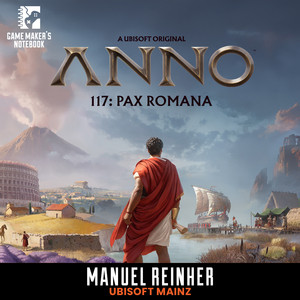
He's the creative director at Ubisoft Minds and also creative director on Anno 117, Pax Romana.
That's right, it's the eighth entry into the beloved sandbox strategy series.
You know, the one that You know setting up infrastructure, managing your economy, making sure your people are happy, building your cities, conquering islands.
You've seen the ANNO on a box.
You know the one I'm talking about, even if you haven't played it.
We talk about the stuff that we usually do at the start.
There's a really interesting story about Manuel doing a deal with his parents to play Game Boy in his years as a Game Boy kid.
We talk about how he was big into the hardcore modding scene and how that led to his first roles in game development, eventually joining Ubisoft Minds art team on Anno 2205.
He spent time on that game, was there for the full cycle, then worked on Anno 1800, one of the most beloved entries in the title.
He was on the art team there as well, leading the art team.
And then he talks about his apprehension as stepping into the creative direction role which he was offered for Anno 117.
Some really interesting insights there from a creative director at Ubisoft, almost not knowing if they should take the role.
We talk about the internal and external resources that they use to research their topics at Ubisoft, or their settings or the years that they're in for the game, and how Anno as a series is inspired by history whilst not choosing to replicate it.
So it enables them to do things like have games in the future, like 2205.
We talk about how a big feature of this new game is diagonal placement.
So it's a city builder in many ways.
You can place buildings on a diagonal grid and access not just on a square grid.
This is great for players.
They love this, have been asking for a bunch, but they don't understand, like we do, the huge undertaking this was.
So we talk about that and how that affected all parts of map and game design and how early they started prototyping that.
There's discussion about onboarding and accessibility for new players.
For those who've played, I know, and especially 117, which has just been released recently.
It's a masterclass in onboarding new players in a way that doesn't sacrifice the complexity of Anno and the series and this genre and what people come to it for.
It's just incredible stuff.
And then, of course, there's really great stuff in how they've gone about creating a narrative structure for a sandbox strategy game.
I mean, how do you wrap a story around what's ostensibly a sandbox of systems?
Really cool achievements there and a bunch to share.
It really is an honor to have someone who's spent so long on such a beloved series with so much depth and has gone to the moon literally, and back with this series.
So without further ado, here's Manuel Reiner, Creative Director at Ubisoft Minds.
Welcome to The Game Maker's Notebook, a podcast featuring a series of in-depth one-on-one conversations between game makers, providing a thoughtful, intimate perspective on the business and craft of interactive entertainment.
The Game Maker's Notebook is presented by the Academy of Interactive Arts and Sciences, a member-driven organization dedicated to the recognition and advancement of interactive entertainment.
Manuel, welcome to the Game Maker's Notebook.
Hello, hello.
It's really good to meet you.
I was saying to you before we spun this up it's not often that I get to speak to strategy game developers.
Having developed strategy games at League of Geeks for 15 years, it feels like it has a particular breed of challenges and problems and, you know, Everest's to overcome sort of our own little roman empires to conquer in and of itself um we've definitely got the difficulty difficulty yeah i think it's really quite different compared to other genres and um and also the way how we shape the team that puzzles that we need to solve it's it's quite unique different take yeah Absolutely.
All right, cool.
Well, we'll try and make sure that this is not just a therapy session for you and I as strategy game developers, but obviously informative for our listeners too.
But hey, let's take it all the way back as we usually do.
We love to talk to our guests about what their first memory of video games was.
And not just like the first game you played, but the first thing that kind of set your brain alight and maybe is the kind of catalyst moment that put you on this path.
For me it was clearly the game boy and um and um, i think tetris and in mario at the beginning.
So i remember i was a small child and i had this deal with my parents so i don't watch tv for half a year to get the game boy and um.
And i remember it was a sunny day outside i was playing with some friends and then i saw that the postman arrived at our door and i I'm not sure what excuse I made up for my friends just to go in there, unpack the whole thing, and then I just played and I was happy.
That's my first memory talking about games.
Man, I love that.
I've never heard of a parent striking a deal like that.
What ingenious, creative, out-of-the-box thinkers your parents were.
And so tell me, how was that half a year?
Were you just completely motivated, set your goal or was it a challenge to not hit the TV for half a year?
I think my parents they were also nice.
I think in the end it was four months or so, but overall it was uh.
No no, i had this goal and i wanted to have this, this thing and um yeah, it really was the start of a lot of things.
That's awesome congratulations.
Really good of them to like give you a shorter term based on good behavior as well, that's great.
So um, all right, hit me with the games on your game boy that you remember i was.
I was a game boy kid as well.
I remember i had, like i had the old, you know the classic game boy.
Then i had the the pokemon limited edition, like color, your blue and yellow game boy, and i remember sitting in the back of the car on long road trips just like hammering that.
What are some games that come to mind that really stick out for you?
For me, i was really totally into the classics.
Like i love tetris.
This was, for me my, and i also like to go back to tetris, so i played a lot in this, and it was mario.
I also like the breaking records there, and so this was really my, my go-to games.
I had a lot of other ones, of course, but I these, these were my all time favorites.
Awesome.
Okay.
And so what about after that campaign?
Is a picture of your sort of like your childhood and video games, where you use it kind of always portable stuff, or was there a?
Did you have a PC enthusiast mom or dad or like, how did you sort of end up getting into games more?
I think it was with the Amiga 500.
So, uh, that, that's where it all started.
And, um, I had also some friends who had PCs, the first PCs.
And so we also used to hang out there and play games.
And I was into it.
When I look back, I think one of these very cool moments was, for example, a test drive for me.
I remember a friend was telling me hey, there's this game where you can drive around in a car and the police is going to chase you.
And I was like, no, this cannot be possible.
And how could it, could it be, and so on.
And then so i i really really um yeah, discovered games with friends on on early devices and um yeah, i got really hooked on that.
That's awesome.
Whereabouts did you grow up, man?
I'm from austria and i grew up there and it's a a small village, a small town, so in the mountains you have a lake, so there was not a big city infrastructure around, so was also quite hard to get to games.
So i remember we had to order them, um and um and, and some friends, i mean it was all on this big discs and under.
So um yeah, we were just carrying them around and um yeah, i love it, i love it.
I love how you know, no matter where people are in the world, i remember talking to, you know farzi, who's talking about his time in the middle east.
You know, growing up out there and yeah, And there's still like these same sort of cultures.
It's like of kids crowded around these glowing screens, you know, and trading discs in the background.
Doesn't matter if you're in the hills of Austria or you know out in the Middle East or here in Melbourne.
It's really, it's classic, isn't it?
Yes, absolutely.
Yeah.
And so what about, you know, obviously you've been a game developer now for over 20 years, right?
Was hobbyist game development a thing at all, or did your game development wait until you started your job?
Yeah, so for me, art was the entrance.
I was always into drawing, and so...
I was studying communication science in Munich at some point.
And while I was there, I also actively tried to find friends that are into drawing and into gaming.
And so I met a group of people and we decided at some point to start to modding games.
And so my entry point really to do?
I was always into drawing, but then to learn texturing and concept art, all of this kind.
This is my entry point was modding.
And we created a mod for the first Battlefield, a World War I mod, because I'm also into tech.
I like vehicles, planes, things like that.
And so I started to, that was my entry point, modding.
Wow.
And so how, how kind of?
Was it kind of just a side thing, or did you get like a little?
Did you get quite into modding?
Was it a big part of your sort of late years?
We were really obsessed.
So uh yeah, I mean I was studying daytime and and, but then during the nights uh, we really worked hard on creating new assets maps for for this mod.
And, uh, the mod was also quite successful during that time.
And um so, this was super inspiring and I really I think we were all really trying hard to get better, getting more into it.
And yeah, this was really an important phase of my life.
Yeah Manuel, I'm sure you're not surprised to hear that so many of the successful developers that we talk to you know folks in you know creative or you know business leadership positions in the industry like got their start in mods.
And so such a classic story as well.
Okay, so how did you go about turning your sort of modding ambitions into a career in video games?
Did you study?
You said you were modding while you were studying.
You weren't studying games or you were or what's the deal there?
Yeah, I started.
Well, I didn't complete my studies because at some point I said, oh, I want to work.
And so I started to go into advertising agency and also I worked there as a graphic artist um, but at some point i was still modding.
And at some point i i got a phone call from a company, um here in germany um, and they, they have seen my stuff in the in the early days of the internet i mean remember it's more than 22 years ago, yeah and they, they saw my stuff and they asked me if i just want to come and visit them for an interview.
They have an open position as a concept artist back then.
And um so um, i decided and i didn't, so i might.
I had never planned to go really into video games um i but yeah, so i just give it a try and i i visit this company and it was really fun for me, because when i really remember the first conversations i had with them, i couldn't imagine that i can earn money with this, because it's it was really far away from From Austria and the mountains and also studying in Munich doing modding.
And yeah, that's how I, that was my first step into the industry.
Wow.
And so what kind of games were you working on at this studio when you got your gig?
It was for a company called EA Phenomic.
And we worked on Spellforce, which was a mix of RTS and role-playing game.
And after that, I also worked in the same company on Battleforge, which was also another RTS.
And yeah, this was my early days.
I started as a concept artist and I led the art department.
And yeah, that was the beginning.
Anything that you remember from those early days?
Obviously, you spent all that time modding and you were playing games.
You had a taste for development in some way, shape or form, right?
And obviously, we're games enthusiasts.
But now you're a professional game developer and you're in there amongst this team of other professional game developers.
Was there anything that you remember those early lessons or things that you learned about?
You know video games and how they differed from your time modding.
I mean, when you do modding, usually you do modding in a small group of people, friends and so on.
And it's of course different if you then join a company where you have a hierarchy, you have teams, everything is bigger.
And it's also for me.
I saw it, as always, as a very interesting playground for me to try out new things.
And usually when doors are closed or when a door is opening, I try also to, I try to go in there and and and take it and see what's happening there.
So, so I felt working in games companies, it's for me, it was still is, it's a playground.
There's so much you can do.
And if you are into it, into it, if you are hungry, there are a lot of opportunities.
And like, I never thought I work in games.
I also never thought I would become a creative director at some point.
It's, it's just, There's a lot of people, a lot of opportunities.
And yeah, if you're hungry, there's a path for you.
Yeah, I can imagine.
And so did you feel that this first place that you went into games they really kind of did.
It sounds like they fanned your flames a little bit.
Did you find yourself having an impact quite quickly?
Those skills were transferable that you had?
Yeah, absolutely.
I mean the whole modding and drawing background, artistic background, was super helpful for me and um.
But when you are in such a company, you see also other areas.
So i was also very much into um ui, ux at some point and you see the other guys in the next room working on those topics.
It's it's it's really easy to get inspired and but also to give back some of your, your skills, your talent um, to other areas of the game and Yeah, interesting.
And so how long were you there for?
Was it like four and a bit years or something like that?
I was around five years there.
I did two games and also helped to work on some other projects that we had.
But at some point, I decided for me, I have enough of a big company, of a big structure.
I want to do something else.
Yeah.
Cool.
And so what's the answer?
Do you have enough of a big company?
Do you strike out on your own?
Did you join a smaller team?
What did you do?
Yeah, exactly.
We joined a small team and the company was called Steroid Interactive.
And we were developing browser games, which were big at that time.
Yeah, I remember, right?
What year are we talking about here, Manuel?
Oh, yes.
Yeah, right there.
Yeah, we all remember the browser boom.
Yeah yeah, and so we've.
I worked in a company with around 10 people, also as an art director at that time and um yeah, we developed a browser, a browser game and a facebook game, which was sadly never released because um, we were, um teaming up with a publisher and then this publisher sold the game and us to another publisher and um So yeah, I stayed there also for five years.
But after this experience which I really liked, also working in smaller teams, having the indie vibe, maybe a little bit more or closer to modding, I then also decided to.
I want to work in a bigger structure again.
And that's why I then ended up at Ubisoft.
Amazing.
And you've been at Ubisoft Mains now for what?
It's like been 12 years or something?
Yes, it's a bit more than 12 years.
And has it been Anno that entire time?
Exactly, yeah.
That's incredible.
Actually, before we get into Anno stuff, let's just talk to me about.
You say you want to join a bigger studio.
Obviously, at the time Ubisoft is we're talking like 2013 right that you join ubisoft and ubisoft are like absolutely flying high.
They're huge, you know, making the biggest games in the world really really impressive stuff.
Tell me about the sort of the process of getting your foot in the door there and and applying and was it?
Was it straight in or was it?
Was it a bit of a challenge?
Bunch of a bunch of interviews?
How did it go?
Yeah, for me i um, I'm really lucky because it was not so complicated for me.
I knew that they were searching for people here in Ubisoft Mainz and I mean, the industry is still rather small in Germany, so you know the people around and so I was at an event in Berlin and I also knew that the studio manager and HR people from Mainz are also attending this event, and And so I reached out to them and we had a conversation and had a coffee together.
And this was how this all started here.
And of course, I also didn't have proper interviews with several people.
As I was also applying for an art position, I had to meet the art director, of course, and the former creative director of NO and various other people.
Yeah.
But it was quite light back then.
So nowadays there are way more checks and also tests that you need to do.
Yeah, of course.
All right.
Well, let's.
Obviously we can't really chat too much about your career without falling and stumbling into Anno because, as we just mentioned, it's been 12 years of your life, which is just incredible, right.
What an incredible contribution to the series.
So before we dive into that, why don't you give our listeners who either haven't heard of Anno or have heard of it and seen it as this kind of like hardcore economic simulation strategy game and thought, that's cool, but I haven't dove in.
So why don't you explain to folks what the Anno series in general is and what the game is?
And then we can talk about PAX a little bit later.
Yeah, sure.
Yeah, so Anno is a premier builder game.
And I think what stands out is it has a very unique feature set.
So because it's a huge part of a city building, you start on an empty island usually.
And so space management is part of it.
And then you build whatever you want.
So in its core, it's a sandbox game.
And we have folks that try to build beautiful cities.
But we also have people who try to break records with their cities.
And we combine the city building aspect with a deep economic simulation, like you described.
So you need to provide needs and goods to your people.
And that's why you need to set up production chains, for example.
And you need to get the balance right so that everyone is happy to progress in the game.
And we combine this with four X elements.
So there is diplomacy.
There's also warfare attached, although warfare is never the core of the experience.
And we wrap this into a super nice immersive world, because we really try to be benchmark when it comes to visuals, but also our music is beautiful and so on.
We have a narrative layer and this unique set really describes Eno.
Perfectly described.
It's almost like you've worked on it for over and pitched it in countless.
You know everything well, very well, very well explained and defined.
It's just, And I think that it really is kind of like that balance sheet strategy game in many ways too right.
Like you're spending, I didn't think I would love that part of Anno.
So let me give you my Anno confession here for a second.
I hadn't played an Anno.
I was the player, the strategy game player, who was aware of Anno, but it just never crossed its path yet, or never taken the dive into it.
And then I was like, hey, Anno's coming out.
Why don't we chat to like someone from Anno?
Like, you know, like one of the one of the creative leads on Anno.
Obviously, that's you.
You know, Ubisoft like, oh, OK, chat to Manuel.
And so I kind of use this interview as an opportunity to dive into Anno and an excuse to get into it.
And I got into it at the start and exploring around.
And I was like my first play session.
I was like, oh, this is kind of.
It's kind of intense, like really easy to get into.
You've done a very, very good job on like how accessible you've made this what can be quite a hardcore and incredibly deep strategy game.
But after the first play session I was like oh, I don't know if these spreadsheet like sort of balancing things act.
You know, production infrastructure efficiency loop here is for me.
And then in the second session I completely went off a cliff and it was just that.
I'm like now I'm min maxing everything.
And I'm every waking moment.
All I'm thinking about is like, how am I going to get my rope production up a bit and It's got me.
So I fully understand now the allure of the Anno.
Yeah.
So we have you on the hook.
That's nice.
Exactly.
You got me well on the hook.
So congratulations.
All right.
So let's go back to your career.
You wander into Ubisoft Minds.
You've managed to get this job.
Talk to me about your early role on the Anno series.
What Anno was it?
What were you doing?
I was leading the art department for 2205, which is one of the sci-fi annals we did.
And yeah, this was a lot of fun to explore because I was leading the art department and compared to an historical anno.
If you work on sci-fi, I think from a creative point of view, you have a lot of different challenges because you need to design everything.
There are no references for everything. superfood factory in the year 2205.
So I think that was a lot of fun to explore and dive and refine how this could look like.
And I'm still really like what we achieved there.
Yeah, I bet.
And I think it's a really great point now that you've sort of illustrated it.
Something else that our listeners should know is that the Anno series jumps around in its timestamps right, we are never historical accurate, so we are always inspired by history.
But also history means for us a potential history in the future.
So we had also two annual titles in the future and um yeah, this is also.
It's really cool to have all these opportunities within the franchise.
Yeah, incredible stuff.
Incredible stuff.
What were the sort of, what were the?
What were the first challenges?
Obviously you've spoke about some, like you know, on 2205, specifically about the sci-fi and having to envision these things that don't exist now, obviously right.
But specific to the Anno series.
What are some of the challenges that you encountered then?
Perhaps, as you know, like leading up the art department on this strategy game which you're you know is obviously so deep in so many ways.
What are some of the challenges that, like the art department or you face as the head of the art department?
Um, that kind of maybe we're like the first encounter of a challenge that you've, you know, been.
That is just something that comes with the series that other developers may not encounter or might have it a little easier with on their games.
Yeah, i think we.
So one challenge that we had was we it was quite clear that we also want to, in this annotated, conquer the moon so you could also build on the moon surface.
And there was one challenge how can we translate the island aspect of the game to the moon and then to work on solution, how this could work in the creators of the moon.
This was a nice creative challenge and also, when it comes to tech, it was quite a challenge because you need a completely different set of materials.
When you go into sci-fi like we did, so you think about We want to have skyscrapers full of glass and interiors that you can see when you look inside the window, things like that.
So that was a lot of fun as well, exploring these different materials and shader solutions to create a wonderful world.
Yeah, I was just going to say, it sounds like a tech artist's wonderland, right?
Wonderful challenges laid down, the gauntlet laid down in front of your tech art team.
Yep.
Exactly.
Help me out here.
What kind of size?
Obviously, Ubisoft are known for, you know, having some of their big flagship games like an Assassin's Creed or something like that, running up over like a thousand people or something, across multiple nations.
What kind of team size are you talking about?
Obviously, this is an Ubisoft Mines project, the latest one.
I know you're working out of Anopax, I should say.
You're working out of Mines.
But like how big is an Ano game generally?
I think the team is currently, we are about a little bit more than 100 people working on the game.
The team was smaller, but now, as we also do consoles, we ramped up the team because this is just an additional task that you need to deliver and it takes some time and also some energy to put it together.
So we are 100 and we are sitting here.
The majority of the team is here in Mainz, on one floor, which is also really nice.
And I think this also makes what really makes it stand out is that we have a super cool mix of veterans.
There are people in the team who worked in 20 years on the Anno franchise, while also we have a lot of young, fresh people.
And I feel that this really is why it really works here.
Incredible.
Yeah, just an amazing team size like.
I mean we at League of Geeks, I think Jump Light, Odyssey and Solium Inferno our last two games, I think the team size, not including our publishing and ops, probably got to about 35 at its height.
And it was like you're incredibly capable as a small indie team, you know, like RuPaul, so I was kind of triple I, you know, and I just can't even imagine like a strategy game with over a hundred people.
It's just, you know, the capability and the talent you must be surrounded by every day is amazing.
No, it's really amazing.
And still 100 is still manageable.
You know, you know everyone on the floor and and still, I also really appreciate that we are sitting here together.
You know, it's because you can just go to a desk and we can discuss together or if you see, or discover some nice ideas or opportunities together.
It's really something magic.
Yeah yeah, you have those uh magical, serendipitous happy accidents right exactly yeah yeah awesome, okay.
So, um 2205, obviously very cool entry in the series.
People still talk about it today.
Sci-fi much, much loved um.
But the next one 1800, is like really really quite cherished um.
But you uh, you weren't the lead artist on that one, right like i was.
I was also the artist there, exactly so, and um, And this was also a wonderful era to explore because I like history.
And when you think about the Industrial Revolution, I mean there are so many wonderful, beautiful topics that you can portray in a game like Anno.
From the rich ornaments on buildings to the wonders that you can recreate in the game.
It's really, really a good spot for an Anno game.
Well, I really want to dive into sort of how you got into Rome for the next one.
But why don't we stop here on 1800?
Because this is the first one.
Correct me if I'm wrong.
This is the first one that you were there for the entire creation of the game, right?
Like 2205 was already development had begun when you joined?
No, no.
I also did the full cycle.
Oh, you did the full cycle on that too?
Yeah, yeah.
Okay.
Well then my question to you is how, what?
How do I phrase this?
How do you go about choosing the premise for an anno game?
I mean, you know you've got all you could shoot to 4407 or you know like 800 bc.
How do you choose this and like how, what?
I'm not only just interested in kind of what the creative inspiration is or the constraints, but then also how are you kind of pitching the business case up to booby execs and stuff like that?
So usually, i mean We always have some ideas in a drawer here where we I mean, most of the people are there.
I mean, we are really attached to the game and we love it.
And so, while you develop something, you always have oh, we could do this or we could that discussions around.
So we as a team have ideas what we could do.
But of course, we're also trying to listen to our fans.
We do a lot of surveys.
And so we knew, for example, that Industrial Revolution, or now Rome, was always on the list of the highest wishes from the fans and the teams.
And then, of course, you combine this also with the feature set that we have in the game and that we want to portray.
Because for a nano game, you need to have a rich setting.
You need to have a setting that can fuel the spreadsheet, all the needs.
You need to have production chains, things like that.
And so when we usually discuss in different potential settings, we try to see can those settings match our feature set?
And that's really important.
And it all usually starts in a small group of people.
So we lock ourselves into a room, and we discuss for several weeks potential options.
At some point, of course, then we need to start also pitching the idea.
And the first thing is to the team.
So, of course, we present to the team, hey, these are our thinkings.
What do you like?
What's your feedback on that?
And once we've settled here in that direction, then, of course, I need to talk to studio management.
And then at some point, I need to also reach out to HQ to discuss with them.
Hey, this is what we want to do.
And...
Usually, or sometimes we also do tests.
So we have some in a really early ideation phase, when we have two ideas or three ideas.
We also ask people and do a survey or some interviews in a small group to also get their sense.
And I think also it was really important to get an understanding about their expectations, because and you see a cover of an NO that potential kids in Rome.
What do the people expect?
What do they wish?
What do they see in there?
Or just to get a lot of feedback before you then really had some point lock in on this.
How incredibly, how incredibly helpful to have those resources.
We worked with private division on a game that didn't actually come out, another sort of tragic vaporware project, you know, like many of the industry has.
But the you know they were a part of take two and the, the the resources that they had at their disposal to run surveys and focus tests.
And like, you're saying like, do you like this poster of the game or do you like that one?
Why do you like this one?
You know, it was we felt so powerful as an independent developer, like just having these hypotheses and being able to, you know, test them out.
And it wasn't that they were defining what we were doing, but or like deciding it, but they were.
It was kind of it was informing the decisions that we were making at the studio with a set of data that we just could never have had on our own.
No, I think that's really very helpful to get this.
And I mean, sometimes as a developer, I'm sure you know it, you're living in your bubble.
So I mean, you have an understanding about certain things, but to check this with the reality of the world out there, I think it's really helpful.
Yeah.
Right.
So you're working on Anno 1800.
You've been there for the full cycle of 2205 with your new team, right?
But obviously you take a few years to ship that game.
Now you're on 1800.
What were your hopes and dreams for that game?
For yourself as say, a leader within Ubisoft Minds, whether it be creatively or whether it be for your people?
Any lessons that you learned on 2205 or things that you were really keen to tackle in 1800 and sort of get right around this time.
Yeah, I mean 2205 is for some of the hardcore fans it's not considered a, a true to the core formula.
Ano, so because we changed some things in the mechanics and so on, and so with 1800 we really want to do go back to a more traditional approach and um, and so for us there was always a big question how will the community react to it, how will they get along with it?
And so it was really um um, at the hope for us that the that it's, it's a well-perceived Anno by the core community, where they feel also as part of the development.
So we invested a lot of time also to get close to the community.
We founded the Anno Union, which is a platform that we have to communicate to our fans.
And so we really try to form a good relationship with our fans.
And this really worked out in the end.
And that is something that makes us very happy.
And another respect that I it was also not.
I mean with the success of 1800, we also decided that hey, we want to explore the huge opportunity of post-launch and to shape here a formula that works for our fans, which is fair and keeps them attached to the game.
This was also a nice challenge, and we learned a lot in this time period.
Yeah, wow.
How incredible.
Okay, cool.
Is there any particular challenges outside of those things?
Obviously they're things that you're going into thinking, okay, we want to tackle this.
We want to.
This is something we want to get right on this game that we may have like, strayed a little bit too far from on 2205 or and sort of this refocusing of your energy in the right areas, so to speak.
You know, or you know, refocusing
Was there anything that came up?
Do you remember any big challenges that came up in 1800 that the fans today that love 1800 may not even know?
That, like you, all kind of went to hell and back over a particular feature or something that almost got cut or you know is something that actually did get cut and was on the cutting room floor that you know it presented a huge challenge trying to get it in.
I mean, in 800, you have two biomes that you can play in.
So you have the old world and the new world.
And the first version of the new world, where it was mimicking South America in the game.
And when we did the first play tests, we got some.
Yeah, that was a strong wish from the community that was able to test it, to explore this region even further and to add more to this region.
And so also during development, we had to change plans just to deliver here on the Full Fantasy.
And this was a of course.
I mean, if things like that pop up and we didn't have it in our initial planning, and so on, this is always a stretch then to get there.
But we also saw the opportunity to deliver something and went all in to really make the new world even more beautiful and refined.
But this was a big challenge and also a change along the way.
Yeah, it's incredible.
I mean, the game's sitting at something like 95 on OpenCritic or whatever, right?
So just so incredibly well-received.
And you mentioned in passing before that 1800 is the first game Anno game to be on console as well.
So huge undertaking.
Did you do that internally at Mines or was that with another company?
Yeah, exactly.
So I mean I was leading the art department at 1800 but in the first year of post-launch I then took over my new position and was leading the project and the franchise from a creative level.
So while we were still developing and working on the post-launch of 1800, we also seized the opportunity that hey, now we have also the perfect testbed to try out consoles.
And we wanted to find out things like, are we able to bring it to consoles?
How can we translate it to the controller?
Can it be done?
And also, we in the team, we have never done a console. on it.
And so we thought hey, it's a good opportunity because the game is out there, so we have a stable environment.
And so that's why we then decided, yes, let's try it out.
Let's bring 1800 to consoles.
Wow.
Incredible.
Yeah, just a stellar achievement.
Okay.
And so you kind of You buried the lead a little bit there.
But post-launch you've obviously had a promotion and you've gone from leading the department.
Talk to us a little bit through that.
First of all, congratulations.
I know it happened five years ago.
It's very exciting.
Talk to me about the process of getting this promotion, how it came about and what the shift in responsibilities meant for Yeah, I mean the former creative director Dirk.
He was working on Anno for such a long time.
So after shipping 1800, he decided that he wants to go on a different journey.
He's still in the company.
But so this position was open at some point.
And I remember, at some data, the studio manager.
He approached me and he pitched me the idea that I should be the creative lead on the uh, on this.
Everyone knew that i i shipped two ano games as an arc lead, so i saw, so i told them as well oh, another ano in the same position.
I would love to have another challenge and um.
So they were thinking about me and and and, to be honest, at the beginning it i was really um, i really couldn't see myself in this position.
Yeah, because i was um, And I think it's also important for for yeah, for your listeners out there.
So that, um, because you, I had, there's always this, um, rockstar image of a creative director.
Yeah.
So, because you see people who are really, they, they are super good on stage.
They, they love to talk in front of people.
They, they have a, they are superb game designers and so on.
And this was my, also my image of a creative director.
And and this was not me now, because I um speaking on stage, it's not my super power yeah, so i also i don't have a game design background.
I have an art background.
Of course, i worked a lot in the industry, so i've seen a lot of things and learned a lot of things, but i wouldn't consider well, i didn't consider myself as a perfect creative director.
Yeah, but then after some discussions um, i um then also say let's give it a try, and that's, That's what happened five years ago.
So they convinced you?
They convinced me, yes.
And I'm happy that they convinced me.
Yeah, good on them.
And so talk to me about what you've obviously seen.
Dirk, you know and worked alongside him, you know, as creative director.
No doubt you have some kind of exposure to other creative directors within Ubisoft, especially within your role now.
The creative director role is quite infamous even outside of Ubisoft, right?
Like folks know about Ubisoft's creative directors and that's the project lead and sort of where people want to go.
If that's what they want to do at Ubi is lead one of these big projects.
Tell me what it means to be a creative director.
That is like has an art background, that is art you know and you may not be art led now right, but like, i don't want to make that assumption there for you, but talk to me about what it means.
You like, you said you weren't.
You weren't this image of the, you didn't fit the blueprint that you had in your head of a creative director.
So what does it look like now, with you being a creative director for the last five years?
What is that new blueprint?
Or what is manuel's blueprint?
I think one of the first things i learned is that there is no such a thing as the blueprint of a creative director.
In particular, when I was exposed to the other creative directors in Ubisoft, I also learned that oh, there's a guy with a tech background.
There's a guy with a music background.
So there's not this one blueprint that really defines it, I think.
I think what's key for me is that you need to form a team around you, or experts.
That's why i have a very strong game director, i have a strong art director close to me, i have tech directors working with me, and so, um yeah, when there are areas where i'm not the expert, you need people and you, of course, you need to trust them and build up a really strong relationship with them, and this works really fine for me.
So i can really encourage everyone to.
If you want to go in this direction, just give it a try.
Do you find your art skills, that you're utilizing them a lot in sort of creating your vision, and say you know that it might be a kind of secret weapon that you have that other folks don't, or an unfair advantage?
Do you find yourself communicating visually a lot?
I mean, it definitely helps.
I mean, as a creative director, you need to oversee also art, but also, when it comes to marketing and so on, you need to give a lot of feedback to trailers, assets and so on.
And in particular for a game like Anno, where the visual style and the quality of the art is very important.
This really helps me.
But also like communicating to the team, doing a scribble, talking to someone.
Yeah, that's really helpful.
Yeah, look, I believe it.
My business partner, Ty Carey.
When I started at Taurus Games, we were both working in the same studio.
He was an art director at the time.
And he's, you know, over the years, he was an art director for a couple of decades or something.
And then you know, when we struck out on our own at League of Geeks like he was chipping in on design and everything.
And he's a great huge, huge design brain just sitting in there that like this for 10, 20 years at this studio that no one was kind of really utilizing.
He's just throwing in on little bits and pieces.
And he ended up being the best game director we've ever had at League of Geeks, which is saying something, because I was a game director.
And I saw this superpower that he had of being able to just like communicate visually in a way that i can't, you know, whereas i'm articulating something, you know i'm a writer, so i'm either writing something up or i'm trying to articulate it through my speech and communicating it that way.
He's, you know, like you say, he does one of his, his famous scribbles, and someone's just like oh, got it okay yeah, and he's just so incredibly effective because of that art background, explicitly as a game director.
So, which there's a couple of.
There's something interesting about creative director and game director, because a lot of the industry will use that interchangeably.
Obviously, there's no set thing there, right?
But I know that Ubisoft has kind of had that defined to some degree for a long time now.
So you mentioned you have a game director, right, who reports into you.
Help our listeners out.
What's the difference between a creative director role, either at Ubisoft Mines or Ubisoft broader, and the difference between that and a game director role and the responsibilities there?
Yeah, you're absolutely right.
This is really different from company to company.
So here in our structure, the creative director, I need to come up with a compelling vision.
I need to sell this vision.
I also need to steer the team towards the goal and try to stay on track.
And so my job is a lot about talking about the game, about presenting, rallying the people behind the idea, these kind of things.
But also I'm responsible for the quality and to some degree of the final game.
And the game director tries to translate this vision then into game design and game rules.
And then the game director is also leading the game design department then within our company.
While I'm responsible not only for the design part, but also for other content and creative areas in the game and also really important, i think, to understand and now i talked a lot about what my, what is my role i do all of this together in a team and when we do these, it's not me coming up with a vision alone, of course.
So we do this also yeah, together in a group.
Yeah, of course, absolutely right.
Like even even these um, these big games that have, you know, people at the top of them called creative director, they're still big teams where everyone's throwing in right, like it's the kind of there are no autos in games or, you know, there is a solo dev does not exist, kind of thing.
No, no, no.
Yeah.
All right.
Now let's, uh, let's do it.
Let's dive into, uh, Anno 117 Pax Romana.
Congratulations on your release.
The reviews are coming through as well.
Looking phenomenal.
I've been playing it.
As I mentioned, I'm having a ball with my first Anno, which also says something too, because something that I really really loved about this one was uh well, this one, my foray into the series.
And obviously this one, having built upon the you know what the 10 Anno games or something before it.
It's so incredibly accessible.
It's, it's amazing.
So why don't?
Before I dive into that, I'm going to ask that as one of my first questions.
But why don't you give people just you've told them what an Anno is, but like, why don't you tell them about what Anno 117 is?
Pax Romana.
It's the eighth installment of the series.
So it's an anno inspired by the Roman Empire, which is a huge step for us because we have never been there in antiquity and now we deliver on it.
And you play in a role as a Roman governor and you are sent by the emperor to the provinces of Rome.
And in the game, you can explore two exciting provinces.
We have one province, which is inspired by Italy, we call Latium.
And we also have a province inspired by the Celtic world, which we call Albion.
And you have a lot of choices and a lot of decisions to make.
And in particular, we want to also tell a different story of Rome.
That's why we also choose the concept of you play in the provinces.
You're not playing as the emperors.
And in those provinces, in particular the Albion, you also had to make a decision if you want to.
How far do you Romanize the people of the Roman Empire?
Which is a legitimate decision people were making back then, right, as well.
Incredible.
So let's dive into the Rome thing.
Obviously Ubisoft, you know just generally, is great, famous for the historical resources and accuracy and attention to detail and everything here.
So talk to me about Roam and how it came about wanting to get into Roam and the resources that you had.
Let's talk about Roam for a bit, Manuel.
Okay, perfect.
I mean, I told you that how we define settings.
So we had also at the beginning of the project.
We looked at different settings and Roam was on the table right from the start because the team wants to do it.
Also the, the fans want to see rome.
That's something we knew for sure right, but to be honest, i wasn't the biggest fan of rome because um, my question was always oh, there are so many games out there, so many movies, comics about the roman empire, so what is the new take?
How what what, what news story can be told?
And um, once we then discovered the time of the Pax Romana for us.
It's peak Rome.
It's the year 117.
And we saw all the different provinces.
And then when we did the deeper research on it, and you realize how many I mean.
These are the people from three continents living together for almost 200 years in a stable country, somehow environment, and it's incredible.
It's the longest peace time in history.
Yeah, it's crazy and yes, of course, there was not.
Everything was peace and harmful.
But it's the time after the conquests and um, and when you then think about all the different cultures that rome conquered and to some degree also rome let room for um, for local traditions or incorporated ideas, and this was really an inspiring and uh topic that was discovered for us.
And this also then convinced me, OK, this is the story that we want to tell in the game.
And this was a very important discovery for us as a team that this is the story we want to tell.
And I'll give you an example.
I mean, we are developing the game here in Mainz.
And we are sitting in our office on the top level of a mall, and during the construction of this building, they found a roman temple here and and the temple they worship the goddess of isis which, which is an egyptian deity, or and it's a good example where you see that an egyptian god traveled through the roman empire to the city of mines, and these kind of stories are also stories you will find in the game, so you can discover celtic deities and then you can also worship them in the sunny latium, for example.
Yeah wow, all right.
Well, let's talk, because i know one of the biggest.
You know it was there with um 1800, but like you've really lent into it on this one as well right, talk to me about the, the two regions and, and you know the things that you wanted to build upon from 1800, and having the new world and the old world and now having latium and albion here And, like you're saying, this kind of this merging of like two peoples or three, really right,
Like, talk to me about this feature and everything involved in it.
Yeah, it was.
I mean, it's clear that we need to deliver the fantasy that that you have when you think about the game set in the Roman Empire.
So we knew for sure we need to deliver Latium inspired by Italy.
It's sunny.
It's the typical Roman theme that you need to have in the game.
So that was already set.
And then, as we discovered the topic of the Romanization and the different provinces, we had a lot of debates about what is the additional province we want to portray, to play around with this cultural aspect of the Roman Empire.
And therefore we settled in on Albion, the Celtic-inspired province, simply because it's a super harsh contrast.
And also back then in Rome, Brittany or Britannia was really an alien place, a place no civilized Roman wants to be.
And so when you think about the visuals, when you think about the marshland that we also portray in the game, about the rain, about the, the mist, the fog, all of this, it's really a striking contrast to the sunny Latium.
And that's why we settled on them.
And another thing that is very connected to the provinces is also that we wanted to make the game less linear compared to the previous ANOs.
We know that the complexity, which is a key of ANO is, at some point, too much for some of our players.
And so we decided also now we want to make the game more flexible.
And so that's why we also decided for the very first time, you are now able to select and choose your starting province, so that, compared to 1800, where you had to play through the game until you unlock the new world and then you can expand, or you need to expand to progress.
Now it's up to you.
You can decide to jump into the game in Latium or Albion, and then you can also decide throughout your game if you want to incorporate the other province to your gameplay experience or if you want to keep it smaller and just stay in one province.
Wow.
That's quite a big.
It's quite a big decision to make, even from just a production standpoint, right.
Where you are developing a half of the game or a whole section of the game in regards to assets features content, all this sort of stuff that players might not even see.
Like, was that a conversation internally?
Or was that just like, yeah, no, that works.
That's fine.
We're cool with that.
Like, let's roll.
I'm not saying it's a bad thing.
I'm just saying naturally a producer is going to flag that at some point in time, right?
Yeah, but we know that our core fans usually they want to incorporate everything in their gameplay experience.
And that's that.
So I think that's, but it's more for newcomers to the series or for casual players, or if you just want to do it, you can.
It's just an option that we offer now.
But I'm sure our core fans, they will include everything.
Yeah, of course.
Talk to me about, you know, when we're talking about this specific time, the Pax Romana you're leaning into obviously, like you say Sonny, what we now know as Italy, and then you've got Albion as well.
Talk to me about your process of research.
Like i mentioned, ubisoft's got all these great resources specifically around this stuff, like historians and everything like that.
Like, did you, were you pulling on sort of um, you know, hq resources or from other studios or other insights within the broader organization, or was did you bring folks in internally?
What was your process for you know research and obviously it's not just a, a narrative game where you're running through, you know, fighting people action, adventure.
You're actually doing production lines and you've got to figure out how people live and everything at the time.
So give us the deep dive on how you figure that stuff out.
Yeah, I think that's really a very interesting phase of the project because at the beginning you do like I said we do a deep research on everything in the team.
And we are also super lucky because we have some experts also in the Roman Empire in the team studying these kind of things, which is really cool.
But you're also right, we have within Ubisoft also resources.
So we have one department and they really help you to do research.
So you can ask them questions or we can do workshops together with them.
They also have a lot of contacts to experts outside the company if you want to go really deep on certain topics.
And yeah, we really tried to use all the resources that we have to understand roman empire or the the aspects that we needed for our game um to translate this then into to a formula that works for us like i say the ano is never historically accurate but we still try to um came up with something that works as the roman fantasy for the people out there we do cherry picking you know if we discover nice i give an example we have um one resources in the game which is bird bird tongues in a speak which is very weird but it was a big thing in rome during that time for the rich people there so and whenever we discover those kind of stories then okay that could be something interesting for for the game we try to incorporate it really cool was there something that you know even if it was late in testing or you know focus tests like you were saying um you had the thing with 1800 where folks are like oh we want to want to spend more time in the new world right we want to explore that more was there something about rome that you was kind of an oversight on your team and as soon as you you gave it to folks that were like hey can we do this i mean i know that you've you've obviously brought back the land units in a big way right and you got legionnaires and everything was there something was that a response from the community was it something you knew was there what what was the thing that they shouted out that they wanted when you when you put it in front of them yeah it was all um The one thing that we discovered during development, when you play the game, now with the buildings, they have buffs that have an impact on the surroundings.
So, for example, bakeries.
They increase the chances of fires in a certain area of the game, but also they provide you a lot of money.
This idea with the buffs started very small.
We only had this in mind for a specific type of buildings.
But once we tested it and we also got the feedback, oh, that's fun, we tried to build on that.
And now you will find it everywhere in the game.
But these are these opportunities that you have, that that we get, but also we are in the team.
So, for example the, the diagonal roads that we have now, which sound right uh easy but um, this is something we tried also with the with previous anos, because the wish to leave the grid to some extent, but still keeping the grid is is uh, was there in the team and also here we did a lot of prototyping really early on because we knew it's, It's a challenge, because the grid is part of the Anno DNA.
So we wanted to protect the grid, but we wanted to offer something that works alongside the grid.
And this was quite some work.
Well, let's go into it because that's literally, I have it written down here.
It just says on my notes, diagonal, because I know this is new to the series, right?
Like you said, it's something people have been wanting.
And so for our listeners...
When you place buildings in Anno, for those who haven't played, a grid comes up, right?
You've got a building that you're dragging around like an RTS or something you're about to, or a city builder.
You're about to place it down.
And there's a grid that you can see.
In this Anno, in 117, for the first time ever, when you hit rotate, you can actually put your buildings on, not just, like you know, rotate it on four points, four cardinal directions, but eight.
So you can have it on, and that's, you can build out roads, you can have your buildings.
And not only can you do it manually, but you the game is kind of intuitively as well.
Like you know going oh, maybe diagonal is better here, because you're in this kind of like you know part of a peninsula or something.
So i, as being again someone from strategy games, understanding how much the grid is like one of the first things that you're doing right and it's like and the problems that just come from having like a square grid or a hex grid, like one that's not crossing over each other in different ways.
I'm so keen to hear about this because I can just imagine, like for players they're like oh amazing, but they don't understand what kind of an iceberg under the surface this undertaking was for your team.
Yeah, it changes a lot because I mean, space management, like I say, that is very important at Anno.
And so the grid is part of the DNA, the Tetris aspect of, I mean, our fans.
They really try to fill every grid in the most efficient way, and so on.
If you're like your guys, it's a production line.
So your crew, your workers are like going, so they're closer.
Yeah, absolutely.
So space and distances are very important.
And so that's the part that we wanted to protect.
And so I mean technically, it would be easy for us to go freeform or whatsoever if we scrap everything and do a new game and so on.
That's not the challenge.
But the challenge was really how can we allow diagonals systems next to the grid?
Because uh, when you look into simple math um, when you just turn a square and make it still somehow part of a grid system um, the sizes are not even different.
They are different.
So um, you need to, there's a lot of things that you need to to take into account and all the the variations that are possible now if you draw streets from every angle and so on.
So there was a lot of, a lot of headache that we had in the team really to figure it out.
Do you remember something about it?
And look, our audience is game developers, right?
So like you can get as nerdy or as in the weeds as you want here in this one.
Like, was there something particularly challenging about it that you remember?
Like whether it be technical, or like in the user interface, or something that seemed like almost an impossible hurdle that might kill the idea before it got a chance to make it into the game.
Yeah, I think on a lot of levels, because we had to change systems.
For example, now we need to have a spline system for streets, compared to the other system we had before.
But also the whole calculation as space is always part of balancing in Anno.
And now if you build a city diagonally, it has a slightly different size than in regular.
This was a challenge.
And also UI and UX, I mean, like um we offer the player the possibility to stay within the grid but also the game suggests sometimes to to build diagonally and how does it feel how how does snapping work you know if you have an asset on your mouse and what is the orientation what is the best direction to build on an island things like that so there's a lot of tweaking in there and um and just yeah we had several prototypes and there were also several moments in early development that oh This is a good idea because we tried it also with the previous Annos in the initial conception phase and we never cracked it.
Wow.
Well, congratulations.
Like I said, one strategy developer to the next.
I totally understand what you all went through and what an achievement to get the diagonal in on the grid.
That's crazy.
And look, if I'm ever in a forum for Anno and anyone's saying anything otherwise, I'll inform them just how much work it was.
Yeah, yeah.
No, it's really good.
I mean outside of the game developer world.
It sounds sometimes also a bit weird if you say oh, it's a major achievement.
We have now diagonal roads.
While you have all these other games for the bus, it's a major achievement.
Yeah, totally.
We had a thing in our mellow where you could.
You know it's a multiplayer game, our first strategy game that we put out there.
And it was a huge for our little indie studio.
It was a huge feature for us to get Reconnect into the game.
And then at some point, because we switched multiplayer systems, we had to deprecate it and...
All the players were like, reconnect.
It's just, what do you mean?
It's a multiplayer game.
Why does it have reconnect?
And it's so hard to explain to people what that kind of a feature entails as a game developer.
And so, yeah, same thing.
I totally get it.
Look, we're talking about this just in a way, where you're talking about intuitively sort of figuring out where do you want this to be?
What orientation do you want this building on or whatever?
But there's so many things in Anno that I was just like, oh my god, what a phenomenal quality of life or accessibility option that you and i don't mean accessibility, obviously your accessibility options are great in regards to helping people with particular, you know, like um disabilities or whatever it might be engaging with the games or things that would um refrain, would restrict them from experiencing it the way that others would.
But i just mean in regards to like ux, accessibility and how accessible the game is, just and user-friendly it is um.
Talk to me about some of the improvements that you've gone through and that you've seen in the series, not just particularly in 117.
But I mean.
Another towering achievement for the Anno series is the game is so deep and it's so complex.
But to get into it, like I said myself, someone who'd never played it before, like I'm able to just walk in.
Obviously, as you say, this is the eighth version, the seven before this, that you're all standing on the shoulders of.
You were there for three of them.
But like, it's just so incredibly accessible.
And like, you know, it's the perfect, you know, that's what's it called?
Maya, right?
Like make accessible yet advanced or deep.
So talk to me a little bit about how much your team puts into this and how you've seen Anno evolve over the years in regards to accessibility and making sure that players not only have access to that depth, but they're also aware of it and that it's there and that they can see it.
Accessibility is super important for us.
So that's why we try to invest a lot on onboarding.
And we have some super dedicated people in the team who really are trying to be better with every anno that we are doing.
And in particular for anno 117, Pax Romana, we try to really step up in this game.
And that's why we have, for example, new elements like the permanent help that is available in the game.
So you have the... a small button on each UI element.
You can press it and then you can read about the element, which is new.
But we also have some other nice features that um, i might that are not so obvious maybe, but we now we have for the very first time we have an active pause in the game.
So um, it's also something we never had.
Also, this is a technical achievement because you have a game tick in the background calculating stuff.
How does it work together with the um, with an active pause?
But now, as a player, you can always press the pause, you can do actions, you can read through stuff.
I mean, I know usually it's not an action heavy game.
It's not super stressful, but there are moments when the city is on fire where people start to panic and to have this option now.
I'm that guy.
But now to have those options, for example.
These are really also helping people to get into the game.
And yeah, it's really important for us.
It's just such an incredible achievement.
And, like, I mean, congrats to you, as I mentioned, this is my first entry.
And I just assumed that Active Pause was in it, like, the whole time.
Like, none of these things stood out to me as, like, a first iteration or anything.
It's just wonderful stuff.
Something that also helps the game move along and you know sort of you know doles it out at the right kind of pace to the player.
Is the campaign structure right?
And i know that the annos are known for this.
You know wonderful sort of narrative structure around these things as well.
So let's talk about the creation of the campaign.
So, for our listeners here, if you haven't played an anno um, there's an actual campaign that's happening and there are characters that are talking to each other.
There's some dialogue options.
Every so often you're doing quests um, and you're, you know, embroiled in this great story that's going on um, so talk to me a little bit about how you basically create a narrative for a sandbox, like economics simulation, like city builder, like Anno.
I mean the narrative, as we wanted to create an immersive world story, and characters are very important for us.
Also, when we think about the campaign, we also believe it's a perfect entry into the game because there's some guidance, some structure that the campaign provides.
And so it's also a good tool to onboard people to the game and to the later sandbox experience.
And so we have a narrative department in our team where we have writers and also designers who work on these kind of things.
And usually we start with coming up with a story that we discuss the plot that we want to describe in the game.
And for a game inspired by the Roman Empire, we wanted to, of course, have some power struggle in there.
We wanted to also feature the emperor to give room for this one.
And also we wanted to introduce the two different provinces.
So to make sure, as you mentioned, that people discover both provinces along the campaign, but also to introduce some of the new features that we have.
So it goes really hand in hand with also the systemic part.
So that's why, for example, there is a small section where you also need to get active in military as long on the way when you play through the campaign, just also to introduce features.
Yeah.
There's also some interesting stuff and a challenge that I saw that you must have encountered in development, because obviously in 117 the kind of ethics and morals and things we believe about society are very different to what they were in Rome at that point in time, even though it was the great peace.
And one of the interesting ones was slavery, right?
Like slavery, is this thing that, as the kind of game articulates, was just everyday business unfortunately, in the Roman times, right
But if you're a player now experiencing this game and this narrative in 2025, chances are you're going to have a pretty strong feeling about slavery and what you're doing and everything.
How does your team work through, whether it's slavery or whether it's other things similar?
How does your writing team navigate things in the game where the actual characters or the opinions of the time might differ completely from the opinions of the players that are actually engaging with the game and going along with the story?
Yeah, I think it's an interesting question.
It's also a challenge for the team, of course.
And so we had a lot of discussions about It.
Was clear from the start we wanted to somehow include this part of the antiquity.
So to shy away and leave it completely out.
This was not.
It just doesn't feel respectful because Not even acknowledge it right.
Acknowledge, yeah.
So that's why it was clear, yes, we wanted to... to have it in the game somehow as a topic.
But it was also clear that we don't want to gamify it.
So there are no slaves as resources because we felt that's too much.
And also i think that's also what challenges of a game developer, the i mean the legacy of anno and the picture people have of anno.
It's usually it's on the first glance it's a peaceful friendly, inviting world.
So only on the second look you will discover there's drama in the world and there is military and there are power struggles in the world, but on the first glance it should look nice and peaceful.
Also, this prevented us from to to gamify slavery in the game yeah, and so the solution and the take that we have now in the game is that slavery is part of the narrative layer.
So we have, for example, ben valian.
He's your advisor, he's a slave, um and um, and he knows city building better than you because he is very educated.
Also, this is something that we wanted to show because um Yes, there were a lot of slaves working for the Romans under horrible conditions, but they were also very well-educated slaves.
A lot of reports about teachers that were slaves.
So this is something we want to bring into the game.
So slavery is part of the narrative layer of the game, but we don't gamify it.
Yeah, it's wonderful how you've identified also an opportunity to educate as well through this right.
Yeah.
Yeah.
Really, really interesting.
It's just one of those things that, like you know, like the diagonal grid, you see a developer undertake something and you're like wow, what a special journey.
They must have gone on with that.
Let's pivot a little bit and talk about the military side of, Because it has been something that, like Anno, is not the kind of game where you know, like you say, it's not, the military side of things isn't a core part of it, right.
The combat's not a core part of the series.
And now, and obviously we're in the peaceful times in Rome, thank God, so you don't need to invest too much in that.
But you have chosen to bring back land units in a big way.
So talk to me yourself as creative director.
How do you ensure that because we all know combat, such a juicy reward mechanic that's so visceral and so immediately relatable in regards to game mechanics and reward and all of this sort of stuff that players really understand that systems language that we get as game players?
How do you stop? a game like Anno from just becoming a military game, that slippery slope?
What work do you do with the team to ensure that you have the right balance there to bring in the parts of Rome that people want to see right?
They want to have their legionnaires.
They want to build their legions.
They want to be the Roman army, even those folks who are coming to Anno for Anno.
But how do you still ensure that it is an Anno game?
Good question.
So it was quite clear from the start when we do Rome, we need to bring back LandCombat, because LandCombat has been part of some of the older ANOs, but not in the latest releases.
We didn't have it.
But to define the right way and to define the complexity and the richness of LandCombat that works for an ANO is definitely a challenge.
So we started super early on with prototyping what we can do.
And now we face a particular challenge that usually the combat doesn't happen on an empty battlefield.
So combat happens in a fully built up city.
And here we tried a lot to define, OK, if we show units, how many units can we show?
Are they visible enough in a city kind of formations make sense.
So we approached it from this side.
So what is possible, what fits gameplay wise to the world that we have um, but also we wanted i mean, as we know that um, combat is also to some degree a controversial topic in our community because we have players who really ask for more combat, yeah.
So they ask also in 1800, can you do land combat?
And it uh.
But on the other side we have players who want to deactivate it because they will just simply build in a peaceful way.
So we really need to find a good balance here to to not go all in on purpose on this topic, even if we also have big military fans in our team.
I also like military in in the game, but it's um, but you need to be really mindful and i find one of the the the yeah, the solutions that we have military is very much tied to the economy.
So um, it's not that you simply can just buy units, so but it's up to you as a governor.
You need to decide if you, if your people, fight for you on a battlefield or if they work for you on a farm field.
So you have a workforce issue to solve.
You also have to provide certain goods.
So Building up a big army is a massive undertaking and this ties it very nicely to the core gameplay.
And also some of the military options are even interesting for non-military players.
So, for example, defense walls and towers.
They are also nice, for even if you're not into military, you want to build them and to make your city richer and nicer things like that.
Yeah it's, i guess they do.
You know, if you're building a roman city, they do have a kind of aesthetic quality about them as well.
Those structures too right yeah, just just um, just as astounding stuff like that.
I keep thinking about those kinds of players and how in our games we've encountered them before, and it really is rare that you do see particular mechanics that can be so polarizing with your, with your player base, and it might be that There are some folks who don't want any combat at all right.
And then there are some folks who like that to them is the game.
And it might be this tiniest little bit.
And you know, as creative directors or game directors, we're sitting there going.
That's not what the game's about.
But because you give them the little taste, it's like you know, it's like a bear with the smell of human blood or something like that.
They're just, they're off and chasing and they want more of it.
Yeah, it's also, I think it's also a challenge how you communicate about it.
So we always try... or we always make sure in our communication as well that we try to frame military the right way because if if we would put legionaries on our box art for example you would really really really set the people on the wrong path there so um and so it's yeah it's in the end you need to find a good sweet spot here of course you know the expectation exactly yeah But it's a complicated one here because it's such a strong fantasy that you have there.
So, yeah, you just have to have the right expectations.
Yeah, awesome, man.
All right, well, look, we're getting close to wrapping it up.
I'm really keen, like you know, again just having a man here who's been working on Anno for 12 years.
Right has just been given the reins on this new game as the creative director.
What were the things that you personally wanted to do?
You know, you've been there as part of the leadership team to some degree, right?
Like working on these two games.
You're playing Anno.
You've spent six, eight years of your life, or whatever it was, on the first two games.
And now you finally, you're in the role of creative director.
You have the opportunity to say.
These are some of the things that I think are really important that we change, or that we return to, or that we add to.
Did you come into the role as creative director with your little hit list of items that you wanted to do or your little missions?
Oh, definitely.
Like I stated earlier, we tried to make this anno more flexible than the previous ones.
That's why we added a lot of choices to the game from choosing your start positions to...
We also removed some of the hard walls that we had in previous annuals.
Now it's up to you, for example, how you provide food to your people.
You can choose between different... You don't need to do everything.
But if you do everything, you have bonuses and so on.
So this aspect, together with achievements like the diagonal roads that we tried several times before, these are things that make me particularly happy.
And now also seeing the perception of the game.
It's also great because I mean We are coming from 1800, the biggest success of the franchise so far.
And so there was always this question in my mind.
So will we be able to pull something off that is different enough from 1800 so that our fans appreciate it?
And here I think really we find a good sweet spot with the feature set that we've done.
Because it's always a struggle.
You need to fulfill the fantasy, the legacy.
People have very strong ideas about how a nanogame should look like.
But then changing it enough to make it exciting, but without losing the core.
That was a big challenge.
And it was always the question, can we pull this off?
And yeah, I'm happy that this worked out.
Well, congratulations, Manuel.
Yeah, I'm having a blast with the game.
So let's now put a vision of a person in our head, right?
They're listening to this podcast.
They enjoy their strategy games.
And let's say they're Anno-curious.
And after this podcast, they're like, you know what?
I'm going to give it a shot.
What would be Manuel, creative director of Anno, worked on three iterations of the series.
What would be your advice to a first-time Anno player to like be up and running and get their city going?
Do you have any kind of like hacks or any particular strategies that you employ to get a healthy happy, thriving society going pretty quickly?
I would say take your time, because some people are used from other games to rush around and place 100 buildings and so on.
On the first seconds,
No, no, take your time.
I would also advise you play the campaign first.
It's a nice introduction into the game.
And yeah, from time to time also just scroll out and admire your creation and have fun with the game.
Yeah.
I'll leave you, Manuel, with one.
The coolest thing that happened to me in this game actually didn't happen to me.
It happened to my partner.
I mentioned on the podcast before, my partner doesn't care about games whatsoever.
Like she's a production designer in film and she's just like, cool, you do your thing.
And every so often she'll be like, oh, what are you playing?
And so when I came in, she saw Anno and sorry, when she came into the room, she saw Anno.
She's like, what are you playing? explain it to her what it is.
She's like, okay.
And I was zoomed out.
And then, for whatever reason, as I was placing things, I had to zoom in, and she's like whoa, you can zoom in that far.
And I said, wait until you see this.
And I hit like control shift R and went into third person view, walking around the town.
And she was, her mind was blown.
Like whatever concept, like I said, she's not a gamer and never didn't grow up as one or anything.
And so just seeing that happen was like, I think, her big year in video games moment, for Yeah, it's really cool.
I mean I think Amanalord's got a lot of credit for it recently, but I mean it's in Anno as well right,
Like you can once you build your town.
You can then actually dive in into third person and roll around in that view.
So very cool.
Thank you.
Well, Manuel, I know you've got places to be.
You're a busy man.
Thank you so much for joining us today.
I really, really enjoyed being able to chat to you.
And I'm pretty sure, right after this I'm going to close this window and boot up Anno and dive straight back into it.
Thank you.
It was really great talking to you.
Thank you for joining us for the Game Maker's Notebook.
For more information on the Academy of Interactive Arts and Sciences, our podcasts and our other initiatives, please visit wwwinteractiveorg.