Lastyear, over 20,000 people joined the Body Electric Study to change their sedentary screen-filledlives.
And guesswhat? We saw amazingeffects!
Now you can try NBR's Body Electric Challengeyourself.
Listen to updated and new episodes wherever you get yourpodcasts.
You're listening to LifeKit.
FromNPR. High Tangle here in forMary-All-Segara.
Hiking has some pretty particular branding here in theU.S.
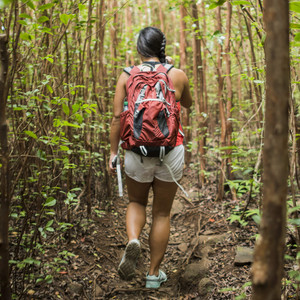
In my mind'seye, I see a seasoned athlete in muddy hiking boots at the peak of a mountaintop.
Arms outstretched and fancy hiking poles sunk down invictory.
Maybe a great big backpack filled with gears on the top of a bright puffyjacket.
And a face looking down at a just conquered valleybelow.
If any of that imagery feels familiar toyou, it makes sense why hiking can often seem like thisintense,expensive, inaccessibleactivity.
Which has always been so weird to me since it's quite literally the freest thing wehave.
We have access to iteverywhere.
Amanda Machado is a writer and facilitator based inOakland,California.
Their work explores herrace,gender,power, andidentity, affect the way we travel and experience theoutdoors.
Growingup, Amanda says she was alwaysoutdoorsy, climbingthings, scraping theirknees, but she wasn't introduced to the more formal world about our recreation until they went tocollege.
And though it was something theyloved, as alethino, she always found herself grappling with the feeling thathiking, outdoor spaces often felt closed off in someways, not meant forher.
But then they spent six weeks backpacking throughEcuador, the country her father'sfrom.
Though they'd visited her father's hometownbefore, they'd never taken the time to just go out and appreciate theland.
There's a moment from that trip she revisits alot.
She made it to KilaToa, which is a lake that is surrounded by mountains in thatarea.
And we got there right atsunset.
And everything just turned this reallycrisp,bright, kind of red that I've never seenbefore.
That trip colored her perspective for other reasonstoo.
First, there was the shock of simply seeing other lethinohikers.
Which looked very different than the way hiking looked in theUS, where it was often sold to me as a white peoplething,right?
And that was the representation I saw very often here in the UnitedStates.
So it was incredibly impactful first just to see Ecuadoriansout, carrying the same gear I'mcarrying, doing the sameadventures, things that I'mdoing.
Then there was the mindsetshift.
What we call hiking here was just a normal part oflife.
And seeing people constantly being outside innature, walking through the mountain ranges in a way that had nothing to do without our recreation was really huge and changing the way I thought about what hiking actually is and who can do it and who's allowed to do it and what it lookslike.
I think it's made it very easy then for me who grew up thinking that this was this sport that was not accessible to me or not inclusive for me as something that's actually been a part of my lineage and my ancestors and my family for manyyears.
It's a lesson she's taken withher.
Hiking is foreveryone.
It's what you want to make ofit.
I mean if we take out all of the competitiveness ofit, the need to like get on the top of a peak or to conquer a mountain or to finish a marathon 30mile,whatever.
If we take out all of those kind of external influences or ideas of what hiking needs to be and just turn it back into what it has alwaysbeen, which is just walking and connecting withnature, I think in that way it feels like it could benefiteverybody.
So in this episode of LifeKit, take ahike.
We'll hit the trails with my favoritehiker, learn how to pick out your path for that first dayhike.
We'll discuss the do's and don'ts of hiking safety and etiquette with the pros and we'll dive deep on the beauty of finding time to be withnature, whether it's a national park or that neighborhood park nextdoor.
Support for this podcast and the following message come fromWise, the app that makes managing your money in different currencies easy withWise, you can send and spend money internationally at the mid market exchangerate.
No guesswork and no hiddenfees.
Learn more about how Wise could work for you atWise.com.
In thiscountry, some truths aren'tself-evident.
An NPR's Black Stories BlackTruth, the collection of stories is wide-ranging andreal, as the people who tellthem, we celebrate the black experience for all its soul andrichness.
Search NPR Black Stories Black Truths wherever you getpodcasts.
All that sitting andswiping, your body is adapting to yourtechnology.
Learn how and what you can do aboutit.
I really felt like the cloud in my brain kind ofdissipated.
Once I started realizing what a difference these little breaks weremaking, there's no turning back forme.
Take NPR's Body ElectricChallenge, listen to the series wherever you get yourpodcasts.
This is myvoice. It can tell you a lot about me and I'm not changing it foranyone.
In NPR's Black Stories BlackTruths, you'll find a collection of NPR episodes centered on the blackexperience.
Search NPR Black Stories Black Truths wherever you getpodcasts.
Are you ready tohike? Are you notcold?
Lots of bikers uphere. Andhikers, ofcourse.
It's just a natural playground going up thetrail, soliberating.
It's a Saturday morning in Southern California and as the committed journalist that Iam, I'm hard at work pounding thepavement, dirt trail for thisstory.
And I've brought my family along for thejourney.
Thishard-hitting, breathing reporting trip includes myhusband, mysister, myniece, plus the several stink bugs she's befriended along theway, and season veteranhiker, mydad, RichardTagle.
He prefer you call himpops.
How seasoned youask?Well, I asked him how many times he's done this particular path we'restarting.
Mission point via decambo'strail.
I'm leaning close to athousand.
Iimagine. Soyeah, pretty bighiker.
He's going to blaze the trail for takeawayone.
Pick a path that matches yourmindset, because it's important to have a why when you set up forhike.
It's not recommended to just go wandering aimlessly in thewilderness, but you don't have to overthink iteither.
It's the beauty of nature makes you really appreciate what we have and what we take forgranted.
That's what I love abouthiking.
Amanda, suggest askingyourself, what would feel most meaningful toyou?
What do you want to get out of thistime?
Do you want to goswimming?
Just get somesun? For somefolks, it's getting to a certain location to see the challengeof, youknow, can we make itthere?
Some people loveviews,right?
Getting to the top of a peak so you can overlook thecity.
Your goals could beobservational.
I might just belike, I just want to see these redwoods or I just want to see this flower that's on this trail and this trail has a lot of wildflowers.
So think about what it is that is your motivation or your excitement or what would give you pleasure or joy or connection and then try to see if you can find a trail that can matchthat.
Maybe the most important thing to you when you're out and about is just to feel comfortable and welcome in whatever outdoor space you'rewalking.
I've created a list of hikes that always have at least50% people of color onthem, whenever I've been on thembefore.
Seeing any of these goals of course requires a bit of researchbeforehand.
Embracethat. Amandasays, looking into the past of the places she hikes really enhances the experience forher.
I think all land hasmemory.
I really believethat. It's really important for me now to research what Indigenous people were on the land that I'm hiking onbefore, what was their name for the mountain or the river or the area that we'rein.
It's often a very different name than what it's callednow, who is not allowed on this land for a long period of time when they're allowed back onit.
I think having that contextual history really changes my experience when I'm hiking from just kind of being in this place that I know nothing about to actually having a relationship and connection withit.
I think it makes the experience just generally feel more meaningful and morefruitful,right?
And then of course there's the physical component ofhiking, which brings us to take awaytwo.
Measure your metrics before your firsthike.
Use a trail that matches your goals andabilities.
First off let's note there are no badtrails, but there are some that might work better for you and yourlifestyle.
But like why do you hike in thislocation, isit?
Oh, because it's close tohome, it'seasy, and most importantly the price isright.
Noadmission. Convenience is a great reason to pick a firsttrail.
Assuming of course you don't live across the street from Mount Everest orHaftome.
Someone who's alreadyathletic, their beginner hike could be three to fivemiles, but for someone who is less in shape or moreintimidated, their beginner hike could be maybe a mile or half amile.
It doesn't have to be super extensive to qualify as ahike.
Jennifer Daring is an outdoor recreation specialist based inCleveland,Ohio.
He's a trained biologist and environmentalist who helps kids to learn and recreateoutdoors.
She says if you're a beginner interested in hiking forexercise, consider firstterrain.
We have an all-purposetrail, youknow, where I work and it's allpaves.
That may be a hike forsomebody.
For someone who is more an avidhiker, that would just be considered a leisurelywalk.
Then there's distance ormileage.
How far you'regoing. Add to that elevation and elevationgain.
The former is the highest point of ahike.
The latter is how much you're going to climb to getthere.
When it comes to figuring out how much elevation gain you canhandle, there isn't an exactequation.
Some sources label anything under 400 feet aseasy.
Jennifersays, youknow, 200feet, you're probably putting yourself in more of like an intermediate space versuslike, youknow, 80 feet to 100feet.
That's more of like abeginner.
And I think that's what kind of differentiates from a beginner hike and an intermediate hike because the intermediatehike, the distance could be thesame, but then the elevation is what's going to make itharder.
So, youknow, the beginner hike could be twomiles, youknow, flatterrain, but the intermediate hike could be two miles and significant elevationchanges.
Some locales like the California Department of Parks andRec, forexample, have set rating systems in place to determine between easy and moderatehikes.
So you can always check in with your local park ranger if you're still feelingunsure.
There are a lot of apps and websites to help out theretoo.
All trails is a super popular one that offers a number of helpfulfeatures.
You can find the average duration oftrails, forexample, and search with filters for things like wheelchair or stroller friendlyhikes.
Andremember, once you pickaround, you might still haveoptions.
It's like a loop hike then you can get kind ofstuck, but if it's an in and outhike, then you can just always decide when to turnaround.
That's what I tellfriends, youknow, whenever we'retired.
Just turnaround. So then you have a lot more kind of agency or power in thedecision.
Take away three hikesmart.
Have a plan before you headout.
Okay, so you found yourwhy, did yourresearch, picked yourpath.
Now let's make sure we set you up for success by getting some logistics out of theway.
Because while hiking iswonderful, it's not withoutrisk.
Prolonged exposure to extreme heat orcold, serious injury from slips orfalls, crossing paths with dangerouswildlife, getting lost in thewilderness.
There can beserious, even fatal consequences to outdoorrecreation.
So it's important to be as prepared aspossible.
Whether it's at the top of thelist, make sure to check it before you headout.
I know it'sobvious, but you don't want to be thatguy.
Whether moves veryquickly, especially depending on where youlive, don't go out if it's about tothunderstorm.
No one wants to beelectrocuted.
And if you're hiking in an environment that's new toyou, say a really high altitude or somewhere particularlyhumid,remember, you'll likely need time and pace to adjustaccordingly.
If the weather isn't cooperating for your route or if you're worried about your lungcapacity, goslow, listen to yourbody, andremember, it's always okay to turn around and try again anotherday.
Time is an important factortoo.
The National Park Service has great guidance onthis.
Forexample, if any of your hike in either direction isuphill, plan for it to take at least double the time it took you to godownhill.
Make sure you set out and turn around early enough for a hike that you don't get stuck outside in thedark.
Set a turnaround time if your trip is taking longer than planned and make sure you stick toit.
Which brings me to anotherbiggie.
Always, always let someone know exactly where you're going and when you're due back before you setout.
Ofcourse, it's safer to go hiking with abuddy,but...
If you're going to hike byyourself, let somebody knowlike,hey, I'm at this park on thistrail.
I expect to be done at X time if you don't hear fromme.
Send forhelp.Jennifer, also make sure she knows who to contactlocally, just incase.
I always keep the local park ranger numbers in my phone on all the various park systems just so that I'm always prepared whether I need the help or if somebody else might need thehelp.
I just want to be quick and alert as fast as Ican.
Alright,pops, what else have you got forus?
You got to know a little bit about the trail at atime.
Goodpoint. Tostart, knowing the trail means making sure you carry a map withyou.
Jennifer encourages bringing along an actual paper map for unfamiliartrails.
Those can often be found at the trailhead or starting point ofhike.
A picture or interactive map on your phone can helptoo.
Justremember, phonesbreak,die, losereception, and tend to fall into puddles when you need themost.
So, don't count on when to be your compass or your flashlight or survival kit for thatmatter.
You're also going to want to familiarize yourself with your specific route on thatmap, because there may be more thanone.
Note where youparked, where your starting pointis, and where you plan tofinish.
When you get to yourtrail, it's important to be aware of your trailmarkers.
They'll look different in differentplaces.
Anything from marked posts in theground, arrows painted ontrees, to just a well-wornpath.
And once you findthem, remember to look back as well asforward.
This isimportant. Those look different on thereturn, and it's easy to getdisoriented.
So, takestock, and maybe note landmarks along theway.
Also, a more generalnote.
I would advise staying ontrail.
Imean, you shouldn't really go off trailanyways, just to be mindful of the natural surroundings and little miniecosystems.
Staying on trail is important to respect and protect wildlife from being harmed by you and viceversa.
Poisonoak, forexample, is a common concern in my neck of thewoods.
Keeping to the well-traumat and path is your best bet for avoiding unwarrantedbites,rashes,cuts,critters, and keeping any number of unwelcome stowaways out of yoursocks.
Speaking ofsocks, take awayfour.
Dress thepart. That doesn't mean you have to goshopping.
You just have to do a little hikingmath.
Meaning making sure people areprepared, but not over-prepared orunder-prepared,right?
Not feeling like they need to buy a bunch of stuff they don'tneed, but then also making sure they're making some gooddecisions.
I know sometimes I've taken people out on hikes and they show up in jeans and the wrong socks and end up inblister.
Youknow, just likethat, so we don't wantthat.
Right, so you absolutely don't need to run to your nearest REI or camping store and buy out all theshelves, but you do want to dress with safety and the elements inmind.
Pups, start usoff.Well,yeah, you've got to haveshoes, propershoes, because it's all about yourfeet.
If you don't protect yourfeet, your feet will not protect the rest of yourbody.
It's thatsimple. That's therule.
Okay, that's therule. Your feet arehappy.
You'rehappy. Notice he said propershoes, not hikingboots.
You don't have to invest in those right away or atall, but you should wearsturdy, closed toe rubber-stalled walking shoes with ankle support and goodtraction.
That means not all tennis shoes willqualify.
Vans or converse stuff that have no tread that if you're in a more steeperterrain, you're just going to slide and you're not going to be able to catchyourself.
Should youfall? If you do go the hiking boot or trail shoesroute, Jennifer suggests going half a size bigger than your normal shoesize.
Just to account for any sort of foot slidingmovements, because sometimes if you wear your actual shoe size that might incorporate any sort of extra rubbing and promoteblisters.
When it comes tosocks, another all-important component of hikinggear, wool is theword.
So woolsocks, they'rebreathable.
If your feet aresweating, it helps wick out that moisture in yourshoes.
The same goes with any sort ofclothing, like a dry fitclothing.
Cotton is usually frownedupon.
It holds odors and moisture verywell, which is not good if you're trying to stay dry while you're sweating all day on yourhike.
Moving to tops andbottoms, the same general logicapplies.
Look for moisture wicking andbreathable.
Don't forget to dress for the weather as well as for the natural elements of yourhike.
I'm going to be in kind of a terrain where there's tallgrass.
I don't even thinktwice.
I'm wearingpants. So I can tuck my pants into mysocks.
So I have full protection of my legs and there's no critters getting inside mypants.
Finally, head and neckgear.
Hats,visors,sunglasses,yes,please.
One protection is one of the 10 essentials needed for hiking listed by the National ParkService.
Pops has one more optional component you mightconsider.
Okay, my favorite piece of your ensemble is yourbandana.
The bandana isme. That's all aboutme, mystatement.
But it is veryfunctional.
Forexample, this bandana happens to be abug.
Yeah,repellent. It absorbs thesweat.
Andthird, it prevents the UV from burning your skin behind theneck.
Veryimportant. Ofcourse, less but notleast, it has a nice little fashionstatement.
It just says it's all aboutme.
Movingon, let's talk about what else you need to carry withyou.
Take awayfive. Get good withgear.
Bring only what you reallyneed.
For dayhikes, the list of must-haves isn't verylong.
Anything we listed here should fit in a standard size backpack or smaller if you'recrafty.
Because when it comes tohiking, the lighter thebetter.
Tostart, there's that map and that phone we talked aboutearlier.
Next veryimportant, and I'm sure it comes as nosurprise,water.
Always, always bring some withyou, no matter how easy or brief thehike.
The right amount of water for a hike will depend on a fewfactors.
The American Hiking Scybees guideline is a half liter of water per hour in moderate temperatures andterrain.
But use that as a startingpoint.
You have to be mindful that however much water you bring is also what you'recarrying.
So keep your physical capacity inmind, but weigh that against the heat and humidity of the area and theday, the length and difficulty of yourhike, and whether or not there's another reliable water source where you'regoing.
Dehydration is nojoke, so always err on the side ofmore, notless.
Then there aresnacks. You should definitely bring something withyou, just incase.
Jennifersays, think about what's light and packs apunch.
She's a fan of fruitjuice.
Trail mix is a popular choice for obviousreasons.
Whole fruit isanother.
Jerky's a goodone, because the shelf life isgood.
I'm all about shelflife.
It'lllast, it's not going tospoil.
If you have to refrigerate itlike,pass.
Nextup,sunscreen, bugspray, insulation asneeded.
So maybe gloves or ear warmers if you're in a colder part of theworld, an extra pair of wool socks is never a badidea.
Jennifer always hikes with a mini first aidkit, and we're talking supermini.
So maybe you're EpiPen or inhaler if you need one ofthose.
Bandaids,Benadryl,ibuprofen,antibiotics,gauze, and a larger bandagepatch.
Aquick,like,oh, I got ablister.
Oh, maybe I had an allergic reaction to a beasting or something of thatnature.
I have justlike, quick on-the-goremedies.
Foremergencies, the National Park Service also suggests a whistle and amirror.
Two small items that make it easy for you to draw attention toyourself.
And one final protip?Oh, I always keeplike,uh, just a couple dollar bills onme, because you just neverknow.
Finally, we have Takeaway6.
Respect the land and your fellowhikers.
All are welcome innature.
That's what all of our experts have tosay.
Ashikers, you have a responsibility to maintain and foster that welcoming environment for eachother.
You can do that in lots of common senseways.
Following hiking etiquette on the trails is a great way tostart.
Forexample, goinguphill, particularly steephills, where there's a climber or hiker going downhill that's meeting a hiker that's goinguphill.
Theetiquette, in mostcases, are typically when the hiker going downhill willyield, because typically the person hiking up is lookingdown.
They're not likely to be looking up as they're walkinguphill.
Here in theUS, you walk to your right and pass on yourleft, same as the way youdrive.
If you're hiking in agroup, your pace should be set by its lowestmember, so no one gets leftbehind.
If you're taking abreak, don't block the trail forothers.
If dogs are supposed to be onleash, keep them on aleash, and don't leave those doggy bagsbehind.
Which brings us to the idea of leave notrace.
Arguably the most well-known of hikingrules.
Try to leave in a way that no one in nature would actually even know you werethere,right?
Not leave in anytrash, but not leave in reallyanything.
Don't walk off thetrail, don't enter areas that might trample flowers or trample plants orwhatever.
Don't build fires unless that'sallowed.
Just trying to make as least trace aspossible.
Then apart from the more formal rules ofetiquette, you just want to be attuned to the people aroundyou.
If you're not going to have a walkout, notice if someone's hurting or seems like they're struggling or needshelp, offer what youcan.
A lot of people sometimes are hiking bythemselves.
It might be kind of nervous about asking for help orsomething, so keep an eye out forthat.
And then ofcourse, pay attention to yourenvironment.
That's why you're hiking afterall.
Not on this airmaster at the gym or watching a nature documentary on yourcouch.
That's why Jennifer advises against headphones orspeakers.
On top of obvious safetyconcerns.
If you're going to be innature, be innature.
I think it's important to be present and to enjoy what you'reseeing.
Stop and take thephotos.
Use like if you have eye naturalist or the Merlin birdID, just to record the birdsounds, what birds are aroundyou.
Takepictures, what plants are aroundyou.
All this tosay, take the time to really appreciate where youare.
Amanda saysoftentimes,hiking, outdoor recreation can be an extractiveactivity.
All about taking from nature without giving anything back or building anyrelationship.
To changethat, she started a simple practice on her hikes of introducing herself to theland.
They'll find a quietspot, usually at the start of the trail and say theirname, where she'sfrom, and her intentions for hervisit.
This is what we know we're just trying to come to this lake and then we'llleave.
I tell them what we're notdoing,right?
We're not going to take anything that's notours.
We're not going to leave trashhere.
We're going to try to make as little impact aspossible.
I think all of those things make me feel a lot more connected to the space I'm in rather than the separation from nature that I think is more cultural here in theU.S.
Thank you for sharing withus.
Oh myGod, I embrace every moment of opportunities likethis.
Let's go get themall, maybe even latertoday.
Roundtwo. Roundtwo.Yeah.
Okay fellowhikers, let's trek back through thosetakeaways.
Take awayone. Pick a path that matches yourmindset.
Are you looking for a greatview?
Some birdwatching? Do some research to find the rightfit.
Take awaytwo. Measure your metrics before your first hike and choose a trail that matches your goals andabilities.
Take awaythree. Hikesmart.
That means figuring out hiking logistics ahead oftime.
Check theweather, plan out your in and outpoints, make sure you're starting out early enough to be back beforedark.
Take awayfour. Dress with safety and the elements inmind.
Take awayfive. When it comes togear, bring only what youneed.
Water, a lightsnack, some just in case for asave, you're well on yourway.
And take awaysix. Respect the land and your fellowhikers.
Follow hiking etiquette and don't forget to stop and smell theroses.
Or, youknow,wildflowers.
Hiking is about being anature.
So goon, be withnature.
For more lifekit, check out our otherepisodes.
We have one on how to get started camping and another on how to get intobirding.
You can find those at nperer.org slash lifekit.
And if you love life kit and wantmore, subscribe to our newsletter at nperer.org slash life kitnewsletter.
Also, we'd love to hear fromyou.
If you have episode ideas or feedback you want toshare, email us atlifekit.org.
Before wego, an editorialnote.
We want to let you know that Amanda Machado and ourhost, MarylSigerra, have in France incollege.
Although that connection played no role in our decision to interview her for thisepisode.
This episode of Life Kit was produced by Claire MarieSchneider.
Our visuals editor is BeckHarlan.
Our digital editor is MalikKukareb.
Our host is MarylSigerra.
Megan Kane is the supervisingeditor.
Beth Donovan is the executiveproducer.
Our production team also includes Margaret Sermino and SylvieDouglas.
Engineering support comes from Gilly Moon and StaceyAbbott.
Thanks to Clarice Henry and CrystalLloyd, who we also reached out to for thisstory.
And a very special thanks to listener LisaMaloney.
You're brought to us with the idea for thisepisode.
I'm AndyTegel. Thanks forlistening.
Black perspectives haven't always been centered in the telling of America'sstory.
Now, we're taking centerstage.
Introducing NPR's BlackStories, BlackTruths, a collection of Black-led stories from NPR'scast.
Search NPR BlackStories, BlackTruths, wherever you get yourpodcasts.
It's a high stakes electionyear, so it's not enough to just followalong.
You need to understand what's happening so you are fully informed onNovember.
Every weekday on the NPR PoliticsPodcast, our political reporters break down important stories and back stories from the campaigntrail.
So you understand why it matters toyou.