
[The Remarkable Cooperative Hunting Alliance of Sea Snakes and Reef Fish]-[Highly Venomous Sea Snakes Hunt in Huge Group | 20 Years of Planet Earth | BBC Earth]
📋 Summary
The Deadly Synergy of the Coral Reef
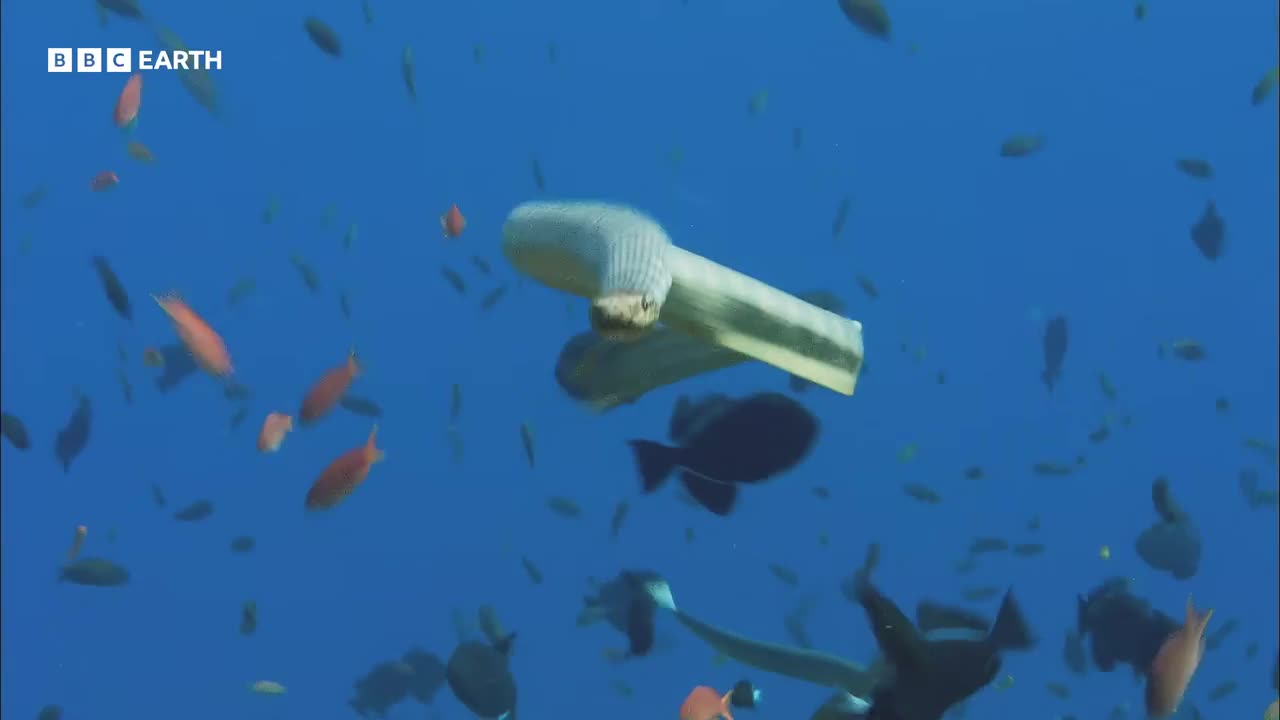
In the remote, pristine waters of Indonesia, a fascinating and complex ecological phenomenon has been observed: a highly coordinated hunting alliance between banded sea kraits and various reef fish, specifically yellow goatfish and trevally. This unique partnership turns the complex architecture of the coral reef into a trap from which there is almost "nowhere to hide" for the prey species.
The Tactics of the Banded Sea Krait
Banded sea kraits are specialized predators. While they are "too slow to catch fish in a straight chase," they have evolved to master the art of hunting within the "nooks and crannies of the coral." Their hunting strategy relies on their "highly venomous" bite, which serves to paralyze their victims instantly. Despite their lethality, they are not solitary hunters in this environment; they have developed a strategic relationship with the larger fish that share their hunting grounds.
A Multi-Species Hunting Caravan
The hunting process begins when shoals of yellow goatfish and trevally start scouring the reef for food. Their activity attracts the attention of the sea kraits. As the narrative describes, "as one group of hunters searches the reef, they're joined by the other," eventually forming a massive "caravan" that can include "at least 30 snakes." This multi-species group acts as a synchronized unit to maximize their efficiency.
The Mechanics of the Cooperative Trap
The effectiveness of this alliance lies in the complementary roles played by the different predators. The "big fish scare the prey into cracks," effectively flushing them out of their hiding spots. Once the prey is forced out, the specialized body shape of the snakes allows them to navigate the coral crevices to strike. Conversely, "anything fleeing from the crates will swim straight into the mouths of the waiting trevally." This pincer movement ensures that the prey has no escape route, whether they stay in the rocks or bolt into the open water.
Ecological Rarity and Conservation Concerns
This "spectacular" display of interspecies cooperation is a rare sight, having "only recently been observed" by researchers. The primary reason for its obscurity is the habitat requirements; this behavior is restricted to the "most remote reefs in Indonesia." The text suggests that such alliances may have once been a common occurrence across the oceans, but human impact has drastically altered the underwater landscape. Today, "no more than 6 of Indonesia's reefs are in their pristine state," highlighting the fragility of these complex biological interactions. The existence of this hunting alliance serves as a stark reminder of how much we have yet to learn about marine ecosystems and the importance of preserving the few remaining untouched habitats where such sophisticated natural behaviors can still occur.

Deep Learning with ListenLeap


