From The New York Times, I'm Rachel Abrams, and this is The Daily.
As wildfire seasons grow longer and deadlier, states are increasingly relying on private companies to provide thousands of firefighters to the front lines.
Today, my colleague Hannah Dreyer explains how lax rules and regulatory loopholes have left many of these firefighters sick, in debt, and on their own.
It's Tuesday, October 28th.
Hannah, it feels like every year there are more and more wildfires, and you have spent months investigating one specific aspect of wildfires, which is the wildfire fighting industry.
So I'd love to start off with you telling us what got you interested in that particular angle.
I first started thinking about this after the fires that tore through Los Angeles in January.
I saw that there was all this footage, all these pictures coming in of the people who were fighting those fires.
And I couldn't help but notice that there were all of these firefighters out there standing in what looked like the most toxic black smoke.
And none of them were wearing masks.
And it got me wondering why is that and what might be the consequences of working in that kind of environment with no protection.
And so I started digging into the industry of people who fight wildfires.
And what I discovered is that it's completely unlike any industry.
They're out there in these really hazardous conditions.
And they work without protection.
And a lot of them are getting very sick at young ages.
And when they develop things like severe lung damage or cancer, things that are linked to the smoke exposure they're often on their own.
Often they don't even have basic health insurance.
So basically, they're vulnerable at several different stages of this process, from starting work to actually getting sick.
Exactly.
I mean, what a lot of people have told me is they feel like they put their health on the line to protect people.
And then when they get sick themselves, there's sort of no one there protecting them.
And this is not a small issue.
There are tens of thousands of people who do this work almost year round now, and as wildfire season grows longer and gets more intense, this is something that is just going to become more and more urgent.
So, to get my arms around this, I talked to hundreds of firefighters.
Many of them were very sick.
But there was one story that really stood out to me.
Hi, come on in.
I'm Matt.
I'm Joel's dad.
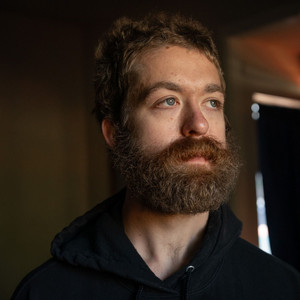
This is a young man named Joel Eisminger.
So can we go all the way back to your childhood and start there?
Just a lot of riding bicycles and a lot of races.
Joel was a shy kid who moved around a lot.
He didn't always have an easy time making friends.
He was really physical.
He went on long hikes, long bike rides.
He played lacrosse in high school, and his nickname was Battering Ram.
But he had a hard time focusing in school.
Sometimes he didn't go to class.
He sort of barely managed to graduate.
And once he graduated, he wasn't sure what he was going to do.
Got a job at Taco Bell.
He was living in Oregon.
He got a job at Taco Bell.
And one night... I watched a movie called Only the Brave.
I work this blaze near Big Timber, Montana.
He started watching this movie on TV called Only the Brave.
No matter what's going on, we can't go back up there.
Stay together.
It's a movie that's about this tragedy that happened a few years ago, where basically an entire crew of wildland firefighters died burned by a fire.
Hey, Supe, I just wanted to thank you for pulling me out earlier.
It was definitely an ass-pucker, wasn't it?
No doubt, man.
I thought I was dying.
And it's this tragic movie.
But his reaction to it was to focus on the bond between these crew members.
This ain't the greatest job in the world.
I don't know what is.
So in the movie, these guys are always joking.
They're really close.
And that really appealed to Joel.
I mean, he's working at like a fast food restaurant during the day.
And to him this is like oh my God, it's a way to be outside, have friends and be doing what he's best at, which is this sort of like physical work.
So the very next day, he goes and applies to work for a company called Pacific Oasis.
And what's Pacific Oasis?
Pacific Oasis is one of hundreds of companies that now offer private firefighting services to the federal government.
And these are easier jobs to get than working directly for the federal government doing firefighting.
Like less red tape?
Yeah, less paperwork to fill out, fewer hoops to jump through.
You can get hired on the spot.
And so they attract a lot of people like Joel, who maybe were a little adrift in life.
So it's an easier job to get than working for the federal government.
But there's a tradeoff, which is that there are a lot fewer protections and fewer benefits.
So most people working for these companies don't have health insurance, for example.
They have less training.
And overall, they're just sort of less protected.
So Taco Bell?
I had a manager.
He brought up Pacific Oasis, actually, so I had that in my head already.
And he just told me all the cool stories, and I was like, oh, this is sweet, man.
He's like, all right, anybody.
So Joel walks in the door.
He meets with the president of the company.
He's like, this is exactly what we're looking for. and signs him up for training.
Straight away.
On the spot.
And he's almost immediately sent out to a major fire.
And he's still 18 at this point.
His father, Matt, remembers driving him down to the Pacific Oasis headquarters.
So I went down there with him and dropped him off at the fire, like it was a sporting event.
You know what I mean.
And I was incredibly worried about him, of course, as I think most parents would be.
Matt was so worried that Joel was going to go out in this really dangerous situation.
He knows his son is sort of hard-headed, maybe sometimes pushes boundaries, and he knew he couldn't stop Joel from signing up for this work.
Joel was determined, but he was really worried.
Understandably.
So Steve saw me just nervously pacing and waiting, and Steve came up to me, and he approached me.
And Steve Dodds, who's the president of Pacific Oasis, comes over and talks to Matt and reassures him.
And he said, hey, we'll take good care of him.
He's going to be all right.
And anybody could say that, but I truly did believe him.
I respected him.
And then Joel gets in a truck and he drives off to his very first fire.
So can you tell us about your first fire?
It was like California coming to the Oregon border.
So we were there to like protect it coming into Oregon.
This fire was called the Clamathon Fire.
Every fire has a name.
So we were doing a lot of direct hand line.
So that's you're at the fire's edge.
You're digging down like bare mineral soil, creating like a small fire break.
The fire stops.
So fighting a wildfire is not like what we sort of imagine when we think of firefighting.
There's not usually water and hoses involved.
It's more like you're digging a containment line.
I would definitely think that any kind of firefighting required water.
So this is interesting.
I mean, what it is is that wildfires are too big to put out with water.
They can really only be trapped and contained.
You're just trying to stop it from spreading on the ground, basically small flames smoldering.
But what that means for somebody like Joel is that you're just working right next to the fire in a way.
That's sort of unbelievable.
Joel's first night was basically traipsing around on a cliff's edge right next to the active fire.
The scariest part about that first fire was...
If they call it a freight train, you start hearing the fire.
You can't see it, but you just start hearing trees just torching and running.
It sounds like, yeah, a train.
He told me about how he was hearing trees snap.
All night long, you know.
So he's crossing checkpoints.
The National Guard was there.
They shut down all highways.
And he gets to drive around them to go to this sort of off-limits space with his crew.
I'm like, I thought it was the coolest thing I ever did.
And it's this wild, unpredictable scene.
It's pure chaos, dude.
Flames start ripping, wind changes.
Where he is right next to these flames.
Fire on both sides of us.
It's like, I look up, like a 200-foot wall of flames just like...
50 feet away from me.
And he's starting to get to know these guys who are sort of teaching him how to be out there and stay safe but also teasing him.
My closest friends I met on that first fire.
You know, I've kept that circle.
For him, it was everything he had hoped it might be to go out and fight a wildfire.
It sounds like he found that Band of Brothers element that he was really drawn to.
Absolutely.
So after that, he was pretty much hooked.
He worked six more fire seasons.
He learned to work a chainsaw.
And that meant that he would sort of be out in front of the rest of the crew, leading this group of guys deep into the woods cutting down trees, cutting down flaming branches.
It took me about three years to be able to walk through the woods without falling over, if that makes sense.
Like with a chainsaw, with all the weight, it took about three years.
He would be hiking with a 50-pound pack, just, you know, him, his friends, and nature.
You're removed from, like, everyday life.
I don't like everyday life, personally, so it's like, I like that, you know?
It's really physically demanding, but it was also for him really rewarding and made him proud.
He felt like it was finally something that he was just naturally good at.
It's just freedom.
Being on fire just doesn't feel like a job.
It's like make-believe stuff that we do out there, you know?
It's just fairyland shit, so it's cool.
But it also involved a lot of risk.
He fell down a burning hill once.
He almost cut into his foot with his chainsaw.
He got full body poison oak.
And one of the most dangerous things about the work was a natural byproduct of fires which was breathing in smoke.
And nobody out there wore masks.
Why wouldn't they wear masks?
Masks weren't provided when he started this work, and they also weren't allowed.
And this is a longtime Forest Service policy.
And what the Forest Service says is that wearing a mask could increase your risk of heat stroke.
The work is really taxing.
It's usually pretty hot out there.
And the concern is if you're out there with something over your face, maybe you would start to overheat.
Wildland.
Firefighters in other parts of the world do wear masks and there has not been a heat stroke issue there.
But that's what the Forest Service says.
But there was also this cultural element of not wanting to seem weak.
Firefighters sort of see masks as like feeling silly, as a sign that you're not going to be up to the job.
And breathing in smoke is seen as a sign that you're willing to, you know, take sacrifices and focus on the work at hand and you're not going to get too caught up in your own comfort.
So basically, even if they had been provided with masks, what you're saying is that they probably wouldn't have worn them because of this culture.
Yeah, there is this macho fire line culture.
But I also think it's worth noting that at this point, firefighters like Joel weren't told that there was any reason to be concerned about smoke.
So part of it maybe, is that they thought that the masks could make them look weak, but they also maybe just had no reason to think that there would be a real benefit to wearing them.
But the smoke exposure was really intense.
Pacific Oasis workers told me the morning sounded like an emphysema clinic and their fire camps.
They were coughing.
They had black stuff coming out their noses.
There's something called camp cred that goes around these fire camps where everyone will be coughing and everyone will be sort of feeling sick.
And people just think of it as like a natural consequence of the work.
For Joel, it was sort of like being sore.
It was just something that he thought came along with fighting fires.
And for him it was proof that he was doing something right and he was putting in the right amount of effort.
He was really focused on trying to get his boss Steve's attention and show Steve that he was tough and he should be sent out on more fires and maybe promoted more.
So he was working really hard.
He was trying to impress Steve, show Steve that he would make any sacrifice.
He would cough up black stuff.
Exactly.
Go out for weeks and weeks without complaining.
And he was getting these positive reviews.
Steve seemed to be liking what he was doing.
And eventually Steve invited him to start training to be a crew boss, which meant that he would lead his own team of about 20 people.
And that, for Joel, was one of the proudest moments of his life.
It was so validating.
Did you imagine spending your whole career in fire?
Oh, yeah, I already knew I was in, yeah.
I knew that's a job I wanted probably when I was 19.
I was probably going to stick with that one.
You know, I'm good at it.
I'm really good at it.
And he started to see this as probably being his lifelong career.
And that's why what happened next felt like such a betrayal.
We'll be right back.
So, Hannah, it sounds like Joel is basically living his dream life.
When do things start taking a turn for the worse for him?
Yeah, so looking back at it, I had a lot of different signs.
Everything started falling apart last year.
It was the Fourth of July weekend.
I was extremely in probably the best shape I've ever been in in my life before that, you know.
I just did my crew boss class.
He was fighting a fire in Northern California, staying in a hotel.
I broke out in a rash.
He had this strange rash that was sort of creeping up his legs.
It was so painful, dude, and I didn't know what was going on.
It really hurt.
It looked like nothing he'd ever seen before.
But he didn't want to complain.
And we're staying in hotels, right?
So everybody was like, oh, you got bed bugs.
Everybody was like freaking out.
And so he let it slide.
Then his crew moves deep into the forest and they start camping there to get closer to the fire line.
Day nine or ten, my face started to droop.
That's when his crewmates notice that his face is drooping.
Half of his mouth is sort of just hanging open.
Every fire you go on, there's gonna be one thing that's always bugging you.
You're gonna have blisters, something, some fingernail messed up, you're gonna have something.
And again, he wants to be seen as this, you know, tough person who could be a crew boss.
And so he keeps going working these 12 hour shifts until the end of their deployment.
That's when a medic finally sees him and says, you need to get to the hospital.
You might have had a stroke.
Were people worried about him?
Do we know during the period that he's working with a drooping face?
You know, people noticed it, but nobody was that worried.
And I think that partly goes back to this fire line culture.
I mean firefighters say if you get injured out on the fire line, you just rub dirt in it and keep walking.
Oh my God.
So everybody is just very focused on getting this fire under control and keeping going sort of no matter what happens.
So the medic tells him you need urgent medical attention.
Does he go to a hospital?
Does he heed that advice?
So Joel opts not to take an ambulance.
He instead is driven by Steve, the owner of the company.
And my impression, I'm going to the hospital, right?
He thinks that Steve is going to take him to the hospital.
That's sort of the protocol for a moment like that.
Instead, he was driven 90 minutes back from the fire line.
And then he's surprised because Steve drops him off at his dad's house.
It's almost midnight at this point.
He looks drawn.
He looks weak.
You could have asked me what color the sky was and I probably didn't know.
That's how just messed up I was.
You know, my body was just shutting down.
When I saw him in that state, I knew this isn't a cold.
And his dad realizes something's terribly wrong here.
I drove him to the hospital thinking that he's gonna die at any moment.
I knew it.
And immediately takes him to the emergency room.
There's no going back from something like that happening as a parent.
So at the hospital, doctors start running tests and it takes a few days of tests and Joel is getting weaker and weaker.
At this point, he can't even really walk down the hallway.
And eventually they come back with an answer that nobody expects.
He is diagnosed with acute myeloid leukemia, which is an aggressive blood cancer that is most often seen in people in their 60s and 70s.
Not somebody Joel's age.
And how old was he at that point?
He is diagnosed the day before he turns 25.
Wow, that moment it's still in shock for him, so it feels fake, but it's not.
You know, He needs immediate chemotherapy, immediate blood transfusions.
That rash that was creeping up his legs turns out to have been his blood, basically just breaking down.
Without treatment, he could die within a matter of weeks.
And the truth is, even with medical interventions, only about half of patients with this kind of cancer survive a year.
But all Joel is thinking about in these days is how quickly he can get through treatment and get back to fighting fires.
So I was really excited, man, to go back with that crew.
I was locked in with that crew, but it was a good crew.
They got the most hours out of any of the crews.
He's sort of not understanding how serious the situation is, how in danger he is of dying.
And he's just focused on this life that he thought was in front of him.
It sounds like he almost couldn't accept the reality of what was actually happening to his body.
Yes, I mean, it's so jarring for him.
He just can't really process what's going on.
But for his father, the reality was very clear.
And he was thinking back to that first day when he dropped off Joel and Steve said that he would take care of his son.
He got dropped off at my doorstep by the same person, not seven years prior, had told me hey, we're going to take care of him.
For his part, Steve says that he understood that this was going to be a long diagnostic process for Joel.
It wasn't going to be a quick thing, and he was trying to do Joel a favor by letting him rest at home and then go into the hospital the next day.
But Matt just cannot get over that moment, that nightmare moment of seeing your child.
He felt like on death's door and they're being taken to your house instead of taken to get medical care.
They let him linger out there having facial paralysis, drooling and all this stuff going on.
He had no control over his muscles, pain.
He wasn't okay.
And what happened to him really could have happened at any private firefighting company.
No matter who he worked for, he would probably have been out there without a mask, in heavy smoke, and he might have ended up in this exact situation at the hospital, sick with cancer.
But I think that for Matt and eventually for Joel, they got really fixated on these specifics of where he got dropped off, what time it was, because they felt like Joel was just sort of dumped, like he had been a disposable worker all along.
And so they felt really mad.
And meanwhile, all of these medical bills started to come in.
I was paying that first hospital bill.
I didn't have insurance.
I was paying that shit out of my pocket, right?
He and Matt felt like Pacific Oasis should be held accountable, since he had gotten sick on their watch.
And workers' compensation covers things like lost wages and hospital bills when employees get sick on the job.
So Joel and Matt decide they are going to file a workers' compensation claim.
They go down to Pacific Oasis and Steve pulls them into a room.
He basically said anything could have caused this.
Our workers' compensation policy is not going to pay for this.
I'm not trying to prove anything.
I'm just trying to say that this happened to him on a fire.
Let's get him covered right now until we can figure this out.
You know what I mean?
But they filed the claim anyway, and ultimately the workers' comp insurer denies their claim.
So I was just using money out of pocket, basically.
Out of pocket.
And why couldn't they prove this link?
It's almost impossible to prove that any individual cancer case comes from wildfire smoke.
And that sort of shields the whole firefighting industry from responsibility.
People who work at the Forest Service have told me that this is one reason that firefighters historically have not been provided with masks, because if you give somebody a mask, it's essentially acknowledging that smoke is risky and could cause some sort of long term illness.
We're not going to give you a mask that could protect you, because that would be an admission that you are in danger doing this work.
So therefore, we were going to leave you unprotected.
This is what whistleblowers have been telling me that there's just sort of been this culture of denial around how dangerous smoke is.
Because what do you do once you acknowledge that?
You have to really change how fires are fought.
The government might start to have to provide more staffing so that people could take breaks from smoke, and they might have to start covering this whole range of health conditions.
Okay, so the employers don't acknowledge a link between the work and the illness here.
But is there a link between the work and the type of cancer that Joel got?
Like, what do we know about that for sure?
So until the 1980s, people thought that wildfire smoke was basically benign like a campfire.
But since then there's been a lot of research that has shown pretty definitively that wildfire smoke is linked to cardiovascular issues, lung issues and at least 12 kinds of cancers.
So, responding to this growing body of research, in 2022, Congress actually forced the Forest Service to start offering workers' compensation benefits for a list of more than a.
But that's not how it works for this large group of other firefighters working on contract for the Forest Service, but working for private companies.
So basically, if you work directly for the federal government fighting fires, you will get coverage.
But if you work for a private company that works for the Forest Service, you will not get coverage.
Exactly.
So if you've had, you know Joel's career and then you develop leukemia and you're working for the Forest Service.
You now don't have to prove where your cancer came from.
It's just assumed that it came from your work on fires because there's such a strong link.
But for Joel, he would have to prove where his cancer came from, which is almost impossible.
So basically for somebody like Joel he is completely on his own it sounds like to cover the cost of his treatment.
Yes.
And as you can imagine, it was extremely expensive.
The family spent basically everything they had trying to pay for this.
And how was Joel doing through all of this?
Was the treatment working?
The chemotherapy starts to fight back the cancer, but it takes a tremendous physical toll on Joel.
He could barely move.
He was in pain all the time.
He would crawl up to his attic bedroom on hands and knees.
By the winter though, he started to get better.
His cancer went into remission and he started recovering a little bit of strength.
He went out with his father to try to go on a hike like he used to do with him.
And at first he could only take these sort of stuttering steps, but little by little he was able to recover a little bit of who he had been.
It sounds like he beat the odds.
I mean, he went into remission.
His doctors were very careful to explain that the cancer could come back at any time, and it often does.
And if it did come back, chemotherapy wouldn't be enough.
He would have to have a bone marrow transplant.
But after Joel got the sign off from his doctors in the spring, he sort of went back to that place of aimlessness that he had been in after graduating high school.
He didn't quite know what to do.
He felt adrift and his mind started drifting back to fighting fires.
He started sort of fantasizing about like, what if I went back there?
He wanted to go back to the line.
He really sees that as a defeat.
And in a lot of ways, he says he wants to redeem himself by getting back out on the fire line.
Sure, I'm motivated.
I can go do fire.
But can I do a 14 day run?
I don't know.
Probably try until I die again.
That's one of those things.
He actually went and asked Steve for his job back.
And Steve told him, are you crazy?
You think that firefighting gave you this cancer?
You're going to go back?
Isn't that tempting fate?
So Steve wouldn't hire him.
He couldn't get a job locally.
So he bought a ticket to go to Alaska where there are a lot more federal wildland firefighting jobs.
Wow.
And Matt desperately wants Joel to do any kind of work besides firefighting.
But he also knows that if he pushes too hard, he could alienate Joel.
So he's walking this really fine line.
You know, everybody's telling me I'm insane, but I don't care what anybody thinks.
Like at the end of the day, it's just all I know.
His kind of cancer is very aggressive.
It doesn't have a great prognosis.
In his mind, he is likely still to die from this cancer.
If I got a year left in my life, I'm going to do the last year doing some shit I enjoy, right?
I mean, the damage is already done, right?
No.
Oh, yeah.
I mean, it's too late to turn back.
I mean, shit.
He feels like everything he's doing now is just sort of borrowed time.
And if he ends up dying in his 20s, he wants to just keep going and keep being that strong firefighter.
It really strikes me that there will always be a Joel.
There will always be people who need this kind of work, who want to do this kind of work, and an industry that needs Joels right.
It's true.
There are tens of thousands of wildland firefighters.
And as wildfire season grows longer and the fires grow more intense...
The government is increasingly turning to firefighters like Joel.
And people get into this work young.
They really want to do it.
And when they get sick, the industry just sort of moves on.
And there's always going to be another young person to come and replace them.
Hannah, thank you so much.
Thank you, Rachel.
Not long after Hannah published the first story in this investigative series, Congress held oversight hearings, citing her reporting, and pressured the agency to make changes.
And soon after it did, reversing its decades-long ban on masks and announcing it will provide masks to all of its firefighters and encourage them to use them.
No plans have been announced to extend worker compensation coverage to contract firefighters.
We'll be right back.
Here's what else you need to know today.
Prime Minister Andrew Holness of Jamaica ordered mandatory evacuations and issued dire safety warnings as Hurricane Melissa, with winds of 175 miles per hour and enough moisture to drop nearly three feet of rain, churned towards his country and its 28 million people on Monday.
Dangerous winds, catastrophic flooding and a storm surge as high as 13 feet were expected in Jamaica as soon as Monday night, long before the hurricane's expected landfall on Tuesday morning.
Today's episode was produced by Nina Feldman, Jess Chung, and Diana Nguyen.
It was edited by Devin Taylor, contains music by Marian Lozano and Alicia Baitube and was engineered by Alyssa Moxley.
That's it for The Daily.
I'm Rachel Abrams.
See you tomorrow.