
[A Summary of 'Heidi' (Classic Starts Edition): Rediscovering the Spirit of the Alps]-[Heidi - Part 01]
📋 Summary
The Timeless Tale of Heidi: An Alpine Journey of Healing and Connection
Introduction to the Alpine World
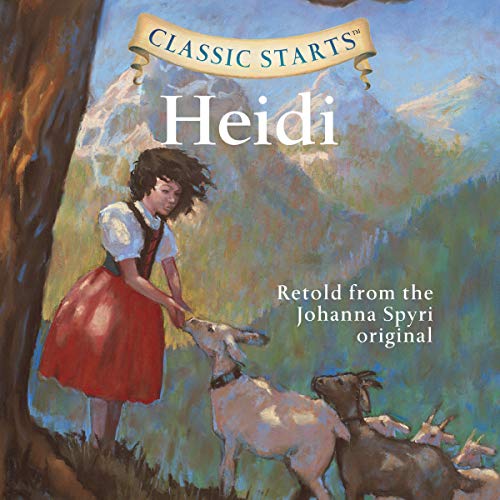
In this rendition of Johanna Spyri’s classic Heidi, retold by Lisa Church and narrated by Rebecca K. Reynolds, the listener is transported to the majestic Swiss Alps. The story centers on the orphaned girl, Heidi, who is sent to live with her estranged grandfather, commonly referred to as the "Alm-Uncle." The narrative immediately establishes a dichotomy between the rigid, structured society of the lowlands and the wild, untamed, and "healing" atmosphere of the mountain heights.
The Transformation of the Alm-Uncle
The relationship between Heidi and her grandfather is the emotional bedrock of the story. Initially, the Alm-Uncle is depicted as a reclusive, grumpy figure who has turned his back on the village life. However, Heidi’s presence acts as a catalyst for his transformation. Her "joyful spirit" and "uncomplicated wonder" at the natural world—the "scent of the pine trees" and the "glistening peaks"—slowly thaw his icy exterior. The text illustrates that Heidi does not just find a home; she rehabilitates the isolated man, bringing him back into a state of humanity through her simple, honest companionship.
The Contrast of Environments: The Alps vs. Frankfurt
The narrative arc undergoes a significant shift when Heidi is brought to Frankfurt to serve as a companion for Klara Sesemann, an invalid girl. Here, the story emphasizes the suffocating nature of urban life. The "grey stone walls" and the "strict etiquette" of the Sesemann household stand in stark contrast to the "open pastures" and "freedom of the mountains." Heidi’s physical and mental decline during this period serves as a metaphor for the suppression of one’s true nature. The mention of "homesickness" is profound, characterizing it not merely as a longing for a place, but as a physiological need for the "sun-drenched meadows" that sustain her spirit.
The Healing Power of Nature and Friendship
The climax of the story occurs when Heidi returns to the mountains, eventually joined by Klara. The transition of Klara from a wheelchair-bound invalid to a girl capable of walking is presented as a miracle of the mountain air and the "wholesome goat’s milk." This section of the book underscores the central theme: the restorative power of nature. When Klara experiences the "mountain breeze" and the "vibrant colors of the wildflowers," her reliance on the city’s medical rigidity fades. The narrative argues that healing is often a matter of returning to one’s "natural state."
Conclusion: A Legacy of Innocence
Ultimately, the Classic Starts version of Heidi serves as a poignant reminder of the power of optimism and the essential bond between humanity and nature. Through Heidi’s journey, we learn that "kindness" and "simplicity" are not signs of naivety, but are in fact the most potent forces for changing lives. The story concludes with a sense of restored order, where the "Alm-Uncle" is reconnected with his community, and the children find their true health, both physical and emotional, in the shadow of the peaks.

Deep Learning with ListenLeap


