In 2007, a physicist introduced an idea that shocked even the scientific world.
A geometric shape so complex, it might contain everything.
Every force, every particle, even gravity.
This particular pattern of charges in eight dimensions is actually part of the most beautiful geometric structure in mathematics.
It's a pattern of the largest exceptional Lie group, E8.
This Lie group is a smooth, curved shape with 248 dimensions.
Each point in this pattern corresponds to a symmetry of this very complex and beautiful shape.
This shape is called E8.
It exists in 248 dimensions, far beyond anything we can imagine.
And yet, it's built on perfect symmetry.
Inside it, every known particle lines up with mathematical precision, almost like they were always meant to be part of the same code.
Even more surprising, this model suggests there are other particles, ones we haven't discovered yet, hiding in unused parts of the pattern.
But here's where it gets even more interesting.
This isn't just about particles.
The idea suggests that reality might not be made of stuff at all, but of structure.
That matter, motion, even time, could emerge from how geometry behaves across dimensions.
E8 is a highly symmetrical mathematical structure with 248 components studied in advanced geometry and group theory.
It belongs to the most complex cases of exceptional lie groups known in mathematics.
Its importance lies in symmetry.
In physics, symmetry is not aesthetic.
It defines how particles behave, how forces interact, and how conservation laws operate.
The standard model of particle physics is built on symmetry groups SU3, SU2 and U1, which describe strong, weak and electromagnetic interactions.
But these groups remain disconnected from gravity.
E8 offers something different.
A single structure large enough to embed all these known groups and gravity inside one unified system.
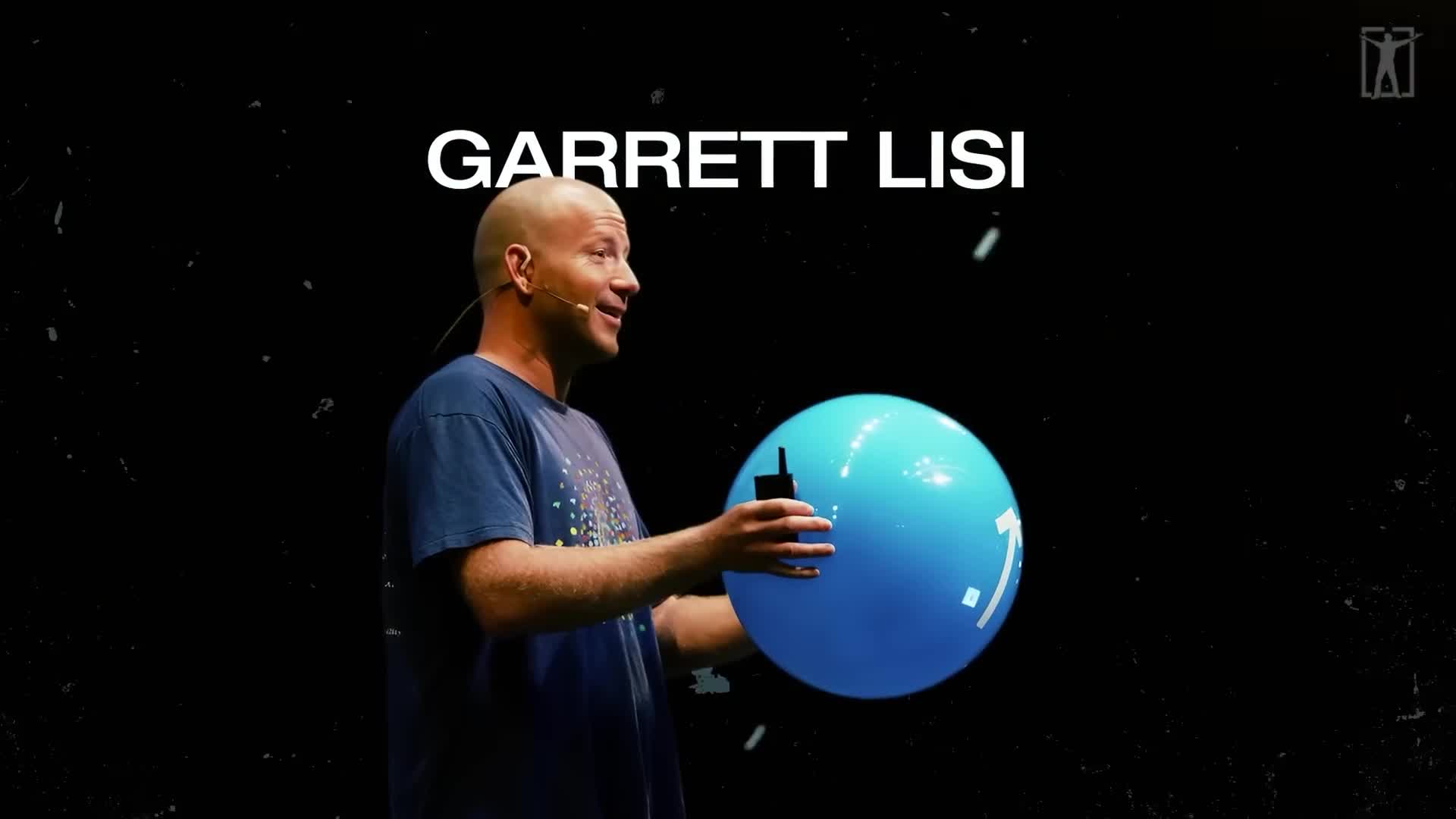
Garrett Lisi's proposal was to map all fundamental particles and forces onto E8's internal coordinates.
He demonstrated that known particles like quarks leptons, gluons and photons could be arranged within its geometry.
Even more.
He identified extra components in E8 that didn't correspond to existing particles, potentially new undiscovered elements of the universe.
The geometry of this shape could describe everything about how the universe works at the tiniest scales.
And the pattern of this shape, living in eight-dimensional charge space, is exquisitely beautiful.
And it summarizes thousands of possible interactions between these elementary particles, each of which is just a facet of this complicated shape.
As we spin it we can see many of the other intricate patterns contained in this one.
In his model, particle interactions are not separate forces, but rotations and translations within the E8 shape.
Electromagnetism, for example, isn't a separate rule.
It's a path through this geometric space.
Gravity fits in as part of the same internal logic.
This makes E8 not just a descriptive tool, but a generative one.
Instead of writing equations for how forces behave, one would navigate the geometry and observe how structure determines behavior.
The model hasn't been confirmed experimentally, but the mathematics behind it is solid.
What makes the E8 model compelling isn't just its internal logic.
It's the fact that structure alone, without added parameters, can produce behavior that mirrors physical reality.
When particles are positioned within E8, their interactions follow paths dictated by the geometry.
These paths are consistent with how particles behave in quantum field theory.
Mass, charge, spin.
They aren't input manually.
They emerge from how each element sits within the system.
This is a shift in how physical laws are understood.
Instead of writing rules that govern matter, we're looking at a framework where matter behaves according to position in a pattern.
And this isn't isolated to high energy physics.
Nature across scales operates using structured repetition.
The same logic, symmetry transformation.
Minimal variation appears in crystal growth, biological forms and even neural activity.
What we often call natural design is usually a product of efficient geometry repeating itself under constraint.
E8 is an extreme case of this.
A maximal symmetry pushed to its mathematical limit.
But its relevance goes beyond particle physics.
It reflects a principle that shows up everywhere. pattern as foundation.
Patterns are not limited to theoretical models.
They appear consistently in the physical world across all scales, from atomic lattices to galactic formations.
This recurrence suggests that structure is not a byproduct of matter, but a primary organizing force.
In biological systems, forms repeat with mathematical precision.
The Fibonacci sequence governs the arrangement of leaves, the spiral of shells and the structure of pine cones.
Each step in the sequence builds on the last, producing growth that remains efficient and compact.
In terms of applications, Fibonacci numbers appear in nature surprisingly often.
The number of petals on a flower is typically a Fibonacci number, or the number of spirals on a sunflower or a pineapple tends to be a Fibonacci number as well.
In fact, there are many more applications of Fibonacci numbers.
The same logic is found in hexagonal structures, like those in honeycombs or basalt columns.
These formations arise because hexagons fill space with minimal surface area, maximizing stability and efficiency.
They emerge spontaneously in cooling lava, crystallization and even in cloud formations over the poles.
In physics, symmetry governs atomic bonds and molecular shapes.
Crystals form when particles settle into a lattice that balances forces in the most stable configuration possible.
No central design is needed.
The structure emerges naturally from internal constraints.
These are not symbolic patterns.
They are structural outcomes.
The result of systems optimizing for stability, flow, or replication.
In every case, the result is predictable geometry.
This consistency is what makes geometry more than just a language for science.
It becomes evidence that the universe organizes itself through repeating, scalable forms.
It also bridges the abstract E8 structure with the visible world, both operating by the same principle internal symmetry producing external behavior.
Recognizing this allows us to move beyond visual aesthetics.
Pattern is not decoration.
It's a signature of how information, matter, and energy organize across domains.
When a structure repeats in a stable environment, resonance becomes possible.
Resonance is not a metaphor.
It describes the synchronization of systems that share compatible frequencies, whether mechanical acoustic, electromagnetic or biological.
In physics, resonance occurs when a system is exposed to a frequency that matches its natural oscillation.
This amplifies its behavior, increasing motion, energy transfer, or structural alignment.
Tuning forks, bridges, and atoms respond predictably to this effect.
At the molecular level, resonance energy stabilizes chemical bonds.
Electrons distribute themselves in patterns that minimize energy through shared configuration.
This principle underlies the stability of aromatic compounds in chemistry.
In biology, resonance is observed in neural oscillations.
Different regions of the brain synchronize during perception, attention, or memory formation.
Coherence across networks allows efficient information flow.
We measure coherence in order to identify functional networks, because we believe that coherence is somehow telling us something about the communication within these networks.
Measures of synchrony are used as a diagnostic tool both for the identification of functional networks, but also for the diagnosis of abnormalities in such networks.
Even in ecosystems, cycles emerge through resonance.
Predator-prey rhythms, seasonal migration, circadian biology all stabilize around repeated interaction and internal timing.
These examples show that structure and rhythm are not separate layers.
They reinforce each other.
If geometry provides the framework, resonance maintains its function over time.
In this way, resonance becomes a stabilizing feedback loop.
It filters out incompatible patterns and strengthens coherent ones.
Whether in materials, thought or systems of life, resonance aligns complexity into persistent order.
This is not limited to sound or vibration.
It applies to fields, forms, and information systems operating across different scales.
When resonance appears in physical systems, it enhances function.
When it appears in cognitive systems, it enhances awareness.
The logic is identical.
Alignment, through frequency, creates integration.
Stay with me, because next we'll explore one of the most recognized visual manifestations of this principle, a structure known for its symmetry, proportion and recurrence across ancient traditions and modern science.
The flower of life.
Across ancient cultures, one geometric symbol appears with unusual consistency, the flower of life.
It consists of overlapping circles arranged in a hexagonal pattern, each intersection forming precise equidistant nodes.
This isn't decorative art.
It's a tightly packed system of symmetry and proportion, governed by simple repetition and radial expansion.
The structure encodes multiple geometric forms within it.
From it one can extract the vesica piscis, the seed of life, the Metatron's cube and the Platonic solids, all considered fundamental in classical geometry.
These shapes are not symbolic in themselves.
They are mathematically significant and used in architecture, crystallography, and spatial modeling.
The flower of life demonstrates radial coherence, a property where every point relates to the center and to the whole.
This reflects the same principles seen in molecular structures, in cellular division patterns and even in astronomical arrangements, and this flower of life symbol can be extrapolated from a tetrahedron array to be the fundamental principle or the fundamental geometry of the structure of space-time.
I had actually come to extrapolate the mathematics to get the proper answer for gravity and the mass of the proton and the radius of the proton and the gravitational coupling constant directly out of this metric.
Its presence at ancient sites — Egypt Mesopotamia China, India — suggests independent recognition of the same principle.
That complex systems emerge from repeating simple units, governed by fixed ratios.
This geometry also models wave interference and resonant field patterns.
When circular waves intersect, they naturally form interference patterns that resemble flower-of-life symmetry, with nodal points of stability and cancellation.
These intersections define energy concentrations, just as lattice nodes define stable bonds in matter.
In modern applications.
This geometry has been studied in frequency, field modeling, cymatics and antenna design.
Its efficiency in space packing, signal distribution and field overlap is measurable and applicable.
The pattern is compelling because it unites form, function, and recursion.
It's not an aesthetic choice.
It's a spatial solution, an efficient way for energy, information and structure to coexist without conflict.
From particle models to memory networks, the same logic appears.
Order through symmetry.
Growth through repetition.
Coherence through resonance.
For decades, neuroscience focused on neurons firing and chemical signals traveling between synapses.
But in recent years, that model has expanded.
Not by changing what we see, but by changing how we interpret it.
In 2017, researchers from the Blue Brain Project published a study that revealed something unprecedented.
When neurons process information, they don't just activate randomly or in simple chains.
They organize themselves in geometric formations, structures that correspond to well-defined mathematical objects.
Into the research itself.
Blue Brain team discovers a multidimensional universe in brain networks up to 11 dimensions.
Using algebraic topology in a way that has never been used before in neuroscience, a team from the Blue Brain Project has uncovered a universe of multidimensional geometrical structures and spaces within the networks of the brain.
These formations are known as simplicial complexes.
At the lowest level, you might see a triangle, three neurons firing together.
But as complexity increases, the shapes scale upward.
Tetrahedrons, five simplicies and so on, all the way to 11-dimensional geometric configurations mapped using algebraic topology.
This isn't speculative.
It's based on precise mathematical analysis applied to large-scale neural simulations from living brain tissue.
The structures form when the brain processes information, and then collapse once the activity ends.
These collapses are known as topological transitions.
The more complex the stimulus, the higher the dimensionality of the structure.
Simple inputs activate lower-order shapes.
Multisensory or abstract thinking generates higher-order forms, short-lived but measurable.
In practical terms, this means thoughts may not just exist as patterns of electrical activity, but as geometrically structured events with dimensional depth.
They rise, form, and dissolve, like temporary scaffolding built for specific tasks.
The implications are significant for how we understand memory, attention, and even consciousness.
But even without speculating, the facts are striking.
The brain uses geometry to encode information, and these structures are not symbolic.
They are real, measurable and consistent with broader mathematical systems already used in theoretical physics.
It may be the first time a bridge has been found between abstract multidimensional geometry like E8, an observable biological function, a pattern hidden in plain sight inside the most complex system we know.
And it's built from shape, structure, and alignment.
Not words, not thoughts, but form itself.
Geometry is not limited to biology or the human brain.
It defines the structure of the universe itself, from the smallest measurable unit to the largest known systems.
In quantum gravity, Planck scale geometry describes space as quantized.
Distances below 1.6 times 10 to the negative 35th power meters lose meaning.
Space may not be continuous, but built from discrete units of geometry, a kind of informational grid that underlies all interactions.
This idea reappears in black hole physics.
According to the Bekenstein-Hawking formula, the entropy of a black hole the amount of information it can store is not proportional to its volume but to its surface area.
This observation led to the holographic principle, which suggests that all the information inside a 3D region can be encoded on its 2D boundary.
It's almost as though the universe was really represented as a large film very, very far away, with dots and dashes on it and dots and dashes.
And that what takes place, the real things you me, or are they real or not?
Planets, everything that's taking place on the inside is a holographic illusion of those things taking place on the boundary.
This is one of the most counterintuitive things that physics has been dealing with over the last 10 years or so.
At cosmological scales, geometry governs the motion of galaxies.
Spiral arms follow logarithmic curves, not random shapes.
These spirals appear across nature, in galaxies, hurricanes and even nautilus shells, all following the same mathematical curve.
Saturn's North Pole features a persistent hexagonal storm system, first observed by Voyager and later confirmed by Cassini.
The structure is stable, symmetrical and not fully understood, yet it resembles the kind of self-organizing geometry seen in crystals and fluid dynamics.
Fractals are also everywhere, from mountain ranges and coastlines to blood vessels and lightning strikes.
Nature builds complexity by repeating simple rules at different scales.
The same branching logic can be seen in trees, rivers, and even neural networks.
These patterns don't require external programming.
They emerge naturally from energy distribution, spatial constraints and feedback loops, processes that reward structural efficiency.
The universe at every level shows signs of geometry guiding formation, not by chance, but by necessity.
And across all domains, from subatomic fields to star systems, we continue to find the same structures repeating, scaling and stabilizing.
Patterns that don't just describe the universe, they shape it.
The idea that the universe is shaped by geometry becomes even more striking when we look at how space itself is modeled in cutting-edge physics.
According to some quantum gravity theories, space is not a smooth background.
It's made from discrete elements connected in a network.
In loop quantum gravity, this network is called a spin network.
Nodes and links that define areas and volumes, much like a mesh.
Each node carries quantum information, and the structure itself defines geometry.
This means that space may not be something that exists independently.
It could be the result of how information is arranged, the geometry of entanglement itself.
I think what this is saying is that in a certain sense, entanglement builds space-time.
Anytime you have entanglement, a bit of this kind of thing happens and builds a kind of space-time between the two things.
Now, if they're just electrons and they're entangled, nobody's going to jump into an electron.
You can't get Alice and Bob to jump into different electrons at different places.
The only content of the entanglement is the usual content of entanglement.
What this is saying is somehow, when entanglement gets big enough between big macroscopic objects, and those macroscopic objects are made very, very dense, that entanglement turns into spacetime.
In this view, two regions of space are close, not because of physical distance, but because of shared information how entangled they are.
Geometry becomes a description of relational structure, not of position.
This shift changes everything.
It suggests that what we perceive as space, form and motion might be the visible output of a deeper informational substrate governed by topological relationships.
From this perspective, even gravity might emerge from how quantum bits are arranged and linked.
Gravitational attraction becomes, a consequence of how information flows between regions, not a fundamental force but a side effect of spatial encoding.
These ideas are supported by calculations in ADS-CFT correspondence, where a gravitational system in one space is equivalent to a quantum system on its lower dimensional boundary.
Geometry and quantum information, once separate domains, now appear to be two aspects of the same structure.
If this holds true, then the universe is not built from particles.
It's built from correlations.
And what we call reality is the result of geometry applied to information itself.
This isn't science fiction.
It's the current edge of theoretical physics.
And it points to a universe where space time, matter and energy are all expressions of underlying structure.
Not randomness.
Not chaos, but order written in form.