Throughout history, food has served as subject matter, inspiration and, of course, sustenance for artists.
Food has also been the art on a number of occasions.
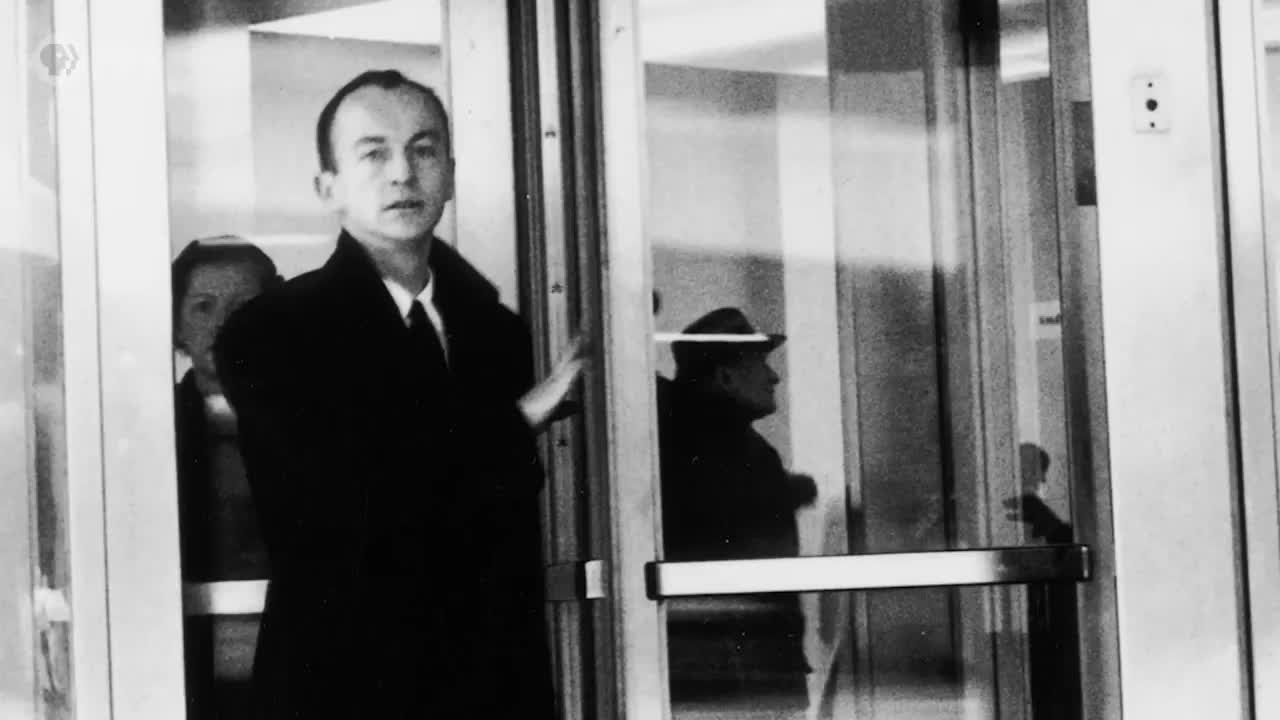
Today, we stray from our usual exploration of the eating and cooking lives of visual artists to delve into the culinary predilections of a poet, a much beloved one, who was deeply enmeshed in the flourishing cultural life of mid-20th century New York City.
He died in an accident at the age of 40 before the wider world had fully recognized his brilliance.
But in his life he accomplished so much, including the lofty achievement of probably being the first to publish a poem mentioning a cheeseburger.
Our source material today will be the collected poems of Frank O'Hara and his book Lunch Poems, published in 1965.
And we're also going to read from Selected Poems by Frank O'Hara, edited by Mark Ford later on.
And while poetry may often be a solitary endeavor, I won't be alone in this one.
Joining me are my husband, author John Green, and poets Paige Lewis and Kaveh Akbar, our collaborators on the channel Ars Poetica, which this might be a very unsubtle plug for.
O'Hara's poetry is full of references to foods.
We've got instant coffee with slightly sour cream in it, and just plain scrambled eggs.
There's a liver sausage sandwich, blueberry blintzes, and spaghetti and meatballs and champagne.
I want some bourbon, you want some oranges, he writes.
And there are numerous references to yogurt.
But for our first menu item, we'll be consulting this 1949 edition of the Settlement Cookbook.
In it, I found a recipe for orange grapefruit and avocado salad that may alert our O'Hara fans to the poem we'll be referencing.
But before we reveal it, let's bring out our ingredients and get to prepping.
We're going to need to create some orange and grapefruit segments using a technique fancy people call supreming, which involves cutting off the top and bottom, so your fruit will sit flat, and then paring away the skin and pith, preserving as much of the fruit as possible.
Rope in your team here and do your best to not freak out when their knife skills maybe aren't pro level, but neither are yours Sarah, so just get over it.
When you're fully peeled, carefully cut along the membrane so that you can release nice clean segments with no white parts, or at least minimal white parts.
And while we hack away at these, let's establish the basic biographical details of our man in question.
Francis Russell O'Hara was born in Baltimore in 1926, grew up in Grafton Massachusetts, and served in the US Navy during World War II.
Afterward the GI Bill got him to Harvard where he began as a music major but switched to English, started writing poetry and met poets John Ashbery and VR.
Lange.
After receiving a master's in English at the University of Michigan, he moved to New York City in 1951 and had begun to find his distinctive poetic voice, publishing his first pamphlet of poems in 1952 that featured drawings by Larry Rivers.
O'Hara was enmeshed from the start in the multidisciplinary world of artists that surrounded him, hanging out at the Cedar Bar writing poems while listening to the painters argue and gossip.
Those would be the abstract expressionist painters who were then called the New York School, a title that O'Hara and his poet compatriots would borrow for themselves Ashbery and Barbara Guest, and Kenneth Coke and James Schuyler.
Alright, well that should do it for the citrus, so let's get started on the avocados.
You're going to want to halve these lengthwise, give them a twist to separate and release the pit in whichever way you like, although you shouldn't technically do this whacking with a knife method, because lots of people go to the emergency room this way.
But peel these carefully to leave the exterior as nice looking as possible and cut them into slices.
While this happens, let's remember a time when our cutting board was clean and dry and the perfect setting for Paige Lewis to read us a short poem that O'Hara wrote in 1959.
This is a poem titled Poem by Frank O'Hara.
Light, clarity, avocado salad in the morning.
After all the terrible things I do.
How amazing it is to find forgiveness and love.
Not even forgiveness, since what is done is done, and forgiveness isn't love, and love is love.
Nothing can ever go wrong.
Though things can get irritating, boring and dispensable in the imagination, but not really for love.
Though a block away, you feel distant.
The mere presence changes everything, like a chemical dropped on a paper.
And all thoughts disappear in a strange, quiet excitement.
I am sure of nothing but this, intensified by breathing.
You've by now figured out that we're making avocado salad in the morning, of course.
And now that our avocados are ready, we'll start in on our dressing.
For this, we're to pound to a paste one tablespoon each of pecans and blanched almonds.
And we're using my ceramic mortar and pestle for this.
There's a fair chance that what O'Hara meant by an avocado salad in 1959 was a gelatin-based concoction of some sort.
You know, something horrific like this.
Or possibly a salad served in a little avocado boat.
But the citrus avocado salad seems to have been in good rotation by this time.
And the poem was written in December, which is indeed citrus season.
And while it would be great fun to spend all morning on a layered avocado jello mold, it seems not at all in the improvisational O'Hara spirit.
He wrote a tremendous number of poems in his short life, once while riding the Staten Island ferry on his way to a reading.
And he's known to have been rather reckless with them, shoving them unceremoniously into drawers and pockets.
And OK, once we've got a rough paste, we'll add half a teaspoon each of salt and paprika.
To this, we'll add two tablespoons of lemon juice and curse ourselves for getting seeds everywhere.
Remove the seeds and add two tablespoons of oil.
We're using avocado oil, which seemed appropriate.
And then mix this thoroughly until it comes together and looks like a dressing.
Now we're finally ready to assemble our salads.
And to do so, we're going to alternate avocado slices with our citrus segments to the best of our abilities.
What O'Hara had in both his personality and his writing was a sense of ease, or what his friend Kenneth Koch called a way of feeling and acting as though being an artist were the most natural thing in the world.
Compared to him, everyone else seemed a little self-conscious, abashed, or megalomaniacal.
And that's why, as we spoon a bit of dressing over each and give it a fresh grind of sea salt over top, we realize that a layered gelatin salad would have been way too contrived here.
Too fussy, too much like people's worst conceptions of poetry careful and slow and designed to impress.
We all dig in and enjoy our light clarity avocado salad in the morning, savoring its contrast of creamy and bright flavors and appreciating the true beauty of the poem that inspired it.
It's a love poem, of course, written expressly to another person.
In this case Vincent Warren, a dancer with the New York Ballet, to whom O'Hara would address a number of poems.
This one gives us a window into one particular and unprecedented moment of loving, of the heightened awareness it brought about, like a chemical dropped on paper, making something special monumental, even out of an event as seemingly inconsequential as eating an avocado salad.
To commence our next course, Kava is going to read some excerpts from a poem O'Hara wrote a few years prior, in 1956.
This is a poem called A Step Away From Them by Frank O'Hara.
It's my lunch hour, so I go for a walk among the hum-colored cabs.
Everything suddenly honks.
It is 1240 of a Thursday.
Neon in daylight is a great pleasure, as Edwin Denby would write, as are light bulbs in daylight.
I stop for a cheeseburger at Juliet's corner.
Giulietta Messina, wife of Federico Fellini, e bella trice, and chocolate malted.
A lady in foxes on such a day puts her poodle in a cab.
A glass of papaya juice and back to work.
My heart is in my pocket.
It is poems by Pierre Everdi.
And yes, that's right.
We too are going to stop for a cheeseburger and a malted.
Alas, not at Juliet's Corner, but in my kitchen.
We're going to do our best to recreate a classic diner cheeseburger from the 1950s, which research tells me would have involved a quarter pound of not lean ground beef, handled lightly, spread into very thin disks and placed atop a hot griddle.
Chava and I are taking different approaches here.
And you can, of course, make your burger however you'd like.
But this poem comes from the collection Lunch Poems, named after O'Hara's penchant for writing poetry during and about the lunch breaks he took from his job at the Museum of Modern Art.
He started out selling postcards at the front desk but eventually became an assistant curator for MoMA's international circulating exhibitions that traveled through Europe.
He was curator for the new Spanish painting and sculpture in 1960 and later became associate curator in the painting and sculpture department.
O'Hara curated the 1965 David Smith exhibition that traveled through Europe, the 1965 Robert Motherwell retrospective and MoMA's 1966 Rubin-Nakian retrospective.
News of a fresh generation of American poets was similarly spreading, thanks in part to the 1960 anthology The New American Poetry, assembled by Donald Allen, which included, of course, the work of O'Hara.
You've no doubt noticed by now that we're using Kraft singles for our cheese that most American of foods first introduced in 1949, and also grilling on the side a couple of frozen veggie burgers which first hit grocery freezer aisles in the 1980s.
But when Lunch Poems was first published in 1964, it included a description on the back that we now know was written by our man O'Hara.
Often this poet, strolling through the noisy, splintered glare of a Manhattan noon, has paused at a sample Olivetti to type up 30 or 40 lines of ruminations or, pondering more deeply, has withdrawn to a darkened where or firehouse to limb his computed misunderstandings of the eternal questions of life, coexistence and depth, while never forgetting to eat lunch, his favorite meal.
O'Hara called these works his I do this, I do that poems, for that is indeed what happens.
We follow him through the city on a particular day, noticing what he notices, following his mind as it pings among the stimuli and landmarks that he passes.
We follow as he free associates between Juliet's corner, the restaurant and the unrelated actress Giulietta Messina.
Trivia that bubbles up unbidden from his active and highly educated mind.
While one negative reviewer in 1966 called his work a wearisome cataloging of personalia, many more responded with glee and adoration, thrilled to be along for the ride.
And it would be a shame if we didn't chase our cheeseburger with a malted, wouldn't it?
So let's do that, starting with a few scoops of good vanilla ice cream, following with an ounce or two of chocolate syrup, three tablespoons of malted milk powder which I now have a lifetime's worth and then following up with some quality whole milk, almost to cover, but not quite.
Then we're going to blend this all up.
But instead of listening to the music of the blender, we're going to hear about the importance of music to O'Hara's life.
Before he turned his attention to writing, Frank was a serious music student, taking courses at the New England Conservatory and studying to be a concert pianist.
He loved the work of Russian composer Sergei Rachmaninoff.
And after O'Hara turned his attention to writing, which he called playing the typewriter.
He wrote no fewer than seven poems, all titled, On Rachmaninoff's Birthday.
But along with references to musicians and music, the poet's musicality can be felt in the syncopation of his poetry, which moves fast and then slow and then fast again, keeping time with the quick movement of the city and also the experiences that punctuate it and make us pause and appreciate the texture and detail and taste of life.
Like sharing chocolate-malted milkshakes with friends.
Yum.
And we can't end this meal without hearing from Frank O'Hara himself.
So why don't we grab a drink and listen as he reads his own work, written in 1960?
The poem's called Having a Coke with You.
It's even more fun than going to St.
Sebastian Irun Ondai, Biarritz Bayonne, or being sick to my stomach on the Travesera de Gracia in Barcelona.
Partly because in your orange shirt you look like a better, happier St.
Sebastian.
Partly because of my love for you.
Partly because of your love for yogurt, partly because of the fluorescent orange tulips around the birches, partly because of the secrecy our smiles take on before people in statuary.
It is hard to believe, when I'm with you, that there can be anything as still, as solemn, as unpleasantly definitive, as statuary when right in front of it, in the warm New York four o'clock light,
We are drifting back and forth between each other like a tree breathing through its spectacles.
And the portrait show seems to have no faces in it at all, just paint.
You suddenly wonder why in the world anyone ever did them.
I look at you, and I would rather look at you than all the portraits in the world, except possibly for the Polish writer occasionally.
And anyway it's in the Frick, which thank heavens you haven't gone to yet, so we can go together the first time.
And the fact that you move so beautifully more or less takes care of futurism.
Just as at home, I never think of the nude descending a staircase or at a rehearsal.
A single drawing of Leonardo or Michelangelo that used to wow me.
And what good does all the research of the impressionists do them, when they never got the right person to stand near the tree when the sun sank?
Or for that matter, Marino Marini, when he didn't pick the rider as carefully as the horse.
It seems they were all cheated of some marvelous experience, which is not going to go wasted on me, which is why I'm telling you about it.
After O'Hara died in 1966 in a freak accident when a beach taxi ran him over on Fire Island, Peter Sheldahl titled his obituary in The Village Voice, Frank O'Hara, he made things and people sacred.
And as we share our cokes and think about his work and life.
That is in essence what O'Hara's work did then and still does now.
He called his approach personism, likening a poem to a telephone call, positioning it squarely between and among two people.
This direct address gives his work a rare immediacy and intimacy.
And blending in references to places near and far and culture high and low.
O'Hara put the process of writing into the writing.
Kind of like the abstract expressionists were putting the process of painting into painting, showing us their gestures and actions.
Nobody else was writing about avocado salads and cheeseburgers and chocolate malteds and Coke.
And even today alone, again in my kitchen in 2019, his poetry still feels very much alive, overflowing with the granular details of his well-lived but too short life.
And I might as well have a snack, too, partly because of your love for yogurt.
Ars Poetica brings you a new poem three times a week, read by poets writers, artists and unexpected but familiar voices.
Like Shailene Woodley reading Khalil Gibran and Sarah Kay reading her poem Forest Fires, and this episode's own Kaveh Akbar reading Mahmoud Darvish.
Poet Paige Lewis, whose hands you also met today, curates the series, which is a co-production of Complexly and the Poetry Foundation, and which you should 100 subscribe to right now.
Thanks to all of our patrons for supporting The Art Assignment, especially our Grandmasters of the Arts Tyler Calvert Thompson, Divide by Zero Collection, David Golden and Ernest Wolfe.