Location, the lab. Quinton only has 24 hours to sell his car.
Is that even possible?
He goes to Carvana .com.
What is this? A movie trailer?
He ignores the doubters.
Enters his license plate.
Wow, that's a great offer.
The car is sold. But will Carvana pick it up in time for— They'll literally pick it up tomorrow morning.
Done with the dramatics?
Car selling in record time.
Save your time. Go to Carvana .com and sell your car today.
pick up fees may apply.
This episode is brought to you by State Farm.
Knowing you could be saving money for the things you really want is a great feeling.
Talk to a State Farm agent today to learn how you can choose to bundle and save with a personal price plan.
Like a good neighbor, State Farm is there.
Prices are based on rating plans that vary by state.
Coverage options are selected by the customer.
Availability, amount of discounts and savings and eligibility vary by state.
A kind old woman spends her time volunteering and giving to charity, but she never lets anyone into her house.
What could she be hiding?
Find out in today's story.
Hello, my lovely learners, and welcome to Easy Stories in English, the podcast that will take your English from OK to good and from good to great.
I am Ariel Goodbody, your host for this show.
Today's intermediate level story is called Have you met Elaine?
As always the transcript and PDF are available at easystoriesinenglish .com and you can find the link in the description.
Alright without further ado.
Let's get into the story Have you met Elaine?
Have you met Elaine?
Elaine is a character when we say someone is a character, we mean they're unusual.
They have an unusual character.
They're special. Very giving, but not very nice.
Giving as in generous.
Oh, she loves everyone.
But she shows her love through action, not smiles.
Elaine helps teach children to read at the local school.
Elaine bakes cakes for her church. So like maybe for charitable events or just for people at the church. Elaine talks to lonely people at the park, although not with great enthusiasm.
So she doesn't maybe show that she enjoys it a lot.
But she always has time to talk.
Elaine would give you the clothes off her own back.
So this expression to give someone the clothes off your own back means when you're very generous and you know, if someone needed your clothes, you would give them.
Elaine would give you her last 10 pounds.
Elaine would give you her lunch, if you asked for it.
Even if she was starving.
Even if she was starving, even if she was dying of hunger.
Elaine would let you sleep in her bed and she would sleep on the floor.
But that won't happen because Elaine never lets people into her house.
That's the one thing she won't do.
She will organise 5000 coffee mornings at the church but she will never invite you in for a cuppa.
So churches and other places like cafes often do coffee mornings, it's like a social event, so basically just coffee and biscuits.
When you invite someone in for a cuppa, this is a very British thing, you say, oh, come and have a cup of tea, so a cuppa is short for a cup of tea a cuppa.
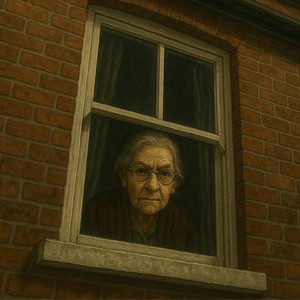
She mostly keeps her curtains closed although you do occasionally see her looking out of them.
Still, there are no strange smells coming from the house.
She's probably not a hoarder, so a hoarder is someone who keeps things in their home and never throws things away.
So if you are a hoarder, your house is filled with things, maybe old food boxes, magazines, whatever.
They just collect things and never throw things away.
People who know Elaine feel like they would know if she was a hoarder.
She just likes her privacy.
Elaine has relatives, so she has family.
She talks cheerily about her younger sister who has five kids for little ragamuffins.
Ragamuffin is like a fun word to refer to children.
Like, oh, you little ragamuffin.
Her parents are dead and her aunts and uncles live far away.
Get a drink in her and she'll tell you all about her cousins.
So once she gets drunk she talks openly about this.
Get a drink in her and she'll tell you all about her cousins, how they used to play wild as kids, riding their bikes down to the farm and stealing vegetables.
It's hard to believe it's the same Elaine who did that.
She doesn't seem capable.
She doesn't seem like the kind of person who could do that.
Elaine never leaves town to visit her relatives.
She says she's too busy.
A few times she's to church after a few days missing in action, so after a few days of people not seeing her, and said that she had her nieces and nephews to stay.
Why on earth didn't you introduce us to them?
People think. But they never say, and nobody ever sees them coming or going.
So although she says she has people visiting, there's no proof that her family actually visits her.
Once some naughty children, some bad children relatively new in town, vandalized Elaine's house.
So vandalizing is when usually kids or young people go and maybe spray paint a wall or draw on the tables at school basically writing a message somewhere that you shouldn't write damaging property.
It could also be like breaking a window, for example.
I didn't see it with my own two eyes.
I was walking in the woods when it happened.
I always go at night.
It's quieter that way.
And nobody can see you in the dark.
But I've heard enough versions of the incident from people in the parish council.
So the eye in the story has heard enough people talking about this thing that happened, this vandalism, the incident.
From people in the parish council, so the parish is like a region that a church is connected to.
So this is quite important in British history, where regions are split up into parishes, and then all the people in that parish belong to one church. These days, it's also kind of like an administrative thing, like the parish council sometimes is just like a government thing, it's not necessarily always religious, so it's just like an organizational thing.
I've heard enough versions of the incident from people in the parish council and various mothers' hushed reports outside the school grounds.
So mothers collect outside school when they're waiting to pick up their kids, so if they're giving hushed reports, they're hushed, they're talking very quietly.
So they're basically kind of spreading this gossip outside the school grounds while they wait for their kids.
So here's what I think happened.
The children came and egged Elaine's house.
They egged her house, they threw eggs at her house.
This is a form of vandalism because eggs are really horrible to clean off.
They were nervous. They weren't really the kind of kids that did these things even though some of them came from a big city.
They hadn't clicked with the town yet.
So when you click with someone you kind of start getting on well.
Yeah, you find that connection.
And they hadn't clicked with the town yet.
They didn't fit in.
See that sort of thing matters in a small town like this.
when the people don't accept you, you feel it, like you're an oily spot sitting on a cheek waiting to explode with pus.
So when you have a problem with your skin, you might have a spot like a little red bump.
I have a spot on my forehead right now and they are very oily, they're very greasy, and Some people like to squeeze their spots and burst their spots, but if you do that, then this white stuff will come out called puss and it's not very nice.
Actually, you're not supposed to squeeze your spots, I don't think.
When the people don't accept you, you feel it, like you're an oily spot sitting on a cheek waiting to explode with puss.
The kids expected someone to come out and scream at them.
They didn't know it was Elaine's house they were egging, just some old woman.
But it was strange that, of all people, they chose hers.
She's not the sort of person whose house you'd want to egg, even if you did find her annoying.
So, if they knew it was her, they wouldn't have wanted to egg her house.
But nobody did come out and so they got through two dozen eggs before one of them noticed the face peering out of the window upstairs.
So a dozen eggs is 12 eggs.
Eggs are often sold in dozens, boxes of 12.
So one of them noticed a face peering out, so looking out of the window upstairs.
through a crack in the curtain through a small space in the curtain Elaine had been watching them silently naturally the kids dropped the cartons and ran so a carton is a cardboard container you know well at least in the UK when you buy eggs it comes in this cardboard carton that the eggs sit in after that some people from the church helped clean Elaine's house.
I wasn't involved. I'm sort of the opposite of Elaine.
I keep to myself. But I'm sure everyone felt like they had to help her.
I'll be alright she insisted, but they insisted all the more.
So to insist, to say really strongly it's okay to keep repeating something.
Elaine's house was sacred territory sacred territory holy ground nobody entered it apart from her and the egging upset the balance the strange energy that protected the place the word which was never uttered nobody said the word which but thoughts can speak louder than words.
And by the way that people gently sponged her stone walls," so a sponge is this big soft thing that you use to clean, by the way that people gently sponged her stone walls, you could tell they expected a curse to befall them.
So a curse is like a bad spell that a witch casts on someone.
So if a curse befalls you, you are hit by a curse.
A curse falls on you, so they expected a curse to befall them.
Once the mess was cleaned up, Elaine continued on as her stoic self, so her serious hard -working self, helping all she came across and baking the best fairy cakes in town.
A fairy cake is a kind of small cake — very popular with kids, they're very easy to bake, they're kind of similar to cupcakes but more British.
Not that I would know.
Her stool at the bake sale is always thronging.
So her stool, the place that she sells cakes at the bake sale, is always thronging.
Always very very busy.
It's impossible to get through.
But I've seen her lugging massive plastic tubs of them into her car and driving off.
So the eye in the story has seen her carrying, lugging, big plastic tubs of fairy cakes into her car and driving off.
Importantly, the children who'd committed the egging were punished.
One of the girls, and I'm really speaking based on rumor here, one of the girls from that group did not take it well.
So she didn't accept the punishment very well.
She hadn't wanted to go in the first place, but the others dragged her along.
They made her go. And she stood at the back and didn't throw a single egg.
Yet her parents punished her harshly.
They punished her strongly.
Taking away her phone and computer and grounding her for a month.
So grounding is a kind of punishment where you tell a child you can't leave the house.
You can only go to school and come home.
you can't see your friends.
Worse, Bea, this girl, was dyslexic.
So dyslexia is a learning difficulty where you find it harder to read and write.
She was dyslexic and got extra help with reading at school.
And who led these extra reading sessions?
Elaine. So day after day, Bea had to sit and read with that stupid woman who'd ruined her life.
I sat a while one day and imagined her pain.
My childhood was filled with similar situations.
I can't stand this old biddy, she must've thought.
So an old biddy is a rude way to refer to an old woman.
Why does everyone like so much. She's just a lonely old woman with too much free time.
One day after school, when Elaine was helping out at the church, Bea broke into her house.
It was shockingly easy.
It was surprisingly easy to break in, to go in.
I saw it with my own two eyes.
The garden wall had a good grip.
So you could hold onto it well.
It had good grip. And no traps or curses jumped at B as she walked across the small stone garden filled with ugly gnomes.
So a gnome is this like thing you have in your garden it's like a short man with a beard and a pointed hat.
They're very popular in Germany, filled with ugly gnomes.
Strangely the back door was unlocked so she could open it without a key.
She cast a glance around.
She looked around, missing me and went inside.
So the I in the story is watching this from somewhere.
We don't know where.
So Bea looked around, but she didn't see the narrator, the I in the story.
All she found there was a perfectly ordinary old woman's house.
I imagine. I haven't been in there myself.
But when someone passes on a rumor, their eyes tell you details that their lips do not.
I was always told off for my overactive imagination as a child.
So I was always told off.
I was always criticized for my overactive imagination.
Having an imagination that's too strong, just making things up all the time.
But now I know that Imagination is the fertilizer of truth So fertilizer is something you pour onto plants and flowers to help them grow It's basically animal poo.
So imagination is the fertilizer of truth Imagination helps fertilize truth.
It helps truth to grow.
So obviously the narrator in the story has some strange beliefs there were ugly old sofas, shelves full of romance novels, a display case of China so like a glass box for displaying China porcelain, endless cupboards of tea and biscuits so many many cupboards of tea and biscuits.
B was disappointed.
No skeletons in the closet.
So when we say someone has skeletons in the closets it means they're hiding secrets, right, so she's looking for some kind of dark secret.
No skeletons in the closet, and it didn't even give off the impression of someone sad and lonely.
Well, there had to be something somewhere.
As Bea climbed the stairs to rifle through Elaine's bedroom, to rifle through, to look through someone's things very quickly, she felt a twinge in her back she felt a sharp pain in her back and halfway up she started running out of breath what was going on?
maybe she did her back in playing volleyball the other day maybe she hurt her back playing volleyball the other day besides the air was very close in here it was very stuffy there wasn't a lot of movement in the air since Elaine never opened a window.
Inside the bathroom, B found a hoard of lavender -scented products.
So she found a hoard, she found a collection of lavender -scented, so having the smell of lavender products.
So lavender is this purple flower and it's very popular as a scent, as a smell with older women.
And in the bedroom there were lots of old party dresses that Elaine wore to church events.
I like to imagine that Elaine was quite glamorous in her day.
As Bea searched through all this, the pain in her back got worse and she started to cough.
What was wrong with this place?
Everything inside it was so normal.
And yet, Bee checks the time, quarter to five.
She needed to vandalize something and get out in case Elaine came back.
What would cause the most damage?
Then she saw it. In the corner of the room, there was a lovely old antique standing mirror.
So a standing mirror is the kind that stands on the floor.
Yeah, like a big tall mirror.
She would smash it.
She would break it.
Seven years bad luck be damned.
So they say there's a superstition that if you break a mirror you have seven years bad luck.
But she doesn't care about that.
Seven years bad luck be damned.
Now you may be thinking that I'm just making things up.
But the sunlight happened to be shining right into Elaine's bedroom at that moment and through the thin curtains, I could easily make out the young girl's silhouette.
I could easily see the shape of the young girl's body, which was moving sluggishly.
Which was moving slowly.
Anyway, it's quite easy to infer the thoughts and behaviors of silly young women.
So when you infer something, you guess what something is, using your intelligence.
So if you infer someone's thoughts, you look at how they behave and you decide, oh, this is what they're thinking.
So it's easy to infer the thoughts of silly young women.
Bea approached the mirror.
But when she saw her own reflection, she stopped.
She was not herself.
Her back was bent, and her skin sagged from her arms and cheeks.
So, it sagged, it hung down like when you were old.
Her hair was short and grey and her clothes were made of various, soft, loose, colourful fabrics.
And those glasses, they were so thick, her eyes looked massive, and they were attached to a chain around her neck.
So old people, at least in the UK, they often wear their glasses on a chain so that they can easily take them on and off." Bea coughed and looked around.
There she was, getting caught up in memories again.
That mirror had been a wonderful present all those years ago, but she didn't have time for that.
She went over to the bedside table and checked her to -do list, so her list of things to do bake a cake write to Susan defrost the freezer so when your freezer gets full of ice and you can't fit things in there you need to defrost it you need to take all the food out melt the ice and then put the food back in yes there was that bake sale tomorrow she'd baked the cake and while it was in the oven write the letter she could post it tomorrow on the way to the bake sale She'd use up as much frozen food as she could for dinner and defrost the freezer over night.
You might argue that the young girl called B never existed, nor did the old woman called Elaine.
But if you break into the school's record – as I did, so if you hack into the school's filing system, if you go into their filing system – you will find a deleted entry for certain Beatrice Waddam.
So there was an entry for this girl Beatrice Waddam, that's B, that's her full name, but it's been deleted.
And occasionally you might find a letter or a note from a certain Elaine which you swear you got from B instead.
You're really sure you swear you got it from B instead?
Well, her Her handwriting always was atrocious.
Her handwriting has always been very bad.
Have you met Bea? Bea is a character.
Very giving but not very nice.
She loves everyone, but she shows her love through action, not smiles.
Bea helps teach children to read at the local school.
Bea bakes cakes for her church. Bee talks to lonely people at the park, although not with great enthusiasm.
But she always has time to talk.
Lately, Bee has been going around for supper at that cuddles house.
They're new to town and they don't feel they can open up to anyone but Bee.
So they can't open up.
They can't share their emotions openly.
They've always wanted a daughter, you see.
They even have a bedroom full of young girls things, but they never had the daughter they dreamed of.
Still, B, this cold giving woman makes them feel better.
At least they look happier.
Sometimes I worry that they'll look up and see me through the window, but it hasn't happened yet.
The end. All right then, now we'll listen to the story again, but this time without interruptions.
So listen and enjoy.
In case you haven't heard, it's officially in Abercrombie Summer.
The A &F Vacation Shop has everything on your packing mood board. I desperately need their new one piece, the A &F Marina.
It's strapless, so flattering, and paired with denim shorts will be my go to beach outfit this summer.
Finally, your suitcase isn't complete without finding that dress.
You know, the one for the photo shoot.
Abercrombie's Boho dresses have that perfect beachy, romantic look.
Make it an Abercrombie summer.
very giving but not very nice.
She loves everyone but she shows her love through action not smiles.
Elaine helps teach children to read at the local school.
Elaine bakes cakes for her church. Elaine talks to lonely people at the park although not with great enthusiasm but she always has time to talk.
Elaine would give you the clothes off her own back.
Elaine would give you her last 10 pounds.
Elaine would give you her lunch if you asked for it, even if she was starving.
Elaine would let you sleep in her bed and she would sleep on the floor.
But that won't happen, because Elaine never lets people into her house.
That's the one thing she won't do.
She'll organize 5000 coffee mornings at the church, but she'll never invite you in for a cuppa.
She mostly keeps her curtains closed, although you do occasionally see her looking out of them.
Still, there are no strange smells coming from the house.
She's probably not a hoarder.
people who know Elaine feel like they would know if she was a hoarder she just likes her privacy Elaine has relatives she talks cheerily about her younger sister who has five kids the little raga muffins her parents are dead and her aunts and uncles live far away get a drink in her and she'll tell you all about her cousins, how they used to play wild as kids, riding their bikes down to the farm and stealing vegetables.
It's hard to believe it's the same Elaine who did that.
She doesn't seem capable.
Elaine never leaves town to visit her relatives.
She says she's too busy.
A few times she's come to church after a few days missing in action and said that she had her nieces and nephews to stay.
Why on earth didn't you introduce us to them, people think.
But they never say, and nobody ever sees them coming or going.
Once, some naughty children, relatively new in town, vandalized Elaine's house.
I didn't see it with my own two eyes.
I was walking in the woods when it happened.
I always go at night.
It's quieter that way, and nobody can see you in the dark.
But I've heard enough versions of the incident from people in the parish council, and various mothers hushed reports outside the school grounds.
So, here's what I think happened.
The children came and egged Elaine's house.
They were nervous. They weren't really the kind of kids that did these things, even though some of them came from a big city.
They hadn't clicked with the town yet.
They didn't fit in.
See, that sort of thing matters in a small town like this.
When the people don't accept you, you feel it, like you're an oily spot sitting on a cheek waiting to explode with pus.
The kids expected someone to come out and scream at them.
They didn't know it was Elaine's house they were egging, just some old woman.
But it was strange that of all the people they chose hers, she's not the sort of person whose house you'd want to egg, even if you did find her annoying.
But nobody did come out, and so they got through two dozen eggs before one of them noticed the face peering out of the window upstairs.
Through a crack in the curtain, Elaine had been watching them silently.
Naturally, the kids dropped the cartons and ran.
After that, some people from the church helped clean Elaine's house.
I wasn't involved. I'm sort of the opposite of Elaine.
I keep to myself. But I'm sure everyone felt like they had to help her.
I'll be all right, she insisted, but they insisted all the more.
Elaine's house was sacred territory.
Nobody entered it apart from her, and the egging upset the balance, the strange energy that protected the place.
The word witch was never uttered, but thoughts can speak louder than words, And by the way that people gently sponged her stone walls, you could tell they expected a curse to befall them.
Once the mess was cleaned up, Elaine continued on as her stoic self, helping all she came across and baking the best fairy cakes in town.
Not that I would know.
Her stall at the bake sale is always thronging.
It's impossible to get through, but I've seen her lugging massive, plastic tubs of them into her car and driving off.
Importantly, the children who'd committed the egging were punished.
One of the girls, and I'm really speaking based on rumour here, one of the girls from that group did not take it well.
She hadn't wanted to go in the first place, but the others dragged her along, and she stood at the back and didn't throw a single egg.
Yet her parents punished her harshly, taking away her phone and computer and grounding her for a month.
Worse, Bea, this girl, was dyslexic and got extra help with reading at school.
And who led those extra reading sessions?
Elaine. So, day after day, Bea had to sit and read with that stupid woman who'd ruined her life.
I sat a while one day and imagined her pain.
My childhood was filled with similar situations.
I can't stand this old biddy, she must have thought.
Why does everyone like her so much?
She's just an old lady with too much free time.
One day after school when Elaine was helping out at the church, Bea broke into her house.
It was shockingly easy.
I saw it with my own two eyes.
The garden wall had a good grip, and no traps or curses jumped at B as she walked across the small stone garden, filled with ugly gnomes.
Strangely, the back door was unlocked.
She cast a glance around, missing me, and went inside.
All she found there was a perfectly ordinary old woman's house.
I imagine I haven't been in there myself.
But when someone passes on a rumour, their eyes tell you details that their lips do not.
I was always told off for my overactive imagination as a child.
But now I know that imagination is the fertilizer of truth.
There were ugly old sofas, shelves full of romance novels, a display case of china, endless cupboards of tea and biscuits.
Bea was disappointed.
No skeletons in the closet.
And it didn't even give off the impression of someone sad and lonely.
Well, there had to be something somewhere.
As Bea climbed the stairs to riffle through Elaine's bedroom, she felt a twinge in her back and halfway up she started running out of breath.
What was going on? Maybe she did her back in playing volleyball the other day.
Besides, the air was very close in here since Elaine never opened a window.
Inside the bathroom, Bea found a hoard of lavender scented products.
In the bedroom, there were lots of old party dresses that Elaine wore to church events.
I like to imagine that Elaine was glamorous in her day.
As Bea searched through all this, the pain in her back got worse.
But she started to cough.
What was wrong with this place?
Everything inside it was so normal.
And yet… Be checked the time.
Quarter to five. She needed to vandalise something and get out.
In case Elaine came back.
What would cause the most damage?
Then she saw it. In the corner of the room, there was a lovely old antique standing mirror.
She would smash it.
Seven years. Bad luck be damned.
Now, you may be thinking that I'm just making things up but the sunlight happened to be shining right into Elaine's bedroom at that moment and through the thin curtains I could easily make out the young girl's silhouettes which was moving sluggishly.
Anyway, it's quite easy to infer the thoughts and behavior of silly young women.
Bea approached the mirror but when she saw her own reflection, she stopped.
She was not herself.
Her back was bent and her skin sagged from her arms and cheeks.
Her hair was short and grey and her clothes were made of various soft, loose, colourful fabrics.
And those glasses. They were so thick her eyes looked massive and they were attached to a chain around her neck.
Bea coughed and looked around.
There she was, getting caught up in memories again.
That mirror had been a wonderful present all those years ago.
But she didn't have time for that.
She went over to the bedside table and checked her to -do list. Bake a cake?
Write to Susan? Defrost the freezer?
Yes. There was that bake sale tomorrow.
She'd bake the cake and while it was in the oven, write the letter.
She could post it tomorrow on the way to the bake sale.
She'd use up as much frozen food as she could for dinner, and defrost the freezer overnight.
You might argue that the young girl called Bea never existed.
Nor did the old woman called Elaine.
But if you break into the school's record as I did, you will find a deleted entry for a certain Beatrice Waddum.
And occasionally, you might find a letter or a note from a certain Elaine, which you swear you got from Bee instead.
Well, her handwriting always was atrocious.
Have you met Bee? Bee is a character.
Very giving, but not very nice.
She loves everyone, but she shows her love through actions, not smiles.
Bee helps teach children to read at the local school.
Bee bakes cakes for her church. Bee talks to lonely people at the park, although not with great enthusiasm.
But she always has time to talk.
Lately, Bea has been going round for supper at that couple's house.
They're new to town, and they don't feel they can open up to anyone but Bea.
They've always wanted a daughter, you see.
They even have a bedroom full of young girls' things.
But they never had the daughter they dreamed of.
Still, Bea, this cold -giving woman.
makes them feel better.
At least they look happier.
Sometimes I worry that they'll look up and see me through the window.
But it hasn't happened yet.
The end. Well I hope you enjoyed today's story.
It's kind of similar to some of my past stories.
This theme of swapping bodies, changing bodies is also in the story, the Red Book.
That's another story I wrote that's really similar in that sense.
And then also I feel like this kind of setting of this, like, small British town where someone is going missing, it's a bit mysterious.
That comes up in, Have You Seen This Woman?
Actually, the style of this story is very similar to that.
It's kind of a bit creepy, a bit weird. And then this theme of the narrator kind of watching but not being involved in the story came up in my story four windows.
It's kind of strange now, I guess I've done so many stories for the podcast that I can see certain themes kind of reoccurring every now and then.
And of have I run out of ideas?
Am I just repeating myself again and again?' But I think it's normal as an artist that you find certain themes and styles that resonate with you that you really enjoy, and you return to them.
So hopefully you don't feel like it's all very repetitive.
Hopefully you enjoyed today's story.
And if you're confused by the ending, you know, leave a comment.
Why don't you say what you think the story is about?" And then other people can let you know what they think.
Sometimes I do get comments from listeners saying, I don't understand the ending, or why did this happen?
And as the writer, I never really want to explain it because my feeling is, you can interpret the story however you want, right?
You can decide what the story means.
So as long as you're understanding the actual language you get to choose what the meaning of the story is.
Obviously in this one it's quite ambiguous like, what happened to this girl?
Why did she change bodies with the old woman?
Who is this mysterious narrator?
What does it all Mean!
You get to choose because I'm the writer and I'm too lazy to do that.
That's not my job. Anyway, I've recently got back into intermittent fasting.
If you're not familiar, intermittent fasting is a form of fasting.
So fasting is when you don't eat for a period of time, often for dietary or religious reasons.
For example Muslims fast for Ramadan.
Intermittent fasting though is the idea that you do it just for a certain time window every day.
So maybe instead of eating breakfast, lunch and dinner, you just eat lunch and dinner and then you fast let's say 16 hours between your eating windows.
So I am not doing it super hardcore.
But basically I'm just doing it because, I don't know, I was finding that I would get up early in the morning around six.
I would have breakfast, I would have lunch at work or after work, and then because I go to yoga after work, I would often get home around nine or ten and then eat a meal, so I wasn't really giving my body like any rest periods, and I found it was not great for my digestion, so I thought, okay, let me try and reduce the eating window, and at first I was just going for like a 14 -hour fast, which is very doable because it gives you 10 hours to eat.
So you could eat between like 7am and 5 pm or 9am and 7pm, but I've kind of just been playing it by ear.
When you play something by ear, you just improvise, you just see what happens and make decisions based on that.
So I've kind of just been, yeah, seeing when I feel hungry and than maybe trying to push for slightly longer fasts, I should say the reason people do intermittent fasting is that fasting has a lot of health benefits, not only for burning fat, but also for repairing the body, for increasing your metabolism, and also it's just good for your willpower, actually.
There's a misconception that it's very bad for you, but actually it's very good for you if practiced in a controlled and safe way.
And as long as you're eating healthy, nutritious food when you are eating.
So for example, yesterday I had breakfast and lunch, and then I went to work, and I didn't eat at work because I was teaching for four hours non -stop.
And then after work, it was like, well, I could eat now but I had yoga in like an hour.
I didn't want to eat anything heavy before yoga so I said okay let me just try it and fast until tomorrow morning because most of that fasting time would be happening overnight so I did that so this morning I got up and I felt great actually I didn't feel the need to break my fast straight away so I had a shower I got a bit of work done I taught a class online but then I started to feel really sluggish sluggish like a lug I started to feel really tired and slow so I broke my fast but all in all I was fasting for 22 hours so almost 24 hours which is one of the longest fasts I've ever done there
was a period years ago when I did a 20 -hour fast every day and then I had a four -hour eating window but that's not ideal because you you end binge eating.
it's very hard to eat enough food in just four hours but I'm going for pizza tonight with a friend so I'm gonna have quite a long eating window and I'm probably going to eat a big pizza and feel very full so it's actually a good thing I think that I had a long fast and then I'll have pizza tonight and just kind of go back to maybe a more normal eating window.
maybe this is quite boring I don't know.
I don't know I feel like I talk a lot on the podcast about like yoga and fasting and like all of this self -development stuff that if you're not doing it, it can sound a bit boring or worse like pretentious like oh my god I'm so healthy, I'm a health goddess, mama mama mama.
If I'm gonna be really honest one of the main reasons I'm fasting right now is I want a six pack.
So six pack is when you have those muscles on your stomach that are like, you have six muscles, right, three rows of two muscles that show up.
The thing with a six pack is, it says much about losing weights as it is about having muscle and I've built up a lot of muscle with yoga.
Hello, if you're on YouTube, I'm showing off the muscle.
Just just like listen.
Wow, did you hear the noise my muscles made?
Wait, let's do it again.
That's how big they are.
They make noises now.
Definitely, it's the muscles making that noises and not me.
But yeah, so I feel like I've built up a lot of core muscles, a lot of muscles in that part of the body.
But I want to see the six pack, which means I need to lose weight.
it's probably a bit vain, it's possibly too much work, like it's possibly too difficult at goal because I know you really have to lose weight to have a visible six pack, and also it depends on your body type and genetics, but I want to give it a go!
I just think that would be really fun for the summer, you know?
Show off my body. Anyway, I want to remind you all that I still have discounts available for my private, one to one online classes.
So if you want to take classes with me in June or July you can get 50 % off.
That's half off. What a discount.
Just go to easy stories in english .com slash classes.
And if you're not sure if you want to start classes, you don't want to commit yet, you can book a 15 -minute consultation with me where we just chat and I answer any questions you have. Alright then, thanks for watching and see you soon.