Hey Proof listeners, it's Morgan Bowling.
In these hot summer months, I know we're all looking for ways to keep our things cool.
Whether you're packing up for that weekend camping trip, loading your cooler for your backyard barbecue, or taking a fishing trip and need to keep your prize catches cool, Arctic Ice makes the ice packs for you.
Arctic Ice Pack Slim Shape makes them easy to pack in coolers, lunch boxes, and more.
Their hard exterior protects them from punctures and eliminates the awful sogginess you get from other options.
We needed only one of these Alaskan Series Extra Large Packs to line a cooler to keep soda chilled for more than a day. and the pack stayed cold for almost 14 hours when we let it sit out at room temperature.
For all these reasons and more, we found the Arctic Ice Alaskan Series Extra Large Ice Packs to be the winner when put head to head with their competitors.
And that's not all. These ice packs are manufactured in America in a variety of different sizes to fit all your needs, and they come with a lifetime warranty.
Visit arctic-ice.com to learn more. Hey, Proof listeners.
Jack Bishop here. I know you're passionate about food, so I have another podcast I think you'll love.
Culinary characters unlocked is hosted by david page the emmy-winning journalist and creator of diners drive-ins and dives This podcast takes you behind the scenes with Michelin star chefs, James Beard Award winners, and food innovators.
Each episode goes beyond the kitchen to explore real lives, big ideas, and surprising journeys that shape what and how we eat.
It's a podcast that uncovers the passion struggles and creative spark behind the food we love.
Follow Culinary Characters Unlocked on Apple Podcasts, Spotify or wherever you get your podcasts.
My 30-year-old daughter turned me on to Quince, and now I'm a repeat customer.
I'm not talking about the fruit, which I love.
I'm talking about the online retailer with high-quality fashion at affordable prices.
I'm obsessed with the Pro-Tech golf pants from Quince.
And in case you're wondering, I do not golf.
I started with these pants in khaki, and I must admit I was skeptical when I ordered.
I usually buy pants that cost two or three times as much, but I love the fit and feel of this Quince Classic.
The fabric is so darn comfortable. wife and to the office.
I've dressed them up with a collared shirt and blazer and kept it casual with a polo shirt.
I like that first pair of Quince Pro-Tech golf pants so much that I've since ordered them in two more colors, blue and black.
I travel a lot and really appreciate that these pants resist wrinkling.
I'm heading to Europe later this year, and I don't think those more expensive pants in my closet are coming with me.
Keep it classic and cool with long-lasting staples from Quince.
Go to quince.com slash proofpod. for free shipping on your order and 365 day returns.
That's Q-U-I-N-C-E dot com slash proof pod. as in proof, P-O-D, to get free shipping and 365-day returns. quince.com slash proofpod.
If you're a budget airplane traveler, you probably don't care too much for the food.
My wife and I have been on enough flights where snacks aren't even served.
So now, she always brings her own. Lauren assumes our flight will be delayed for hours, maybe days, and packs accordingly.
Dried apricot. nuts, hard cheeses and salami, already sliced, of course, crackers, apples, chocolate bars.
Thanks to my wife, I eat very well when we fly.
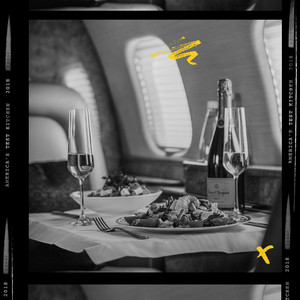
But I head to the front of the plane and airlines are competing in new ways to serve memorable food at 37,000 feet.
They're hiring celebrity chefs to design wildly creative menus.
They're expanding their wine offerings and making their table or tray setting feel like a fancy restaurant.
Reporter Emily Siner wanted to understand how and why airline food is evolving.
She takes us inside a commercial kitchen where thousands of airline meals are prepared every day.
And she looks at the economic forces that have shaped onboard dining over the years.
Today on Proof from America's Test Kitchen.
What exactly does it take to serve a high-quality meal when jetting across the globe?
I'm Jack Bishop. Fasten your seatbelts and get ready to fly.
Hey Proof listeners, it's Jack Bishop. At America's Test Kitchen, we know how important it is to cook with a good sturdy pan.
And Smithy's Ironware, well, it gets the job done.
Smithy Crafts cast iron and carbon steel pans in South Carolina.
They come pre-seasoned with no chemical coatings, so they're ready to go right out of the box.
When our in-house reviews team tested Smithy's carbon steel pan, an egg even slid across the surface the very first time they used it.
The cast iron pan had the same impressive non-stick quality and was our reviews team's top choice.
And these pans aren't just good looking, with that iconic golden hue and sleek finish.
They're balanced, comfortable to handle, retain heat beautifully, and deliver even browning every time.
From weeknight meals to decadent desserts, these pans work hard and look good doing it.
Smoothie doesn't just make skillets. They have Dutch ovens, griddles, and more, all guaranteed for life.
And speaking of for life, all of their cookware is engravable, making them the perfect family heirloom.
All that and more is why Smithy Pans are highly recommended by our reviews team.
Visit smithy.com to learn more and get your hands on one of these pans today.
Eczema isn't always obvious, but it's real. taking EPCLS achieved itch relief and clear or almost clear skin at 16 weeks.
And most of those people maintain skin that's still more clear at one year with monthly for two milliliter injection is a prescription medicine used to treat adults and children 12 years of age and older who weigh at least 88 pounds or 40 kilograms with moderate to severe eczema. also called atopic dermatitis that is not well controlled with prescription therapies used on the skin or topicals or who cannot use topical therapies Epgliss can be used with or without topical corticosteroids.
Don't use if you're allergic to Epgliss.
Allergic reactions can occur that can be severe.
Eye problems can occur. Tell your doctor if you have new or worsening eye problems.
You should not receive a live vaccine when treated with Epglys.
Before starting Epglys, tell your doctor if you have a parasitic infection. searching for real relief?
Ask your doctor about Epglys and visit epglys.lily.com or call 1-800-LILY-RX or 1-800-545-5979.
Save big during Labor Day at Lowe's. Get up to 40% off select major appliances.
Plus, buy more to get up to an additional 20% off.
Shop even more savings with three Stay Green one-cubic-foot vegetable and flower garden soil bags for $10.
This Labor Day, take care of your home for less it loves.
We help, you save. Reporter Emily Siner has the story.
I was 15 years old the first time I flew overseas.
It was on a choir trip to Italy. And everything about that flight seemed novel and exciting. the airplane safety announcements in two different languages, the free blankets and headphones, and most of all, the food.
I still remember the anticipation of smelling that there was hot food on the plane and then getting to choose what I wanted to eat.
To be clear, we were flying economy, so it's not like it was fancy.
Some kind of pasta with salad and dessert.
But the fact that I was getting served a personal meal at all felt like the ultimate unexpected treat.
Like going on a boring trip to the grocery store as a kid and realizing that they're giving out free samples.
Or stumbling upon an art gallery opening that's giving out complimentary wine and cheese.
Basically, I'm a sucker for free food. And to this day, airplane meals still have that sheen for me.
There's something exciting about them, even when you're packed like sardines in economy class. but this is apparently an unpopular opinion.
You're the very first person I have ever met, and I'm going on 79. who looks forward or looked forward in any way to airline food.
I find that fascinating. Annette Fida is my mom's first cousin.
And I have to say, I was surprised to hear this because Annette was a flight attendant back in the late 1960s. during what we now call the golden age of flying.
It really was such a different way to travel compared to how people are traveling today.
Wouldn't you like to fly up, up and away?
The golden age of flying usually refers to this mythical time from around the 50s and 70s.
Airplane technology had advanced enough to become the go-to method of travel in the US.
People were taking planes instead of trains to travel domestically, It was way better than a boat for crossing the Atlantic.
And flying during this time was iconically bougie.
Whether you're traveling in the supreme comfort of first class, where all the extras are on the house, including champagne, of course, Annette remembers working on two-story planes with coat closets.
There was ample legroom, and it was not an everyday experience, in part because flights were still very expensive.
One calculation I saw is that a flight from New York to LA would have cost you the equivalent of $1,600 in today's money.
Flying was still something that was a little exclusive and people dressed up to go on airplanes.
The way Annette describes it, the era was serving luxury with a heaping scoop of misogyny.
Are you wearing your girdle? Yes, ma'am.
Oh. In the opening scene of an ABC drama called Pan Am about the lives of Golden Age stewardesses, all these women in matching blue caps and suit dresses stand on a scale before boarding their flights.
Annette says, yep, this is accurate. We had our little hats.
And our little uniforms. And back then, stewardesses were on Weight Watch.
If you were a little too chubby you could get taken off your line until you lost a certain amount of weight.
Like she said, a different time. And one of the other things that made this era seem so foreign was the food.
Quiche Lorraine. Lovely, fresh chips. Lasagna over Los Angeles.
On the now-defunct airline TWA, the flight attendants would carve Chateaubriand beef tenderloin right there in the aisle.
Alaska Airlines famously served caviar. If you were in first class, you were eating off of china.
You had a linen tablecloth. You had crystal.
The food was much better and it was served more like in a restaurant.
The keywords here are first class. You got the golden age of airplane meals if you had money.
If you didn't and you were stuck in the economy seats, There's always the rubbery chicken. and the overcooked vegetables.
And usually the rolls were safe to eat. And so people would eat the rolls in butter.
And then the desserts were very unmemorable.
This explains why Annette has never found airplane food exciting.
Even when she was flying in the late 60s, she was mostly stuck serving the rubbery chicken and mushy broccoli.
Only the more senior stewardesses got to work first class.
And then, within a decade, the airline industry would go through a seismic shift that notoriously made the food even worse.
In 1978, Congress passed the Airline Deregulation Act, which allowed airlines to function without as much government oversight.
For the first time, they were able to compete for passengers by dramatically lowering their ticket prices.
Many more people could now afford to fly, but the low fares came at the expense of the luxuries.
Take this small carrier out of Texas that thrived after deregulation.
This is your basic one of a kind airline.
No gimmicks, just your money's worth. Southwest Airlines invented low fares.
That's true. Yep, good old Southwest Airlines.
One of the original low-cost carriers, which meant, among other things, that they packed way more people on board and they didn't give out many perks.
Definitely no caviar, not even rubbery chicken.
But hey, the fares were cheap and that was enough to get customers.
Later, there was 9-11 and then the recession, new security measures and deep financial pressures.
The airlines had to find new ways to make money while keeping the seat price as low as possible.
This was the era of unbundling, when everything became an add-on.
Extra fees to check a bag, extra fees to eat a snack, And even on international flights, like the one I took on my choir trip, I would venture a guess that the food they served cost as little as possible.
The reputation of airline food became and remains firmly in the dumps.
But it might be time for a little reputation upgrade.
Nowadays, you see airlines like, you know, Hemmards, Qatar Airways, Etihad, even Air France coming up with a very nice roster of Michelin-starred chefs. designing new dishes for those sitting in first class or business class.
Enrique Perella is the aviation director at Business Traveler magazine, an outlet geared toward high-end flyers.
He says the shift toward nicer airplane food started more than a decade ago, but it ramped up even more right after the pandemic.
People had stopped traveling. And when they finally did again, they were like, hey.
If I'm going to do it, I'm going to do it well.
And, you know, I want to have a pre-flight meal in the lounge.
And if I'm going to be flying. Improving economy or business, you know, I want to be served a decent cup meal and, of course, wine and cocktails and stuff like that.
Real YOLO vibes. they are expecting a lot more than what we used to see before the pandemic.
If you think back to deregulation in the late 1970s into the 1980s, Customers seemed to want low prices more than anything else, and the airlines responded by dropping all the amenities.
Now, customers want amenities, And the airlines are responding by raising the prices.
For example, in 2026, United will start flying a redesigned plane that includes more first class and business class and economy plus seats. and fewer seats in normal budget economy.
Enrique says that's a multi-decade gamble.
It tells you that the airlines are understanding that there's a lot more people willing to pay for a business class seat and therefore willing to receive benefits. a proper meal on a long-haul flight.
To manage this new wave of food expectations, airlines have increasingly outsourced that part of the business.
United, for example, used to handle all of its own catering in-house.
But Enrique says for such a large airline with so many hubs, dealing with the logistics became arduous and expensive.
So United started outsourcing in 2021. I would say probably 90% of the airlines around the globe outsource the catering program, mainly because it's really difficult to coordinate the logistics of putting a dish for one passenger inside an aircraft that's going from point A to point B.
That word, logistics, is admittedly not the sexiest one.
It's definitely not as sexy as Chateaupriant beef.
But Enrique says if you want to gain an appreciation for the modern age of airline food, this is where you have to start.
Not with the food itself, but with the operations behind it.
And so I flew to Chicago to see it for myself.
Right across the street from the tarmac at O'Hare International Airport is a nondescript, low-slung building that's home to the Chicago outpost of a company called Gate Gourmet.
In a world where airlines are outsourcing their catering, Gate Gourmet is one of the largest players.
They produce about 400 million airplane meals a year around the world.
They have operations in 60 countries. And in Chicago alone, they produce almost 250,000 meals every month for hundreds of flights across multiple airlines every single day.
This is sort of one part of where this all starts, right?
I've been invited to tour the Chicago facility.
We begin in the warehouse, with the stores of fresh produce, Big stacks of pineapple, asparagus, huge cans of whole peeled tomatoes, an entire room filled with cheeses.
Double Gloucester cheese with olive and chive.
That's going for a particular customer that wants exactly that.
Jars of olives. There's sliced peaches and syrup.
There's Pozzelli whole peeled tomatoes. I have to admit, as much as I enjoy getting my little tray of hot food on a plane, I've never given much thought to where it comes from.
I would have assumed it came from some faraway warehouse in Shipton.
But almost immediately on the tour, I realized this is wrong.
The food going out of O'Hare, especially on the large international flights, are being prepared that day.
The trucks that load up the plane drive in from right across the street.
What's even more impressive is realizing how many different kinds of meals these workers are responsible for.
Think about an international flight. It might have four cabin classes.
First class, business, economy, economy plus.
Each kind of seat comes with different kinds of meals.
And each one gets choices, chicken or vegetarian, fish or pasta.
In economy, maybe you have like two choices, but in business, in first class, you might have five.
This is Molly Brandt, one of the lead chefs at Gay Cormé.
So it's like five times this dinner service, five times this lunch service. so on and so forth.
And then there are snacks and there's pre-arrivals and there's breakfast.
And so a menu grid can be, you know, a hundred plus dishes.
The CEO of Gate Gourmet once compared it to a Formula One pit stop.
They have to make sure that every one of these hundred plus dishes for a single flight is prepared correctly, in the right numbers, between the time that a plane rolls into the gate and when it leaves.
Because once that plane is in the air, there's no going back.
Mastering the logistics is the single most important priority for Gate Gourmet and its competitors.
If they don't stock the planes correctly, if some passengers end up without dinner on the overnight flight, if the chicken isn't fully cooked, ugh, that's bad.
But when Gate Gourmet is trying to compete for a new contract, they're not only talking about logistics.
No, the way they win a client is by impressing them with the food.
This is a smoked whitefish dip. And then we also have a whitefish roe right next to it.
And there's a little bit of beet horseradish and dill.
Molly Brandt isn't just a lead chef at Gay Gourmet.
She holds the unusual title of Gay Gourmet's Executive Innovation Chef.
Which means her job is to come up with concepts for airplane food that haven't been thought of before.
She's the one the company brings in when they really want to wow a client.
What I'm fond of telling people is If I were in the car business, these would be concept cars.
Okay. And you come to the show and I have designed this concept car just for you.
We know everything about your heritage. We know all about your brand pillars.
We know all about where you believe you are excelling and where you might not be doing so well.
And we have created this storyline that should be a perfect fit for you.
Her job starts with old school research, specifically cookbooks from all over the world.
Church cookbooks are her favorite. And I have the most analog, very Gen X thing of me, which is like an accordion file of years of magazine tearouts.
For extra authenticity, she calls up her contacts in other countries.
When she was designing food for a flight to the Netherlands, she asked her Dutch friends what they eat when they go home. bitterballa and yuppie sauce and all kinds of things.
I'm sorry I'm not going to put the pickled herring on the flight.
But yuppie sauce, which is like a curry condiment.
I incorporated that into a sweet potato puree and then paired it with a rendang croquette.
Everything Molly creates is intended for flights coming out of North America.
So she says she's not doing fusion just because it's fun.
The idea is that the people who live in both the outbound and inbound cities will find the flavors familiar.
Here's what that might look like in practice.
Molly says Gay Gourmet is trying to do more business with Asian carriers flying out of O'Hare.
So Molly was like, what if I take a Chicago-style Italian beef sandwich, but make it more familiar to a Chinese palate?
And it just so turns out that in Chinese cooking, there is a very well-known cold appetizer that is braised beef shank in master stock. and then it's shaved.
It comes with some spicy oil and usually some scallions, et cetera.
These ingredients have the added benefit of being heavy on umami.
In 2015, researchers at Cornell University found that the noise on airplanes affects people's sense of taste.
It lowers the perception of sweetness and heightens the perception of umami.
That's part of why, famously, people are more likely to drink tomato juice on flights.
So Molly sous-vides the roast beef, shaves it, adds some giardiniera and some chili oil.
We have some chopsticks for you. Definitely dip, get into the sauce, make sure you get some of the pickle.
I got to try a sample the dish was savory and complex with a bit of a kick that would help clear my sinuses mid-flight this is delicious And more than that, it was beautiful.
It could have just been a whole lot of brown, but there were sliced carrots on top shaped into flowers.
There were artfully scattered green peppers and olives and pickled cauliflower that added acid and crunch.
Another creation I got to sample was a take on Chicken Vesuvio, which also has origins in Chicago.
Molly made it with a Middle Eastern customer in mind, adding nine spice and limon omani dried lime.
And then she turned it into a sort of deconstructed pot pie with a little rooster imprinted on top, just for fun.
It was playful and savory, a classic with a twist.
This is the concept car. The sky is the limit, literally.
And it's giving airplane food a whole new reputation.
After the break. How do these artfully designed meals actually get into the air?
It's way more complicated than any restaurant on the ground.
Funding for Proof comes from American Cruise Lines, proud sponsor of America's Test Kitchen.
On a journey with American Cruise Lines, travelers experience the maritime heritage and culture of the Maine coast and New England islands.
Their fleet of small cruise ships explore American landscapes, seaside villages, and historic harbors where you can experience local customs and cuisine.
To learn more, visit AmericanCruiseLines.com This episode is brought to you by Indeed.
When your computer breaks, you don't wait for it to magically start working again.
You fix the problem. So why wait to hire the people your company desperately needs?
Use Indeed's sponsored jobs to hire top talent fast.
And even better, you only pay for results.
There's no need to wait. Speed up your hiring with a $75 sponsored job credit at Indeed.com slash podcast.
Terms and conditions apply. Mint is still $15 a month for premium wireless.
And if you haven't made the switch yet, here are 15 reasons why you should.
It's $15 a month. Seriously, it's $15 a month.
No big contracts. I use it. My mom uses it.
Are you playing me off? That's what's happening, right?
Okay. Give it a try at mintmobile.com. Upfront payment of $45 for three-month plan.
$15 per month equivalent required. New customer offer first three months only.
Then full price plan options available. Taxes and fees extra.
See MintMobile.com. And now, back to our story.
As the innovation chef for a massive in-flight catering company, Molly Brandt designs meals to woo airline executives.
They are like concept cars. They're beautiful and impeccable and made of the highest quality.
And yet they're usually too elaborate to be mass produced.
Or if we're using her analogy, not all concept cars are meant to be driven.
But there is a team of development chefs who bring these blue sky recipes down to earth.
And it's led by chef Farrand Lee. My job is to put food on a plane.
That's what I do. Ferrand is pretty matter-of-fact about his mission, but he is in charge of every gate gourmet meal that leaves North America.
This is a massive job. Remember, a single international flight, just one route on one carrier, might have more than 100 distinct dishes on board.
From vegetarian to kosher, from breakfast to dinner to mid-flight snack, from first class to economy.
You're on planes all the time. So how often are you eating things that you've developed?
I just came back from a trip to Dublin and it was our food.
So it was very interesting. And were you like, I did pretty well.
This is good. Well, I always have feedback to the team, so immediately after I landed, I will send a report Besides giving notes on the food, part of Farron's job is turning Molly's blue sky ideas into flyable recipes.
Maybe I can walk you through an example that Molly designed for a Middle Eastern carrier.
Molly had conceptualized a dish for passengers flying out of Boston to the Middle East.
The concept was a seafood bake, a nod to New England.
But Farron says this particular airline serves halal meals, so Molly designed the recipe without white wine or pork.
Instead, she used Japanese dashi to give it a smoky flavor.
The airline liked the concept, so she handed over her recipe to Ferrand to develop further.
And with every dish that goes on a plane, his first question has nothing to do with the actual food.
What kind of vessel is it going into? For airline in particular, it's the size and the height of the dish that is very important.
So nothing can be too high because it won't fit into the trolley or it won't fit into the oven.
Next, he considers the base ingredients.
How will they hold up in the amount of time between when they're prepared on the ground and when they're served on the plane?
A dish that's cold, for example, will sit in a cooler for several hours.
So Farron's team of development chefs stress test it.
They build the dish, chill it for four hours, and see what goes wrong.
So if there's anything that is too delicate on the menu or in the recipe, we need to change that out to something that is more durable.
Salad dressing, he says, is vulnerable to splitting when it's chilled for a long time.
His team also tests the hot food. On my tour at Gay Cormé, we walk past an industrial kitchen where line cooks sear tomatoes and grill short ribs.
But Farron points out that all the hot food quickly gets chilled before it's transported onto the plane and eventually reheated on board.
This presents problems for things like meat, which can dry out if it's not reheated properly.
So we need to make sure the protein is as moist as possible when it gets on board before reheating. hence incorporating short ribs rather than a leaner cut of steak.
One of the ways they keep protein moist is by using sous vide, the chef-y technique for cooking proteins in a precisely regulated water bath.
Sous vide is typically associated with fine dining restaurants, not airplane food.
Sous vide is about... controlling the texture, right?
You want soft chicken or do you want like firmer chicken? we can control it very accurately with sous vide technology.
Because we have different applications, right?
Sometimes we use chicken for a roast chicken dinner, or maybe we use the roast chicken for a chicken salad.
Ferrand also showed off this nifty contraption called a rationale oven.
It's the size of a large refrigerator. and cooks trays and trays of food to the exact temperature you specify with whatever technique you want.
Steaming, broiling, grilling. Once we have set the time, temperature, moisture level, we can download those programs into all our ovens across the network in North America. to achieve that level of consistency.
If nothing else what I learned on this tour was the high premium placed on consistency.
Every ingredient and every process is meticulously measured so that the cost doesn't go over budget, so that everything meets safety regulations, And so the experience is the same for every passenger on every flight over and over again.
So, in the case of Mali's seafood bake for the Middle Eastern airline, Farrand ultimately had to re-engineer the dish.
Instead of just popping a big bake in the oven, each piece of seafood was cooked separately, guaranteed to be at the right level of doneness. and then the component parts were assembled into individual portions so that every passenger would get the exact same serving.
The next time when the customer comes back, we will show that they're in a flyable format.
Consistency achieved. Now, it's ready for airtime.
So these are the tomatoes that were being grilled and now they're being plated with.
That's a beef short rib. You see the tomatoes.
On the tour, we get to see the flyable formats of several dishes.
These aren't meals that Molly came up with, but they still look delicious.
Workers are wrapping tiramisu for a Delta flight, making cheese plates for British Airways, So they'll serve this on board in like a first class.
You can tell what's heading to which part of the plane just by looking at the plating.
Economy class food is prepared in tins, easy to reheat in convection ovens and stick on trays.
Business class food is usually prepared on real plates, which will be reheated on board.
First-class meals might not be plated on the ground at all.
The flight attendants would be responsible for heating up each component on board and arranging everything like a top-notch meal at a restaurant.
And some airlines even have flying chefs that will do the heating and plating on board.
I flew first class from Paris to Riyadh, I think about two years ago.
This is Nick Lucas. He runs an Instagram account and website called InFlight Feed.
He's what I would call an airplane food influencer.
I had a butler. I had a private chef. I wasn't ever served by a flight attendant.
Nick's mission is to try as many meals in the air as possible and then tell you if they're any good.
The first-class meals, they are good. It was like dining in a Michelin-star restaurant.
They would sit there and explain everything about the meal to you.
It really went into the history of the food and where it might have come from and why they're serving that on board the airline.
I can remember things like the precision in the way that everything was laid on the table in front of me, the way that they put the tablecloth down.
This is glamour. This is luxury. Hearing Nick talk about this right after going on the tour of Gate Gourmet, I'm convinced that we must be in a new golden age of flying.
There's your edible flowers. Yep. Gate Gourmet is incorporating trendy, high-end ingredients.
Enrique Perrella with Business Traveler magazine says airlines are hiring pastry chefs and sommeliers.
He told me about one reporting trip where he saw this firsthand.
I visited last year with Singapore Airlines.
We flew to France to select the labels that they were going to be serving for the next 10 years.
Caviar and champagne are no longer relics of the golden age.
They are back, baby. And yet, just like in the Golden Age, it's a tale of two classes.
Because for passengers like me and economy, Probably going to be served a very basic and cold and not appealing meal.
The food, I would say, was mediocre. I recently got to experience this for myself.
While I was reporting this story, I happened to fly to Europe again.
My dinner came out not cold, but very soggy.
Some overcooked... An over-cheesy tortellini.
The meal wasn't complex. It wasn't even balanced.
A salad with lots of cheese. A dairy dessert.
My stomach is not a fan. It really put my love for airplane meals to the test.
I would have loved something with, I don't know, edible flowers, but those don't get served in the cheap seats. and certainly nothing that Chef Molly creates.
I asked Farron Lee from Gate Gourmet about this.
Do any of the really creative ideas that come from Molly filter down into economy or So far, no, I have not seen anything filtered down to economy costs.
I understand why this is the case. I'm a person who still prioritizes price over luxury.
There's no incentive for an airline to woo me with fancy food, as long as they can provide me a low fare.
Yet I can't help but feel a little disappointed.
They say comparison is the thief of joy.
And now when I eat my soggy pasta on the plane, it's made soggier emotionally. by the fact that I know that there's really good food being served to passengers just down the aisle.
I asked airplane food influencer Nick Lucas about this.
Because like any good content creator, his Instagram pictures look beautiful.
But they're not just business and first-class meals.
In fact, he says he only accepts one or two free tickets a year.
The rest is out of pocket. So he flies an economy quite a bit.
I've got a number of airlines that I'm trying to sort of catch up with because there's been so many new innovations in economy, We've even seen airlines like Swiss who have just totally reimagined the whole economy class experience.
And it's actually wonderful and lovely and reminiscent of like earlier times in life.
Nick says he got a meal served delightfully in a bento box.
Unlimited Swiss snacks were available for free in the galley.
He also points to JetBlue, where customers can choose what they want to eat on their in-flight entertainment system. and Turkish Airlines, which serves kafta, a Turkish meatball, to its economy customers.
I find it amazing that they can create something outside of Turkey that seems so authentic.
Nick also is not afraid to pay for upgrades.
Instead of a standard meal on KLM, he says he got a much nicer one for an additional 20 to 30 euros.
That doesn't give me the same satisfaction as a free meal, but I admit it's still cheaper than paying for a premium seat.
But either way, Nick says he thinks airlines should aspire to serve good food even when someone isn't paying big bucks to fly.
Because it fosters something that all airlines have been competing for ever since deregulation, loyalty.
I do think that flying has a lasting impression on you.
It's an experience, it's out of the ordinary Why not make it a little bit nicer?
Why not let people remember your airline?
They'll definitely remember how the crew treated them and how the food was.
And for the other less than stellar food experiences in the air, regardless of how much money you paid for the seat, Nick encourages a little bit of patience.
But you've got to remember, you're kilometers up in the air in a pressurized metal tube.
You're traveling at like, what, 700 or 800 kilometers an hour, whatever they fly at.
It's not going to be perfect, but I still think that sometimes you've just got to kind of take a step back and go, hang on a minute, I'm having a meal in the air.
And the logistics and everything that goes... into getting that meal to you is quite extraordinary as well.
It's a meal that I now know was crafted and prepared by real people, many of whom are working in close proximity to where I took off.
The constraints are numerous and the innovation is happening.
And if I'm really worried about it, I can just pack my own snacks.
Thanks to Emily Siner for bringing us today's story.
Next time on Proof, We dive into the meat paradox and learn how the industrial revolution changed our relationship with the animals we eat.
It's only very recent in our history as humans that we have had the option of not seeing our food be killed.
If you like Proof, be sure to subscribe wherever you listen so you can get new episodes as soon as they drop.
And while you're there, why not leave us a rating or write us a review?
It really helps other people find the show.
This episode was hosted by me, Jack Bishop.
And the podcast is made by the following cast of characters.
I'm Yumi Araki, the managing producer. I'm Senior Producer Alex Curran-Cardarelli.
I'm Associate Producer Angelica Quintanilla.
I'm Associate Producer Louise Curran-Kensler.
And I'm Kyla Foreman-Andrade, the TV and podcast intern.
Audio services are provided by Ultraviolet.
Sound design by Matt Boynton. Brian Campbell of Signal Sounds composed our theme music.
Additional music by Kyle Forrester and Jordan Pearson. is our director of post-production and our director Special thanks to Mike, Gabby, and Jordan at Juliet Alpha, and to Chris Kinsella and Charlie Staff at Gate Gourmet.
Nina Gianelli. Is the Senior Vice President of Television, Video, and Podcasts.
Dan Souza. and Dan Surratt is America's Test Kitchen's CEO. proof is a production of America's test kitchen.
This podcast is part of the airwave media podcast network.
Visit airwavemedia.com to listen and subscribe to their other fine shows. an Airwave Media podcast.