Innovation and opportunity aren't confined by geography.
For investors seeking to chart a different course, the GlobalX International Access ETFs deliver targeted exposure to emerging markets such as Argentina, Brazil, India, and more.
Explore GlobalX's full range of ETFs, including thematics, covered calls, fixed income, and more at globalxettfs .com.
Today is graduation day and I'm exhausted.
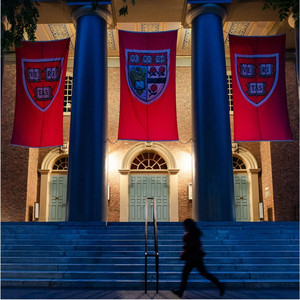
I'm a Harvard student and over the last few months we've just been washing the news, scared.
And we've somehow become pawns in this political culture war.
Trump has been coming up with new ways every single day of how to come after us.
We're currently in month four, and we have a long time to go with this administration, so we really don't have a lot of hope that this is going away anytime soon.
From the New York Times, I'm Rachel Abrams and this is The Daily.
I've been very proud to see the university stand up and protest, but I think our overreach is from the Trump administration.
It's not an easy thing to unite a place as opinionated as Harvard, and yet Trump has succeeded in doing exactly that.
For Harvard students, this year's graduation ceremony comes amid an intense standoff between one of America's most prestigious universities and the United States government.
I definitely think that some of the administration's criticism of Harvard is valid.
I've been frustrated by how left -leaning a lot of the courses are.
But I don't think the federal government should be trying to force Harvard's hand in this way to fix them.
— In particular, the Trump administration is trying to cut the school's federal funding and eliminate student visas.
— I'm really concerned about the research that's lost and the projects that are going to be halted halfway through because of these funding cuts.
— We, as international students, are asking ourselves, constantly, and each other, what control do we now have over our lives?
— We feel bullied by this administration and we just don't really know where to go from here.
Today, my colleague Mike Schmidt on how that conflict escalated and what it reveals about how far the administration will go to execute its agenda.
It's Thursday, May 29.
So, Mike, we know that the Trump administration has targeted a wide range of universities.
The campaign that they have waged against Harvard, though, in particular, it really feels distinct from what's happened at other schools.
And we've seen this fight really ratcheting up over the last few days with the news about more funding cuts and this attempted ban on international students.
How would you characterize this fight and why is it so different?
We are seeing an administration that is using all different types of powers that the federal government has to hit the pressure points of Harvard and to do it in a way that they certainly aren't doing to any other school or institution in the country.
It has been a relentless attack in a way that certainly I didn't think an administration was capable of pulling off.
And as someone who has covered retribution and Trump's use of his power against institutions and individuals, I've found it pretty remarkable.
It's so interesting that you mentioned retribution, though, because I don't recall whether Harvard actually did anything to Trump.
Trump. When did this fight start?
So, it all may have happened because of an accident.
Let me try and explain.
Please. What happens is that after the Trump administration comes in, they start quietly in March having discussions with Harvard about ways that the administration would like Harvard to change how it operates, particularly around the issue of antisemitism.
There has been a range of reporting about how Jewish students at Harvard were subject to harassment on campus by protesters in the aftermath of the October 7th attacks.
And this was an issue that the far right and Trump supporters and Trump himself have talked about at length.
So Harvard had been widely criticized for allowing antisemitism on campus.
What has also become clear over the last few months is that the concerns raised by the administration are not just about antisemitism.
Can you remind us what else has the Trump administration taken issue with at Harvard?
The Trump administration had taken a position that the far right had taken on Harvard for a while, that they were concerned about how Harvard was proceeding with DEI policies, and using and considering issues like race in a range of different matters on campus.
To say it another way, it sounds like Harvard was one of the many institutions that the Trump administration is concerned is, quote unquote, too woke.
Perfectly said. So they're having this very constructive back and forth.
Harvard doesn't like us to call them negotiations.
They like to call them, because they didn't want to be seen as sort of capitulating.
So they're engaging this back and forth about what the administration would want Harvard to do.
And in the midst of this back and forth, Harvard's lawyers say to the administration like, okay, today, we have some idea of what you want, but give us some specifics.
Tell us what you actually want us to change.
They want a demand letter.
Yeah. So we can go back to the top officials at Harvard and say, Look, here's what the administration wants.
How can we make a deal to satisfy this?
Give us a letter that tells us exactly what you're looking for.
And these lawyers for the administration say, Okay, we'll send you that letter on Friday." So Harvard is waiting for this letter from the administration, and that Friday comes and it goes and no letter comes.
And then, in the middle of the night, Harvard receives a letter from the administration.
What does it say? The letter is not just what the administration wants Harvard to do.
But it's a series of demands about how Harvard would operate that someone on the Harvard side told me essentially amounts to appointing Stephen Miller, the chancellor of Harvard. What does that even mean?
It means that Harvard would have to give up an enormous amount of power to the Trump administration to allow it to see into its admissions, its hiring, what it teaches, the types of people who teach it.
The demands are extraordinary.
In other words, it sounds like this letter is demanding that the administration get a lot of control over things that are probably pretty core to the academic independence of Harvard. It would do more than just fly in the face of academic freedom, it would have given the federal government an arm in Harvard's day to day operations that go far beyond anything we've seen at a private education university like Harvard. So how does Harvard react to this?
So Harvard makes an extraordinary decision.
Over that weekend, they decide that the demands from the Trump administration are so great that they have no choice but to publicly rebuff this and take on Trump and stand up for themselves.
And just to remember what's happening at this moment.
This is coming after Colombia, basically capitulated to a similar list of demands that the administration was making in order to provide that school with funding.
So, when you say that this was an extraordinary decision, you mean because, like, their response is so different from what we saw up until that point about how university presidents were dealing with the Trump administration, right?
And it's vastly different than a series of top law firms in the country who were also going in to the Oval Office to make deals with Trump to head off executive orders against them.
So that Monday, without going back to the administration.
Harvard puts out a letter that essentially says, there is no way we are going along with any of this.
We are putting our foot down, and we are going to do whatever we need to do to protect our independence.
Along with putting out their letter and a statement from Harvard's president.
Harvard puts out a copy of the letter that the administration had sent them that Friday night.
So they really want people to see the demands for themselves?
They want the world to see, look at how crazy these demands are.
Look at this letter, and you can see why we decided we had no choice but to fight.
And almost immediately after Harvard puts all of this out, Harvard's lawyers receive a frantic call from a lawyer in the Trump administration, who they had been negotiating with.
And what does he say?
He says, that letter that you guys got on Friday, that now is like the center of the whole issue for why Harvard has decided to take on the Trump administration, that letter wasn't supposed to be sent out.
What do you make of that?
Do you believe that?
Do they believe that?
It's one of the great mysteries of the Harvard story.
Did they mean to send the letter?
Was the wrong letter sent?
was it sent at the wrong time?
Or did the administration overplay their hand?
Did they send a letter that they thought was negotiation, but was just so extreme and so beyond the pale that Harvard thought they had no choice but to fight?
Did they call their bluff, basically?
Correct, it'd be like if you and I were negotiating and you said to me, Mike, I'll give you 25 cents, and I said, what about 75 cents?
And we're going back and forth in good faith.
And then all of a sudden, I walk in and I'm like, give me $20.
And you're like, what the heck, Mike?
You know I only have like maybe 50 cents, 75 cents?
There's no way I could give you $20.
Sorry, there's no way I could make a deal with you if that's what you want.
And that's sort of what happened here.
You're basically saying that Harvard is looking at this demand letter being like, there's nothing to even negotiate with.
Correct. Act. But at that point, the war had already begun.
Harvard had already declared that it was going to rebuff Trump.
And by the end of that day, the White House announces that Harvard will start to lose major portions of federal funding that it receives for research the school does.
And just days later, Harvard goes to court and sues the administration to get back the money Trump has stripped away from them for their refusal to go along with what he wants.
Tell us about the lawsuit and how exactly Harvard is fighting it.
Well, Harvard goes to court with two of the top conservative lawyers in the country at the head of their legal team.
They had Robert Herr, who had been the special counsel who investigated whether Joe Biden had mishandled classified documents.
Is Robert Herr the one that called Biden elderly man with a poor memory?
And then they had Bill Burke, who is a well -known lawyer in Trump's orbit, who even at the time was the outside ethics advisor to the Trump organization.
So clearly they're trying to bring in people that would understand the administration and have some good sense of how they're thinking.
People who could bridge the gap between what the administration wants and those that are targeted by it who could potentially make a deal.
So what is Harvard's legal argument exactly?
What Harvard is essentially saying is that you have unfairly taken away our money without any process without even investigating us, and you've done it in a way that actually violates our First Amendment rights because you're trying to infringe here on what happens inside of our classrooms. in their lives.
And Harvard's also saying, look, if you're saying this about how antisemitism is on campus, what does funding for cancer research have to do with antisemitism?
And as this court case is proceeding, Harvard looks like it really has the wind at its back.
Legal experts are saying that they have a very valid case and could quickly win in court and get their money back.
Harvard is also being widely praised for its willingness to fight back.
There's a feeling that not only is Harvard taking a stand, but like Harvard has to take a stand because they are uniquely positioned to fight back.
They have an enormous amount of resources and abilities.
And if they're not going to fight back, then who is?
But at the same time, as it appears like all the momentum is heading in Harvard's way, I start to hear from folks that I'm talking to that Harvard's problems may be much bigger than just winning this legal case.
We'll be right back.
Hi, this is Sydney Harper and I help make the Daily.
One night it's 10 p .m. my colleagues working on the next day's episode are looking for a speech, this piece of tape that they really need to make the episode sing.
They've tracked it down to a university library and that library happens to be close to my house.
So I hop into a car, I head across town, I get to the library, they're about to close, I'm copying the tape, uploading into my computer, sending it off to my colleagues working on the episode.
It makes it into the show the next day.
It really helps make it shine.
The whole effort is a success.
And I'm telling you this, because I don't think people realize that that level of teamwork and dedication goes into every episode that you hear of The Daily.
That sort of collaboration takes people.
It takes resources.
It takes support from subscribers.
So that's why I'm asking you to subscribe to The New York Times so we can keep bringing you The Daily everyday.
Mike, you just told us that there's a feeling out there that Harvard is one of the best -equipped institutions to fight the Trump administration.
But yet, there are people inside Harvard that still feel like they have all of these problems no matter which way the lawsuit goes.
So what are those problems exactly?
What I was coming to understand was that the court case only related to funding that the Trump administration had already frozen.
And that even if Harvard was to prevail in court, they would still need to get funding in the years that followed. And if they remain persona non grata with the administration, how are they going to get future federal grants for their research?
So, it showed that while the court case was important, there were other consequences to being in such public opposition to the administration, which had the lever or the spigot of research money that was critical to the work that was going on at Harvard. In other words, the court case does not guarantee that they're going to get access to future grants, future federal funds, etc. Correct.
How big of a deal is this money that we're talking about for a place as enormous as Harvard that also has tons of donors the way that other Ivy League schools do?
So understanding Harvard's finances is probably like a Harvard class in and of itself.
At the very least another episode of the Daily.
Boring one. How dare you.
Basically, Harvard has, along with becoming a place that teaches and educates, has become a big research institution.
It does work on cancer.
It does work on things related to aerospace that I don't even know how to describe.
It does stuff on physics and math and all the important things that we think that academia does or is supposed to do to be at the cutting edge of making our society better.
To do that work, Harvard has come to rely on grants and funding from the federal government that accounts for about half of their research budget.
And we're talking about billions of dollars, just to be clear, right?
Billions and billions of dollars.
Harvard, though, don't they have other resources?
I mean, how screwed are they?
They can go out and raise hundreds of millions of dollars, but to come up with the hole from the federal government may even be too big for Harvard. Because while they do have all of that money in the endowment, endowment is not a slush fund or a rainy day fund, or something they can easily tap into.
It's a more complicated thing than like, oh, wow, Harvard's got the biggest bank in the country, why don't they just go break into it?
It's more complicated than that.
Have you heard examples already of, I'm just making this up, researchers who are say declining to go to Harvard because they're worried about their funding getting cut?
Yeah. And we've heard about how other universities are trying to appeal to these researchers to say, look, we don't have these major questions over us.
We've even heard of foreign countries like China, trying to recruit some of these researchers, because while Harvard is held up as the most prestigious institution in the country, there are a lot of other universities in the country that can and do similar work — and could facilitate that." Given the existential threats that the funding cuts could pose to Harvard, are they considering at all trying to reach some kind of deal with the administration despite the language that they put out about how they're going to fight?
As far as we know, the corporation, that board that oversees Harvard, has not authorized its lawyers to go back to the table to negotiate.
Huh, why? Because there's a feeling that how can you make a deal with Donald Trump?
Donald Trump has shown through the deals he made with the law firms that there's Donald Trump's understanding of the deals, and there's the law firm's understanding of the deals.
There is a gap between those two.
You mean one side thought they were getting something, but then it turned out they were getting something different?
Yeah, in the case of the law firms, they thought to head off these executive orders from Trump, they were committing 10s of millions of dollars in pro bono legal work to uncontroversial causes like helping veterans.
And then in the weeks after the deal, Trump started talking publicly about how, oh, these lawyers could go and do trade negotiations for the government.
And oh, these lawyers could go and help the coal industry.
And that's not what the firms thought that they agreed to.
So there's this feeling of like how can we go to the negotiating table with someone like that, who could easily move the goalposts on us.
And Harvard is also being lavished with praise.
Harvard has not always been an institution that is looked favorably upon.
They themselves are coming out of scandal.
Right, of course, there was quite notably the resignation of Claudine Gay, the first female Black president of Harvard, who resigned after only six months in the wake of plagiarism allegations and sort of disastrous congressional testimony over anti -semitism.
And the corporation that board was lambasted for giving into the far right on that.
And in this instance, the corporation, which has some pretty prominent Democrats on it, is being held up as a central player of the second term resistance.
And they know the criticisms that the law firms have received for making deals with Trump, so they know if they go back to the table, that that's a pretty big step for them and something that they could really face a lot of blowback for.
I mean, it sounds like they're basically kind of stuck.
Correct. And that was the sort of thing that I found most fascinating about the Harvard story, which was that as they were being praised for fighting back, and as everyone said, oh they've got this great legal case and they've got these great lawyers that they were really in an increasingly difficult position and that there weren't great ways out for itself.
And in the midst of that, they have continued to be pelted by the administration.
In the weeks since the funding was first taken away, the administration has doubled down on its funding cuts.
It's found new and different ways to strip Harvard of federal money.
It has made other threats and brought into question whether Harvard is going to be able to keep its tax -exempt status with the IRS.
There's additional measures potentially in place to tax their endowment in a more severe way.
Harvard is also getting buried in requests and paperwork from a range of different justice department investigations, investigations by the Department of Education, Health and Human Services.
And there's this fear atop Harvard that with all of these different investigations, which for now are civil, that they'll turn into full blown criminal investigations.
And on top of that, in perhaps one of the most severe things that we've seen, the administration demanded all of the information the school had on international students.
And when Harvard didn't give the administration what it wanted, it said we're taking away the visas for all of your international students.
Which is a potentially huge deal because international students make up a quarter of the student population at Harvard. And they tend to pay full price.
Correct. And Harvard did quickly sue.
They went to court over this, and got a judge to temporarily halt it.
So, it's been paused for now, but now if you're an international student you have to be checking the federal docket to see if there's an injunction in place that allows you to continue to go to school.
It also sort of feels like, up until now, the cuts have been aimed at the funding, but cutting off visas is really striking at the fabric of the student body, and the identity of the school, and the diversity of the school, things that go beyond just the tuition money that Harvard gets.
Correct. Think about that, that the government, in one what appears to be fairly quick action, was able to raise a question of whether a quarter of a student body was going to be able to attend school in the fall.
Even if a judge steps in and says it's no good, that's a major use of the government's power.
What's the takeaway here?
You mentioned earlier that Harvard is one of the institutions that is arguably one of the best suited and most well resourced to fight a broad side from the administration.
And so I just sort of wonder, especially for you who's thinking about the retribution beat.
For people that are looking at this fight, what is the takeaway for them?
Before Trump came back to office, I spent a lot of time trying to understand what retribution was like in his first term and how he may use his power to his political ends when he came back to office.
The thing about Trump's attempts to use power in his first term is that while he does have some success, it's really success through blunt force, he basically jumps up and down until his rivals are investigated.
it, and the government doesn't always do what he wants, even when he demands it.
And I often said to myself, I've never seen Trump do a three -point turn.
Everything he does is sort of through blunt force, but in the second term, particularly through the law firms and through Harvard, we've seen a sophistication to his retribution that goes beyond, certainly, what I thought he was capable of.
Someone, somewhere in the administration has found the different pressure points that they can hit on Harvard. Even if you have the best lawyers and the law on your side, any significant portion of the country behind you, it doesn't necessarily mean you're going to have success when you're back against an administration that is audaciously using its power.
And if there is a victory for Harvard, it will not be a clean, clear cut thing that is resolved in court.
It will be something that will have to play out over many years, over many different court cases, and will force Harvard to come up with money, or cut back on its ambitions in ways that that it didn't think it would ever have to.
We'll be right back.
Hi, it's Alexa Y. Bell from New York Times Cooking.
We've got tons of easy weeknight recipes.
And today I'm making my vegetarian mushroom shawarma pitas.
This recipe is just built for efficiency.
You toss your mushrooms and red onion in your spices, throw them in the oven.
By the time they're done, you've chopped your cabbage and you're ready to assemble.
It feels crazy that this takes just 20 minutes of active time.
It's just delicious.
New York Times cooking has you covered with easy dishes for busy weeknights.
You can find more at BYTcooking .com.
Here's what else you need to know today.
Secretary of State Marco Rubio said on Wednesday evening that the Trump administration would seek to revoke visas of Chinese students, including those with ties to the Chinese Communist Party or studying in what he called critical fields.
Rubio also said the State Department would revise criteria for all future visa applications from China, including from Hong Kong.
And the United Nations denounced the new aid operation in southern Gaza a day after its chaotic launch, which saw thousands of Palestinians rushing a food distribution site.
Israel had borrowed humanitarian aid from entering Gaza for more than two months.
And while shipments began entering the enclave last week, much of it has yet to reach many Gazans.
The UN criticism comes as allies, including the United States, are expressing frustration with the protracted war and Israel's conduct of it.
Today's episode was produced by Rob Zypko, Stella Tan, and Ricky Novetzke.
It was edited by Michael Benoit and Patricia Williams. Contains original music by Marianne Lozano, Dan Powell, Pat McCusker, and Alicia Baietoupe.
And was engineered by Alyssa Moxley.
Our theme music is by Jim Brumberg and Ben Landsburg of Wonderly.
That's it for The Daily, I'm Rachel Abrams. See you tomorrow.