Discussion keeps the world turning.
This is Roundtable.
Move over iOS and Android.
There's a new whizkit in town.
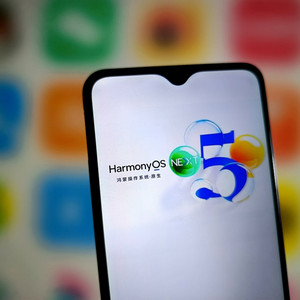
Huawei's HarmonyOS Next has just arrived as China's first locally developed mobile operating system and it's already made it to the big leagues.
We'll break down the tech, its impact, and what future or what the future holds.
Coming to you live from Beijing, this is Roundtable.
I'm He Young. For today's program, I'm joined by Steve Hatherly and Yu Sun first on today's show.
When you think of mobile operating systems, iOS and Android have dominated the game for years with Windows Foe now a distant memory.
But things are changing.
Huawei's HarmonyOS Next, China's first homegrown mobile operating system, has made its debut on October 22nd and it's already ranked the world's third largest.
For those who may not be familiar with the tech lingo, a mobile operating system is like the brain of your smartphone keeping everything connected and running smoothly.
Just as your phone controls your movements and reactions, the OS manages all the apps and features ensuring they work in sync and respond to your needs.
Without it, the phone would be just a lifeless shell.
So what's new with this operating system, HarmonyOS Next and how is it different?
Yeah, so we've had the idea of operating system and we previously have the two major operating systems which are iOS and Android.
So how is this HarmonyOS Next different from them?
So basically, the key differences lies in the kernel which is the core or the heart.
I'm laughing already.
I'm sorry to interrupt when I saw Yu Sun walk into the office this morning, I was like, explain kernel please.
He didn't even have a chance to take his code off just yet.
So here we go. Break it down for us.
Yeah, so I can understand it as a you know, the deepest level framework of the operating system and it's so to briefly explain it is I think it is you can see it as a skeleton of a human body and then it is the skeleton of an operating system.
So developers are developing their operating system based on these things.
So so when you put if you put software into a phone that doesn't have a kernel in it, then the software isn't going to run.
There are no softwares.
If there is no kernel and if there's no kernel, then there's no smartphone.
Yes. So traditional operating systems like iOS and Android are based on Unix and Linux kernels.
These are two major kernels.
And in contrast, the Huawei HarmonyOS Next has created its own kernel called Open Harmony, allowing China to break free from their dependency on existing kernels, making it the first homegrown system of its kind.
And how is it different from maybe previous versions of HarmonyOS?
So here's the thing.
Actually, HarmonyOS is not new.
Huawei have already released it for a couple of years, but previous versions may still have relied on Android applications.
So according to the introduction at the new product launch conference, the previously released HarmonyOS due to its system base that still utilizes some codes of the Android open source project, which is AOSP had to be compatible with some Android applications.
And now all of these HarmonyOS Next features a fully self -developed system base, which significantly is enhancing fluidity performance and security and thereby achieving greater autonomy for domestic operating systems, which means you cannot use Android apps anymore on this HarmonyOS.
Yeah. So this is a big, big, big deal.
And if you search this topic on international tech media websites or outlets, it's all over.
This is all over the news.
This is groundbreaking, really.
And there's a lot of questions and a lot of answers on the way, right?
HarmonyOS has been around for what, about four or five years now?
And HarmonyOS debut in 2019.
And it's gone through some changes during that time, too, yes?
Yes. HarmonyOS has undergone like four major changes.
And on January 18th, 2024, Huawei announced their HarmonyOS Next would no longer support Android compatibility, which is, as I said, a shift to a fully self -developed system.
And users dissatisfaction, I think, and, you know, negative opinions on this will certainly appear, I would say, because as you can understand, they are no longer using other platforms, apps, which means developers need to develop new versions of apps on these platforms.
So the phones previously that ran HarmonyOS, those were compatible with apps that you would find on the Android app store.
You could use those phones, use those apps on HarmonyOS run phones.
But now with Next, those applications are not compatible anymore.
So that means that those applications cannot run on that system.
So users must be a little bit frustrated at this point.
But I suppose the users aren't unfamiliar with this idea, though, because, well, let's say originally pre -HarmonyOS 2024.
Well, you know, we're divided in the terms of iOS systems or Android systems.
And I don't think these two systems have apps that are interchangeable, that can cross that moat or whatsoever.
So I suppose this concept isn't really all that different.
But now it's just going to be a third space of another operating system.
Yeah. Yeah. And as China's first homegrown mobile OS system, this has been touted all over the place.
How significant do you think is this development?
Yeah, you know, the first thing that we need to emphasize is that we need to recognize that it's not just about the current convenience or inconvenience of use.
More importantly, it is a system developed entirely from scratch, right, which offers significant guarantees in terms of, let's say, security and autonomy.
And also, this is still, you know, a platform that is in its early stage, and many applications have yet to be adapted.
And as we can see, Huawei is calling on a lot of developers to develop their versions of apps.
And this is something to do with, you know, the large number of people who already hold Huawei phones.
So if you are a Huawei user, then I suppose the new Harmony OS operating system could pretty, hopefully, seamlessly be used on your phone.
And for those who are looking at this subject, I think a lot of users, especially here in China, you know, speaking Chinese and looking at the tech news these days, they talk about tech independence and feeling pretty proud that a company can manage to build something from scratch.
And also, this could be contributing to economic growth, developing a local iOS, can drive innovation, simulate or actually stimulate the domestic tech industry, fostering new job opportunities, partnerships and investment in the broader ecosystem and especially think about all those developers or app
companies that might, it depends on how you think about it.
Well, some will participate and some might feel less compelled to come up with the apps to fit the system.
What my question was as well when we were discussing this before the show, because I think a lot of people may be under the impression that it's very easy for an app company to simply make an iOS version of their app, an Android version.
Oh, Harmony Next? OK, sure.
Boom. Here you go. No, it's not that simple.
And Yushin was telling me that Huawei was in contact with a lot of app developers well before the launch of this new operating system to deal with issues such as that.
Because, you know, we can understand that right.
Before a new whole operating system was launched, you need apps to use, daily apps.
I mean, for example, you you need to order something, you need to hell a cap or you need to contact somebody.
These are the apps that we need to use daily.
But the thing is, when you are developing and maintaining an application for a new, whole new operating system is really labor intensive and costly, especially for small startups.
And that cannot afford that kind of burden.
And because we know that not all of these technology companies are huge as Tencent as JD .com, which are huge tech companies in China.
That's why this creates a paradox, actually.
Developers, developers are waiting for this Harmony OS Next to gain traction before committing to it.
Yeah. But the Harmony ecosystem needs a lot of applications to to get power to succeed.
So they they need at least some app developers to say, yeah, OK, we're on board, even though we're not sure which direction this operating system may go in the future.
And we're not talking about four or five or six apps.
I mean, we're talking thousands of apps, right?
So it's yeah. Don't be under the impression that, you know, they have 12 apps developed through app developers and hopefully others will.
No, no, no, they've planned for this.
There are a lot of apps available.
Thousands again, thousands and more will be on the way.
Yeah. And you guys bring up the really good point of ultimately, I think this depends on users, whether people are willing to switch because you're kind of used to what you're already what you've already got on your smartphone and what makes you feel like, oh, I need to change to something different.
And by the sound of it, it's it's kind of a big change of the fundamentals of the system that we use every day.
But it's really funny as a complete tech layperson, but somebody who uses her smartphone with multiple apps every day.
I don't have any trouble using it, but I know nothing about the theory or the kernel until today until preparing for this show.
I was I was looking at a lot of different foreign tech websites to see what they were saying about this.
And this is from tech, Android dot com.
I love the opening paragraph.
It reads as follows.
We thought we had reached equilibrium in the world of smartphone operating systems.
There was no expectation that anyone would rise to usurp the throne from the only two real players left.
Excuse me. Until now.
Huawei decided to build its own kingdom, its own kingdom.
I love that wording there.
Harmony OS next. It's a completely new operating system with no Android DNA.
And it was just launched in China with global plans.
The story goes on to talk about some of the improvements that this operating system will bring.
And one of it, one of those is in the fluidity of the operating system user interface.
Huawei says that there's going to be a 30 percent improvement.
There's going to be 20 percent less power consumption.
And that will lead to nearly a full hour more of battery life.
That's a pretty significant upgrade.
The OS also seems optimized to the point where there's now 1 .5 gigabytes less RAM being used by the system.
And I assume that's going to help speed things up and take less memory.
Let's explain kind of a 1 .5 gigabytes of RAM.
It means that it is a temporary disk that you have to run all of your apps on your phone.
And then if it can save up some of the spaces, then you can run maybe more apps or you can run more apps at the same time, which means it will get your apps run smoothly.
Yeah. Right. Well, since we're on that topic of fluidity and you know how people are feeling or, you know, once they've used this operating system and given that this is still so very new, what are some of the feedbacks that we've gotten so far for those who've gotten their hands on the operating system
already? First of all, I think as we mentioned, the fluidity fluidity.
Another aspect I think we would like to mention is their privacy or their attention on the privacy and security of users.
Yeah. Users always want to know about their privacy and security for good reason.
And improvements have been made in this Harmony OS next privacy and security issue, allowing apps to access only user -selected images and videos and permission usage is more transparent, enabling users to see which apps can access specific permissions.
Maybe we've already seen a lot of operating system or a lot of phones are giving users the bottom to see that whether you are permitting any apps to use their camera or photo gallery.
But in this one, they were trying to say you're just this app are only using their camera for that one click.
The app can only use the photo that you took when you're using it, but not taking up with all of the permission of using the camera.
So I think that is another step that we are using, another understanding on how you protect users privacy.
And another point is their AI use on this new system.
Xiaoyi is the AI system on this new system.
But another thing I would like to mention is that their function that they created for people who have disabilities.
Yes, the new system includes an AI voice restoration function for those with hearing and speech impairments, which who, you know, they cannot give out speech very clearly, but they can speak.
But people cannot, you know, understand them very clearly.
And that is the thing.
So well, we learned that that's an issue.
Remember when we did the story on the show about McDonald's and they were canceling their AI drive through because of accent recognition, the AI was unable to recognize anything that was out of the quote unquote standard, if you will.
This is a vast improvement, then in this case, they can refine these incoherent speech into clear sentences.
And this could be, I think, beneficial for interpersonal communication, first of all, and even the mental and physical well -being of patients because they can actually communicate with others very easily with this.
Huge, huge development.
Yeah. This operating system, one of the big deals, I guess, is and one of the maybe big differences from before is going to be about how the applications or how the devices that are running with this operating system will be able to be compatible with each other.
And that's a big that's a big deal, too, right?
From smartwatch to smartphone to tablet to eventually I was reading a little bit, maybe even TVs that will run this operating system as well.
Yeah. So they were introducing this operating system onto different devices, not only phones and tablets, actually, they even your smart wearables, your smart watches or your earbuds or even your car cabins.
They are using this operating system to make them connect with other devices smoothly.
So but I think this is also something that many other brands are trying to achieve in this Internet or IOT era of Internet of Things era, you know, creating an entire ecosystem that allows your all of your devices to connect with other devices like tablet, computer, home appliances or even your car
to, you know, actually tie your users into your ecosystem.
So you're saying that if you're a Huawei user, then you're most likely a forever Huawei user if this operating system works well, just like if you're if you've entered the Apple Chapel, then a lot of people stay there forever because you've got all these devices and it's difficult to switch one of them
to something else. And from a business point of view, this is such a huge advantage.
Many people say this is how Apple built their kingdom is because of this.
If you own, for example, I own a MacBook and I have an iPhone and having the same company between your phone and your computer is just such a it's such a convenience.
Right. Right. I mean, you can share files in an instant, and that's just one example.
So, yeah, if these things are all running on the same operating system, it's just so good for business because people will just feel like, I'll just buy another Huawei product in the future.
Right. And then for them, that's exactly what they want.
You don't need to do anything else just by using one maybe cloud account.
You can copy on your phone and paste on your computer.
Yeah. Yeah. And what has driven Huawei to develop its own mobile operating system?
And, you know, with this newest addition, then it's quite the departure from Android.
The previous systems that, you know, we've all become so accustomed with.
So when we're talking about the motivation or the motives of Huawei were they worked so hard to develop because we know that how hard it is to develop a whole new operating system from scratch.
So this not only actually enhances their competitiveness in the digital world, but also brings new vitality and opportunities to the global mobile operating system market.
And we know that even for a country, an autonomous operating system is very crucial for ensuring controllability and protecting user privacy and data security.
And also, it is also a proof that we have reached that kind of technological innovation since we can develop our own operating system.
Yep. Own operating system.
They develop their own kernel, as we mentioned, and this is big for innovation and it's big for efficiency and a smoother user experience.
We're talking about things like battery life and security and privacy protection.
Those are just things that people have come to expect.
And those are the rights of the user.
But to have a really comfortable user experience with not just one device, but inter -device connectivity and having its own ecosystem, this is...
I mean, international websites are saying this too.
One sentence from one of the websites said, it may not feel like it, but this is a historic moment because Apple and Google Android, that was it.
I mean, Windows tried and they failed.
One of the reasons they failed I was reading was because of their kernel.
It wasn't optimized for modern day smartphones.
They failed for other reasons as well, according to experts.
But that number three spot was empty.
And the foreign websites are saying that Huawei, they're not just looking at doing big things here in the Chinese market.
They're looking to eventually go global with this.
Now that remains to be seen whether they can really take on Apple and Google for their operating systems.
But they've done it themselves and now the fight begins, if you will.
And also we've discussed so many breaking breakthroughs that Huawei have created.
But as we can see, it is a whole new thing.
And it is actually it's not something that you can use it and hand on it and just so smoothly transition from another system to another.
So we can see is that of course, Huawei have developed thousands or 15 ,000 Harmony OS applications and services, but actually it's not still, there are still a lot of apps that are not compatible on this Harmony OS.
One interesting point is that current version of Harmony OS Next does not yet have an official version of WeChat.
Which was really quite surprising to me.
Yes. Because WeChat equals life in China.
Tencent, which is the home company of WeChat, has initiated a beta testing invitation allowing users to upgrade to the Harmony OS to sign up for this version of WeChat.
And this version of WeChat currently supports basic features, but still is not open to public users.
So what we can see is that there are still a long way to go for at least in the area of app adaptation.
The app adaptation progress for this Next system is maybe there yet, but it is quite promising because we can see how many developers that they are recruiting for develop their Harmony OS Next application.
I saw that some of the numbers on Android and iOS developers and Harmony OS developers number is astonishingly huge.
So I think at least we are having a path on this way.
This is new and it is not perfect, but we are going to a way that they are trying to perfect.
It is only 2 -3 days after the first launch.
Exactly. And I was going to put it in a context like this.
When Sony comes out with their new PlayStation, PlayStation 5, they do not release all the games that are going to be available for the new game station at the launch.
They have some that are available.
And then as the months pass and the years pass, you get more and more and more and more.
And that is kind of the way I see it when a new operating system comes out.
You get what you get in the beginning, but they will be rolling out new stuff all the time.
The excitement is palpable and we feel it here in China.
And it is always great to have another choice, I suppose.
But there is one thing I suppose as an average user of apps and your smartphones, we take for granted that it is supposed to run so smoothly.
It is supposed to be compatible.
And you are not supposed to waste one millisecond in waiting for it to operate, to run smoothly.
But I guess you still need to give it a little bit more time.
And as Harmony OS Next carves its path in this very competitive mobile operating system landscape, it not only represents a significant technological leap for China, it also signals a shift in the global tech landscape.
And this development embodies the potential for greater technological and digital independence and innovation.
And that is something that we are very much excited about.