This BBC podcast is supported by ads outside the UK.
I've spent the last three decades trying to better understand money across the boardroom, the newsroom and the trading floor.
That's longer than most podcast hosts have been alive.
But even I've got questions.
Join me, Meryn Subset-Webb, every week for my show Meryn Talks Money from Bloomberg Podcasts, where I have in-depth conversations with fund managers, strategists and experts about how markets really work.
And join me for a separate episode where I answer listener questions on how to make those markets work for you.
Follow Maren Talks Money on Apple Podcasts, Spotify, or wherever you listen.
I'm Celia Hatton and in this edition how the placement of an old-school phone in an unusual locations led to hundreds of people telling their stories and millions of views.
There's so much shared experience and there's so much reassurance to be had from the shared human experience.
Just knowing about that kind of reminds us of who we are.
Also, a lot of things went through my mind.
Happy thoughts.
I think that kept me going.
Yeah, so much going through my mind.
I was really scared.
The teenager who swam for hours to get help after his family were swept out to sea.
Why one man has devoted his life to preserving rare varieties of rice.
The city trying to become the best place to raise a child.
This program is a source of immense joy for our community.
Our neighborhoods don't have enough space for the children.
It brings me so much joy just to spend this time together and the 82 year old goalkeeper still showing younger players how it's done.
I think I'm worth my place in the team and I'm still making saves.
When I get to the stage where I think I'm letting the side down, I will retire.
First, let's start with a social media account that's using a relatively simple concept to attract millions of views online.
If you had told me back when I was a kid that I would have studied to become a kindergarten teacher, everyone would have laughed in your face.
We realized at the end of the class that we already met.
I remember his energy.
And so I decided to ask him, do you want to drink a beer with me?
I was full of guilt because I saw that everything was going to change.
If I would have organized my party, my parents wouldn't have gone.
I feel like I've got to know so many people that I probably would not have ever met or gotten the time to know had I not have looked this way.
Yeah, sometimes everything we have is everything we need.
Those are clips from an account called A View from a Bridge.
The idea is pretty straightforward.
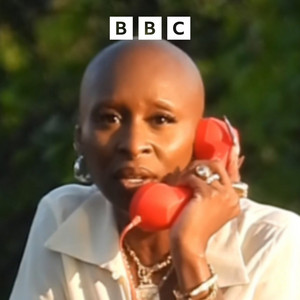
An old school phone is placed on a bridge and strangers are invited to pick it up and share their stories.
Its creator, Joe Bloom, started the project in London two years ago.
Now he travels to bridges all over the world to speak to people.
Some famous faces have joined him along the way, including the composer Max Richter, actor and singer Cynthia Erivo and designer Paul Smith.
The Happy Pod's Tamsin Selby has been speaking to Joe.
She started by asking him how the conversations happened.
I'm actually at the other end of the phone.
So it's a working phone.
We have real conversations on it.
And often the phone calls go up to half an hour, 45 minutes.
And obviously from that, we then make our edit.
I was trying to figure out how do we tell stories on social media but cut the noise, you know?
Really, just make it about the storyteller, make it about the person sharing the story.
I'm a palliative and end-of-life care nurse.
It's really a great privilege and an honour to be with people as they're dying and, after they've died, with the families.
Don't ever cry in front of people.
Don't ever tell people about how you're feeling.
I grew up with men that were really like that, like from back in the day, that were like, you know, hard as nails seemingly on the outside.
Through many trial and error, I sort of had this idea of Stripping it back.
And you know, bridges aren't destinations, are they?
They're sort of these places in between where no one really goes just to go there.
That opens up the mind to quite a beautiful place.
For many years, I tried to learn to articulate myself without crying.
But now as an adult, I could cry and articulate myself at the same time.
This is going to be a really hard question.
Talk to me about some of your favourite videos that you've done either through street casting or through more famous faces.
I think all my favorite ones have been the street cast ones, to be honest.
You know, it's that unexpectedness and it's just constantly proving myself wrong about how poorly I judge people or the world around me.
A good example of that was we came across these three lads.
Looked like they were sort of up to no good really.
They ended up being the most sweet three lads ever.
My name's Owen, this is Harrison and this is Roy and we live in Ilkiston.
The main guy just stole the show really and shared this sort of deep details of his life and his struggles and what he wants from the future.
Obviously I had a rough childhood with my mum dying and I kind of taught myself to be quite mature in the way I think, because obviously the things that I've been through and obviously family circumstances, I've just had to learn it all on my own.
I've got to battle with myself, obviously, to get on with my day as sad as it sounds.
He spoke so beautifully and that video ended up getting, I think, like 7 million views in a ridiculous amount of time.
What would I want to say to the world?
I'd basically say stick with your maid and be with your mum for as long as you can, because she's not always around.
I know you said that you prefer the street casting videos, but out of the people and the names and faces that people will recognise, which ones kind of most surprised you?
Cynthia Erivo, she was great.
Human beings in general are not good at saying goodbye, even when we're meant to.
I think we get scared of... either hurting someone or being hurt.
She was lovely.
She had a good cry on the bridge, but she really opened up and it was a really beautiful chat.
It's nice when the experience with a well-known person just matches that of someone that we might have just picked up off the street.
That's really what we aim for.
People seem to really get quite a lot from a view from a bridge.
When the handbooks were given out for life...
I got missed out like someone forgot to give me one, because I just, even at that early age, started to feel a bit like an alien.
My only ambition was to be a footballer.
When that went pear-shaped I totally lost my direction really and felt for a good 10 years just stuck.
I'm really grateful that how it's received and the time people give it.
How does it feel to kind of have the privilege to tell people's stories in this way?
Yeah, it feels amazing to be able to share these stories because you know, these stories all exist because of people walking around with them.
But until we kind of pull it out of a person and put it on a platform, you know, these stories can sort of just go unheard or only maybe shared between a few people.
So the fact that we're able to hear these tales and then share them to a wider world is just it's unbelievable really.
And long may it continue.
What would you say is the importance of people hearing these stories?
I guess that it all just comes down to that really quite simple thing of just relatability, right?
And understanding that the feelings that we feel, that might sometimes feel like totally, can only be totally unique to our own experience.
I guess it's a reminder that that is just completely wrong.
And there's so much shared experience.
And there's so much reassurance to be had from the shared human experience, right?
Even if it isn't a relatable experience, it's we're still sharing the experience of being human.
And what that looks like for one person can be either similar or completely different from another.
But Just knowing about that kind of reminds us of who we are.
Jo Bloom speaking to Tamsin Selby.
To Australia, where a 13-year-old boy is being hailed a hero after swimming for several hours to help save his family who were lost and afloat in the sea.
The group of four got into difficulties after getting into the water off the town of Quindaloop in Western Australia with a kayak and two paddleboarders.
When the weather changed, they were swept out to sea.
The 13-year-old Austin Appleby set off for shore in the kayak, which soon capsized.
He swam the rest of the way for about four hours.
Meanwhile, Austin's mother, brother and sister stayed afloat on paddleboards.
By the time they were rescued, they had drifted 14 kilometres offshore.
Austin and his mother Joanna, spoke to the BBC's Kasia Madeira and explained that when he first left in the kayak to get help.
They didn't think they were too far from land.
He took off in the kayak and we didn't realise how damaged the kayak was.
So obviously, as he progressed towards shore, he took on a lot of water and he couldn't keep it going.
The decision was either you know if I can row back to shore to get help quickly, but I couldn't leave the kids at sea.
So, him being the oldest and the strongest, we said we'd send, and he was quite happy to go in, which was a very hard decision, because you don't want to Do any.
Of your kids have to do that.
He headed back for shore, and then myself and the other two kids ended up drifting out further and further as the day went on, as the hours progressed.
My goodness, it's extraordinary.
So Austin, what was going through your mind when you realised that the kayak was damaged?
You're going to have to swim.
I can't imagine what went through your mind at that point.
Well, the kayak actually started taking in water when I first got in it.
You know, I started rowing back, but I kept on falling in.
And for a while, I got back up and I kept on going and I thought all was great.
I thought I was going to make it.
And then suddenly the boat goes sideways and it flips me off and the paddle goes out and I just see the paddle just going away.
So...
I swear I saw something in the water, which frightened me a lot.
So I was clinging on to this capsized kayak and then I decided to leave the kayak because it was getting really, you know, dangerous now.
It's getting a bit late.
I've been out here for a couple of hours.
I was thinking about obviously Mum, Beau and Grace.
I could see them...
I could see the figures in the water go smaller and smaller until you couldn't see them anymore.
But I was also thinking about my friends and my girlfriend.
You know, I have a really good bunch of friends that, you know, I called when I got to the hospital.
You know, they've had such good support.
And I know just a lot of things...
It went through my mind.
Happy thoughts.
I think that kept me going.
Yeah, so much going through my mind.
I was really scared.
As the day progressed and there was no vessels and nothing seemed to be coming to save us is when I went.
If he hasn't made it, what have I done?
Have I made the wrong decision?
What's happened to him?
And is anyone going to come and save him?
My other two, because they've got no food, they've got no water.
It's getting colder.
It's about to get dark.
And the waves were getting very high.
So it was very much get to that point where we're on our own.
This is going to be over.
And I had assumed that Austin may not have made it.
So that was an absolute perfect ending to have all three of them.
And happy and sore, but no injuries.
Austin, when did you realise that you had saved their lives, that your mum and Beau and Grace were alive?
I remember the moment exactly, but I couldn't jump up and down because I had fluids.
But these doctors ran and they were shouting, they were cheering.
I didn't think I was a hero.
I just thought, oh, man, culture was there.
That's really what I did.
That was my mindset.
And, you know, all these hospital staff calling me a hero and everything.
Yeah, it was a moment I'll never forget.
Wow.
Well, that was Austin and Joanna Appleby speaking with Kasia Madeira.
Here in London, one man's been recognised by his community for organising friendly football matches for more than four decades.
Leo Gotsman is also the goalkeeper, and he's 82.
His fellow players say he's an inspiration.
He's got so much experience, his positioning is incredible, and so he's difficult to score past.
I think he's a brilliant keeper.
He really commands his goal.
I really enjoy the competitive spirit, but also the camaraderie that we've built up over all these years.
Leo is an inspiration.
I don't know any other football game where they've got a goalkeeper who's not only that age but also has been playing for 40 odd years.
Leo is a very passionate and reliable person and he's a role model for all of us.
Leo says he first fell in love with football near the start of his life.
I played football at school and then I stopped playing until I was 35 years of age.
And I've been playing six-a-side football ever since.
I arrange the bookings.
I collect the subscriptions from all the players.
I wash the kit and I just make sure that everybody's happy that's playing.
25 years ago, I had a heart attack.
Leo Gotsman.
Coming up in this podcast.
Without him, probably our parents would never have played it.
We would never have got involved.
And yeah, I'm sure him and my granny were very proud to see us do well on the world stage.
How one man's decision to build the world's first hotel ice rink could lead to Winter Olympic medals for his grandsons.
I've spent the last three decades trying to better understand money across the boardroom, the newsroom and the trading floor.
That's longer than most podcast hosts have been alive.
But even I've got questions.
Join me, Merrin Somerset Webb, every week for my show.
Merrin Talks Money from Bloomberg Podcasts, where I have in-depth conversations with fund managers, strategists and experts about how markets really work.
And join me for a separate episode where I answer listener questions on how to make those markets work for you.
Follow Merrin Talks Money on Apple Podcasts, Spotify or wherever you listen.
To Ethiopia now, where the first female mayor of Addis Ababa has pledged to make it the best city in Africa to be a mother and raise a child.
The city's population has more than doubled in the last six years, and that's led to more overcrowding, more pollution and a shortage of outdoor space where children can play.
The mayor, Adanich Abebe, has pledged to bring in some fresh solutions by the end of this year, including a bold promise to create thousands of playgrounds.
And already a simple plan to close hundreds of streets to traffic every Sunday appears to have made a difference to families.
Hide and seek, and tag, and some running around games.
They wake me up.
I ride in my scooters.
I play football with my friends.
Our neighborhoods don't have enough space for the children to run.
It brings me so much joy just to spend this time together.
Their social life comes alive.
I play with them, I watch how they interact, and I see them becoming part of something bigger.
It's fun for them, but honestly, it is just as much for me.
I have made new friends here myself.
But the most beautiful thing is watching the children say goodbye.
They don't just say bye, they say we will meet you here again next week.
They are already planning their next Sunday together.
This program is a source of immense joy for our community.
Usually there is simply nowhere for sports or for children to just be kids.
Honestly, just being here and seeing the joy in their eyes, it makes me very happy.
I have met many new friends here today.
On a normal day, everyone is rushing, but here we stop, we talk.
It is building a stronger community on Sunday at a time.
We'll be watching to see how the mayor's pledges might come to life in the coming months.
My colleague, Myra Anubi, also spoke to Karima Grant from the Van Leer Foundation, which works on early years development in more than 80 countries.
She explained how they help city officials see things from a child's perspective.
We've used things as simple as a periscope to move city leaders around cities to see a city from the perspective of a three-year-old, 95 centimeters.
When I do workshops, I ask people, you know, get down, kneel down to 95 centimeters.
I would love to see that, a bunch of mayors and leaders on their knees.
Even better.
We've had mayors and their teams work.
Moving through cities with strollers and with a rice bag.
You know, like a five kilo rice bag in a stroller.
So that again, as I said, they're able to experience the journey.
What is it like when you have to cross the street?
They're not always stoplights.
So, of course, many parents are not pushing their kids in strollers.
They're carrying this baby on their back.
What is it like to dodge in and out of traffic with a baby on your back?
Honestly, I've seen this.
It's really scary.
It's absolutely scary.
And it's scary for us even as drivers because you don't see the young children.
And my understanding of what's happening in Addis is that this doesn't just affect closing streets.
It's affecting every ministry being able to consider exactly how their work impacts children.
There's just a cross-section of people who've come together and who are working together, understanding that that's the most important time for human development zero to three and really saying OK, how do we work together?
How do we coordinate to make sure that children who were born in the city of Addis have what they need to thrive, to become the kind of adults we want for Ethiopia and for Africa?
Growing cities, Karima, also come with other challenges, whether it's water, sanitation, housing.
Skeptics might think why not invest in that instead of investing in three-year-old children and closing streets?
What would you say to that?
So there's this wonderful gentleman named James Heckman, who many, many years ago won a Nobel Prize in economics, around the idea of understanding that for every dollar invested in early childhood, you have a 6 to 17 return.
We're talking about young people now, but we're also talking about the youngest continent, 20 years from now, right?
So when we're making investments, yes, we want to make investments around sanitation.
Yes, we want to make investments in housing.
So I think it's not one or the other, but every place where we see cities are battling again, taking an early childhood lens helps them to also provide housing for stronger futures for all of its citizens.
It's never easy, but sometimes it's possible.
Cara McGrath.
And you can hear more about efforts to make cities more family-friendly.
On People Fixing the World wherever you get your podcasts.
Next, to a man who's become known as India's seed warrior.
For three decades, Debal Deb has made it his mission to conserve almost 1500 different types of Indian rice, many of which were thought to have been lost.
He grows the rice on his farm and he also donates seeds to other farmers free of charge.
Debaldem told Joe Fidgen from the BBC's Outlook programme why he feels so strongly about protecting these rare species.
In India alone, there used to be 110000 varieties of rice existing, but more than 90 of this diversity is lost from the farmers' fields.
All over the world, most of the people actually eat just a handful of varieties of rice.
So one instant in a one single pest outbreak or a disease outbreak will push this entire species to extinction.
For our own food security all over the world, we have to take care of the genetic diversity as much as possible.
This is what triggered my interest and commitment toward saving the rice diversity.
I thought that you know, if I wait for some conscious expert for conservation, then it might be too late.
We already had lost 90% of this diversity.
You decided that this was so important that you were going to quit your job at the WWF and you were going to pursue this and find a way to conserve rice.
What did your colleagues make of that decision?
Almost everyone said I was stupid, I was a completely dumb idiot.
I only had academic degrees but no intelligence.
So that was the major impression of my seniors.
But my mother, by that time I had lost my father, but my mother was always in support.
She said whatever he decides is the best.
It was quite rewarding because after the descent of this project, I collected 140 varieties of rice, extremely rare, not recorded anywhere.
Some of these were mentioned in some ancient literature, ancient Bengali literature, but nobody saw them.
But I never planned to cultivate them and become a farmer myself.
So I donated this stock of these 140 rice varieties to the state government's rice resuscitation.
But they refused to take this.
So then I set up a seed bank where farmers would come, whoever needs some kind of special variety of seed, like an aromatic rice variety, small grain, long grain, red grain, all of these aromatic ones, plus the climate resilient varieties, like a variety which is drought tolerant, a variety that is salt tolerant, and so on.
And farmers are actually really in need of them.
So I set up the seed bank.
And so that people from different parts of the country can come over and exchange the seed.
So it's important to you, is it, that the seed be exchanged, that no money is changing hands?
Exactly.
That whole idea was to revert to the ancient tradition which was prevalent all over the world.
None of the farmers ever bought seeds.
All the farmers all over the world on all lived continents used to exchange seeds.
They collected their seeds either from their ancestors or from their neighbors and friends.
Hundreds and hundreds of varieties, open exchange, people to people.
In 2009, for example, after two cyclones devastated overnight, 10000 hectare of land overnight became out of production.
We rescued about 14 families of farmers by giving them 14 varieties of rice which could save their food security of those families.
India's seed warrior, Debal Deb.
And last.
The Winter Olympics has just got underway in Italy, and one sport that often proves popular with viewers is curling.
If you've never seen it.
Curling involves one team member releasing a heavy granite stone so it can slide along the ice, while their teammates sweep in front of the stone to warm the ice and guide it towards a target.
And one of the favourites for a curling medal.
Scotland owe their skills to one man's decision to build the world's first ice rink in a hotel more than 50 years ago.
The BBC's Laurie Carnan has been to the town of Stranra to find out more.
Hamilton Macmillan, known as Hammy, bought the hotel with his wife Janet back in 1961.
But it was a pioneering business move in 1970 that turned this hotel into one of a kind.
I've got a collection of stones and annuals and lots of books there.
Gail Munro was just four years old when her dad made the bold move.
This was a meeting point after a day's curling at Ayr or in Glasgow.
The curlers would say, we wouldn't need to go away if you would just build us an ice rink.
And six months later, we have an ice rink.
And over the past 56 years, it has produced European, World and Olympic champions.
Now chasing a gold medal at the Winter Games in Italy are Hammy's two grandsons, Grant Hardy and Hammy Jr.
Alongside fellow Stranraer local Bobby Lammy.
They're part of Team Mowat and Hammy knows it's a chance made possible because of his grandfather.
It was amazing what my then-grandfather did for the community, for Stranraer.
Rugby and football are your main kind of sports, and then curling's a close second or third in Stranraer.
So it's amazing, and the community down there is just fantastic.
The third, Hammy Macmillan, is hoping to go one better than the silver medal that Team Mowat picked up in Beijing four years ago.
And being currently ranked number one in the world, Grant's mum Fiona is clear on the goal.
They want the gold medal.
They just missed out the last time and there's only one medal they want.
It's the gold.
The hotel itself has a cosy and homely feel that Bobby Lammy's mum Katie, says helped to shape their careers.
This wasn't just somewhere our boys came and curled, but it was like a home from home really.
The hotel is unapologetically committed to curling.
Even the ice bucket in the bar is shaped like a curling stone.
There's curling memorabilia everywhere, and the plethora of trophies packed into the cabinet are gleaming as much as the ice itself.
But Tammy's mum Lorna thinks there's room for one more.
Winning gold at the Olympics this year would just be the pinnacle.
It would be the most amazing thing for us all, but any medal would be amazing too.
Grant would love to be an Olympic champion, not just for himself but for his family, who have given so much to the sport.
Unfortunately, our grandfather is not here anymore, but he was aware of the impact it had on curlers in the region.
They might have curlers go away and have success on the world stage and come back and thank him every time.
Without him probably building the ice rink in Shinra, our parents would never have played it, we would never have got involved.
I'm sure him and Granny were very proud to see us doing well on the world stage.
It'll also be nice to have our Granny out there in Cortina supporting us.
Grant Hardy, ending that report by Laurie Carnahan.
And that's all from the Happy Pod for now.
If you have a story to share, we'd love to hear from you.
As ever, the address is globalpodcast at bbc.co.uk.
This edition was mixed by Alison Purcell Davis.
The producers were Holly Gibbs, Tamsin Selby and Rachel Bulkley.
The editor is Karen Martin.
I'm Celia Hatton.
Until next time, goodbye.
I've spent the last three decades trying to better understand money across the boardroom, the newsroom and the trading floor.
That's longer than most podcast hosts have been alive.
But even I've got questions.
Join me Maren's Hubset Web every week for my show Maren Talks Money from Bloomberg Podcasts, where I have in-depth conversations with fund managers, strategists and experts about how markets really work.
And join me for a separate episode where I answer listener questions on how to make those markets work for you.
Follow Merrin Talks Money on Apple Podcasts, Spotify or wherever you listen.