
[The Underground Railroad: Hale Woodruff’s Artistic Testament to Freedom and Agency]-[Hale Woodruff, The Underground Railroad]
📋 Summary
The Underground Railroad: A Visual Narrative of Liberation
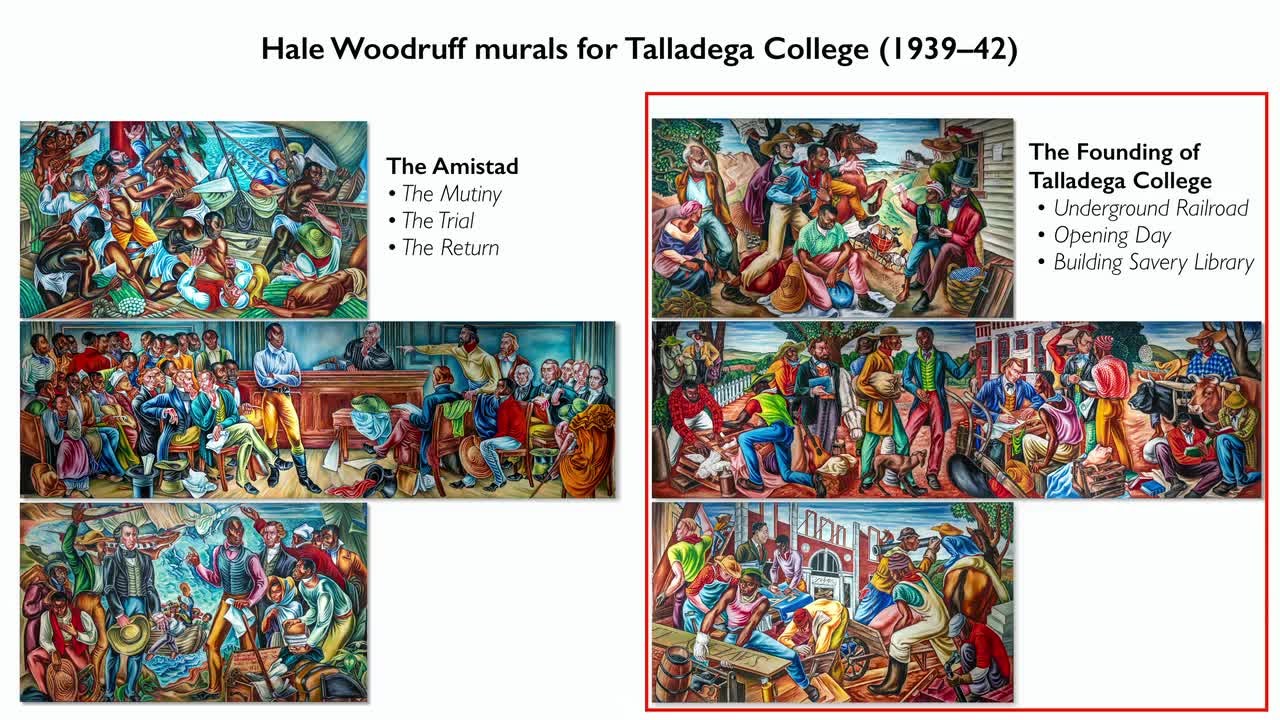
Located within the William Harvey Museum of Art at Talladega College, the mural The Underground Railroad by Hale Woodruff serves as a profound historical and artistic document. Part of a second set of three paintings commissioned for the college, this work captures the essence of the abolitionist movement and the perilous quest for liberty. Through meticulous composition and symbolic depth, Woodruff invites viewers to engage with the complex emotions of those seeking a life free from bondage.
The Philosophy of Brotherhood and Common Purpose
Central to the painting is the theme of alliance between abolitionists and enslaved individuals. The narrative draws heavily from the American Missionary Association (AMA), which emphasized a core ideology of "brotherhood." The underlying belief was that "if their fellow brethren were not free, then they themselves were not free." This "coming together of people who saw a common purpose and a common goal" is the driving force of the canvas, illustrating an interracial coalition dedicated to the pursuit of a country where liberty was universal.
Navigating Trauma, Fear, and Hope
Woodruff masterfully directs the viewer’s gaze from left to right, mirroring the journey of the escapees. The narrative begins with an older gentleman, whose eyes reflect a mixture of "trepidation" and profound hope as he looks toward the "topography of Ohio." The painting captures the physical and psychological weight of the journey, referencing the "Fugitive Slave Act" and the "Dred Scott decision," which meant that even after escaping, one could be "taken back into bondage."
This atmosphere of anxiety is punctuated by a rider on a rearing horse "tearing down a poster that is reading Runaway Slave reward 400." This act of defiance signifies the collective decision to move forward, as the figures share a common resolve: "no matter what, they did not want to go back." The presence of a woman holding a Bible suggests that this "new journey" and "new possibility" are grounded in both spiritual faith and the sheer necessity of survival.
The Symbolism of Agency and Possessions
Woodruff uses visual details to assert the inherent dignity of his subjects. By highlighting the "well-worn" shoes—or the lack thereof—and the varied headwear, from "straw hats" to the gentleman’s "fancy top hat," the artist emphasizes that these individuals possessed "agency, even in their social condition." The decision to carry their meager possessions on this "voyage to their new life" highlights a reclamation of self-ownership. These details serve as a reminder that despite the trauma they endured, these individuals maintained their humanity and pride.
Educational Legacy and Artistic Mastery
Originally housed in the Savory Library, these canvases were designed to be part of the students' daily environment. This proximity allowed generations of students to "learn these stories in this new way." The murals functioned as a constant reminder of the "willingness to move towards a better life," which the speakers define as the very heart of education.
Woodruff’s use of color, repeating specific hues like the "light-colored brown jacket" and the "green shirt" of the gentleman waving a handkerchief, unifies the composition and directs the viewer to pay attention to the "many kinds of interactions that are taking place." Having learned from his initial work on the Amistad incident, Woodruff viewed these murals as his proudest achievement. Ultimately, The Underground Railroad remains a powerful testament to the resilience of the human spirit and the transformative power of art in historical education.
Deep Learning with ListenLeap


