Discussion keeps the world turning.
This is Roundtable.
You're listening to Roundtable with myself He Yang.
I'm joined by Yu Shan and Steve Hatherly in the studio.
Coming up, given the growing conversation around hair loss and Chinese social media, can hair transplants deliver the real solution we need?
And should we try to address deeper emotional vulnerabilities to better navigate the physical transformations as time goes on?
Well, nobody's getting any younger after all.
Our podcast listeners can find us at Roundtable China on Apple Podcast.
Want to be part of Roundtable's Heart to Heart segment?
Share your thoughts, questions, or hot takes on the news, tech, and life by sending us a voice memo to RoundtablePodcast at QQ .com.
You might hear yourself on our live show.
Now time to turn the page and discuss something equally captivating.
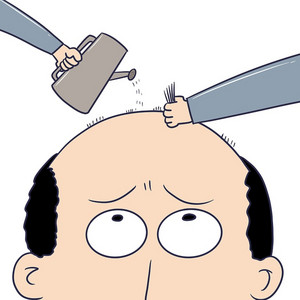
Hair loss might feel like an uninvited guest, but what happens when hair restoration promises a full house of luscious head of hair, from miraculous before -and -afters to the fine print that gets overlooked, we explore whether hair transplants are truly a confidence boost or just a filter for real -life
expectations. In recent years, hair loss has become a rallying point on Chinese social media among young people, sparking evergreen discussions while that many feel that they can unite around.
And in fact, it's a global issue.
But just how widespread is this problem?
Oh, wow, let's just look at data from a Chinese scope.
So this is according to the National Health Commission back in 2020, and they revealed that more than 250 million people here in China, including 163 million men and 88 million women, are experiencing hair loss in China.
And among those with hair loss, that's reported by China Daily, 84 % lost their hair before the age of 30.
Wow, that's younger than in the past.
Yeah, I'm so sad to hear that.
Of course, which is 20 years earlier than previous generations, reflecting, you know, this is becoming a trend.
And as well, personally, I'm really sad to hear as well that hair transplants have become popular choices among the post -90s generation, as People .cn reported that young people between the age of 20 and 30 account for 57 .4 % of customers who go for hair transplants in the year 2020.
So about half of the younger generation that's seriously considering getting a hair transplant.
And the leading reasons, let's just try to discuss a bit more on that.
The leading reason of hair loss is from a condition named male angiogenetic alopecia.
Well done, that's a mouthful.
That's also called male pattern baldness, right?
Right. And it is, well, quote unquote, the most common form of hair loss in men, affecting 30 to 50 % of men by age 50 and causing around 95 % of male hair loss cases.
An issue here in China issue globally as well, hair transplant platform MediHair, that's an outlet to a company named they posted their hair loss statistics for 2024.
And they surveyed over 4 ,000 individuals all around the world.
And they discovered that the top three countries with the highest rates of male hair loss, specifically looking at males, Spain at number one, 44 .5%, Italy at number two, 44 .37 % and France at 44 .25 % in third place, all in the all in the forties, just under 45%.
But yeah, not just an issue here in China, it's all around the world.
And also, you guys mentioned men a lot.
But apparently, women suffer from this as well.
Yeah, I mean, more than 50 % of women are found to experience hair loss after going through menopause.
And data also shows that women who live stressed lives are 11 times more likely to suffer from it too.
Wow, 11 times more likely.
That is the power of stress.
We talk about it all the time, don't we?
But it's one of those intangible things, we can't put our fingers on stress, we can't see stress.
So it's hard for us to evaluate how strong or how terrible it can be.
Here's some evidence 11 times more likely to suffer hair loss if you live a stressed lifestyle.
And that is something I bet a lot of listeners, especially maybe living in big cities, are nodding along right now, either listening to the traditional radio or in the car or listening to off your smartphone on demand.
Because who is not stressed?
I shouldn't say it this way.
But it feels like if you live in a big city these days, there's so much to stress over, and therefore, not having enough hair or seeing that the hair might be thinning out a little bit, that becomes part of the vicious cycle of stress.
It creates more stress.
That's right. And with those numbers here in China and the numbers that we heard from different countries around the world, that implies then that there would be a demand for hair treatment in one way or another.
Oh, yeah, because market -wise, we've seen such a grow in the hair transplant or hair treatment market over the years as well, as the 2024 statistics also suggest that the hair loss market had a global size of US $52 .37 billion back in 2022 in terms of sales of hair loss products and treatments.
And the revenue has grown by an average of US $6 .7 per year from 2017 to 2022 and is estimated to reach US $88 billion by 2030.
So this is like a continuously growing market that we're talking about.
Yeah, a growing problem, hence the growing market.
Oh, yeah. Right. Those two are very, very closely related for sure.
Yeah. And I can't help but wonder how much of it is a result of this stress or this perceived risk that is feeding into our anxiety, which make people shop for these products and how much of it is really that these things actually work.
Yeah. Because there's often this discussion where at least some people question, is this another stupid tax that people are paying for?
That's a term in Chinese social media refers to when you're paying for a product that you have these high hopes for, but actually maybe there's only the placebo effect that you get from it and it might not really actually cure the problem.
Well, false hopes come from false claims, as a matter of fact.
And I'm not sure about here in China on television, if you'll see a lot of advertisements for hair loss products, things that claim they can restore hair growth or there's so many different products, right?
Shampoos, that's just one example of them.
But I know in the United States and in Canada, you'll see these types of TV commercials a lot.
And I know this because I'm a big fan of American football.
So a lot of men watch American football.
So therefore you can see TV commercials targeted at that demographic during the football matches.
And they do make all of these claims, don't they?
But sometimes that can be true, I guess, but sometimes that can be false.
And they say that you have to really do your research very, very well before choosing your products or your treatment or whichever route you decide to go.
Right. And in China, previously, a lot of the focus has been on all kinds of hair treatment to solve the balding issue.
And now it's hair transplant, which apparently is a faster, quicker, and more expensive, sometimes a solution or am I going too far?
What do you think? I mean, faster, I'll doubt that because it's nevertheless still a long healing process in order to see like the effect of a full grown hair after the transplant surgery was done in say a few hours.
But well, I think you mentioned something really funny about the private hair transplant facilities, Steve.
I remember seeing a lot of such advertisements here in China in subway stations.
There's this huge commercial board showcasing which facility and what they do for your hair and what are the numbers, stuff like that.
But sometimes they also label something as a success ratio as high as 95%, 97%.
But here is the thing, such rates are just for reference.
I mean, there are examples everywhere.
So here is one woman surname, Zhang, who lives in Shenzhen in southern China's Guangdong province.
And during an interview, she told the reporter that a year after she underwent a hair transplant surgery at a local say cosmetic surgery facility that claimed the 95 % success rate, her hair on the practiced part after the surgery still remained thin and fragile.
And when she tried to confront the facility, they only said, oh, your hair follicles are lack of vitality.
It's not our problem.
So there are such risks everywhere.
So really, we need to be aware of the first of all, the success rate that they label.
And secondly, how reliable these facilities are because we see their commercials everywhere.
Yeah, not just the facilities, though, the products too.
There's a company called Olaplex.
And in 2022, 2023, 30 women, almost 30 women filed a lawsuit against the company.
They alleged that their products caused hair loss, breakage, and scalp irritation.
Their hair products, which by the way, are really popular on TikTok and celebrities talk about these hair products all the time as well.
They claim to strengthen your hair and to fix and prevent damage.
But this lawsuit that was filed in February of 2023, it claims that the products not only don't live up to the hype, but they're actively dangerous.
And the lawsuit claims that Olaplex's marketing materials falsely claimed that their products restored damaged hair and created healthy and shiny hair as well.
It's not a class action lawsuit.
The judge said that the women's claims were all a little bit too different to be considered a class action lawsuit, but it's just evidence a lot of people very upset over these, what they call, what they claim are false claims.
Where is this happening?
This is in the UK, I believe.
Oh, interesting. Well, in China, we're seeing still for the hair transplant, if I may call it an industry, in its fast growing phase right now.
And we're seeing that, well, actually this is more of a question I've always had.
When we talk about hair transplant, like how is that being done?
And also like you guys mentioned, sometimes it's really difficult to sort of claim your rights because you don't have like a small magnifying glass that you can put on the top of your head and sort of cite as evidence or whatnot that, oh, you've got, you've lost like 50 more hair after it's being transplanted
or whatnot. I mean, this is kind of difficult to collect evidence in a way.
So there's two main types of popular hair transplant surgeries.
This is from a clinic website called Wimpolek Clinic.
There's the FUE hair transplant procedure known as the follicular hair extraction technique.
And that's among the most modern techniques available for people these days.
They have a minimum transplant scarring post procedure and a relatively better result with a shorter recovery period.
That's one. Then there's another one called the FUT transplantation.
That's a more traditional way.
And what they do there is they remove a strip of skin from the donor area, the hair donor area, that's usually from the back of the head that could leave a linear scar where they take that hair from.
That surgery itself lasts between four and eight hours depending, of course, on the size of the area under treatment and also the number of follicles needed to be extracted.
But the patient can usually go back to normal, their working routine, their life about one or two days after the surgery.
The hair grafts themselves takes about a week once the post -op care takes place for the follicles to settle down.
But yeah, it's very intrusive, I mean, these are actual surgeries.
This isn't like you pop in and 10 minutes later, you're back in your car.
No, this is hours and hours with a legitimate recovery time.
Here in China, depending on, they call it the zones on your head or on your scalp.
And depending on how many zones on your head are in need for transplant, the cost and the time of the surgery may vary as well.
Here's some examples I've found in one leading facilities that does this.
So for a three hour transplant of 500 grafts of hair transplant that takes about 4 ,000 RMB, well, it only fixed the outer realm of your forehead that's just making it...
Like your hairline, you mean?
Yeah, fixed up a little bit of the hairline and it takes like three hours and it takes 4 ,000 RMB or a bit more than the 550 US dollars.
And then that's just for the basics that can be fixed in three hours.
And for the more severe hair loss that's on the top of the scalp that require a bigger area of surgery, usually it takes like four to five hour transplant.
Some even reach to seven to eight hours of full transplant over a bald area with 2 ,500 grafts takes about 3 ,350 USD or more than 23 ,000 yuan.
So, yeah, I mean, I was looking at the videos just now, it looks like a lot of blood is going on.
Well, it's a surgery.
Yeah, it is a surgery, but well, I don't know.
I've never had a tattoo.
That's the only thing that's remind me of such procedure.
But if you want a graphical description on how such transplant looks like, that's how it looks like.
It's a commitment, I think.
And also, there must be a lot of things that is better to be aware than beware when it comes to going under, almost like going under the knife for this, right?
Yeah, it is. But I think we should acknowledge that hair loss for men or for women can be a really traumatic thing, right?
You know, people tend to joke about it on social media.
They tend to joke about it in the media as well.
And I think maybe make light a little bit of the situation.
But this is a really traumatic experience for people when they suffer from this, particularly you, Shen, you talked about in the beginning of our chat.
This is happening to people 20 years earlier in their lives than it used to.
Suffering from hair loss in your fifties and sixties is something that we consider to be, oh, it's just part of getting older.
It's part of old age.
But suffering from hair loss in your twenties or your thirties when you're a man or a woman, this is a really serious and traumatic thing.
This can lead to, if you look at psychology websites, they talk, experts talk about it.
This can lead to things like depression.
This can lead to things that can affect your daily life, like social anxiety, being afraid to go out and meet people because you're scared.
Oh, they're just going to look at my hair.
They're going to notice it.
Oh, I just don't want to go out anymore.
This is a really serious thing.
So to have these options available, and yes, of course, everyone should do their research extensively before making a decision on which path they want to take.
But to know that there are options available for people is a really comforting thing, I think, for those who are suffering from hair loss, particularly at an early age.
I agree. Hair loss really can significantly impact how we perceive ourselves because it often ties into our sense of identity, confidence, and even self -worth.
For many, hair is a symbol of youth and vitality, and losing it can feel like losing a part of that image.
And this shift in appearance can affect how we perceive our attractiveness, which in turn influences our social interactions sometimes, professional confidence, and even emotional well -being.
So it's not just about aesthetics.
It can also evoke these feelings of, I think, essentially, it's about aging, vulnerability, and loss of control, which may deeply affect daily life for those who feel like they're in that seat.
But can I also sort of tip this a little bit in the sense that, okay, if there's really obvious change going on on the top of the head, then okay, I understand.
But could it be that sometimes maybe I'm being a little bit paranoid, that sometimes maybe it's not as bad?
And I can use myself as an example.
I've fallen for or shall I just say maybe I happily paid for it.
Going into a hair salon and then when the hair specialist says to you, hey, he young, we've been working together for three years, you used to have thicker hair here.
And there's treatment.
This is not necessarily surgery, but there's this very expensive treatment that goes on in 10 parts.
And are you willing to act in almost a preventative manner before it's too late, better safe than sorry?
And then, yeah, I paid for it.
Yeah. And it's understandable because you were put on the spot, first of all, right?
A conversation that was happening in real time at that time where you were learning about that information for the very first time.
So the obvious reaction is to say, yeah, but I think that's true for many people.
They just think that the problem might be worse than it is.
I check my hairline all the time too, just to say, okay, something going on here, something going on there.
Everybody does it. Everybody does it.
So I think it's a natural thing to overreact as well.
But you do make a great point there.
You know that expression, we are our own worst critics.
If you're looking in the mirror, it's probably not as bad as you think it looks to other people.
Yeah. And well, my point of view would go to that if it's not hair loss, it's got to be something else.
Like for me, I'm not really worried about too much about my hair, but I worry a lot about the acne's going on on my face that's ongoing all the time.
So yeah, we all worry about something about our, whether it's skin care or scalp care or just in general, the aesthetic appearance of ourselves that's really closely linked to our social functioning as well.
But in, well, regarding hair transplant and conducting surgery, I would say that these transplantation surgery should be a last, if not a later resort in your fight against hair loss, because there are plenty of say treatments that's not intrusive, that's not causing a lot of bleeding out there that you
can try as a start.
For example, there's this, I was looking at some medical terms.
So apparently for most men that suffering from hair loss, there's this medicine pill called thinasteride that's supposed to adjust a hormone inside the male patient's body that helps to, you know, combat hair loss from inside out.
But the thing with that is once you stop taking the medicine, the effects start to fade, if not get back to before you start a treatment.
And same goes for female patients as well as there's another type of wash, I believe that's for external use that helps to say, circulate the blood flow floating around your hair particles.
And, and that will kind of counter the effect after you stop using the medicine as well.
So well, for treatments, that's how it used to be.
And hospitals nowadays offer not only treatment, but also a comprehensive, what they call a comprehensive treatment for hair related diseases that include like hair wash, anti hair loss treatment, massages, and also now in hospitals, you can find services that covers hair transplantation surgery as
well, which I would assume it's safer, relatively safer than going onto some hair salon facilities.
And then if you look at websites where experts are giving their advice on things that you can do, if you're looking to take preventative measures or even just tackle the problem as it's happening to you, they talk about even less invasive things like eating maybe 60 to 70 grams of protein a day can help
out or increasing your exercise can help out as well.
Taking care of your diet can help out as well.
Reducing the amount of stress in your life.
We talked about that before.
These are other kind of like home remedies that you can do to, to take care of the problem.
And there could be some cultural specific recommendations, which I don't think necessarily work, but I'll say it anyway.
In China, we think about the black sesame seed or the grinded black sesame seed to be apparently good for hair growth, but you know what?
That's added calories as well.
So, you know, putting on weight versus, you know, curing hair loss or might work or might not work.
Well, you know, you take the pick and then there are some other foods apparently that in our traditional culture, they say, oh, you can eat from a, from an emotional standpoint, those same websites that say increase your exercise, eat a healthier diet, reduce your stress.
They also talk about an important point to you, I think, emote, and this is from the emotional side.
If you are suffering from it and it's hurting you emotionally, what the experts say is don't run away from the problem.
Don't avoid the problem.
Don't lock yourself in your house.
They say it's better emotionally to just try to deal with it.
You can go online. You can do your own research.
You can speak with your family or your friends about how you're feeling, but also you can speak with a, with a professional.
Visit a doctor, get some advice on what's the best course for you and, and deal with it.
That's from the emotional point of, point of view.
That's what the experts say.
It's better to deal with the issue than to avoid it because it's only going to get worse emotionally for you as well.
Right. And while we recognize that this is a personal and sensitive issue for those affected, what are some thoughtful and effective ways to approach managing your hair loss, both practically and psychologically.
And I want to land on psychologically.
In 2021, we did a show capturing the trend back then it was called embracing boldness and I love the Chinese, which became one of the most streamed show of the year on our podcast.
Maybe there is something to be said for embracing and accepting it instead of fighting it.
I mean, just don't see it as a combat.
I mean, Steve raised a very good point there by dealing with it.
We're not trying to see it as our enemy, but really incorporating this long -term treatment as part of our daily life and see it as a general improvement of your living standard as a whole because there's a lot of lifestyle or habits that we mentioned that's going to benefit for a better hair quality
that improves your sleeping routine, adding more exercises, eating more healthily.
These are all good for general health as well.
So don't see it as an enemy.
Just see it as part of enhancing your own life.
Then that will erase a lot of the psychological burdens.
And you know what they say, bald is beautiful.
Great. And we understand that hair loss can be a deeply personal and challenging experience.
Embracing self -compassion and acceptance can be a gentle way to navigate this journey.
And it's not about minimizing the struggle, but about finding ways to support ourselves through it, recognizing that each person's path is unique.
And I reckon there are some of folks out there who are basically exercising a little bit of self -deprecating humor on social media as well.
But all this talk, you know, make people feel is a safer place to talk about it anyway.
We'll see you next time on Roundtable.