
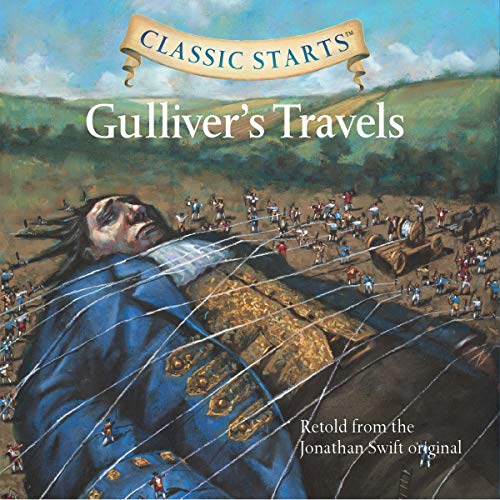
[Encounters in the Land of the Houyhnhnms: An Analysis of Gulliver’s Interaction with the Rational Horses]-[Gulliver's Travels - Part 19]
📋 Summary
The Paradox of Rationality and Human Likeness
Introduction to the Strange Dwelling
Following his initial arrival in this unfamiliar land, the narrator finds himself escorted by a gray horse to a long, straw-roofed wooden building. His initial strategy to gain favor involves presenting "toys that travelers usually carry as presents to the natives," a desperate attempt to establish rapport through material offerings. Upon entering, he encounters an environment that defies human convention: a room with a "smooth clay floor" and a "manger" housing several horses. The narrator’s astonishment grows as he observes these horses "sitting down" in a manner that suggests a highly organized, sentient society, marking his first true immersion into a world where horses occupy the role of the master.
The Encounter with the 'Yahoo'
As the narrator is led deeper into the structure, he is introduced to a mare and her young. The interaction is marked by a "disapproving glance" from the mare, who proceeds to repeat the word "Yahoo" during her consultation with the gray horse. This term becomes the central mystery of the narrative. The narrator is subsequently taken to a courtyard to witness three "horrible creatures" tied to a beam.
His reaction upon seeing these beasts is one of profound psychological distress: "My horror and shock are not to be described when I saw in this disgusting animal a perfect human face." The physical comparison is meticulous; he notes that the paws of the Yahoo differ from his own hands only in the "length of the nails and the hairiness on the backs." He recognizes a disturbing structural identity: "every part of our bodies was the same, except for the hairiness and the color." This realization serves as a brutal mirror, forcing the narrator to confront the possibility that he shares a biological lineage with these "filthy yahoos."
Cultural and Dietary Incompatibility
The interaction highlights a severe disconnect between the narrator’s biological needs and the expectations of the horses. The "sorrel nag" attempts to provide sustenance, first offering a root, then a piece of flesh from the Yahoo’s kennel, and finally hay and oats. The narrator experiences deep "disgust" at the scent of the flesh and rejects the hay, fearing that he might "starve in this country" due to his inability to consume the local diet.
This tension is only resolved when the narrator points to a cow, prompting the gray horse to provide him with milk. This act of communication—using a "forehoof to his mouth" as a gesture—demonstrates the horses' intellectual capacity and their willingness to accommodate the narrator, provided he can distinguish himself from the base Yahoos. The narrator notes that his clothing acts as a barrier, preventing the horses from seeing the full extent of his physical resemblance to the hated creatures, a detail he seems somewhat relieved by, given his own revulsion toward the Yahoos.
Conclusion: Isolation and Reflection
The day concludes with the narrator being assigned a sleeping space separated from the stable of the Yahoos. As he settles into the straw, covering himself with his clothes, he is left to contemplate a reality where he is an outsider among rational beasts, physically linked to the very creatures he finds most "hateful." This chapter serves as a foundational exploration of the narrator's identity crisis, as he navigates the chasm between his human form and the societal standards of the Houyhnhnms.
Deep Learning with ListenLeap


