
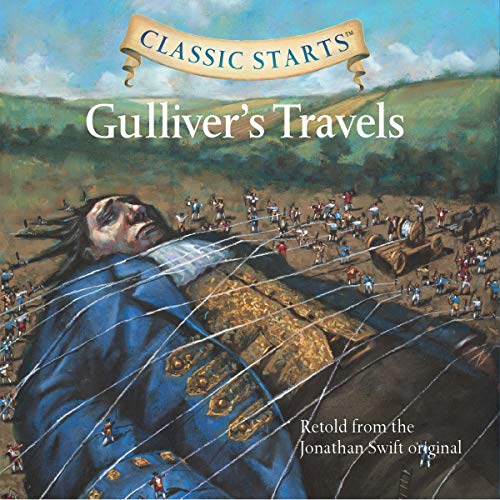
[A Voyage to the Country of the Hohenheims: An Encounter with the Rational Beasts]-[Gulliver's Travels - Part 18]
📋 Summary
The Unfortunate Voyage of the Adventure
The narrative begins with the protagonist, a seasoned captain, reflecting on his restless nature. Despite having a "very happy condition" at home for five months, he succumbs to the temptation of command and accepts a mission on a merchant ship named the Adventure. This decision marks the beginning of his downfall. The voyage, which commenced on the "ninth day of September 1710," quickly descends into chaos. Beset by tropical fever and the unfortunate recruitment of pirates from Barbados, the captain finds himself betrayed. These "scoundrels" successfully stage a mutiny, confining him to his cabin before eventually abandoning him on an unknown shore with nothing but his knife.
The Encounter with Disagreeable Beasts
Left to fend for himself, the protagonist ventures inland, hoping to find civilization. Instead, he encounters a species of animal he describes as the most "disagreeable" he has ever seen. These creatures are covered in "thick hair" on their heads and breasts, possess "long beards like goats," and climb trees using "sharp, hooked claws." Their behavior is equally repugnant; when the protagonist attempts to defend himself, a herd of at least forty of these "ugly monsters" surrounds him, "howling and making ugly faces," even resorting to spitting on him from the trees. This confrontation establishes the primal and chaotic nature of these beasts, which contrast sharply with the later discovery of the horses.
The Revelation of Rational Horses
The protagonist’s terror is interrupted by the sudden flight of the beasts, triggered by the arrival of a "gray horse." Unlike the animals he previously encountered, this horse exhibits "orderly and thoughtful" behavior. The interaction that follows is profound; the horse gazes at the protagonist with "wonder," and when a second, white-colored horse joins the first, they engage in a rhythmic exchange of hoof-striking and neighing that the protagonist perceives as a sophisticated language.
Convinced that these creatures must be "magicians who had disguised themselves," the protagonist attempts to communicate his "sad situation." The horses listen with "great attention," leading to a pivotal moment of linguistic mimicry. The protagonist manages to echo the sounds the horses make, eventually learning the term "hoi hin him." The intelligence displayed by the horses is underscored by their calculated reactions—they are clearly surprised by the human's ability to imitate their speech.
Conclusion: An Obedient Departure
The encounter concludes with a shift in power dynamics. The horses, appearing to deliberate, eventually decide to guide the protagonist. By having the gray horse make signs for him to "walk before him," the protagonist recognizes the wisdom of compliance. This transition from a desperate castaway to a follower of rational, equine beings sets the stage for a deeper exploration of the "Country of the Hohenheims," where the traditional boundaries between human and animal are fundamentally challenged.

Deep Learning with ListenLeap


