This BBC podcast is supported by the UK.
Hi, this is Alex Ritson from the Global News Podcast.
We're bringing you the latest from Iran, which is seeing the biggest anti-government protests in over a decade.
The protests which began nearly two weeks ago were sparked by the collapse of the Iranian currency.
Join us to hear the day's top stories from BBC News, delivered twice a day on weekdays, daily at weekends.
Search for the Global News Podcast wherever you get your BBC podcasts.
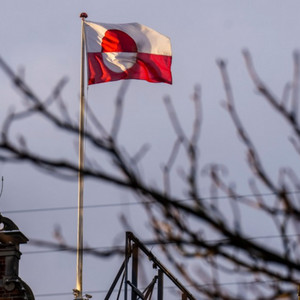
What's the future for Greenland?
My hope is that Europe would understand that a strong America is good for Western civilization.
I would never discount anything that President Trump says.
He generally follows through with what he says as well.
It's World Business Report from the BBC World Service.
This is Andrew Peach.
On the way.
I'll be joined by Greenland's business minister to ask her what her red lines are ahead of those talks with the US and Denmark in a few days.
Also today, the foreign investors looking for opportunities in Venezuela.
And we're in central Texas to ask why brisket is so expensive.
First, the White House says President Trump is discussing options to take over Greenland, including military action, and that's in spite of objections from his European allies.
The mineral-rich Arctic island is part of the Kingdom of Denmark, which has warned that any unilateral American action would spell the end of the NATO alliance.
The US Vice President, Jamie Vance, had this to say at a news conference a couple of hours ago.
Take the President of the United States seriously.
What has he said about Greenland?
Set to the side the crazy overreactions that I've seen from the press and from certain people in Europe.
What has the President said?
Number one Greenland, is really important not just to America's missile defense but to the world's missile defense.
Number two we know that there are hostile adversaries that have shown a lot of interest in that particular territory, that particular slice of the world.
So what we're asking our European friends to do is to take the security of that land mass more seriously, because if they're not, the United States is going to have to do something about it.
What that is, I'll leave that to the president.
The US Secretary of State, Marco Rubio, says he'll visit Denmark next week to talk about Greenland's future.
But what does Greenland itself think?
Well, to find out, I've been talking to its business minister, Naya Nathanielsen.
We are very happy about this.
We think that dialogue is the path forward and we are looking forward to being able to speak directly to the US administration and listen to their concerns and be able to voice our own opinions, instead of doing it through media, then doing it directly.
We still believe in dialogue and in diplomacy.
Of course.
The US Secretary of State talked about going to talk to officials in Denmark.
It seemed to be up to you guys to say, actually, we're coming as well.
Yes, and that is, I think, the narrative of the story, oftentimes as an indigenous population and a small population.
There seems to be a lot of ideas about what Greenlanders should do and who Greenland belongs to, but I think you oftentimes forget we are actually a people living there.
And we do have a function in democracy and we do insist to have a voice in the future of our country.
Is there any way in which the US can have greater involvement in Greenland or even run Greenland in the future, as the Trump administration seems to want?
Well, first of all I want to say that there seems to be no appetite amongst the Greenlandic population to become American.
So I just want to put that on the table.
We don't have a lot of surveys, but the ones we do have show that there seems to be no interest in this.
But when that is said, we expect that the treaty from 1951 is still in operation and that grants the US wide access to Greenland in terms of military installations or a greater presence.
And we still support this treaty.
Do the US want something else or something more?
We need to hear that from the US administrations themselves.
Maybe they can clarify what they are lacking in the current situation.
Also when it comes to investments in, for instance, our mining sector, energy sector, we are an open economy.
It is already possible to invest and engage in a private sector.
So we have been inviting the US to do so for quite a while and have been really hoping to see more American investments into Greenland.
It's interesting speaking to you because I'm not getting the sense that the door is completely closed to all of this.
We are a small country when it comes to number of inhabitants.
We are used to being that we need to engage with the outside world.
And we've been saying this all along.
We realize that we are a part of the American national security interest sphere.
We have been so for decades.
We realize this.
We accept this.
Also, we have been a colony.
We have been used to Greater countries, stronger countries having their opinion about us.
What we continuously is trying is to voice our own opinion on the matter, say, yes, we are small.
Yes, we are, in a geopolitical sense insignificant, but that does not make our voices not important to us.
Let's look at the Greenlandic economy and where the benefits might be of more investment from the US or, I guess, from elsewhere.
Which sectors could do with that?
Because you already acknowledge in our conversation that you do seek more investment from elsewhere.
Absolutely.
The energy sector, the mineral sector is very capital intensive.
It's very long term investments.
And these are sectors that we've been trying for quite a while now to get outside investors engaged in.
Right now, we don't have a lot of American investments in these sectors.
We do have a lot of interest from Canada, UK countries, the European Union Australia, but we're seeking American investments as well.
When it comes to other sectors, such as our fisheries and the tourism sector, we can take care of these on our own.
We don't need a lot of outside investments, but the more capital intensive sectors will need outside investments to get off the ground.
You say you're very keen to have this conversation with Denmark and the US to understand what Donald Trump wants and what sort of future relationship there might be.
What are your red lines?
What would you not do?
Well, we will not give up our country, of course.
We do insist that, even though we have been colonized and even though we are part of the Kingdom of Denmark, we want to be able to have our own say in the matter.
And that's the red line for us.
We do not accept that other countries are discussing us like an object that can be sold or bought or even invaded.
It's very frightening right now for the population of Greenland.
And I really find the situation devastating.
It's a difficult time to have to explain to your children that other countries are discussing your hometown as an object, as something that can be acquired.
But wanting to have a say doesn't seem like a very firm red line, because one suspects that when you talk to Marco Rubio, the US Secretary of State, whatever he's got in mind, he won't be saying that Greenland and the people who live there have no say.
Well it depends what kind of rhetoric you're listening to.
If you say that we need to control and own Greenland, that leaves very little voice to the people of Greenland.
So I do expect that, whatever comes, we must listen to what sort of worries and interest comes from the US side.
And we must assess whether or not this can be transferred into something that is acceptable for the people of Greenland.
But right now, it's a lot of, I think, media debate and a lot of heated rhetoric.
And it's difficult to figure out what is the actual new thing that should be discussed.
Would you, for example, be happy for the US to have far more influence in the future?
Depending on what kind of influence.
Right now, there is quite a bit of influence when it comes to military access, for instance.
We have really no objections if you want to try to redefine or try to figure out a way to get more American involvement into, for instance, a mineral sector, if that's the interest.
So it all depends on the subject and the way we approach this.
But I think what is needed right now is to de-escalate and take this heat out of the current rhetoric, because that is serving no good purposes.
And I think it's very difficult to be a Greenlander at this time.
How do you feel, how do other people in Greenland feel, about the idea of perhaps the US replacing Denmark as the primary influence over the country in the future?
To quote our former Premier, we are Greenlanders.
We are not Americans.
We are not Danes.
We want to continue being Greenlanders and have our own culture and our own country.
And that is, I think, Not very wonderful.
I mean, I think every country feels like that.
And so do we.
We have no appetite in becoming Americans.
And you've talked about it feeling a very uncomfortable time with politicians talking publicly about the future of Greenland.
What about the rhetoric we have had hints at in recent days that Greenland could be taken by force?
It seems unlikely, but it has been said.
Exactly.
And it plays into this great fear.
It introduces great fear in the population of Greenland.
It is very difficult to hear a superpower talk about your country in a way like that.
We really do nothing but try to build our democracy like every other country.
People are concerned about health care and education and inflation and all the other stuff that other people are concerned about.
And all of a sudden, the narrative in all media is whether or not you have the right to your own country.
It's very surreal.
That's Naya Nathanielson, the business minister of Greenland, talking to me on World Business Report.
Now the US Senate has agreed to vote on a resolution which would require President Trump to seek congressional approval if he wants any further military operations in Venezuela.
Obviously, a few days ago, the US forcibly removed President Nicolas Maduro.
We've been hearing all week on the programme about the need for foreign investment in different sectors of Venezuela's economy.
In a few weeks from now, a group of potential investors and hedge fund managers will be heading to Caracas with Charles Myers, the chairman and founder of Signum Global Advisors.
That's a geopolitical risk firm based in New York.
I asked Charles when this trip had been planned.
We've been planning a post-Maduro trip to Caracas for about two months now.
We've been writing very publicly about our view that Maduro would be out around this time because the Trump administration was so committed to that objective.
And so, now that it has happened, we're going to take about 20 to 25 foreign investors to Caracas to look at reconstruction opportunities.
Meet with the, where we took 27 clients to meet with the new government and look at reconstruction.
We did a trip to Ukraine last February.
So it's very similar to that.
It's multinationals across oil and gas infrastructure banking, insurance technology autos, minerals.
And then also on this trip, there will be some of the asset managers that own the defaulted Sovereign and Bevedesa bonds.
Let me just push back on the idea that it's a new government, because it's the same government minus Maduro.
Yes, no, that's fair.
This is not regime change.
It's leadership change.
I think that unlike in Syria, where it was clearly regime change, this is a different outcome.
Our goal is to meet with the new leadership, meaning hopefully the president, but also there could be a little bit of you know kind of reshuffling of a few of the portfolios across some of the ministries between now and March.
But no, we are meeting with It is mostly the same people.
And the people who are coming with you, potential investors.
How much do they already know about Venezuela, about the opportunities there are, about what they might want to invest in?
Or are they really starting from a blank sheet of paper?
No, these are very sophisticated multinationals and asset managers.
On the asset management side, they're mostly emerging market investors and frontier emerging market investors.
So they are very sophisticated and very smart.
And again, already have exposure in many cases to the Venezuelan bonds, which have done incredibly well even though the restructuring process hasn't even started on the multinational side.
Some of them are companies that have a long history in Venezuela and had their assets nationalized.
Others just want to go in and see what the opportunity is potentially.
If they have not, you know, it may be new for them.
First and foremost, a sense of what the domestic political and domestic security situation looks like and will look like.
Going forward meaning meeting with the government.
Is this the government?
Is this the government that will be in place six months, 12 months, two years from now?
We don't know when the transition to democracy will happen.
But is this a stable, viable government?
Secondly, can this government bring about or maintain domestic security for the employees of these companies that may be going in to invest?
And then third, I think very importantly, we need to see changes to legislation.
The existing hydrocarbons law, the entire framework, needs to be completely rewritten and drafted and passed for foreign investment in Venezuela.
And then lastly, is there a US government backstop for some of this foreign investment?
I think they're looking for those four things.
Everything's ticked off on that list.
If people come with you on the trip and go, yeah, we actually think this is a stable situation.
It's got some legs into the future.
They're willing to change the rules.
What then happens is it creates investment opportunities in Venezuela and its infrastructure in different sectors of the economy.
We've heard a lot about oil, but there are others, too.
Absolutely.
So you know, most of the coverage of sort of Venezuela and the commentary so far has been focused on the challenges right.
There are huge challenges for this country, not only in terms of the incredibly degraded oil infrastructure, but just broader challenges political domestic, etc.
Social challenges.
And the historical parallel that's being used the most is that this could be the next Iraq, meaning yes, oil output can be increased, but it's still going to be a bit of a domestic security nightmare.
I don't agree with that analogy.
I think it's much closer to the more relevant analogy of Hungary Poland, as those countries transition from communist to capitalist.
And I would even put East Germany, when it was absorbed into West Germany, as a more relevant model, because Venezuela has actually two even bigger advantages than say, Hungary and Poland had, which is the world's largest oil reserves and a complete backstop from the United States.
The United States is 2000% invested in the success of Venezuela.
Foreign investment is a critical part of that economic success.
And I think those advantages, in a way, are much better for Venezuela.
And so I think, to quantify it, I think it's a 500 billion opportunity over the next 10 years of foreign investment in Venezuela.
Oil and gas will be first, but everything needs to be rebuilt.
This is a reconstruction of a country that is emerging from 25 years of dictatorship, economic mismanagement and chronic underinvestment.
Because it does seem remarkable to have a country with not only such rich oil reserves but also potentially rare earth minerals in great supply.
An amazing tourism industry potentially.
It's got all of these things.
And yet we've been talking all week to young people in Venezuela who say the only way to get work is to work online for companies based elsewhere.
And even then you're not earning very much and you go to the shops and the price of things is double since Saturday and all of this kind of stuff.
It doesn't mesh together.
There doesn't seem any reason for it to be that way.
Anytime a country is coming out of in this case again 25 years of both political and economic repression and recession.
Really, having been a economic pariah and with sanctions, completely cut off from most of the world economy, it takes time to invest in all of these sort of industries, and foreign investment will be a key part of that.
But I think, looking out two years, I think Venezuela bounces back economically much faster than most of the predictions are, in part because of all that potential that you just mentioned across many sectors of the economy.
And secondly, the United States being again so invested in the success and in the outcome of this and doing everything possible to make it happen.
So I think that if we're on a call like this, in a year, we'll look back and realize Venezuela has moved much faster, being reintegrated into the world economy and its domestic economy having bounced back much faster than most people expect.
Charles Myers, the chairman of Signum Global Advisors, with me from New York, where we also find Jennifer Snyder, financial advisor at Brighton Securities.
Jennifer, thank you for being with us.
We've been saying on the programme this week that despite the drama in Venezuela, actually the markets haven't been terribly troubled, apart from a bit of a boost for infrastructure firms like Halliburton.
Is that still the case?
Yes, I really appreciated your last guest there and definitely agree with all those insights.
And that is truly what we're seeing is the markets are responding, and certainly something to be looking at with the emerging markets.
A lot of great points that he raised there.
Let me mention a story just breaking in the last few minutes about the US carmaker General Motors.
They say they're going to write off another $6 billion.
This is linked to scaling back investment in electric vehicles, which is what the Trump administration has been encouraging, of course,
They already had a write down of $1.6 billion in the previous quarter for the same sort of reasons.
Tell us a bit more about the health of General Motors in that context.
Well, because we see all these carmakers trying to get in on this EV initiative, but because of converse things that we're hearing from the administrations, or pullbacks for getting the tax breaks, it's really put a crunch in that ability to move forward with it.
And I think they're just reevaluating the landscape as a whole, trying to balance traditional gas-powered vehicles with EV portfolios.
And We're just seeing the pushback on the EV side.
And it's certainly coupled with the administration and what's being pushed at the moment.
And we have a similar thing with Ford as well.
Is part of the equation here these firms thinking we've got to keep the administration happy?
That's a great question.
There's probably a balance in there.
I mean, we bailed out the automakers at one point.
They're obviously a huge part of our economy, but definitely reevaluating what EV looks like going forward.
I
There's a lot of conversation costs.
Do we have enough options for people?
And then just this overall lack of want in the EV market at the moment.
So I think it's just coupled with the timing of all things.
Jennifer, stay with me.
More with Jennifer on the way.
Hi, this is Alex Ritson from the Global News Podcast.
We're bringing you the latest from Iran, which is seeing the biggest anti-government protests in over a decade.
The protests which began nearly two weeks ago were sparked by the collapse of the Iranian currency.
Join us to hear the day's top stories from BBC News, delivered twice a day on weekdays, daily at weekends.
Search for the Global News Podcast wherever you get your BBC podcasts.
To World Business Report with Andrew Peach here on the BBC World Service.
Now, beef prices in the US are at record highs.
They went up by 22% last year.
US herds are getting smaller, supplies are tight, demand remains high and one cut of meat in particular is really feeling the price pressure brisket.
Elizabeth Trovol, from our broadcast partner's marketplace, went to brisket country in central Texas to see how pitmasters and customers are managing brisketflation.
Crackling Texas post oak wood is heating up the smoker at Charlie Rose Barbecue in Taylor Texas, 40 miles northeast of Austin.
It's a low slung gray takeout place with picnic tables out front.
Pitmaster Rusty Rohan was out here at 540 this morning putting his briskets on.
So they'll come off about five this afternoon and then they go in the warmer and they rest overnight and then rock and roll next day.
It's quite the process, so you can't quickly adapt to daily shifts in demand.
Well, you should have made more.
I'm like well, I can't just throw another one on and you know like throw another hamburger on the grill.
It takes 12 hours.
And Rohan, who got into the barbecue business in 2021 after leaving his job as a high school football coach, says smoking brisket has gotten a lot pricier.
When I decided to get out of coaching and getting this, you could buy a 15-pound brisket for $30.
And I'm paying $110, $115 a brisket now.
So it's gone up quite a bit just over the few years.
With a small setup in Taylor, population 18000.
It's a guessing game how much brisket to smoke for the next day.
If he doesn't make enough brisket?
I'll have people walk in.
If I'm sold out of brisket, they just walk right back out.
On the other hand, prices being what they are means whether he makes money off his brisket hinges on getting it out the door.
It all depends on if I get rid of the brisket.
If I sell it all, yes.
If I don't, no.
At the shop's front counter, repeat customer Randy Harley makes a lunch order for him and his coworkers.
He tells me prices are way too high.
Brisket back in the day was a scrap cut of meat.
Nobody wanted it.
Nowadays it's a commodity that it's way overrated and overpriced, because it's still the same cut of meat.
Because brisket has been mastered and marketed to perfection, he says, to a fault.
I remember you used to go get a chopped beef sandwich for 495 and a bag of chips and a Coke and you were good to go.
Now you're looking at a better part of $20.
And the face scale has not went up high enough to match the market of brisket.
That's the part i don't like.
A mile down west second street i talked to third generation pit master wayne miller at his renowned restaurant, louis miller barbecue.
There's ample tables and chairs and you can smell the brisket cooking.
We're peasant food, suddenly thrust into this stratosphere of pricing and it just wreaks havoc because people are like you know, I don't want to buy the whole place.
I just want a sandwich.
Louie Miller is an institution when it comes to Texas barbecue.
The restaurant opened in 1949, back when cooking brisket was economical.
But Texas barbecue, especially brisket, has blown up over the last 15 years.
And cows aren't growing a third brisket.
Herds are actually smaller now than they've been in, you know, 50 years.
So what we're seeing is this squeeze on pricing pushing up higher and higher.
He spends around $15,000 a month on brisket.
It's about half of his food costs.
So any hike in prices is a big deal.
In one month, we saw brisket jump up 75 cents a pound.
Well, if you're, I mean, think about it.
If you're doing 1,500 pounds of brisket, I mean, you're at $1,200 a pound.
A week.
So you're almost $5,000 a month, $60,000 a year, just from 75 cents a pound.
He says he's seen a reduction in foot traffic, and he gets it.
As brisket becomes bougier, rural areas feel the squeeze.
Taylor's a poor town.
People here, from here, price and elasticity.
This is my budget.
I've got, you know, $12 for lunch, and that's all I can spend.
So he tries to get his customers excited about chicken.
Give it a whirl, you know?
I mean, I'd be perfectly happy selling a little bit more white meat.
You know, the margins are actually there.
But this is Texas, and brisket is what the people want.
Jennifer Snyder from Brighton Securities in Rochester, New York, is still with me.
So there are particular issues there as brisket becomes bougier.
But what about the cost of living issues more generally?
When we talk about the US cost of living, it always seems to come down to eggs.
Yes.
Well, eggs, we had some issues with the eggs, definitely supply chain issues.
There's the feed costs.
The disease outbreaks.
Avian flu, definitely still feeling the pinch and definitely heard on the brisket.
But I would say that we still see a consumer demand for that beef.
And so it just it didn't matter.
We just have an overall cattle scarcity at the end of the day.
And we need to build back, right?
That's the biggest piece.
Over time, these prices don't go down.
They just don't rise as fast.
So we have this wave of time that we need to get through to eventually get our supply where it needs to be to match the demand.
Our Adam Smith invisible hand there.
The data today says the federal workforce in the US has fallen to its lowest level in a decade.
And presumably there's celebration about that in Washington, because that's what they were trying to achieve.
Yeah, so why, right?
So there's the attrition, the retirement's outpacing the hiring.
We had DOGE, the hiring freeze, coupled with budget constraints aimed at that, the efficiency initiatives to limit the government spending and, of course, AI.
There's fewer federal employees that are needed for certain functions.
However, it is a plus for the economy, as it does tend to support our private sector and lower those interest rates, which essentially loosens the purse.
Good for all Americans.
And we're going to spend more.
And that's why we're seeing markets react.
OK, more jobs data tomorrow.
Also mark our card for tomorrow, because we are definitely going to come back to tariffs on World Business Report tomorrow, because we've got a big ruling coming tomorrow on the US tariffs.
Huge.
Yeah, the tariffs brought in billions, reshaped the trade.
But if the courts strike them down, the importers could seek up to $150 billion back.
Definitely can shake up the markets a bit.
So very interested to keep a close eye on what happens tomorrow.
Is that likely, though?
Because isn't the Supreme Court tilted in Trump's favour, so rather unlikely to strike it down?
Yeah, it confirms the president's power to set trade policy, certainly.
And again, it's just what is going to be the outcome effect.
No one knows.
That's kind of our saying as professionals in the markets.
We don't know what tomorrow is going to bring, but we just hope for the best and have everyone's good interest at heart.
Jennifer, thank you very much indeed for being with me.
Jennifer Snyder is Financial Advisor at Brighton Securities in Rochester, New York.
More about today's stories online at bbc.com slash news.
And do be with us for the programme tomorrow for that important US jobs data and the Supreme Court ruling on the legality or otherwise of the trade tariffs that have been introduced.
For now, from me, Andrew Peach, thanks for listening.
Hi, this is Alex Ritson from the Global News Podcast.
We're bringing you the latest from Iran, which is seeing the biggest anti-government protests in over a decade.
The protests which began nearly two weeks ago were sparked by the collapse of the Iranian currency.
Join us to hear the day's top stories from BBC News, delivered twice a day on weekdays, daily at weekends.
Search for the Global News Podcast wherever you get your BBC podcasts.