
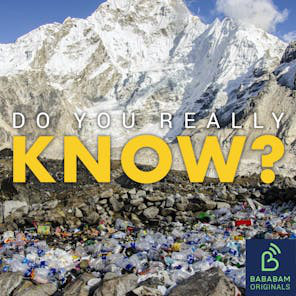
[The Great Pacific Garbage Patch: An Environmental Crisis of Global Proportions]-[What is the Great Pacific Garbage Patch?]
📋 Summary
The Great Pacific Garbage Patch: A Deep Dive into Ocean Pollution
The Anatomy of the Trash Vortex
The Great Pacific Garbage Patch, frequently referred to as the "Seventh Continent" or "Trash Vortex," represents one of the most alarming environmental phenomena of our time. It is an expansive, swirling mass of debris located in the center of the Pacific Ocean, currently estimated to contain 1.8 trillion plastic waste pieces. According to a 2018 study published in Scientific Reports by the NGO The Ocean Cleanup, this accumulation covers an area of 620,000 square miles—a staggering footprint that is larger than the combined territories of France, Germany, and Spain.
Origins and Formation: The Legacy of Plastic
The formation of this patch is intrinsically linked to the post-1950s surge in plastic production. Data from Plastic Oceans International indicates that humanity produces 380 million tons of plastic annually, with 50% of this output designated for "single-use purposes." Of this massive volume, approximately 10 million tons infiltrate the oceans each year. Rather than sinking to the seabed, these materials are caught by tides, currents, and the rotation of the Earth, forcing them to circulate indefinitely in a suspended state. This process is not unique to the North Pacific; the United Nations identifies five such garbage patches distributed across the North and South Pacific, North and South Atlantic, and the Indian Ocean.
Ecological Catastrophe: Impact on Marine Life
The environmental consequences of these patches are devastating, particularly for marine species. The WWE reports that 100,000 marine animals perish annually due to plastic pollution. A primary threat is the prevalence of "microplastics"—fragments measuring less than 5mm. These particles are frequently mistaken for plankton by marine life, leading to ingestion and fatal suffocation. The scale of this ingestion is horrifying; a 2017 UN report highlighted a single bird in Australia that had 234 pieces of plastic lodged within its body.
Beyond physical ingestion, plastics act as vectors for pollutants and "invasive substances" that destabilize marine ecosystems. This is a critical concern because oceans and marine flora perform a vital global service: they absorb 30% of atmospheric CO2 and generate up to 75% of the oxygen relied upon by terrestrial species. By damaging these ecosystems, plastic waste threatens the very biological machinery that sustains life on Earth.
Mitigation and the Path Forward
Efforts to combat this crisis are underway, most notably by The Ocean Cleanup, which has deployed the "Interceptor 007" vessel to physically collect accumulated waste. However, experts emphasize that technological cleanup is only a partial solution. The most effective approach remains addressing the crisis "at the source" by drastically reducing plastic production.
Individual action is identified as a cornerstone of this transition. Recommendations for consumers include:
- Boycotting single-use plastic: Actively refusing items that contribute to the waste stream.
- Supporting legislation: Advocating for policies that curb production and enforce better waste management.
- Conscious consumption: Shopping locally and re-evaluating the use of bathroom and cleaning products by opting for bulk purchases or creating "natural alternatives."
In conclusion, the Great Pacific Garbage Patch is a testament to the unsustainable nature of modern consumption. Addressing this "expanding mass" requires a multifaceted approach, combining innovative collection technology with a fundamental shift in how society interacts with plastic.

Deep Learning with ListenLeap


