discussion keeps the world turning this is round table You're listening to Roundtable.
I'm Niu Hongling, joined by Steve and Yuxuan.
Around the world, shared spaces are under pressure.
Trains at rush hour, cafes with remote workers and libraries full of exam-takers freelancers, parents and retirees.
China's public libraries are now a vivid case study in this global squeeze.
See, talking, booking apps, patrols, and time limits raise a bigger question.
How do we design public spaces when everyone needs something different from them?
And sometimes all it takes to brighten your day is a fresh perspective.
Yes, it's time for Roundtable's Happy Place of the Week.
Here, we share something that made us feel lighter, happier, or just a little more grateful.
But now, Give humans a public space and we'll invent rules, official or not.
In China's libraries, the unofficial rules are everywhere.
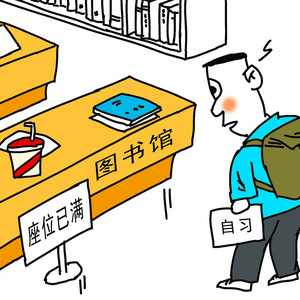
Leave your bag, claim your spot.
Take two seats so you have a buffer.
A quick break. never counts as giving up the seat.
These behaviors aren't uniquely Chinese.
They're universal reactions to scarcity.
Today, we explore why even the quietest spaces become battlegrounds of time, fairness, and equity.
So, Yu Shun, have you ever grabbed a seat in a library public one, or in a university, and didn't really put it into full use?
Oh, I'm quite civilized, to be honest.
I always take my belongings with me when i don't need the seat anymore or when, even temporarily, i go to the canteen with my belongings and i go back find another model citizen.
Yeah, but that is not everyone.
Not everybody is doing like that, because many readers frequently experience the frustration of finding that seats And they feel that it's hard to find that specific seat that they can sit in.
And this scarcity is primarily caused by these kind of seat hogging behaviors.
What are some common of those behaviors?
Because all I can think of is taking up the seat without using it or leaving for longer than I expected.
So I accidentally hogging the seat without using it.
I don't think there's any accident there.
You can also...
Put your bag or your coat on a chair or space next to you.
Oh, I sometimes do that.
So that it belongs to you.
Now somehow, bag and coat weren't there, somebody else would be using that.
Um yeah, sometimes people will drop their stuff off and then just leave for a long period of time and i think it's kind of acceptable right, maybe 30 minutes, maybe up to even an hour in some cases, is considered okay.
There can be more, and well, there can be markers there that could signify how long you'll be gone for, But still, I still consider it to be rather bad manners, because universities I know we're not specifically talking universities today, but campuses are large and they have a lot of spaces where people can study.
And if we're talking public libraries well, I mean you can find other places in the community to study too.
So I just find it to be poor form. to drop your bag off and go out and stay out all afternoon.
And yeah, cause we were talking about these public libraries and some of these battles can be very, very feels fierce.
I actually noticed that because one time I need to get, you know, a body check.
And so I went to the hospital very, very early and there is a I think it is the national library or something is next to that hospital.
Wow.
It's probably, Before 8 a.m., people are queuing up in front of the library.
In front of the door.
Yes.
They try to get the best spots.
Yeah, yeah.
And that's why I saw a lot of news even saying that when people are physically present but using the space for non-reading activities, that's maybe a kind of invisible occupancy.
That's strict.
Yeah.
Yeah, but anyway, and also people seeking paid seat reservations.
Yes.
How?
Or long-term cooperation to secure seats.
Like people, they put their own stuff, they get their library earlier, put their belongings to that seat, save a seat for you and you pay them.
Oh.
Wow, they're paying.
Well, but I kind of get it.
Because, according to a news report, during the summer of 2025, libraries across China's major cities become very, very popular.
The go-to spot for escaping the heat and having a little bit of a leisure time.
We see that the National Library here in Beijing welcomed more than 12000 visitors daily, with its public reading areas nearly full by 10 am in the morning.
It's no joke.
And in Zhejiang province.
The Zhejiang branch recorded over 11000 visitors in a single day, when Shenzhen Library's North Branch saw such high demand that seeds were nearly impossible to find during peak hours.
So it's not just something randomly happening in one library.
It's definitely happening across the nation.
Just before we jump into dive into the seed hogging problem, I have to say one of the reasons is that these libraries now are really good.
They provide good services.
The environment is good and the supply or the related services you can go to a clean restroom and the air conditioner is good and also the internet connection as well as the book they have.
The kind of services you can enjoy is quite good and the interior design of these libraries is pleasant.
They're very pleasant.
They're really beautiful.
So, yeah, I understand the desire.
It's not just university students or high school students who are going there to study.
People go there to enjoy an afternoon.
And I kind of get it because, for example, the National Library is where it is in Beijing.
You might not live right next door.
That means you've planned your trip to the library.
So if you get there at, say...
10, 15 am and no seat for you.
And there are no seats available.
And i made the statement earlier oh, communities are big.
You can go to a coffee shop nearby.
Well yeah, that's true.
But if your plan for the day was to go to the library, maybe with your kids or or something like that, then it can really kind of ruin your day.
Um, but again, the issue isn't about the popularity of libraries, it's if you're gonna go get the seat, then sit in the seat.
Maybe that is the first step, right it's.
It's almost a little counterintuitive with these in this day and age, with internet connection, with cell phone as our I don't know next organ, always attached to you.
You would think that people do not need these kind of public libraries or these kind of public spaces.
But what are they doing in public libraries?
Are they really just reading and borrowing books from the library?
Yeah, first of all, it's not like we have limited seats.
Actually, we're getting more and more libraries and the seats is getting more.
And one report from China Youth Daily is showing that now China have more than 15 million reading seats nationwide and the demand often exceeds the functional supply.
Because Who counted those, by the way?
Whose job was that?
Because more and more people no matter it's the readers or people want to study in these libraries, and not only during weekends, weekdays people go to these libraries.
And this draws various groups whose primary need is a quite study space and not necessarily just book boring.
And some people went there for exam preparation, like postgraduate studies right, civil service, professional certificates, who prioritize a quiet seat above all else, and also mobile office workers.
They went there for working and also parent-child groups.
They, Some of them, even bring their child.
Family time.
Yeah, they bring their children to that big library maybe experience some children reading zones and to have some parent-child time.
Very reasonable.
I would do that when I get older.
Basically, they're not doing anything that... Is not okay in a library.
Yeah, it's the same reasons everybody else goes to the library.
Okay, so what are the libraries doing?
I mean...
Yes, they're happy.
They're maybe smug a little bit, saying, huh, my library is very popular.
But at the same time, they must find some ways to make the management more effective.
Well, maybe the public libraries can take a note from Zhejiang Normal University, where students and teachers reserve seats, just like you reserve a seat for a movie.
Yeah, you know how you go on the app and you choose your seat for the movie you're going to see at the theater.
Many university libraries have that system.
Yeah, digital platforms.
Sometimes on WeChat too, right?
Or sometimes on the library website or something like that.
But yeah, you reserve your seat before you go.
That is a very, I think, smart and intelligent way of managing the seats and the turnover rate.
Yeah, it's pretty strict though.
So if you miss your check-in time, just like at the movie theater, if you don't go exactly on time well, actually the movie theater's a little bit different, because you can still walk into the movie 25 minutes late.
This is actually even more strict.
If you don't check in on time at the library at that university, Jujan Normal University if you don't check in on time, it's one violation.
If you get three violations, That's a 10-day suspension from booking.
And here's how they tackle the leaving, the temporary leaving.
So if you are already seated but you need to step out, then you have to swipe your card and select the option temporary leave.
And then it'll hold your seat for an hour.
Remember before I said sometimes up to an hour?
But if the user returns within 60 minutes, then it's a normal check-in.
If you don't...
Your seat is gone and you get one violation.
And guess what?
If you get three violations, again, that's a 10-day suspension from booking.
Okay, so for the libraries that do not want to sound so strict, there are, you know, buffer zones between taking the example or learning from Zhejiang University to creating a little bit of your own ways.
Because some other libraries are having their staff patrolling in the public areas.
Capital Library of China, right?
That's where they do that.
They're patrolling and affixing a seat usage reminder note to unintended seats and then noting the time of departure and the deadline for return.
And this actually helps define the usage boundary, because you don't want them to leave for couple of hours.
Yeah at that universe, or sorry at that library, if you leave your seat for 60 minutes, then it's gone.
Your seat is gone and the staff walk around every 40 minutes and check for seats that are not being used.
But stuff is there, and that's when they'll put that time stamped reminder uh to to get back to your seat, or that your seat might disappear.
I don't know what the reminder says, but it's some sort of threat.
Okay, so for regular library goers,
I mean, yes, these measures would make sure more vacant seats can be available for us.
We love that.
But anything else we can do to improve the situation?
We can do as in the citizens, right?
Of course, that kind of a civilized mindset is necessary when you're getting to that library.
Because the reason why I do that is because I will think about others when they're getting to that because when I get into that library seeing that all of these empty seats well I will thrilled but when we get close to that empty seats they are all like occupied with their personal belongings and I wouldn't be happy to see that and one thing is that the kind of intelligence systems are helping people to manage these kind of things because of course when we When there are benefits for ourselves, we don't feel that it is an obligation to behave.
So when it's for others, okay, others can feel that it's not good.
So this management system is helping people to behave, I would say.
This isn't only libraries, by the way.
You ever been to a hotel and you try to go out to the swimming pool area and get one of the sun loungers.
Mm-hmm.
After breakfast after the hotel buffet breakfast is finished.
Good luck, because people go out there at like 7 am and put their towels and their hats on the pool sun lounger because they want to reserve their space.
This is terrible hotel etiquette, but a lot of people do this.
It's really quite rude.
In Korea, people will do this on the subway, right?
Subway?
Yeah.
So this actually happened to me.
So a lady, this is my real situation.
I was looking for a seat and I saw one empty spot and a mom was sitting there and she had her hand on the empty spot right.
She was reserving it with her hand.
And I looked and I thought, what's going on there?
The mom's kid was like playing or yelling or running at the, just a little bit far away from her.
And she was calling her child, come here, come here and take your seat.
Well, I started walking towards her.
The kid ignored her.
I got there and I looked at her and she just didn't move her hand.
So you know what I did?
Sit on her hand?
I sat on her hand.
Wow, Steve.
That was my seat.
No reservations on the subway.
Sorry.
Well, I think for me...
There's this one thing that I can change.
That is my mindset.
Maybe you can share that mindset with me.
That is when I'm in a public place, especially a public library, where I will stay for longer, longer hours.
I truly do not like sharing a space with the people sitting next to me.
I do not like to have neighbors.
To start with, I would definitely take a seat with only one neighbor and hopefully no one's going to sit on that seat.
Oh, that's everybody's dream on an airplane.
Yes, that's true.
And that's the thing.
I realized that I do not have to have the... worry or repelling feeling about strangers.
Because I did also have the experience of talking to people sitting next to me and finding out we like the same book and we shared a nice conversation.
We didn't ended up making friends with each other or anything, but it was a very lovely afternoon.
So maybe in this society, everyone say, I do not like socializing.
I do not like to talk to strangers.
I hope that when I'm in a library I do not have to have a neighbor, but maybe That is the kind of small sacrifices you can make to make sure that more people would be able to enjoy the pleasure of public libraries.
Just don't be rude.
As well.
Yeah, if you want to go to the bathroom or step out to get a snack or something, that's one thing.
But dropping your bag off and then going and... Party.
Shopping or something.
It's just rude.
You know, don't do that.
Yeah, and we should always remember libraries exist in the first place because we want to make knowledge accessible to everyone equally.
So when we honor that spirit, the space feels a little more generous, and so do we.
Yeah, that lady was not happy.
I sat on her hand.
By the way, i don't think i did a lot for the expat community's reputation, but that is a valuable lesson to both her and her kid.
Absolutely, you're listening to roundtable coming up next the happiest place you can find on air.
Don't go away Delivery.
Delivery.
Delivery.
What is it?
Happiness from Roundtable.
It's Roundtable with me, Steve, and Yushun.
So, what's made you happy this week?
I did something last night that I realized I hadn't done in...
I can't even remember.
So I haven't been feeling that well this week and maybe our listeners could tell my voice is not in perfect condition and I apologize for that.
But last night when I went home I just decided I need to take a real rest, and it was in the evening.
And instead of doing what I typically do in the evenings you know something screen related, or you know a show, or even going out to the gym, you know consuming some sort of content somehow, visually or or through my ears I decided to just lay down on my bed for one hour, not for the purpose of sleeping I was wide awake but just lay down, close my eyes and put on something pleasant to listen to.
I was conscious the whole time, but I just turned my brain off.
And I felt amazing afterwards.
And I thought, when was the last time I did this?
All day, every day.
I'm always connected to my phone, from the minute I wake up in the morning until the minute I go to sleep at night.
At work, I'm staring at a computer screen constantly.
Nyonglin, you're staring at two computer screens right now.
And I realized, oh, we always talk about this on the show.
But we talk about it in terms of like blah, blah, whatever.
Oh, too much screen time.
But we don't actually follow the advice that we give here on the show.
So I thought I'm going to do it.
I can't overstate how great I felt to not pay attention to anything, with my eyes closed for one hour.
It was meditative, and it was healing, and it was amazing.
And I suggest everyone try it.
When was the last time you did that?
Just lay down, eyes closed, but you're still awake for one hour straight.
I kind of do it quite frequently, I have to say.
Well, aren't you better than me then?
No.
I wish you had told me this 10 years ago.
I feel like I needed this kind of thing during weekends.
That is one of the ways that I rest.
And I really feel you.
That is one of the moments that we really need for ourselves, when you can really maybe reflect a little bit and think about what's been happening, maybe lately.
Or just not thinking about anything.
Yeah, don't think about anything at all.
So that is the moment that I realized that yeah sometimes, when we are in this kind of fast-paced society, we even ignore the time that we need some blank space.
And I didn't know I was ignoring it.
And I don't know how long I've been ignoring it.
But I want to keep doing that from time to time.
When was the last time you did something like that?
I don't remember.
But what I know is that, while I'm listening to a certain podcast, I also need to work on two apps.
One might be a simple video game, another one being something that work related, and i can also give orders to my husband who's, you know, actively working.
How's doing housework in the house?
I think about at least three things together simultaneously.
Maybe that's why I need this so frequently because I cannot multifunctional that much.
I can only listen to that podcast very, very carefully.
I cannot do anything else.
My day is too busy.
I should take notes.
I should try doing only one thing or not even doing anything.
It's amazing.
Again, I can't overstate it.
I know it's super simple for Happy Place, but I felt so happy after I did that.
Let me see if I can make this... my happy practice next week, or maybe tonight.
How about you, Yixuan?
Shamefully, my happy place about screening is screening time.
My happy place this week is a recent American TV series I watched called All Her Fault.
It's a story that begins with the disappearance of a young boy and gradually unravels a web of mysterious behind it.
It's an incredibly gripping thriller and full of twists that's what i love that constantly reshape what you think is real, and the plot is tight, layered and packed with elements that keep you hooked.
And what really stood out to me is how many real world issues, social issues that show, weaves into the storyline, like The compromises working a female are forced to make and to some of the psychological turmoil that people may experience when grief and guilt push them into believing that don't deserve even a moment of happiness.
So that kind of self-punishing mindset.
Anyway, the constant plot turns, you know, I mean plot turns or plot twists, keep the suspense alive.
And Instead of feeling just overwhelmed or feel repetitive, I found myself just more invested into that story.
And honestly, I finished the whole series within two days.
That's kind of binge watch.
I really love that.
And I just couldn't stop start watching it.
Oh, cool.
I haven't watched this, but I've heard about this.
They were talking about it on the internet.
Articles on the internet saying one of the things that the viewers loved about the show is that from the instant the show starts, the tension starts like immediately.
That's how I felt.
Yeah.
That's what people were saying on the internet.
Like, Oh, sometimes there's a slow buildup during a drama.
No, it starts immediately.
The second the camera turns on.
I both of your sharings because I think it signals that in the world we have different choices and maybe both of your happy places would suit different needs from different people, those who feel like they need a little bit tension fun, intense fun.
You can watch the TV series.
And those who are already having a very busy and multi-layered, multi-element kind of life can take a pause.
And all that.
No matter what kind of rest or joy you chase in your life.
As long as it makes you feel better, it can be your happy place.