Attention kids of Australia, here's your chance to run the country.
Announcing PM for a Day, a brand new Squiz Kids competition where we ask you, our fabulous audience if you were Prime Minister for a day, what would you do to make Australia a better place to live?
The winner will win a trip to Canberra for a private tour of Parliament House, a chance to visit Question Time and receive a personal tour of Government House by the Governor-General herself.
You might even cross paths with the actual PM while you're there.
All you need to do is send a video to squizkids at thesquizcomau telling us the one thing you would do to make our country better if you were PM for a day.
But hurry, you've only got until March 13 to get your entry in.
Check out our website squizkids.com.au for terms and conditions and details on how to enter.
Hello, it's Bryce here, fresh from digging around in the Squiz Kids archives for this week's episode of From the Vault.
This Sunday, March 8, right around the world is International Women's Day.
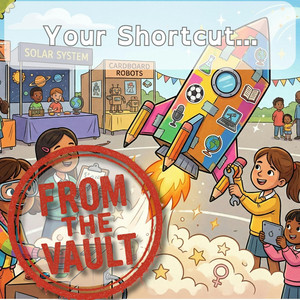
And so we thought it would be a good idea to dust off our very excellent Squiz Kids.
Shortcut to girl power.
Did you know that some 32 million girls your age don't go to school each day?
And I know why that might sound awesome.
It's actually not.
It means that 32 million girls your age are missing out on an education, and an education sets you up for life.
In this shortcut, we look at how girls can do anything and how centuries of discrimination are starting to be overturned by smart feisty, clever girls, just like the ones who listen to this podcast.
Enjoy.
This is a Squiz Kids podcast.
Your fresh take on what's happening in the world around you.
Girls are more likely to do housework, less likely to go to school, and they're doing something about it.
This is your Squeeze Kids shortcut to girl power.
The podcast where we dive into the who what when where, why and how of the big news stories.
I'm Amanda Bower.
And I'm Bryce Corbett.
Bryce, the world is home to 1.1 billion girls under 18.
Wow.
And, given that October 11 is the United Nations International Day of the Girl Child, it seemed like the perfect time to talk about where this phrase girl power comes from, why there's an international day for girls, what chores and weddings have to do with it, and how superheroes and sports stars are a sign of better times.
Oh, sounds great.
Now listen carefully because there's a quiz at the end.
Amanda, I think I'm showing my age, but doesn't the phrase girl power come from that British pop band from the 1990s, the Spice Girls?
They are definitely the ones who made it popular Bryce, but it actually started a little earlier in America, when this girl punk band called Bikini Kill – don't ask me what that means – started a magazine, and that magazine's subtitle was Girl Power.
The band was known for its feminism, which means standing up for women's rights, but it was definitely those five Spice Girls who really pushed the slogan Girl Power into popular culture and even into the Oxford English Dictionary.
I remember.
They were all about friendship between girls, about girls helping their friends feel confident, powerful and strong.
And it may or may not be true that I can sing the lyrics to every single one of their songs from the album Spice World, but that's probably not for now.
Tell me what you want, what you really, really want.
And there it is.
Anyway, back to the Spice Girls.
They made the phrase girl power a part of the popular culture, didn't they?
Sure did.
Nowadays, if you Google girl power, you'll find playlists T-shirts organisations, running workshops, sports camps for girls.
It's a really common thing to see girls being encouraged to seize opportunities and make the most of their abilities.
So if that's the case, why do we need an International Day of the Girls?
Why?
OK, Amanda, the United Nations has dozens and dozens of international days.
There's a day of Indigenous peoples, a day for biological diversity, a day against nuclear testing.
Why do girls get one?
Well, the UN says that these days are occasions to educate the public on issues of concern and fire them up to address problems.
There's been an International Women's Day since the early 1900s and that tries to make things more equal between men and women.
But in 2011, the UN decided that it should draw attention to issues faced specifically by girls in their younger years.
So on October the 11th, 2012, the first International Day of the Girl Child was celebrated.
OK, so what are some of those issues that are faced especially by girls?
Well, education is a big one.
So yeah, girl power is a well-known thing in Australia and America and Europe, but there are 32 million girls worldwide who are primary school age, just like you Squiz Kids listeners, and they're not going to school.
What?!
!
Yeah, and it gets even worse when they become teenagers.
So globally, nearly a quarter of all girls aged 15 to 19 don't have a job and they're not at school or university.
And that's compared with one in 10 boys of the same age.
So I'm imagining some kids are listening and thinking, no school?
That sounds all right to me.
Well yeah, I guess it could sound like fun not to go to school if you're staying home and playing video games or, you know, hanging out with your friends.
But these primary school age kids who aren't getting educated are usually extremely poor and they're having to help their parents trying to scrape together a living.
Just put food on the table.
Right.
So imagine that you can't read, you can't write, and you're doing back-breaking work.
It's really not much fun.
And then, of course, there are places where girls aren't allowed to go to school.
We've talked on Squiz Kids today about the challenges facing girls in Afghanistan who are trying to get educated.
That's right.
The Taliban, an extremist religious group that regained power in Afghanistan in 2021, has stopped most girls from being able to go to school.
Okay, so education is one area of concern for many millions of girls.
You mentioned weddings and chores earlier.
What do they have to do with the situation facing some girls today?
What?
Bryce, hold on to your hat for this statistic.
Okay.
A new report from the Save the Children organisation estimates that one girl under the age of 15 is married.
Every seven seconds.
Oh, what?
That is really young.
And every seven seconds, that is really often.
Yeah, in the time we've just spoken these last few sentences, at least two children have gotten married.
Another way of thinking about that is that one in four women in the world today got married when they were still a child.
But why would their parents let them?
Well, usually it's their parents arranging it.
They're doing it because they think it's the best thing for the family and for the girl.
They sort of think of marriage as a way of protecting a girl and making sure she has a husband to take care of her.
And in some cases and places, people still think that the main role of a girl is to get married and have babies.
And I'm guessing those attitudes to what girls should be doing has something to do with the chore situation as well huh.
Yeah, that's right.
So worldwide, according to UNICEF, girls ages 5 to 14 spend more than 160 million hours on household chores than boys of the same age do.
Hmm, that doesn't sound like gender equality to me.
Well, and if a girl is doing more than her fair share of chores, then she's not able to spend as much time on homework, and the cycle continues.
But you mentioned that things are getting better.
How?
The first thing to know is that every single statistic we've talked about with education, child marriage chores.
The numbers are improving as organisations like the UN work to educate people about the problem with discriminating against girls, but also about the positives of getting girl power going.
And there are definitely more role models for girls now, aren't there?
Absolutely.
We're seeing women go into science and computing.
We're seeing more women in politics.
We're even seeing more girl power at the movies.
So, Bryce...
You know, when you and I were kids, the only superhero movies were about Batman Superman, Spider-Man.
There were a lot of men.
Yeah, you're right.
And there were comic book girl superheroes, just in the comic books, but they used to often be like the weakest in the gang or they were drawn in ways that drew a little more attention to their looks and their outfits than actually their characters and their powers.
Yeah, you're right.
So now...
We've got full-length feature films about Wonder Woman, Captain Marvel, Black Widow.
Yeah, you get the idea.
Girl power.
And we see the same on our sports fields.
Women started competing at the Olympics starting in 1900, but only in three sports.
In 1988, only a quarter of all Olympic athletes were women.
And the Tokyo Olympics in 2021 was the highest percentage so far at 49%.
Oh, so close to half.
So, despite being almost equal on that front, if you turn on the telly or pick up a paper, you'll see that only about 10 of the total sports coverage on any given day in Australia is showing women's sport.
That could have something to do with the fact that only 10 of sports journalists are women, even though women make up half of all journalists.
Well, girls, if you love sport and writing, that is a great future career option.
Girl power.
Time for the quiz.
Quiz.
This is the part of the podcast where you get to test how well you've been listening.
That's right, it was a measly three.
How often is a girl under 15 married in the world today?
Yep, you got it.
It's an astonishing every seven seconds.
Question three.
What is the name of the British pop group who helped make famous the expression girl power?
It's right, it's Bryce's favourite, the Spice Girls.
The Spice Girls!
That's all we have time for today.
Thanks for joining us as we explored the who, what, how, where, when and why of girl power.
Now get out there and have a most excellent day.
Over and out.