
[The Paper Route: Lessons in Responsibility and Reality]-[Georgie Trains Sheldon to Enter the Workforce | Young Sheldon]
📋 Summary
The Paper Route: Lessons in Responsibility and Reality
The Motivation for Independence
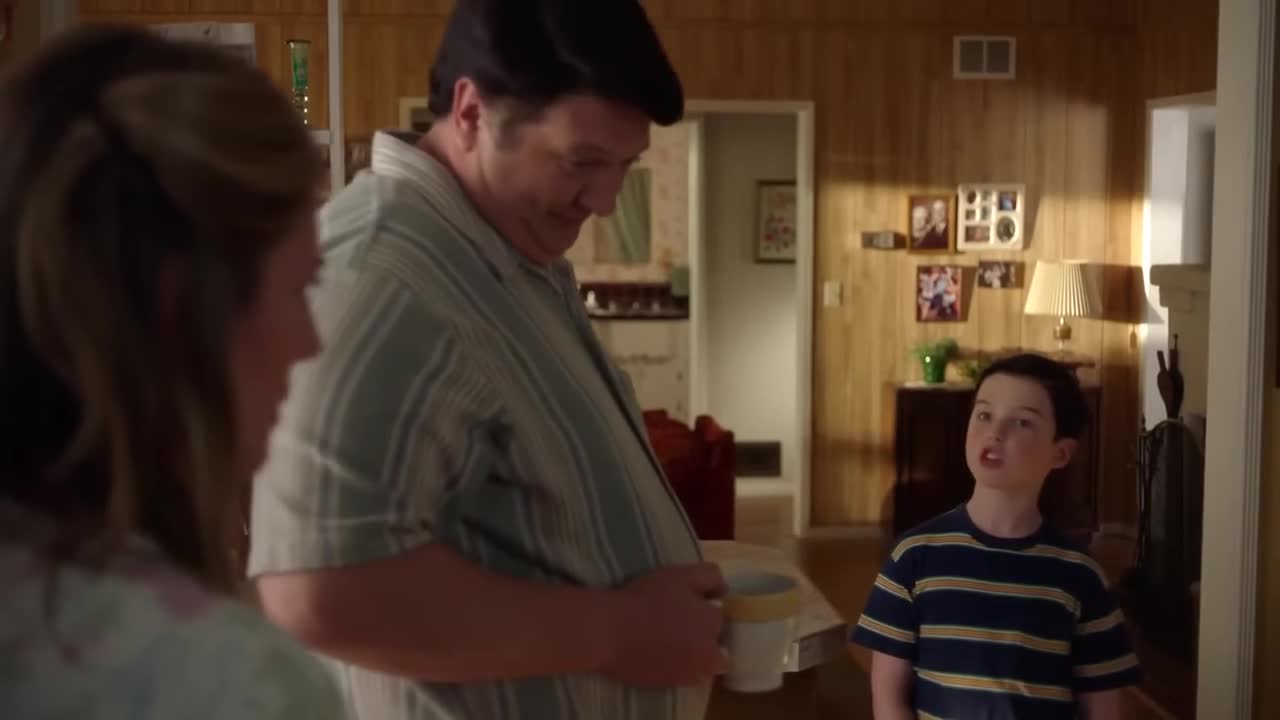
The episode begins with a domestic scene where Sheldon Cooper, seeking to assert his autonomy and alleviate the perceived financial burden on his parents, decides to take on a job as a "paper boy." His motivation is rooted in a desire to "pay back my debt," showcasing his precocious sense of responsibility. However, this ambition immediately clashes with the practical limitations of his childhood, most notably his inability to ride a bicycle. Sheldon’s unwavering confidence, reflected in his claim that "there’s nothing I can’t learn," highlights his characteristic intellectual arrogance, which he supports by citing his recent success in learning to "take apart a refrigerator."
The Parental Conflict and the Role of Georgie
Sheldon’s desire to work meets resistance from his mother, who views the delivery route as "too dangerous" due to the hazards of riding a bike at "5 a.m. with cars and dogs." This tension illustrates the classic dynamic of overprotection versus the desire for growth. To facilitate Sheldon’s goal, his father mandates that Georgie, Sheldon’s older brother, take on the role of a mentor. This dynamic is fraught with friction, as Georgie clearly harbors resentment, admitting, "I hate everything about you." Despite this, the forced collaboration serves as a catalyst for Sheldon’s entry into the adult world of labor.
The Intersection of Theory and Practice
As the brothers begin the process of folding newspapers, the clash between Sheldon’s theoretical mindset and the reality of manual labor becomes apparent. Sheldon’s intellectual nature is on full display when he critiques Georgie’s folding method, noting that Georgie failed to "fold it into even thirds." Sheldon’s obsession with precision leads him to spend "17 minutes" using "physics, geometry and old-fashioned hard work" to engineer a "perfect newspaper folding system." This segment underscores Sheldon’s inability to accept the "uninformative" nature of standard tasks, which he derisively labels as a "tautology."
The Harsh Reality of Labor
The transition from folding to actual delivery serves as a wake-up call for Sheldon. While he initially treats the task with academic rigor, he quickly encounters the messy, tactile reality of the job. Upon realizing his hands are covered in ink, he experiences a moment of genuine distress, asking, "Why are my hands black?" and "Why wasn't I warned of this?" This reaction emphasizes his sheltered upbringing and lack of exposure to the grit of physical work.
Conclusion: A Literary Retort
The narrative concludes with a poignant moment of realization. As Sheldon struggles with the physical consequences of his job, he inadvertently quotes Shakespeare, referencing a "damn spot." This juxtaposition of high-brow literary references with the mundane, dirty reality of a paper route perfectly encapsulates Sheldon’s character: a brilliant mind trapped in the uncomfortable, unpredictable process of growing up. Despite the friction with Georgie, the experience serves as a foundational step in Sheldon’s journey toward understanding that effort, while noble, often comes with unexpected and unrefined consequences.
Deep Learning with ListenLeap


