Hello and welcome to the NVIDIA AI Podcast.
I'm your host, Noah Kravitz. Georgia Tech University has unveiled a new AI makerspace built in collaboration with NVIDIA.
Housed in Georgia Tech's College of Engineering, the artificial intelligence supercomputer hub is dedicated exclusively to teaching students, initially focusing on undergraduates.
Combining massive compute with classwork and other educational resources, the makerspace is designed as a hands-on sandbox. to give students experience with AI and better position them for life after graduation.
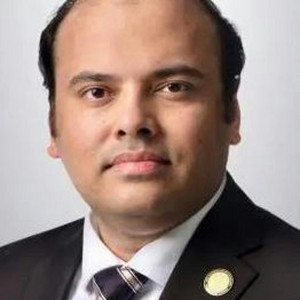
Here to tell us more about how Georgia Tech is reimagining the present and future of higher education in the AI era is our Regent Ray Chowdhury.
Professor and Steve W. Chaddock School Chair of Electrical and Computer Engineering at Georgia Tech's College of Engineering.
Arijit, thank you for joining the NVIDIA AI podcast and welcome.
Thank you so much, Noah, and thanks a lot for having me.
So this is really exciting. There's some great blogs and a great video kind of with a tour of the makerspace on the Georgia Tech site that I'd encourage everybody to check out.
But let's hear it direct. Tell us all about the makerspace.
Yeah, absolutely. I mean, this is a very exciting new makerspace in the College of Engineering, which I am expecting will have a very large impact on the entire community of students in Georgia Tech.
As you know, we have a very strong engineering program, one of the largest in the country, Over the last many decades, I should say, we have been teaching students about AI and ML and principles of machine learning and data processing.
As you all have seen in the last few years, there has been several inflection points.
The first one being deep learning. And second, I'd say in the last couple of years, with generative AI, some of the problems and some of the engineering tasks that you can do with AI have kind of exploded.
So of course, our curriculum, our teaching requirements, and what we teach our students have also morphed and changed following that trajectory.
One of the things that we have been noticing of late is that the amount of data and the amount of computational resources that you need to be able to solve at scale realistic problems in AI, have also grown quite significantly.
Although we were using online tools and open-source hardware, or even limited amounts of hardware to train students and teach them in classes and so on, we found that that was one of the things which was missing, that we would not necessarily have the resources that the students need to be able to solve real life problems.
Georgia Tech always had this notion that we wanted to augment our theoretical education with hands-on practical training.
All the schools in the College of Engineering have our own maker spaces.
ECE, which is my school, we have a maker space.
That makerspace is the electrical engineering makerspace where you can find anything from hammers and screwdrivers to oscilloscopes to very high high-end equipment for doing electrical experiments.
And these are nothing but the tools of the trade.
These are tools of engineering. If you ask me what's the tool of AI, that's computing, that's computational resources.
So we found that we were at a point where we really needed to step up our game. and not for the practical hands-on experience for the students in the AI space, we needed to provide them with a digital sandbox, I'd say, which would allow students to learn in the classroom setting for senior design, for capstone projects or even just do independent study.
Like if they want to have study something on their own or even pursue some entrepreneurial adventures. or ventures, they would be able to kind of have the resources to be able to do that and pursue that.
So that kind of was the genesis of the AI makerspace.
And like any other makerspace, this is dedicated space. purely to students for student use.
And we were super excited to partner with NVIDIA as well as Penguin Solutions to bring this to life. and it's a huge computational resource, a data center. uh ai purpose built for ai and that the students have access to and we are at the moment at this point we are kind of ramping up on on the usage as well as deploying it across the campus.
This is the AI Makerspace is the latest addition to our series of physical makerspaces that we have, and this is the first virtual makerspace that we have.
Fantastic. And as we record this, I don't know what academic calendar Georgia Tech goes on.
It's early May as we record this, and so lots of schools are winding down.
And you said that the makerspace is ramping up.
So it's open now. When did it open and what's sort of that ramp up schedule?
Sure. As you know, getting something of this order, of this size and magnitude, of this order of complexity is a long process.
We started working with NVIDIA almost a year back and the GPUs and the switches and all that. so a lot of and even reference designs are hard so i think you know we need the expertise of nvidia and penguin solutions to kind of you know work with us We have an existing supercomputer cluster, but mostly CPUs.
The team worked with NVIDIA and Penguin to work on reference designs.
All of that happened late last year, I would say in September, October, November of last year.
We placed orders. The GPUs and all started coming back to us in the December right before the holidays.
From the beginning of this semester, which was end of January, we started slowly. um you know putting things together and about a month or so back this is uh this became functional the first phase of the ai maker space become functional That is what used to be a three-phase design.
This is the first phase. where we have essentially 160 H100 processors.
You read my mind. I was going to say we don't always get into the speeds and feeds on this show, so to speak.
But, I mean, we have to in this case. Tell us what's in the space feed.
Yeah. It's essentially 20 AGX boxes, a total of 160 GPUs.
Forget the memory specification. I think it's about two terabytes per node.
Then this is the first phase of this. Then this is already fully up and running.
There is one class which is using it already.
Then there are a bunch of other classes which are the projects on those classes are incorporating them.
We haven't opened it out. completely to students yet for general use.
We plan to do that by the end of this year.
Great. We are now ramping up on the orders for the phase two.
So by fall of this year, I would say maybe the middle of fall, we would have the second phase of the GPUs here, which would be the plan is to have H200s at that point and a very similar number.
By the end of this year, we should have the first phase 1 and phase 2 of the AI Makerspace all set up and deployed, which will essentially be opened up to all 50,000 graduate and undergraduate students in Georgia Tech, all the students. amazing.
I'm having flashbacks listening to you to my own undergraduate experience.
To be fair, I was a liberal arts student, not an engineering student.
But I would go to the VAX terminals in the lab to do my problem sets.
A little bit different of an experience.
One of the things that struck me that I think is great that was mentioned in some of the literature is that Typically, you see this type of compute reserved for research projects, or at least the preference given to researchers, which is obviously important.
The Georgia Tech Makerspace is focused on undergrad students. went into that decision and what's kind of the larger thinking around the role of, or to use the phrase, the intersection? higher ed, undergraduate education and this explosion, these inflection points with AI that you described?
Yeah, that's a great question. I think that kind of goes back to some of the things that we were already doing in the research space.
We have computational resources for research.
Of course. We have a lot of researchers working in the AI space, not only on the theoretical aspects of AI, but the applications of AI.
We have lots of research going on with NVIDIA as well on the hardware design for the next generation of AI chips, for example.
So we have computational resources that the faculty have and the graduate students and research faculty, you know, they have access to. the intent for the AI makerspace was to democratize AI.
What we see today is where computing was probably 20, 25 years back.
At that point in time, Everybody who started getting into college started to realize that they need to know a little bit about computing and need to do a little bit of programming.
For example, if you look at our university system of Georgia today, in Georgia Tech, if you do any major, It doesn't matter what kind of major you are in.
So you can be law, you can be design, you can be humanities. you have to take a pro in a programming course because that's you need to do programming because it's a way of thinking it's a logical way of thinking right So what we feel is AI is that point in our trajectory of human evolution at this point in time.
Everybody needs to know a little bit about AI.
Either they would be pushing the boundaries and envelopes of AI, then they would be inventing the next new models, the next new data structures and the databases, they will be the ones who would push the frontiers of AI.
Then there will also be a large portion of our student population when they grow up, they pursue their careers, which would not be directly related to AI, but they will be using AI as a tool. whether you're doing creative writing, whether you're doing creative design, you will be using some form of AI.
What we wanted to do was to make sure that all our students, no matter what their discipline is, have a low barrier to entry to AI, and have not only the theoretical understanding that they need, but also practical hands-on experience on how to use AI for their particular degree program. whatever their major or minor is.
This is a larger initiative within the College of Engineering and we are working with other colleges as well. where we have now started a new AI minor for students to do more courses in AI.
We have more and more courses getting retrofitted with AI content.
We are using AI for a lot of EC courses like engineering courses as well, where we are using AI for students not only to use AI as as a means to extract intelligence from data, but also using practical AI for some of the signal processing classes.
Some of them are using Things like conversational AI like in a large language models to design high-level synthesis programs.
They're using it for programming autopilot.
These are all things that are already happening. in a very natural, organic way.
The AI makerspace is one of those additions to that overall broader effort. where you're essentially trying to provide access.
That was the motivation that AI is not something which is It's only dedicated to research, to graduate students who have an understanding of what the systems are and trying to push the research boundaries. but we are trying to make sure that AI is a tool that can be used by anyone and everyone who comes to Georgia Tech, and has access to computational resources that are super critical at the moment.
Absolutely. That's the genesis of our thought process.
I want to ask you in a little bit about the future of higher education, but also what happens after graduation and, you know, this notion that I think your, well, more than hinting at, but I don't want to put words in your mouth, but sort of preparing students to be AI native and AI ready.
And, you know, as you said, it's again, much like when I was coming out of college, the internet was just starting to, right?
And now it's, you know, There aren't many jobs where you're not using the internet, at least some ways.
So there's a similar phenomenon I think happening.
But I wanna ask you about the faculty. Was there upskilling or is there, I should say, upskilling involved in the faculty process?
I would imagine in the College of Engineering, you might have folks who were already using some of these tools to advance their own research because it's been in that domain for a while.
What's the faculty sort of reaction and enthusiasm been like?
Yeah, that's a great question. And I think we have a large faculty body, which means we have a very good mini cosmos of society itself.
We have an entire spectrum. But as an institute, we have embraced AI in all possible ways.
So I think there is, at least from an institutional policy or people's intent on how they want to use AI, there is no controversy.
We are not saying that AI is not something that you cannot use.
I think was one of the first schools that started uh telling students that you can use the ai for writing your college you know essay as long as you know how you're using it and as long as you're using right So I think, should we tell our students not to use AI because that opens students up to things like cheating and all?
I don't think that's the right argument.
I think the right argument should be, how do you use AI better?
How do you write prompts better if you are using conversational and language models?
So I think that's why we need to embrace and teach students how to use AI better.
And I think as an institute and as the faculty body, we are all on the same page.
That's where we need to be. Now, how we get there, at what speed we get there, and what are the tools that we use to train ourselves?
It depends from discipline to discipline.
It varies from discipline to discipline.
So as I can say, electrical and computer engineering, I have some of the people who are actually at the forefront of AI research itself and it's a natural thing for them.
They have been teaching these courses in computer vision, in conversational languages for many years.
Those are the pioneers in the field, so it's very easy for them to incorporate them in the classroom setting as well.
Those of us who are not exactly in that domain are, I think, very well calibrated with what's going on and how our fields are getting impacted by that.
We are trying to use AI for some of these courses as well.
I'd say we have courses on technical writing and we have courses in electrical engineering on professional you know how do you write professional essays or technical essays and stuff like that and we are using the instructors in those classes are also using language models now to teach students how to use it better,
They are learning the process and they're working with companies including Nvidia to learn how the containers would work and how their course can fit into that.
Some of the tools and software that we are seeing an emergence of new companies in startups in that domain at the intersection of AI and education, um which are also you know our partners so we are working with a whole bunch of people who are learning and teaching at the same time and i think that's a very interesting and fun place to be in Absolutely.
And you mentioned that Georgia Tech now has unveiled—I don't know if it's available yet— but their first minor degree program in AI and machine learning, I believe.
And then there's also the creation and kind of reimagining of a dozen or so undergraduate courses.
Are those new courses? Can you talk a little bit about some of those new courses and maybe how... you know, AI is at the core of them?
Yeah, absolutely, absolutely. I think there are some courses which had been now, you know, They had AI already in them, but now with the availability of the AI Makerspace, the projects and hands-on work that the students can do are kind of have expanded.
So students would be able to do things like, you know, segmentation models, just to give you an example, in a computer vision class, they'll be doing segmentation models on static images.
They'll click on a particular point and they'll segmentation.
They understand how a segment, anything kind of a model would work, but you would not know how to do segmentation on a real life video stream because you would not have the computation resources to do that.
Now, as we move from an open source platform to the AI Makerspace, the students have taken that particular project in that particular class, from a static click here and do segmentation, this is the algorithm, to building an actual system where they are taking in video streams from a vehicle, and processing it on the fly on the AI Makerspace and doing segmentation and you're trying to do navigation and all of that.
How amazing. complexity of the projects that the students can do have kind of exploded.
That's one. Then there are courses which did not have AI.
I'll give you an example. I teach a course in VLSI because that's my area in circuits and VLSI design.
We build the hardware for AI research and AI work, but we do not necessarily use AI a lot in designing of chips, for example.
But that is changing. If you look at the latest tools, they are using AI for doing in a floor planning, placement, that kind of stuff.
In the last time I was teaching this course, we have started discussing how AI would impact some of the tools and the flows, how you can potentially use a language model to write very long code, for example.
These are things that we are preparing the students that when you go and work in the industry, you will be faced with a new reality where many of these tools will have some AI component and you can use AI better.
Then the third category would be we are introducing new courses.
One of the things that I'm very excited about, is we are trying to, again, most of the AI-related or machine learning-related courses were in Georgia Tech at 3,000 or 4,000 level courses, which means juniors and seniors, and then of course graduate students.
But now I think from fall of this year, is going to introduce a new course at the 2000 level, which is like AI for everybody, like AI for all students.
This would be like for sophomores or even freshmen. would be able to take the courses.
The idea is to take the students who are coming in as teenagers, or right out of high school and give them some exposure to what AI means, what are the mathematical principles of AI, It's not magic, it's something very structured.
Maybe there is an element of black box in there, but this is how we do how we write software on AI, this is how you can use AI for your curriculum.
Getting them exposed to the principles of AI right on at the very beginning of their journey, so that they are better prepared on using AI for whatever tasks or courses that they eventually take.
So I'd say all categories, you know, projects, the courses that have AI are becoming more more I'd say hands-on because of the AI makerspace.
Classes that did not have AI are now using AI because that's a direction in which we are moving anyways.
Then we are also introducing new classes, particularly for younger students just to get exposed to AI and start using AI as early as they can.
Fantastic. I'm speaking with Arjit Raychoudhury.
Arjit is Professor and Steve W. Chaddick School Chair of Electrical and Computer Engineering at Georgia Tech University at the College of Engineering, and we're talking about Georgia Tech's new AI Makerspace. which is open in Phase 1 and continuing to ramp up. just a lot of compute in there.
It's a data center on campus for students to go hands-on and and as arji was saying to be able to go from being able to uh do segmentation frame by frame to working on video in real time there was a great quote and one of the materials I was reading in prep that talked about it would take one of these nodes, I think a second, to come up with the question that it would take your students decades to answer, which puts us on perspective.
I want to shift gears a little bit, or maybe it's not shifting gears so much as accelerating, to what happens after graduation. and the topic of preparing students, preparing people for what's probably going to be a very new kind of workforce, or at least, you know, um,
One that the day-to-day work, may be quite different than what we've seen, what you and I grew up on.
A lot of opinions flying around over the past couple of years.
And I think this is a little different because you're talking about and I love that you were talking about the AI for everybody class, the 2000 level class. where students get exposed.
It's not just how do you use it, but what are the mathematical principles underneath it?
Where did this stuff come from? And as you know, sort of a scientist, so to speak, like, what does it look like?
And how do you work with it? Right, which is so important.
How do you see the workforce transforming these individual roles, a collective idea of, and take it where you will, whether it's electrical engineering or somewhere else.
I keep thinking as we're talking of Within the past couple of months, there was a quote, Jensen was being interviewed, and he said something about if you want to prepare yourself.
It's not so much learning how to code, it's getting expert in a discipline, in a domain.
Follow your passion. dive into what you do, get really good at it because these AI tools are going to be part and parcel of whatever it is that you do.
How do you see all of this and how do you talk about that intersection of AI, higher education moving into the workforce?
Again, a great question. I think what Jensen was saying was absolutely spot on.
I think AI is here to stay and this is again going to be one of those tools Of course, I think one of those things we need to teach our students is not only what AI can do, but also what AI cannot do.
I think that's as important as understanding where to use AI and where not to use AI.
So I think a part of our education process itself and training process for the students would be to kind of take a with the capabilities that it comes with in areas and disciplines where you can use it properly, and also kind of understand areas where human creativity and ingenuity will still be important.
And you have to think outside the box. If you're working on algorithms, you will still need to be able to find out how an algorithm works or understand the complexity of an algorithm.
If you're a computer scientist, maybe you don't need to code anymore, but that does not mean that you would not need to know how the algorithm works.
So you would be able to use AI as a tool and you would be able to use it very, very efficiently.
But you have to understand A, how to use it, B, where not to use it, and C, if you want to make enhancements, if you want to better human society or your discipline, you have to understand the fundamental and the basic principles, which is not something that you can delegate to AI.
So the foundational knowledge that we need, I think, is super important. and if you just look at how much data AI consumes, I think it's an insane amount of data, that's true. but also I think making sense of the data or making interpretations out of data is something that is purely human even today.
AI cannot help you explain data, for example, very efficiently.
Those are the things that human experts will still need expertise in certain disciplines. where you would be able to do your job much more efficiently, but still need to understand the core principles of your discipline well.
So I see the landscape for the workforce and how students today are going to be the professionals for tomorrow, how they're going to do their job differently.
But at the core of it, I don't see things changing dramatically.
Some jobs will become obsolete, some new jobs will come in its place. which has always happened.
If you look at going back to our evolution of technology, it happens every time.
A, I'm not worried that AI is going to take away all jobs.
I don't think that's true. No technology does that. you can re-imagine that the job spectrum is going to change and evolve.
But more importantly, I feel like the students just need to be aware of how to use AI better, and efficiently and in their own disciplines and jobs.
Are the types of internships, jobs, other opportunities that students from the engineering college are going to.
Are they changing right now? I wonder if people feel sort of caught a little bit in almost like in a sandwich between what was and what's coming, but we're not. quite there yet relative to industry adopting AI.
And again, that's a little bit different, obviously, depending on the discipline and But how are you seeing that in your domain?
Yeah, I think every industry or every company now needs to have an AI policy.
They're all talking about an AI strategy, they need it or not.
So there is, of course, going to be some noise in the transient where people are trying to figure out how exactly to use AI or eventually maybe the At the end of it, they will figure out that they don't need to use AI for their particular work or particular company or particular discipline.
But everybody is interested in AI because it has been so disruptive in so many areas.
So I think we see as the students are going for internships, co-ops, or even full-time positions, there are lots of students who are working in the AI space and kind of becoming either AI software engineers and hardware engineers doing AI, or even in other disciplines, not just engineering, they are using AI and data sciences in very interesting new ways. the whole area of bioinformatics has kind of exploded.
Students are working in biology and biological systems.
A lot of them are using AI as tools for the data sciences aspect of what they do.
I see new possibilities, new jobs at the intersection of computing and data. and other disciplines.
That's what seems to be the one area which is exploding and growing very, very fast.
But have we settled down on where the future would essentially settle down to?
I don't think we are there yet. And it'll take some time, but I think, you know, it's not something that, it's not something that, you know, one person or one company or one school or university will figure out before the rest.
Everybody in society will come up with the same kind of understanding of where to use AI, where not to use AI, how to use it, and how to use it better.
I think there are still going to be questions around ethics and bias and compliance and all of that policy. which will continue to be a topic of discussion i don't think it's going to go away in the next few years it's going to be something we'll keep on discussing for decades maybe so so i think our our students today would need to be a part and parcel and they would be the leaders who will be leading some of these discussions in 10 years.
So they need to kind of understand the whole spectrum better.
As you look ahead to the next couple of years and whether it's the upcoming phases of the Makerspace project, the impact of all this technology on electrical engineering, whatever it might be.
What gets you the most excited? What are you just really can't wait for? this thing or this particular kind of area of your work to evolve And you know that AI, machine learning, deep learning, all of this is giving it, maybe giving it a nudge that wasn't available before.
Yeah, I think that's a, of course, that's a fascinating question.
It's more of a science fiction kind of a question.
Of course. and more like boots on the ground kind of thing.
And on our end, I think I'm very excited because the AI makerspace with phase two will also be connected to all our engineering makerspaces. which means all of our robotic arms, everything that you see around in the engineering maker spaces now will have this gigantic brain on the back end that it and do all kinds of crazy things.
So I'm most excited about the possibilities of new things, new applications at the intersection of AI and data sciences and the physical world, where I think we can see new applications, new ways the students are going to use AI, and we as a society,
Not all of this needs to be huge models.
This will probably be small models, which is going to be ubiquitous, embedded throughout the world, but you will have intelligence and smartness.
I'm very excited about the possibilities of the intersection of the AI as a whole and the AI makers space in particular on our campus. with the physical aspects of design and engineering that we are very familiar with.
So that makes me really excited. Excellent.
And last question for you. Let's say there's a teenager listening, a high school student or a high school student's parent, for that matter, who's listening and thinking, Oh man, this sounds great, and this is where the future is headed, and I'm interested in science. engineering and wrote to my thing like, what do I do now as a 14, 15 year old to try to prepare myself to be able to maybe get a spot in Georgia Tech's engineering program in a few years.
Yeah, absolutely. I would encourage you to learn the basics.
I think that's important. Learn math, learn statistics, learn physics, whatever that core discipline you want to pursue.
If you want to pursue engineering in Georgia Tech, for example, you don't have to be an AI expert when you come in.
That's not the goal. The goal is to be able to have a good understanding of core disciplines because those are the foundational technologies that you need.
If you have a chance to take online courses on AI or let's say data sciences, a lot of these will also have programming courses that you can do along with that just to be able to get yourselves some degree of familiarity with the field, I think that would be great, not needed, but great.
Here, if you're local to Jujutech in the city, in this area, we have some partnership programs with high school students.
Fantastic. and they want to work with us, with our faculty.
One of the things I did not mention about the AI Makerspace was I talked about the phase one and the phase two.
The phase three is where we are hoping to be able to have an impact outside of the walls of Georgia Tech.
We are essentially trying to open it up to our local high schools and middle school students who want to come here and spend time. or even to local HBCUs and HSIs, so that universities and colleges that may not have the resources to have such large computational capacity, would be able to use our resources and teach their own students.
So I think the I think as I was telling someone that this is a huge computational power, but as we know with power comes responsibility, so I think we need to do our part.
So if you're a student and if you are in a high school and want to learn more, drop by, visit us on our website.
If you can physically come over, we would love to talk to you and show you around. but more importantly my only advice would be if you're a student and aspiring to become an engineer run the basics well because that's what's going to you know because by the lifetime of a person who is a high school student now, there will be many inflection points in technology.
I can't even imagine. Things will keep on changing, but the basics of math and science and physics will remain the same.
So you need to understand that better. Fantastic.
I alluded earlier to a couple of articles you just mentioned on the website.
Is that coe.gatech.edu? Yes, that's our college website and you can find links to go to all the makerspaces, including the AI makerspace.
Excellent. Arjit, this has been great. Again, if you're listening, go check out the blogs.
There's a video. shows the data center and the racks and all that, but there are students talking about using the Makerspace and As you said, that's what it's all about.
It's the power, the responsibility to share and democratize access to all of this so that the children can make the world a better place going forward.
Margie, again, thank you so much for taking the time to join the podcast.
Wish you all the best with phase one, phase two, phase three, and whatever else is to come going forward.
Thank you so much. It was a real pleasure talking to you.
Thank you. ¶¶