

[The Essence of Gentle Ambient Soundscapes: An Analysis of Deep Sleep Sounds]-[Gentle Vent Heater Noise | Cozy Constant Warm Hum]
📋 Summary
Introduction to Auditory Relaxation
In this episode of the Deep Sleep Sounds podcast, the host, Thomas, introduces listeners to a carefully curated auditory environment designed to facilitate rest. The podcast focuses on the therapeutic application of consistent, low-frequency soundscapes to aid in sleep induction. By utilizing the "gentle vent heater noise," the program aims to create a psychological state of security and comfort, effectively masking external disturbances that might otherwise disrupt the sleep cycle.
The Psychology of "Cozy, Constant, Warm Hum"
Thomas emphasizes the specific acoustic characteristics of the soundscape, describing it as a "cozy, constant, warm hum." This terminology is not merely atmospheric; it serves as a functional tool for cognitive regulation. The "constant" nature of the noise is vital for what sleep scientists refer to as sound masking. By providing a steady auditory baseline, the brain is less likely to react to sudden, sporadic noises in the environment, which are known to trigger the "fight or flight" response.
Furthermore, the descriptor "warm" implies a frequency spectrum that avoids harsh, high-pitched tones. High-frequency sounds are often perceived by the human auditory system as alarming or alerting. Conversely, the "warm hum" mentioned by Thomas occupies the lower registers, which are evolutionarily associated with safety and stability. This creates an environment where the listener feels "cozy," a state of physical and mental relaxation essential for transitioning from wakefulness to the first stage of NREM (non-rapid eye movement) sleep.
The Functional Utility of Vent Heater Noise
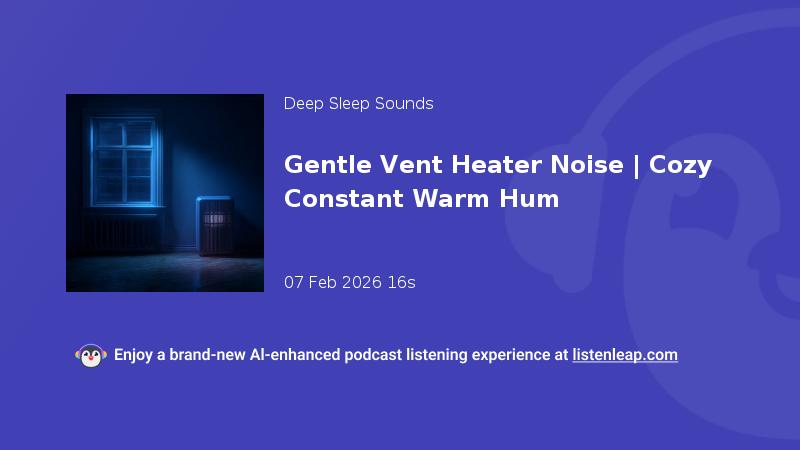
The choice of "vent heater noise" as the primary sound source is deliberate. Unlike white noise, which can sometimes be perceived as overly synthetic or abrasive, the sound of a heater provides a naturalistic, domestic hum. It mimics the familiar auditory backdrop of a safe indoor environment. Thomas invites the audience to tune in with the intent of lowering their baseline stress levels through this "gentle" sonic intervention.
Conclusion: Sustaining the Sleep State
Ultimately, the podcast serves as a bridge between the chaotic auditory input of daily life and the stillness required for restorative rest. By maintaining a "constant" output, the episode removes the need for the listener to engage with their surroundings. The effectiveness of the Deep Sleep Sounds approach lies in its simplicity: by providing a singular, predictable, and "warm" auditory anchor, the podcast allows the nervous system to decelerate, facilitating a deeper and more uninterrupted sleep experience. As Thomas underscores, the goal is to provide a soundscape that is unobtrusive, allowing the listener to drift away without the distraction of dynamic or changing audio patterns.
Deep Learning with ListenLeap


