This BBC podcast is supported by the UK.
The U.S. electric grid is approaching a breaking point.
As demand soars from data centers and home energy use, our aging infrastructure can't keep up.
And the Department of Energy warns that without action, blackouts could surge 100-fold by 2030.
The good news?
One solution is already here.
Propane.
It's American-made, stored on site, and always ready.
Powering homes and businesses with cleaner, reliable energy that doesn't depend on the grid or the weather.
Learn more at propane.com.
Saks Off 5th is your secret to fashion's most wanted deals at up to 70% off.
On the hunt for designer steals that'll turn heads and leave a trail of envy?
Uncover Gucci, Valentino, Versace, Stuart Weitzman, and more.
With new arrivals dropping weekly at prices too good to stay confidential.
Luxe layers, statement boots and tailored essentials from Saks Off 5th will put your wardrobe on the most wanted list.
Head to saksoff5th.com or a Saks Off 5th store near you for a style lineup you won't want to miss.
This is an extra edition of the Global News Podcast from the BBC World Service.
I'm Bernadette Keogh, and at 9 GMT on Thursday 9 October, we're bringing you the latest on the Gaza peace deal, after Israel and Hamas agree to the first phase of the plan.
In this extra episode, we'll bring you the details of what we know so far, along with reaction from within Israel and Gaza and around the world.
Thank you.
After intense negotiations in Egypt, Israel and Hamas have reached agreement on the first phase of a peace plan for Gaza.
The deal first announced by President Trump involves a ceasefire followed by the release of all Israeli hostages in return for Palestinian prisoners and the withdrawal of Israeli troops from parts of Gaza.
Israel's cabinet is due to meet later on Thursday to approve the agreement, which the Prime Minister, Benjamin Netanyahu, called a victory.
Hamas welcomed the deal and urged the US and other mediators to ensure Israel sticks to its terms.
In Gaza, there's finally hope that Israeli military attacks might soon end and desperately needed aid might soon be able to reach hundreds of thousands of Palestinians who've been forced from their homes, often repeatedly.
Gazan journalist Imad Kudair is currently in Al-Mawassi, west of Han Yunis.
Everyone in the street was dancing, was chanting in the streets.
Finally, we're going to sleep with no bombs, with no drones.
So this is the moment that we did wait for the last two years.
In what's become known as Hostage Square in Tel Aviv.
Fireworks were set off as the news spread that all the remaining hostages, 20 of whom are believed to be alive and held in appalling conditions ever since, are finally going to be coming home.
The news of a deal came as President Trump was speaking to the media at the White House.
His focus was on domestic issues until the Secretary of State, Marco Rubio, walked in and handed him a piece of paper with important news.
I was just given a note by the Secretary of State saying that we're very close to a deal in the Middle East and they're going to need me pretty quickly.
So I will take a couple of more questions.
I have to go now to try and solve some problems in the Middle East, although I'm very well represented by our Secretary of State.
He could probably do an even better job than me.
But who knows?
We don't want to take any chances.
So we're going to go and do that.
Despite the joy and relief that their loved ones could soon be home, many of the families of the hostages remain angry that it's taken so long.
Yehuda Cohen, the father of 21-year-old Nimrod, spoke to Nick Robinson.
Well, we're trying to get used to it.
I would say we're in kind of a limbo.
Out of hell, but still not in the promised land, let's call it.
But yeah, in the direction of a good morning.
Because you can't believe it until you get the chance to hug your boy again.
Now, we know we're going to hug our boy again, but the still open question is when and where.
And, of course, the bigger open question after two years, what's the condition, mentally and physically, of Nimrod?
What's the damage that being done, what's the damage that be could have been saved?
Not talking about avoiding this attack and we can put it on netanyahu, but the fact that netanyahu was working for two, two years to prolong this war on the suffrage of my son and the other hostages.
Of course, some of them didn't make it.
We know that at least 42 was were murdered, came in alive into gaza and were murdered in different ways directly, how directly or indirectly, by the IDF.
But it could have been said.
It couldn't have ended much earlier, but due to Netanyahu's personal and political interest, This was prolonged for two years until President Trump put down his heel and gave Netanyahu no option but to end the war.
You are clear, are you, that the president deserves the credit for this?
Of course, President Trump deserves the credit for it.
Well, at least now that it's been done, but it wouldn't have been ended if any external pressure wouldn't have been put on Netanyahu.
And unfortunately, the only pressure that he can do it was President Trump, because Netanyahu was left with no other friends.
All Europe, all the Arab countries, South America, everybody was saying this war's got to end.
Netanyahu was working for personal interest, blackening the name of Israel and destroying the country of Israel.
Destroying.
Extraordinarily strong words.
At a time when your thoughts are with your son, you're furious.
You are in a rage with your leader.
This thing should not have happened if...
Our government, the army were really on alert, really did their jobs.
Always saying, always hearing you know ex-professionals from the army, from the state you know, sitting down in their homes getting pension from the government, from the country that they should have served, and saying you know a lot of smart words, but no one actually did his job.
And the result is, and you said it in the beginning, this mental tank.
Not only that no one informed them, not only that there were not enough units there on the border, They even equipped the soldiers with dismantled equipment.
They were saving money on equipment, and that was the result.
So it's clear, Yehuda.
Just for people who don't follow the details you blame Netanyahu for the attack on October 7th, or failing at least to prepare for the attack and to stop the attack, as well as what's happened since.
I want to end with the personal, because I'm struck by how political you're being this morning, but your thoughts are clearly with your son as well as with the politics.
How much have you heard about him, about the condition he's in, about whether he was still alive in these past two years?
Of course he's still alive.
We heard it all along.
Last actual detailed information we got from hostages who returned last, at the end of February.
Two of them, Sagida Kelchen and Yair Horan, were with him few months.
So then, I mean, it's about seven months, all this information, but then the condition was severe.
I mean we know that since then Netanyahu intensified the war and we fear that condition gotten worse.
We don't know.
And that's what I said.
We need to know when we meet Nimrod in what physical and mental condition he is.
More than two million people have been displaced by Israeli bombing in Gaza over the past 24 months and more than 67000 have been killed.
Rushdie Abu-Aloof is the BBC's Gaza correspondent, who's currently based in Istanbul.
The ceremony will not involve Hamas or Israel in the announcement.
And very little detail are released about what is going to be announced.
But they are talking about like five days.
A framework will involve Israel heavily.
Technical issue related to the release of the Israeli hostages and the Palestinian prisoners.
There is still final touches are being discussed with the teams who are remains in the same place.
The Hamas delegation and the Israeli delegation are talking about a lot of details the map line, how much Israel will keep and how much Israel will withdrawn from, and which direction and what time.
So a lot of details has to be discussed.
The first stage was the announcement, the outline of the deal, that the deal is done and signed.
And now there is a lot of work for the two teams and the mediators to set up the exact time for when ceasefire would go into effect and what time.
A frame that Israel want in order to take their forces out of the city centers because, you know, tanks are literally 400, 500 meters from Gaza's city centers.
Gaza is the biggest city in the entire Gaza Strip where about a million people used to live there.
About 700,000 people were displaced because of the operation.
They are not allowed to go back to their towns and neighborhoods.
As of now, Israel Army issued a statement warning people from returning to the area.
There is still fighting.
All elements of war still exist.
Israeli drones are flying over Gaza and different places.
Israeli bombing different sites and blowing up places, according to locals in Gaza.
Israel is conducting active operation.
So there's a lot of confusion about the details.
But we will continue to celebrate, because this is a moment that they have been waiting and waiting, and waiting for a very long time.
And they want to just catch the moment to spread some joy and celebration.
We noticed that by videos posted on social media and by other platforms.
Rushdi Aboulouf.
Our Middle East correspondent, Yolan Nel, is in Jerusalem.
How did we get here?
After we had the addition of these heavyweight mediators, we had President Trump's envoys Steve Witkoff and Jared Kushner arriving.
We also had the Qatari prime minister there, the heads of Egyptian and Turkish intelligence.
We knew that meetings were going on at quite a pace, but still the speed at which an agreement was reached overnight was surprising.
Now we're expecting this formal signing ceremony in Thank you very much, in the afternoon, Israeli time, to authorise the release of the Palestinian prisoners held by Israel.
That's required under Israeli law and amazingly, at this point we still don't know exactly who is on the list.
We know that there should be 1700 of the detainees who have been picked up by Israeli forces in Gaza during the course of the two-year war and we know there will be 250 names who are serving life sentences.
But there are some very contentious names.
For many Israelis would just be beyond the pale having them released as part of this deal, but Hamas has been demanding them.
Then we will have a 24-hour period where Israeli forces in Gaza will have to withdraw to lines that have been agreed with Hamas.
We understand that will leave Israel in control of just over half of Gaza, but we haven't seen the exact map, and there'll be a 72-hour window then for the hostages to be released.
They should be released all at once, without ceremonies.
That is part of the agreement.
There are 48 hostages altogether, and 20 of them are believed to be alive.
We understand that Hamas has told mediators that they will need more time to locate some of the bodies.
The exact location of some of the remains of the hostages isn't known, and some of them may well be buried under rubble.
There'll be an Israeli cabinet meeting later, as you said.
Is that likely to be straightforward?
You can imagine that for the Israeli prime minister, this is something where he will have some kind of trepidation.
He knows that his far right allies have expressed opposition to any kind of deal with Hamas that does not answer these five guiding principles to end the war that has been authorised by the cabinet already.
We've not been hearing anything about the really key points from Israel, in particular, that Hamas should disarm.
So there are many more difficult discussions to happen based around the rest of the Trump peace plan.
It's been suggested the Israeli hostages might be out by Monday, but it's also been suggested it could happen sooner than that.
That's right.
And there are these reports already circulating from Egyptian sources that Hamas has been getting the living hostages ready for their release.
I mean, that's something we'd expect, given that these talks have been going on through the week and Hamas knew that they were gathering pace.
There's an expectation that the hostages could be out in time to meet President Trump, who's due to arrive in Israel on Sunday to give a parliamentary address.
What's the IDF doing at this point in time?
Well, the Israeli military has said that it is ready for all scenarios.
At the moment, we have seen in footage there is still smoke on the horizon in Gaza.
There have still been explosions and strikes reported in the past few hours, although not at the same kind of level that we've seen prior to the past few days.
This ceasefire has not yet formally begun, so Israeli forces are still carrying out attacks.
Sharon Haskell is the Deputy Minister of Foreign Affairs for Israel.
My colleague, Amal Rajan, put it to her that, while this is not the first time a ceasefire has been announced, this was a more hopeful moment.
Yes, it is a more hopeful moment.
The cabinet here in Israel.
The government is going to join in the next couple of hours and we will get more of the in-depth detail on what was discussed in the last couple of days.
And hopefully within a few hours after that, the deal will be signed.
This means for us, on the one hand, a huge joy and relief, because this means that within this weekend, we'll be able to see at least 20 of our hostages, who are being tortured, abused physically emotionally, sexually for the last two years, back home in the loving arms of their families.
But I have to say it's also a very difficult moment for us in Israel.
This means that many terrorists with blood on their hands who were convicted with crimes with murdering children, innocent women and men will be released back into society.
Some of them have participated in the 7th of October massacre.
And this is a very difficult moment for many families and the victims.
Sorry, I'm so sorry to interrupt.
It was one of your two war aims, wasn't it?
One of the war aims was to release the remaining hostages.
The second was that Hamas should disarm and give up control of Gaza.
Just before we come to that, I do want to ask you a couple of very specific questions, if I may, Ms Haskell.
The first is, will Israel now lift any and all restrictions on aid getting into Gaza?
Look, first of all, you need to understand that there is a huge flow of aid going into Gaza.
Sure, I'm just asking you about the restrictions, the restrictions that you've placed on them.
Well, the restrictions are to make sure that they cannot smuggle arms, that they cannot use product to build more rockets.
And so those restrictions will not be lifted.
OK, understood.
That's a clear answer.
Will you now let journalists into Gaza?
Well look, as I said before, within a few hours we will get the details of what was negotiated just in the last couple of days.
Once we get the information, I'll be able to answer more specifically.
OK, appreciate that.
Hamas has repeatedly refused to give up its weapons.
I said a moment ago, and as you alluded to in your previous answer, Hamas are not disarming yet.
Do you require that Hamas disarms if you're going to proceed with this peace plan in full?
The reason I ask you that, just to be very clear about the context, is we've heard on the programme this morning about concerns in the region that after this first phase of the agreement, after you get the hostages back, some people would say well, why would Israel then commit to the rest of President Trump's plan in full?
Will you commit to that plan in full, even if Hamas have not disarmed?
Let's put the facts in order.
Trump put a peace plan on the table.
Israel said yes.
America said yes.
And the Arab countries, including Qatar, Turkey and Jordan, have said yes entirely to what was in the plan.
The first stage of the plan speaks about the release of the hostages and releasing terrorists back into society with no restrictions.
This is the first step.
The second step speaks about the day after in Gaza and how it will look.
Unfortunately, Hamas hasn't accepted yet what the entire world, including the Palestinian Authority, have already said yes to.
And this will be negotiated probably in the next few weeks.
And I really hope that you understand, as the Arab countries, as the Palestinian Authority, have even stated that Hamas doesn't have any room in the future for the Palestinians.
Otherwise, this will continue to be a cycle of war and one year after another.
Hamas doesn't want peace or coexistence.
Hamas wants the destruction of Israel, murdering all the Jews.
It's written in their charter.
Their leadership have said time and time that whenever they'll have the opportunity, they will commit the worst massacre of Jews since the Holocaust, like the 7th of October.
Over and over again.
I understand your position.
That's very clear.
Thank you.
On the Israeli politics.
Bezalel Smotrich has said in the last 25 minutes or so that he will not vote for this deal.
Are you confident that it can get through the Knesset and that Benjamin Netanyahu's government will have sufficient support politically and political capital to actually sign this off?
Yeah look, the political situation is complicated and is very, very different, even the government system, from Israel to the UK.
Because of that, we've done major steps me, my party, New Hope, in order to join this coalition to make sure that we back Netanyahu on his decision, whether it was the war against Hezbollah in Iran and whether it was the deal to release the hostages.
And the fact is that every time we had a diplomatic path to achieve the goals of the war and the release of the hostages, we picked it.
And even last time it was difficult, but we've backed Netanyahu.
I believe there's a majority for it.
But I also suggest we wait to see the fine print, the small details on what was negotiated in the last two days.
Sharon Haskell, the Deputy Minister of Foreign Affairs for Israel.
You're listening to an extra edition of the Global News podcast, following the announcement that Israel and Hamas have agreed to a ceasefire in Gaza, raising hopes of an end to the war.
The U.S. electric grid is approaching a breaking point.
As demand soars from data centers and home energy use, our aging infrastructure can't keep up.
And the Department of Energy warns that without action, blackouts could surge 100-fold by 2030.
The good news?
One solution is already here.
Propane.
It's American-made, stored on site, and always ready.
Powering homes and businesses with cleaner, reliable energy that doesn't depend on the grid or the weather.
Learn more at propane.com.
Welcome to The W, where legends are made and history is written under the brightest lights.
The WNBA delivers nonstop action and world-class talent every single game.
And now, it all comes down to this.
Who will win it all this season?
This is where champions rise and legacies are defined.
Watch the WNBA Finals, currently underway on ABC and ESPN.
Hi, I'm Cindy Crawford, and I'm the founder of Meaningful Beauty.
Well, I don't know about you, but I never liked being told, oh, wow, you look so good for your age.
Why even bother saying that?
Why don't you just say you look great at any age, every age?
That's what Meaningful Beauty is all about.
We create products that make you feel confident in your skin at the age you are now.
Meaningful Beauty.
Beautiful skin at every age.
This message comes from Greenlight.
Ready to start talking to your kids about financial literacy?
Meet Greenlight, the debit card and money app that teaches kids and teens how to earn save, spend wisely and invest with your guardrails in place.
With Greenlight, you can send money to kids quickly, set up chores, automate allowance and keep an eye on what your kids are spending with real time notifications.
Join millions of parents and kids building healthy financial habits together on Greenlight.
Get started risk free at greenlight.com.
And a reminder.
The deal involves a ceasefire followed by the release of all Israeli hostages in return for Palestinian prisoners and the withdrawal of Israeli troops from parts of Gaza.
Israel's cabinet is due to meet later on Thursday to approve the agreement, which the Prime Minister, Benjamin Netanyahu, called a victory.
Hamas welcomed the deal and urged the US and other mediators to ensure Israel sticks to its terms.
Let's get a sense of the situation on the ground in the Gaza Strip now.
James Elder is a spokesperson for the UN's children's agency UNICEF.
He's been speaking to the BBC's James Copnell.
He was just south of Gaza City, where Israel's assault has been concentrated over the last few weeks.
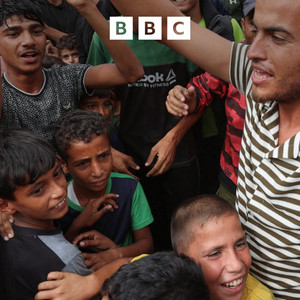
I'm heading through the streets as we speak and for the first time in a long time, you're seeing a noticeable you know smile on kids' faces.
Kids look happy.
Families, families, you can sense finally a sense of relief.
Having said that, when I look at children, James, I'm seeing smiles.
I'm also seeing theatiated children.
So there's a lot to be done.
But, yeah, there's an immense amount of relief right now.
You can't overstate that how Palestinians have been pushed to the edge physically and psychologically.
You know they.
As a Palestinian said to me yesterday, we've lost our homes, our loved ones, ability to feed our children.
So the only thing they have agency over is hope, and they've been holding on to that.
So today, today is a very, very important beginning.
One of the key points of this deal is an agreement, we're told, to let humanitarian aid in.
Israel have placed very strong restrictions and at some point simply stopped allowing any aid in.
What sort of difference will that make, do you think?
Yeah, you're spot on.
It'll be a game changer.
Look, those denials of aid led to a famine.
Those denials of aid had a very clear impact on every single child.
We've got a third of mums...
You know, a third of births James, in the first half of this year, babies were either premature or went straight into ICU.
So it's a huge amount to be done, but this does.
So, you know, we're talking about super serial for mums and children.
Get that over the border.
Healthcare, continue with all the water repairs we're doing.
Sanitation repairs.
You know 85 of people living within 10 metres of stagnant water or rubbish and so on.
So, you know, UNICEF, we're ready to bring in a million blankets.
Today is the first rains, James, so this is a critical time.
Let's get these winter clothing to all these children and shoes.
There's so, so much to do.
We've got thousands of tents, James.
I think it's something like a quarter of a million tarpaulins.
So these are critical.
The rains are coming.
It's going to get colder.
And Remembering, you know, four out of five homes in Gaza, four out of five, have been damaged or destroyed.
And that was the number before the real assault on Gaza City in the last few weeks, where we've seen, you know, old armored personnel carriers by Israel, packed with explosives and put under towers and just devastating there, devastating the homes, the neighborhoods.
So huge amounts of shelter equipment.
There's 3,500 children there. that need medical evacuation.
So, look, James, the needs are immense.
A lot of damage has already been done on children's bodies, certainly on their minds.
But this today, if it holds, if it becomes permanent, it gives children a chance to heal, to recover, to rest, to start again.
The ceasefire hasn't yet come into force, but the announcement of a deal prompted a flood of messages of congratulations and hope from leaders in the region and wider afield.
Rebecca Wood has been monitoring reaction.
Let's start, Bernadette, with the UN Secretary General Antonio Guterres.
He's described the moment and the agreement as a momentous opportunity, said that the UN will support the full implementation of the deal.
Qatar.
Now they've been a major player in efforts to end the two-year war and their foreign ministry has said the agreement will lead to the end of the war, the release of Israeli captives and Palestinian prisoners and the entry of humanitarian aid into the Gaza Strip.
Turkish President Erdogan, he's welcomed Hamas's positive reaction.
He said the group was ready for peace.
And here in the UK the Prime Minister, Keir Starmer.
He's described the deal as a moment of profound relief.
And that will be felt all around the world, he said, but in particular for the hostages, their families and for the civilian population of Gaza.
China, they say, hopes for a permanent and comprehensive Gaza ceasefire.
And on social media, President Emmanuel Macron of France has posted that the release of all hostages and a ceasefire in Gaza are within reach.
He went on to say that France will play its full part, in line with its efforts at the United Nations, alongside its international partners.
So why has a deal been reached now?
Our international editor is Jeremy Bowen.
I think a date actually to wind back to is the 9th of September, the attack by Israel, the failed attack on the Hamas leadership in Doha in Qatar when ironically, they were actually in a meeting discussing Trump's proposals for a ceasefire.
And that caused such a backlash among the Americans, among the Gulf Arabs, particularly that it started the head of steam which caused Trump to put the pressure that was necessary on Netanyahu.
In May last year, Joe Biden put quite a similar deal on the table, and Hamas said that if Israel ended the war and pulled out of Gaza, then the hostages would be released.
Now Biden though, was never prepared to use the very real leverage that the Americans have, because Israel is a very isolated country, now under a lot of pressure from allies, including Britain, to end the war, and I think that Netanyahu felt he didn't really have a choice on this, because the Israelis are dependent on the Americans.
What about the other side then?
Hamas, by releasing all the hostages living and the remains of those that have died in captivity, is arguably giving away its negotiating cards.
So what has persuaded them to do the deal?
I think it's because there's a united front.
I mean, there are two important sources of pressure.
First of all, Trump on the Israelis and also on Hamas.
But, you know, for an American president, putting pressure on Palestinians isn't politically costly.
And Biden always calculated, apart from his own strong support for Israel, that it would be politically costly to do.
That, I think, for the Americans, the really important countries for Hamas, the Egyptians, the Turks and particularly the Qataris, of course, who give them a haven in Doha.
Said to them that look.
These hostages are not an asset for you.
They don't protect you from Israel's attacks.
If you can release them then there can be a deal and we will try and keep the pressure on Trump and that will be crucial continued American pressure to make sure that the rest of the points in his 20-point plan come through.
And particularly there's this big question about the degree to which the Israelis will pull out of Gaza and the question too, about Hamas weapons, because they want to keep them.
But I just want to say one more thing about Israel the interview with the father of the hostage, Mr Yehuda Cohen, and that was a really graphic example of the massive divisions caused inside Israel by the war and by the way that Netanyahu has conducted it.
The enormous humanitarian crisis in Gaza.
That is not really an issue for the vast majority of Israelis.
But the way that many Israelis believe, as he does, and he said very graphically that Netanyahu, for his own political reasons, has prolonged the war.
And that's why the Biden plans wouldn't work, because Netanyahu wouldn't do it.
He'd add things to the negotiations.
And then, on the other hand, you've got B'Tselel Smotrich, this very hard right nationalist, ultra-nationalist minister, saying he's going to have no part of the ceasefire at all.
And that's always been his position.
The BBC's international editor Jeremy Bowen speaking to Nick Robinson.
And a quick update.
While we've been recording this episode, the Israeli government has said that the deal and the ceasefire will only take effect after it's been approved by its cabinet, which is due to meet this evening.
Israeli time.
And that's all from us for now, but there'll be a new edition of the Global News Podcast later.
This edition was produced by Harry Bly and Rachel Bulkley and mixed by Callum McLean.
The editor is Karen Martin.
I'm Bernadette Keogh.
Until next time, goodbye.