the unmissable news stories of the day.
This is the Beijing Hour.
Examining the events that impact and shape China and the rest of the world.
This is the Beijing Hour, one hour of news and information brought to you every weekday.
Now here's your host.
Shane Bigham with you on this Friday, November 7th, 2025.
You're listening to the Beijing Hour, coming to you live from the Chinese capital.
On today's program, the Chinese president visited Hainan province, where he oversaw the commissioning of the Fujian aircraft carrier and offered guidance on the development of the Hainan free trade port.
China's reported strong growth in the country's foreign trade through the first 10 months of the year.
China's vice premier is attending a climate summit in Brazil and has promised that the country will honor its climate commitments.
And today we continue our special series on China's path toward its dual carbon and sustainable development goals.
Now checking the day's top stories.
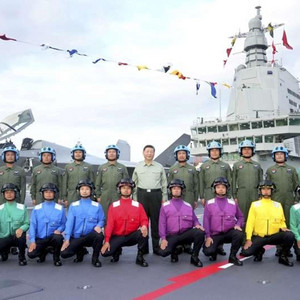
China's Fujian aircraft carrier is being commissioned into service.
President Xi Jinping attended a ceremony in Hainan Province on Wednesday.
He boarded the vessel and learned about operations onboard.
The Fujian is China's third aircraft carrier and the first with electromagnetic catapult launch capabilities.
Chinese President, Xi Jinping, has called for high standard development of the Hainan Free Trade Port at a briefing in the provincial capital on the port's construction.
President urged officials to fully implement the guiding principles from the key meeting of the 20th Central Committee of the Communist Party of China, which adopted recommendations for the country's development plan in the next five years.
Hainan is making final preparations for launching island-wide special customs operations in less than six weeks.
And Chen Yuan tells us what this will mean for trade.
When you hear the word Hainan, what comes to mind?
Beaches?
Waves?
Think again.
The tropical island is often known as China's Hawaii, but after 2025 you might see Hainan entirely differently.
This means Hainan will be transformed into a special customs supervision zone.
To understand what exactly happens after 2025, the key concept is this.
In essence, it means free flow through the first line, control at the second line and liberalization in the island.
The first line means the island itself.
After 2025, most imported goods will be exempt from tariffs.
The second line refers to the Chinese mainland.
After 2025, goods flowing from Hainan to the mainland will be considered as imports.
Liberalization means firms on the island will experience simplified customs procedure and regulatory requirements.
China calls it letting firms in and letting them do business.
Together, they allow for greater degrees of trade liberalization, part of a free trade port policy framework expected to be basically established in 2025.
Meanwhile, a series of benefits that are already in place in Hainan will be upgraded, including a zero tariff policy.
Currently, the zero tariff policy is applied to selected list of items.
Even so, the result is fruitful.
As of October 2024, the policy has helped over 460 firms save nearly 29 billion yuan, or nearly 400 million US dollars.
The expansion of the policy will not only benefit firms, but will also allow customers to buy more imported goods at lower prices.
Tax rates will be lowered as well.
The double 15, meaning an existing preferential tax rate of 15 for corporate income tax and personal income tax, will be further upgraded, attracting businesses and talents.
The list goes on, with independent customs operation considered key to future developments.
Independent customs operation is a new starting point for Hainan's high-level opening up, an important starting point for the comprehensive construction of the Hainan free trade port.
The plan is to build a high-level free trade port in Hainan by 2050.
That was Chen Yuan on plans for the Hainan free trade port and China's opening up.
Research fellow Zhou Mi at the Chinese Academy of International Trade and Economic Cooperation says Hainan's location will link China with the world, making the free trade port a hub for innovation.
He also explained what will appeal to global investors once full customs operations begin.
There may be at least two of them.
The first one is that the foreign investors can come here to make the better use of the new policies, like the free flow and the free allocation of the different resources.
And that is also even better for them to have a better connection with the rest of the world by different resources and even the data.
But the second is also attractive because Hainan is also an important place for many Chinese companies to go there.
So the integration between the foreign one and the domestic one can create an even larger contribution to the development and will also having more opportunities for some innovation-based creation and innovation in the services sectors, like artificial intelligence, digital economy or the green economy.
The expert also said policy support in the market will allow the free trade port to explore more opportunities.
Hainan has been focusing on upgrading its transport infrastructure in recent years to support the development of the island's free trade port.
The island has seen major breakthroughs in the aviation and shipping sectors.
Xiao Peng reports.
Over the years, Hainan has built a high-quality interconnected transport system, completing the world's first island looping high-speed train line.
The Rounding Island Tourist Highway and the Tropical Rainforest National Park Scenic Route have both opened to traffic.
The scenery keeps getting more beautiful.
It's a tourist highway well worth visiting.
The China-Yangpu port registry policy and efficient shipping services continue to attract international vessels.
To date, 64 international vessels have registered onto this flag, with the total deadweight tonnage exceeding 635 million.
Hainan ranks second among China's provincial-level regions for the registered tonnage of international sailing ships.
Cumulative tax reforms for newly built vessels reached 400 million yuan or 5517 million US dollars, while tax exceptions for foreign vessels exceeded 11 billion yuan or 1517 million US dollars.
Our company was established in Yangpu in 2021.
By registering in Yangpu China, we qualify for the Hainan Free Trade Port's zero-tariff policy on imported vehicles.
As operations progress, we are also eligible for a preferential 15% corporate income tax rate.
As of June this year, Hainan operates 72 stable container shipping routes covering all major domestic ports.
In Yangpu Hainan, we've launched 14 international trade routes, eight domestic trade routes and five routes for ships carrying cargo for both domestic and foreign trade.
Hainan has opened international civil aviation routes, with a free entry now applies to citizens from 85 countries.
In the first half of 2025, the province recorded 663000 foreign entries and taxes, a 48 year-on-year increase.
Inbound and outbound personnel and vehicles have increased significantly compared to last year.
Exchanges between Chinese and foreign nationals in the Hainan free trade ports are growing more frequent, with visa-free entry becoming a primary method for foreigners visiting Hainan.
The visa-free policy is very convenient and our clearance process was extremely smooth.
This highly efficient and well-connected transport network provides continuous momentum for the development of the Hainan Free Trade Port.
That was Xiaopeng reporting.
Coming up, China reports strong growth in its foreign trade.
From the banks of the Huangpu River, a new chapter of openness begins.
In the heart of Shanghai, the world gathers to share, to connect.
From innovation and technology to green energy and fine living.
Eight years on, the world meets here once again to inspire, to thrive.
Join us for our special coverage of the China International Import Expo in Shanghai from November the 5th to the 10th, only on CGTN.
We're at nine minutes past the hour.
China's foreign trade continued to show resilience in the first 10 months of the year.
Data from the General Administration of Customs shows that total imports and exports climbed 36 on a yearly basis to 373 trillion yuan, or 52 trillion US dollars.
Exports rose 62 to 221 trillion yuan, while imports held steady at 152 trillion, boosted by higher purchases of crude oil, metal ores and electromechanical products.
A trade with Aussie and led the gains with growth of over 9, followed by nearly 5 with the European Union and around 6 with Belt and Road partners.
Officials say foreign trade has now expanded for nine consecutive months, underscoring China's steady economic momentum despite global uncertainties.
Industry insiders have signed deals for five projects related to the Chenkei port in Peru.
They attended a promotional event at the China International Import Expo marking the one-year anniversary of the sea route linking Chenkei with Shanghai.
Those from international organizations, maritime logistics and advanced manufacturing discussed development and cooperation through this new corridor between Asia and Latin America.
The CIIE also offers opportunities for African exhibitors under the zero tariff treatment for all countries on the continent that have diplomatic ties with China.
Tian Liu spoke with Rwandan Ambassador James Kamanyo about what this means for his country.
How do you see the role of the CIIE in promoting trade and economic cooperation between Rwanda and China?
It's a very important platform or an opportunity for the whole world, regardless of their economic status, to showcase their products.
And so we look at this exhibition or expo as Rwanda, as a great opportunity for our traders to come and showcase various products like coffee tea honey, handicrafts and so on.
Of course, this is supported by a very attractive and positive policy framework put in place by the government of China to support African countries to increase their exports by putting in place zero-tariff policy for the products to come in without paying taxes, which then increases the chance for the products to be competitive in the Chinese market.
So this has really supported growth in our exports.
But CIE is also an opportunity to showcase Rwanda as a tourism destination.
There are so many different tourist attraction products that we showcase.
It is also an opportunity for us to engage with Chinese investors to promote foreign direct investment.
So this has been really a great opportunity.
China has granted zero tariff treatment to all African countries with diplomatic relations.
How do you view this policy and what specific opportunities does it bring for Rwanda?
It's a demonstration of the Chinese government or China's interest in ensuring or achieving what consistently, the Chinese government and President Xi himself has been calling for collective growth, making sure that nobody is left behind.
The essence of Global Development Initiative is to make sure that we collectively move in the direction of growth and prosperity.
It is difficult maybe, to move at the same pace because of the level of development, but it is very important to ensure that we create conditions for global material trading system that will support countries that are struggling to achieve transformation for the shared future for mankind, as China has consistently been saying.
So when China say collective development, collective growth, it's not rhetoric, it's not political, it's real.
And the CIA is a testament to that important policy that China has really put in place.
That was Rwanda's ambassador to China on Developing Together.
The China International Import Expo has introduced a special exhibition zone dedicated to products from the world's least developed countries.
Many of the exhibits there come from Africa.
Exhibitors say the platform is opening new doors and bringing real changes.
Li Yunqi has more.
The pavilion is filled with lively music and warm voices a celebration of culture, trade and friendship.
Exhibitors share not only their products, but also the opportunities that the China International Import Expo has created for them.
Trade Promotion Officer Mamatsitsi Muthumber from Lesotho says her delegation has brought a diverse range of goods to Shanghai this year.
We have got textiles, like Afrocentric textiles.
We have got our arts and crafts that are made from wood.
We have got also cosmetics that are made from our indigenous plants and also herbal teas.
All of these products can be imported into China duty-free, as China now grants zero tariff treatment to all African countries with diplomatic ties.
And for African participants, exhibition space at the CIIE is provided free of charge, a policy Muthamban says that's had a meaningful impact.
It's a great opportunity that has been granted to us, because now it is going to allow us to have more market access, like diversification of markets, as well as products.
We are saying it is really an advantage for us as a country to come to this platform and potential suppliers of some of our raw materials.
So it's a pleasure.
For Frank Defoe, an executive member of the International Chamber of Commerce in Ghana, this year marks his third appearance at the Expo.
He says the CIIE has helped businesses from both sides form long-lasting partnerships.
We have a lot of Chinese people who last year, they are visiting in Africa.
Africans also want to see some farmers, want to do their business with them there.
DeFore adds that the benefits go beyond business.
They reach local communities in Africa.
For others, the expo is also a chance to learn from China's development experience.
Gaspard Ndesengijamba, an internal auditor with Rwanda's Ministry of Health, says that exposure is valuable.
With expanded market access, stronger policy support and growing interest from Chinese partners, the CIIE is helping more African businesses find opportunities for growth.
From trade to knowledge exchange, the Expo has become more than a marketplace.
It's a bridge of cooperation and progress, helping bring African products and voices to a global audience.
For the Beijing Hour, this is Li Yunqi.
Government officials and experts at the Hongqiao International Economic Forum in Shanghai have shared their insights about digital and green transformation.
Azerbaijan's First Deputy Economy Minister, Elnur Aliyev, says digitalization is transforming the country's economy.
In the past six years, the number of active entrepreneurs has doubled from 400000 to more than 800000.
Supportive policies such as tax incentives, simplified administrative procedures and investment in digital services have made it easier for business to grow and scale.
Today, the non-oil GDP makes up to 68 of the economy, reflecting the growing impact of digital industries, e-commerce and IT-enabled services.
Tenja Diskelova at Bulgaria's Economy and Industry Ministry said technology and innovation are critical in the country's transformation.
Bulgaria is a critical point in its technological development.
Our country is committed to developing an ecosystem where science, businesses and society collaborate is to stimulate sustainable digital transformation through continuous achievements, advancement in education infrastructure, research and support for young talents and entrepreneurs who are building Bulgaria's future today.
Economists and trade officials voiced support for green technology and urged expanded knowledge sharing and capacity building.
Coming up, China promises to honour its climate commitments at a summit in Brazil.
The Yellow River Mosaic is a 12-part series of multimedia stories featuring the people who live by the river and share a close bond with it.
Subscribe to Yellow River Mosaic on your favorite podcast platform or visit radiocgtncom for more in this program.
19 past the hour.
China says it'll honour its commitments on peaking carbon emissions and accelerating the green transition of development.
Vice Premier Deng Xuesheng told the Bellum Climate Summit in Brazil that humanity should uphold multilateralism to promote steady and sustainable global climate governance.
The summit came ahead of the United Nations COP30 climate conference and as the world marks 10 years since the signing of the Paris Climate Accord.
Paulo Cabral has more from Bellum.
The United Nations Climate Summit opened in Belém, in the Brazilian Amazon, with dire warnings that time is running out for the world to deal with its climate emergency.
President, Luiz Inácio Lula da Silva opened the session by listing the impacts of rising temperatures, pointing out that, for the first time last year, the planet surpassed the 15 degree Celsius threshold above pre-industrial levels set by the Paris Agreement.
Human and material losses The loss of human lives and material resources will be drastic.
More than 250,000 people could die every year.
The global GDP may shrink by up to 30%.
That's why COP 30 will be the COP of truth.
It's time to take the warnings of science seriously.
China's vice premier, Ding Shuixiang, urged countries to lift trade barriers that slow the global spread of green technologies such as solar panels and advanced batteries, essential for the energy transition.
There is no expectation of a joint statement at the end of this two-day summit.
Leaders are laying the groundwork for COP 30, which begins Monday and runs through November 21st, when final agreements are expected.
The message from leaders this year is that this must be the COP of implementation.
After decades of debate, the world already knows the problems and solutions at hand.
It's time to get things done.
And one of the biggest steps toward getting things done is funding.
Brazil is promoting the Tropical Forests Forever Fund, a mechanism that channels public and private capital into forest conservation, while guaranteeing investors their money back through returns from low-risk global assets.
Brazil's environment minister, Marina Silva, said the idea is already paying off.
She says it aimed to reach 10 billion dollars in a year and raised more than 5 billion on the first day.
I think we already have more than half of the funds we had set as a goal just on this first day.
Both public entities and private investors contributing with resources to the Tropical Forests Forever Fund will get their money back.
And more importantly, their money will also go toward protecting the forests.
Outside the venue, indigenous people of the Amazon performed a ritual under a Samauma tree, a symbol of the forest spirit, calling for a stronger voice in decisions that affect their lands.
We are here today with indigenous peoples and traditional communities, showing that we are the solution.
But this responsibility shouldn't fall only on us.
Everyone has to take action.
As COP30 approaches, the challenge for Belém's COP of the Truth is to turn billions in pledges and words of urgency into concrete action that can contain and ultimately reverse the ever-rising temperatures endangering communities around the world.
And that was Paulo Cabral in Brazil.
COP30 President André Correia do Lago has acknowledged China's efforts in tackling environmental issues.
He says China's leading global south countries in committing to glean energy.
China has a very elegant attitude that they don't give lessons to other countries, like sometimes some countries do.
And they do the best they can do.
And this has been somehow a revolution in this new economy that is emerging.
And there is no country that is betting so much on this new economy than China, by really concentrating on technologies, on scale, on quality and in finding solutions that really, at the end, benefit everybody.
COP 30 president also said China's technological advancements in electric vehicles and solar and wind power will lower costs, so more countries can join the campaign to tackle climate issues.
The United Nations chief has urged immediate and decisive actions to combat climate change.
Secretary General António Guterres said the goal of limiting global temperature rise to 1.5 degrees Celsius above pre-industrial levels, as established in the 2015 Paris Agreement, has failed.
He called for a paradigm shift to limit the overshoot and drive it down, warning of ecosystem dangers along with socioeconomic consequences.
It could push ecosystems past irreversible tipping points, expose billions to unlivable conditions and amplify threats to peace and security.
Every fraction of a degree means more hunger, displacement and loss, especially for those least responsible.
This is moral failure and deadly.
The UN chief said the 15 degree Celsius limits a red line that must be kept within reach to reverse the global warming trend.
He said it's still possible to make the overshoot small, short and safe.
Small by picking global emissions immediately, cutting them deeply this decade, accelerating the phase-out of fossil fuels, slashing methane and safeguarding forests and oceans.
Nature's carbon sinks short by reaching global net zero by 2050 and moving swiftly to sustain net negative emissions afterwards.
And safe by drastically increasing investments in adaptation and resilience and delivering early warnings for all by 2027.
Guterres also urged efforts to ensure that developed countries honor their pledge to provide 40 billion US dollars of adaptation finance by the end of the year, while equipping developing countries with a climate justice package that delivers equity, dignity and opportunity.
Potmaker Cezano from COP30 host country Brazil, has presented a zero-carbon notebook at the China International Import Expo.
Company is growing along with China's low carbon goals.
Chen Tong spoke with Global Executive Vice President Pablo Machado.
Nice to see you again.
Welcome to our booth.
It's not Pablo Machado's first time attending the import expo, but you can tell he's still excited.
At this year's event, he debuted a green notebook.
This is the first carbon neutral product that was ever launched in our industry in China.
After launching here, this is going to be in the stores in China starting next week.
But in fact, it's actually not my first time seeing the notebook.
Nice to meet you, Pablo.
Two weeks ago, I met Pablo at a firm's lab in Shanghai.
This is our carbon neutral notebook.
We measured all the carbon emission across the full value chain from cradle to grave.
And all the unavoidable carbon emissions were offset with carbon credits generated by our forests in Brazil.
Brazilian pulp maker Suzano entered China in the 1980s.
Its pulp is used in making paper, diapers, sanitation supplies and etc.
According to the China Paper Association, China produced over 136 million tons of paper in 2024, a year-on-year increase of 5.
Digitalization may cut off some of the paper demand, but China's e-commerce market requires an immense stock of packaging paper.
Instead of using high pieces of land, we intertwine planted forest and native forest.
And by doing so, we keep ecological coordinates.
China represents 40% of the global demand in pulp, paper, textiles and construction materials.
In 2020, China brought up its carbon emission goals of reaching carbon peak before 2030 and carbon neutrality by 2060.
The dual carbon policy of China is highly accreted to our business.
Because on one hand, we have all the support from the policies and the government.
And on the other hand, on the consumer side, we see also consumers looking more and more towards sustainable products.
Printing El Susano's carbon neutrality notebook are animals representing China and Brazil.
So you can see the Chinese panda, the Chinese monkey, the Brazilian jaguar and the Brazilian Amazon dolphin.
They are also symbols of the tie between China and Brazil, carrying forward the trade cooperation along with the green goals.
That was Chen Tong in Shanghai.
Typhoon Kalmegis killed at least five people and injured six others in central Vietnam.
The storm has left 52 houses collapsed and thousands of others damaged.
Local authorities are assessing the damage and carrying out recovery efforts.
The typhoons left devastation across the Philippines, killing over 180 and injuring nearly 100 others.
At least 135 are missing.
Typhoon weakened into a tropical depression on Friday, before further dissipating into a low-pressure area over Laos.
A UN official says Jamaica suffered damage caused by Hurricane Melissa almost equivalent to 30 of its GDP.
The UNDP has allocated 400000 to assist with basic assessment work and provide national partners with early support.
The UN World Food Program is airlifting food from Barbados to support over 6000 households for up to a week.
Authorities have confirmed 32 deaths in Jamaica.
29 minutes past the hour.
Beijing getting a light rainfall in 5 degrees on Friday evening.
Tomorrow cloudy in 13.
Hulunbuar has moderate snow in the forecast and a low of minus 9.
Tomorrow is cloudy.
The high is minus 9.
Nanchang will be overcast in 19, then a light rainfall in 21.
Elsewhere in Asia, Islamabad is 12 this evening, then sunny in 22 for Saturday.
Vientiane will see a light rainfall tonight and tomorrow.
The low is 22, a high of 24.
Phnom Penh will see a light rainfall tonight and tomorrow.
24 for a low, then 34 a high on Saturday.
In Africa, Nairobi is getting clouds in 26 degrees Celsius on Saturday.
It's time for a short break.
So far this hour.
The Chinese president visited Hainan province, where he oversaw the commissioning of the Fujian aircraft carrier and offered guidance on the development of the Hainan free trade port.
And China's reported strong growth for the country's foreign trade through the first 10 months of the year.
And China's vice premier is attending a climate summit in Brazil.
Shane Begum with you.
Stay with us here on the Beijing Hour.
Listen up.
Can you hear the heartbeat of our world?
It's vibrant and pulsating with the essence of life itself.
From the stem of trees to the gurgle of rivers.
From the silent strength of mountains to the icy whispers of glaciers.
Even the solid ground beneath our feet.
Right there, in the midst of all, beats the heart of humanity.
What if those other heartbeats were to stop?
Would ours keep on ticking?
Ever wondered what's actually going on in Africa through the perspective of an African?
How are things really going between China and Africa?
What's the narrative of this relationship?
Well get a perspective with China Africa Talk.
Hear from African diplomats, entrepreneurs, academics, Chinese natives, and more.
Get on our wavelength every week to find out what's real with China Africa Talk.
Find us on your favorite podcast.
We'll see you there.
Examining the events that impact and shape China and the rest of the world.
This is the Beijing Hour, one hour of news and information brought to you every weekday.
Now here's your host.
Shane Biggum with you on this Friday.
Still to come.
We continue our special series on China's path toward its dual carbon and sustainable development goals, examining how China's NEV sector is helping that effort.
To contact us, you can email radio at cgtm.com or follow our ex-account at cgtmradio.
Now with the check of the day's headlines, here's Tianyu.
Thank you, Shane.
Chinese President, Xi Jinping, has attended the commissioning ceremony of the Fujian aircraft carrier at a military port in Hainan province.
He boarded the vessel to learn about operations on board.
The Fujian is China's third aircraft carrier and the first capable of electromagnetic catapult launch and recovery.
It was launched in 2022.
Chinese authorities say the country's foreign trade in goods saw a steady growth of 36 in the first 10 months of this year.
From January to October, China's imports and exports totaled 373 trillion yuan, or 52 trillion US dollars.
China's trade with Belt and Road partner countries exceeded 19 trillion yuan, an increase of nearly 6.
In October alone, China's foreign trade volume hit 3.7 trillion yuan.
Six countries, including Sweden and Colombia, are serving as guests of honor at this year's China International Import Expo.
Emil Akaner at Business Sweden and Oscar Felipe Rueda Plata at the Combination Embassy in China have held the event as a platform for companies to establish cooperation.
We believe that China is the world leader in innovation, so our companies need to be here to meet with the Chinese companies.
So our expectation is to find new partnership with Chinese companies, but also to strengthen the partnerships that we already have today.
This time we have a team of 29 enterprises.
The scale of the China International Import Expo is getting larger and larger and more and more people and companies are coming.
We are selling more and more products in China.
This platform is playing an increasingly significant role for Colombia.
Sweden is exhibiting its achievements in green technology and digitalization, while Colombia is demonstrating its culture through traditional dance performances and furs.
Chinese Vice Premier Ding Xuesheng has urged fellow leaders to uphold true multilateralism at the Belém Climate Summit in Brazil.
In his speech, Ding emphasized China's commitment to climate action.
He said, China's 2035 nationally determined contributions include an absolute emission reduction target.
He said China's next five-year plan prioritizes carbon peaking and carbon neutrality as drivers with active steps to achieve the peak and greater contributions to global climate action.
The Chinese Vice Premier also called for more efforts to coordinate goals like environmental protection and economic development, implement climate actions and deepen opening up and cooperation.
The 2025 World Internet Conference Wuzhen Summit has kicked off in Zhejiang province.
This year's edition is themed around forging an open cooperative, secure and inclusive future of digital intelligence.
It includes 24 sub-forums on topics such as the China-proposed Global Development Initiative, the digital economy, AI and data governance.
This year's summit will run through Sunday in Wuzhen.
The US economy shed jobs in October as government and retail payrolls declined, while cost-cutting and the rise of AI fueled a surge in layoffs.
With the federal government shutdown now in its second month, official Labor Department data remains frozen, leaving private reports to fill the gap.
According to Revelio Labs, government payrolls fell by 22000 and retailers cut 8500 positions, while gains in education and health services only partly offset the losses.
The Chicago Federal Reserve estimated the jobless rate tickled up to 4.4%.
A separate report from Challenger Gray and Christmas showed plant layoffs jumped 183 to more than 153000, the highest October total in 22 years.
Tech companies like Amazon were the main drivers linking the cost to AI adoption and weaker spending.
The Community Food Bank of New Jersey has organized a food distribution site in the northern part of the state.
It comes as people receiving benefits from the Supplemental Nutrition Assistance Program begin to feel the effects of the US government shutdown.
Please, get them together.
Get it together, because families need it.
Families need food.
You don't use food to starve people to get to your really agenda.
So please, talk. and get together and really think about it's for the people.
It's not for you.
It's for the people.
My message to the people in Washington would be just to get it together.
We need to all work together.
Regardless of whose side we're on, we all need to work together as people, human beings.
The bank organized 4,000 emergency boxes at the relief site.
SNAP recipients are expecting to receive only half of their benefits at a delayed and undetermined date because of the shutdown.
The shutdown reached its 36th day on Wednesday, surpassing the previous record of 35 days set during Donald Trump's first presidency.
Tesla CEO Elon Musk has won shareholder approval for a record-breaking pay package worth up to 878 billion over the next decade.
The vote signals strong investor confidence in his vision to turn Tesla into a powerhouse in AI and robotics.
Despite opposition from major investors like Norway's Sovereign Wealth Fund, the proposal passed after Tesla's move to Texas restored Musk's full voting rights.
Mark Neal has more.
Shareholders voted with a 75 approval, passing a proposal that now makes Elon Musk the highest-competed CEO in history.
Musk appeared on stage at the shareholders meeting, dancing with robots and celebrating his victory.
The approval gives Musk about 25 percent stock ownership of Tesla, up from the 15 percent that he currently holds.
The package is conditional.
Musk doesn't actually earn a salary, but unlocks Tesla stock worth about a trillion dollars if the company meets certain criteria within the next decade.
He has 12 different targets to hit, and each time that unlocks a tranche of stock.
That's contingent upon him, raising the company's market capitalization, which is the value of all of its stock put together, from about 15 trillion today to the ultimate goal of 85 trillion.
And finally, putting 1 million robo-taxis into commercial operation.
There was some opposition.
25% didn't vote for the package.
That was Mark Neal reporting from California.
And finally, the organizers of next year's Milan Cortina Olympic Winter Games have unveiled the concept for their closing ceremony, Beauty in Action.
Set for February 22.
The show will take place at the Arena di Verona, a UNESCO World Heritage Site that will be transformed into a vast open stage.
The theme celebrates the beauty of movement, blending sport, art and human connection, while highlighting harmony between nature and the city.
Thank you very much.
That was Tianyu with Headline News.
You're listening to the Beijing Hour.
And up next, the special report on how China's NAV sector is helping the country achieve its sustainability goals.
Devastating hurricanes.
Unprecedented heat waves.
Catastrophic flooding.
An upward trend of extreme weather and climate events is leading to significant losses across the globe.
In the fight against climate change, No one is a bystander.
China has pledged to peak the nation's CO2 emissions before 2030 and achieve carbon neutrality by 2060, to shed light on the country's journey towards sustainable development.
Our reporters travelled across China to capture the stories of individuals, enterprises and public institutions who are striving to make a difference.
CGTN Radio brings you a special series, Greener China, A Journey to 2060.
Join us on your favorite podcast platforms and search Climate Watch to witness Chinese people's awareness actions and the challenges we face as the country journeys into a greener future.
Forty minutes past the hour and today we continue our trip within China's new energy vehicle industry to learn how it's aiding sustainability.
From bold national targets to street-level change.
China's accelerating its shift to green transport.
In Guangzhou, car owners, auto manufacturers and the government are jointly working to accelerate toward China's dual-carbon goals.
Guiyan visited the southern city and NEV factories to see how green technology is driving toward a sustainable future.
Growing fleet of cars produces less carbon emissions every day.
This is a transformation in motion, from electric vehicles cruising the streets to solar-powered factories, building the next generation of vehicles.
Hello and welcome to our program on how China's electric vehicle industry is turning sustainable mobility into reality.
I'm Guoyan.
In this episode, we'll explore how public enthusiasm, corporate innovation and national policy are powering the drive toward a sustainable future.
China is the world's largest auto market.
In recent years, the rapid rise of new energy vehicles or EVs, including pure electric plug-in, hybrid and fuel cell vehicles, has become the focus of green mobility transition.
What forces are driving this transition?
Let's begin on the streets of Guangzhou, where drivers are increasingly choosing electric cars over conventional ones.
There are more electric cars on the side.
I lean more toward electric cars.
They're generally better now, whether it's the driving range or overall comfort.
I'd say 80% of people around me are driving new energy vehicles.
China's automakers are ramping up new energy vehicle manufacturing and embedding sustainability across the vehicle lifecycle.
According to Tianyancha, the top Chinese business database, over 14 million companies operate in the NEV industry.
Guangdong province in southern China leads in the NEV production.
Official data shows that in 2024, nearly 28% of all NEVs produced in China came from Guangdong.
Here we visited ION, the Smart EV Arm of Guangzhou Automobile Group Corporation, or GAC, one of China's biggest auto makers.
ION was launched in 2017 and became an independent brand in 2020.
Gu Hui-nan, head of ION, has lived through the auto industry's evolution.
We launched our first NUV in 2010.
One year later, we released what was then called an extended range electric vehicle.
From that point, we laid the foundation for our future NUV development.
That foundation included building in-house expertise.
Another key focus is the three electrics battery, motor and electronic control.
Early on.
We didn't produce cells ourselves, but we were already capable of assembling battery modules, integrating them and developing our own battery management system.
Today we operate our own battery factory and motor factory.
He said the company has built the entire ecosystem.
We produce advanced motors.
Our energy company builds charging stations and develops photovoltaic energy storage solutions.
We were an early adopter of battery recycling and cascade utilization, repurposing batteries for second life uses, which we call cascade use.
The company is also moving beyond electric, adding smart features to their vehicles.
ION began rolling out level 2 assisted driving in 2019.
Today, many of our vehicles are equipped with enhanced level 2 systems, just a step away from full level 3 autonomy.
This represents the cutting edge of autonomous driving technology.
Their bigger goal is to make all of its manufacturing carbon neutral by 2045.
Guangzhou's Panyu district, ION has created a carbon-neutral factory.
We walk through the workshop, where a new electric car rolls off the line every minute.
The factory's roof is covered with thousands of solar panels, generating enough electricity to power about a quarter of the factory.
This is Linhan Factory, a new green factory.
We set out to build a truly green NEV factory.
In 2023, it reached carbon neutrality.
Huang Guihua, senior manager of engineering operations, explained how they accomplished this.
Our electricity comes from nuclear power, along with the solar system on our rooftop.
We've also installed large-scale energy storage, more than 40 MWh.
That means during peak time we can help balance the grid, reducing stress from the wider energy system player.
In China's EV boom, we learned about how intelligent driving helps reduce energy loss and make the ride smoother and more controlled.
自动驾驶其实也有大大降低能耗的可能性。 因为在高等级辅助驾驶或者自动驾驶的环境中, 其实一款车它的大量的能耗
A significant portion of a car's energy usage comes from acceleration and deceleration.
Through driver's assistance technologies, we strive to make driving extremely smooth, minimizing unnecessary braking and reducing energy consumption.
One of the country's leading startups known for pushing the edge of smart vehicle technology, Xpeng focuses on saving energy across the entire life cycle of a car.
We reduce drag right from the design stage.
Our latest model has an ultra-low drag coefficient, which causes energy use and emissions.
In manufacturing, we have simplified the process that saves a lot of energy.
The company states that their EV production in 2024 cut more than 3 million metric tons of CO2 compared to diesel cars.
Looking ahead, it's exploring ways to reuse retired batteries.
After retirement, the batteries still have usable capacity.
Instead of treating them as waste, we test ways to repurpose them into energy storage units by linking multiple packs with our battery management system.
We may first use these battery units in our own factory as a microgrid or at our supercharging stations.
We are also exploring their use in rural areas with limited power access.
We are committed to investing in their RD.
The rise of iron, Xpeng and other EV giants is driven by a key factor, China's national policy.
Since 2013, national and local governments have provided strong incentives to encourage both automakers and consumers to adopt electric vehicles.
We went to Shenzhen for research.
Bai Mei, a senior researcher at the Chinese Academy of Social Sciences, bought her first EV in 2016, long before they became mainstream.
I am a consumer of new cars.
From my point of view, I bought a new car in 2016.
Back then, getting a license plate for gasoline cars was tough.
But electric vehicles?
Nope, you didn't have to wait.
A decade ago, EV registration had a shortcut.
Today, in megacities like Beijing, getting a license plate, any license plate, is tough.
Nevertheless, while getting the registration plate of a guest car means years in the lottery, it played for an EV still relatively fast-tracked.
Bai Mei recalled that back in the day, quick plates weren't the only perk.
She also got generous subsidies.
The longer the driving range, the higher the subsidy.
I got 55,000 yuan from the city and 55,000 from the central government.
The idea behind was simple, reward better EVs and push automakers to improve.
For early adopters like Bai Mei, those perks made the switching easy.
For EV startups, it was a lifeline to attract talent and investors.
But this wasn't meant to last forever.
By 2019, most local subsidies were removed and national ones were slashed.
The message was clear, a shift from state support to market competition.
Meanwhile, China introduced what's known as the dual credit policy.
Carmakers earn credits for producing electric or fuel-efficient vehicles.
However, those who build cars with poor fuel economy receive negative points.
The longer the driving range, the more credits a car earns.
Advanced attack gets extra credits.
An automaker must stop making it if a gas car racks up too many negative credits.
They are basically forced to upgrade their lineup.
Beyond guiding production, the government has also tackled consumer range anxiety through infrastructure construction.
Big state utilities like the State Grid along with private companies are racing to fill in the map.
Data from National Energy Administration shows that by the end of 2024, 98 of highway service areas had charging stations.
Nationwide, charging points recorded a 49% increase from the previous year.
And the country is going further, reimagining EVs as batteries on wheels.
The idea is called Vehicle to Grid, or V2G.
It means the EVs can return power to the grid, charging when the power is cheap and feeding energy back during peak hours.
This year, China has launched V2G pilots in nine cities, including Guangzhou, Shanghai and Shenzhen.
A new peak value pricing system has been introduced to reward EV owners for returning power during high demand times.
Data from National Energy Administration reveals that back in 2013, China made 18,000 new EVs.
By 2024, that number reached 12.8 million.
According to the International Energy Agency, nearly half of all cars sold in China in 2024 were electric, making up two thirds of global EV sales.
Climate expert Wu Changhua pointed out that China's top-level design has helped the EV industry survive the so-called Death Valley for innovation.
That's when good ideas die without enough support.
It takes massive national coordination to get through the toughest phase.
Now battery tech, AI and smart systems are no longer experiments.
They are products.
And they are everywhere.
We've seen carbon neutral factories, assembly lines, and policies that guide us forward.
But behind the green transition lies a complex reality.
Why is true zero emission so hard to achieve?
What challenges still haunt EV manufacturing?
In the next episode, we'll dig into the complexities and barriers to sustainable transportation.
Until then, goodbye.
And thanks for listening. cloudy tomorrow with a high continuing at minus 9 degrees.
Nanchang will be overcast in 19 this evening, then a light rain and 21 degrees.
Elsewhere in Asia, Islamabad's down to 12 this evening.
Saturday is sunny and 22.
Vientiane will see a light rain tonight and tomorrow.
The low is 22, the high 24 degrees Celsius.
That's it for this edition of the Beijing Hour.
Making news today, the Chinese president visited Hainan province, where he oversaw the commissioning of the Fujian aircraft carrier and offered guidance on the development of the Hainan free trade port.
On behalf of the staff.
This is Shane Biggum in the Chinese capital, hoping you'll join us for the next edition of the Beijing Hour and open a window to the world together at precisely 6 pm.
Beijing time.
We meet you on podcast and on air every weekday.
The Beijing Hour, your window on China and the rest of the world.
He can't live without the Yellow River in his eyes.
The Yellow River is so noble and elegant.
Both my grandpa and dad made the living from the river.
Would you like to move away from the Yellow River?
I don't think I will.
I love it so much.
The Yellow River, the second longest river in China, is regarded as a shaping force in the history, economy and culture of northern China.
Today, about 100 million people live within its water basins, making up nearly 9 of the country's population.
How is climate change felt at its headwaters?
And what are the locals doing to cope with it?
What are the descendants of the boatmen doing?
What has kept some people from leaving their home village by the river?
And what has drawn others back?
Could the fading fishing community revive in a time of digital transformation?
From 2021 to 2024.
Our reporters visited the upper, middle and lower reaches of the Yellow River, talked to the herders farmers boatmen, fishermen and eco-activists who share a close bond with the river, and present their stories in pictures, podcasts and videos, all in our 12-part series, The Yellow River Mosaic, available only on CGTN Radio.