In this country, some truths aren't self-evident.
In NPR's Black Stories Black Truths, a collection of stories as wide-ranging and real as the people who tell them,
we celebrate the Black experience for all its soul and richness.
Search NPR Black Stories Black Truths wherever you get podcasts.
In this episode, we mentioned an AI company called Anthropic.
We should say they are a sponsor of NPR.
This is Planet Money from NPR.
These days, when most people hear about the cryptocurrency exchange FTX,
they think of one of the great financial meltdowns of the 21st century.
But there is this huge other part of the story,
about the obscure corner of the financial world that feeds off of disasters like this.
To tell that story, we're going to start with someone named Bugamshi Kanagundla.
In early 2022, he had just opened up an account with FTX.
The platform was legit. It was really easy to follow, really easy to do stuff.
Your transaction fee was very low. I mean, it was great.
Bugamshi had found out about the platform the way a lot of people did.
Through a Super Bowl ad starring comedian Larry David.
It's FTX. It's a safe and easy way to get into crypto.
I don't think so.
I'm never wrong about this stuff.
I was like, oh man, Larry David's hilarious.
Yeah, who doesn't love Larry?
Exactly, exactly. I mean, come on.
Bugamshi works in IT, and he is a big believer in blockchain technology.
But he says for investing, he just wanted an easy way to buy and sell crypto
without having to deal with the blockchain stuff himself.
Over six months or so, Bugamshi built up over $200,000 worth of Bitcoin and Ether
and other crypto in his FTX account.
And then one day in early November, he started to hear some unsettling news.
Chaos in the cryptocurrency market.
FTX, one of the biggest players in the digital money markets is now on the
Virgin Bankruptcy.
Over the weekend, speculation rose about the solvency of FTX, calling into
question whether this was all House of Cards.
For several days now, cryptocurrencies have been in a freeform.
When you use the word collapse in the financial world, you're talking really
serious stuff.
All of a sudden, there are allegations that FTX's founder, Sam Bankman Fried and
his colleagues may have been using FTX customer deposits.
The money that people like Bugamshi had put on the platform to make risky
investments.
Now there seem to be billions of dollars missing from the company's books.
I was just like, oh my god, this looks like it's a Ponzi or something in my
head I was thinking.
At that point, you were like, this smells like foul play.
This smells really, really bad.
Bugamshi started trying to get his money out of FTX, along with a ton of other
people.
But then the company stopped allowing customer withdrawals all together.
And just nine days after all of this started, Sam Bankman Fried signed over his
control of the company to a new emergency CEO, who almost immediately filed for bankruptcy.
Do you remember where you were when you heard that they were declaring bankruptcy?
I was in the gym working out and I was just like so depressed so then I
worked out even harder that day.
You got to make your gains somehow.
Exactly, exactly.
It was a very, very sad workout day.
Bugamshi had managed to get some 40 or 50 thousand dollars worth of crypto out of FTX
before his account got frozen.
But he still had more than $150,000 locked up inside.
It seemed to Bugamshi that FTX was going down in flames and that it was bringing
the crypto market down with it.
I was just like, oh my god, I think I'm going to lose everything.
For Bugamshi, his FTX holdings were starting to feel something like toxic assets.
They seemed like they might be worthless.
At that time, I was in the lowest point of my life.
Okay.
And I was just thinking to myself, what the hell can I do with these toxic assets?
I had no clue what to do with them.
So he starts poking around the internet for a way to get any sort of value out of his frozen FTX
account.
When he stumbles across this online marketplace called X-Claim.
He gets on the phone with someone from X-Claim who explains the new situation.
Now that FTX has declared bankruptcy, Bugamshi owns a bankruptcy claim.
Basically, in IOU, that FTX is obligated to pay him back if and when they can recover
enough of the missing money to do so.
And then the agent explains, Bugamshi can actually sell that IOU.
I was just like, wait, there's a weighted sell this toxic asset.
I was like, I was in disbelief.
Hello and welcome to Planet Money.
I'm Alexi Horowitz-Gazi.
And I'm Amanda Aaranchi.
For the last year and a half, the story of FTX has focused largely on the crimes and
punishment of San Bankman-free.
But in the background, the actual customers he left behind have been caught in this
financial feeding frenzy over the remains of the company.
Today on the show, an anatomy of the FTX bankruptcy.
We dive into that feeding frenzy to meet the
vulture investors who make markets out of risky debt.
And hear how customers like Bugamshi navigate the murky world of bankruptcy claims trading.
This message comes from NPR-sponsor LinkedIn Marketing Solutions.
As a business to business marketer, your needs are unique.
Be to be buying cycles or long and your customers face incredibly complex decisions.
LinkedIn adds Empower's marketers with solutions for you and your customers,
allowing you to build the right relationships, drive results, and reach your customers in a
respectful environment. Get a $100 credit on your next campaign.
Go to LinkedIn.com slash money to claim your credit, terms and conditions apply.
Support for this podcast and the following message come from Wise.
The app that makes managing your money in different currencies easy.
With Wise, you can send and spend money internationally
at the mid-market exchange rate. No guesswork and no hidden fees.
Learn more about how Wise could work for you at Wise.com.
Here is the crux of what went wrong at FTX.
When FTX customers thought they were buying, say, one Bitcoin,
it turns out FTX wasn't always buying one Bitcoin and setting it aside for them.
Sometimes they were using that customer money to make risky investments.
And when people found out and customers started rushing to withdraw their crypto,
FTX did not have enough. It was like a run on the bank if the bank were
unregulated and without government protections.
And so in November of 2022,
embattled FTX Founder Sam Bakeman-Fried signed the company over to a new emergency CEO,
man named John Ray. John Ray has separated several distress companies through bankruptcy before,
most famously, Enron. And almost immediately, after taking over, FTX filed for bankruptcy.
So to understand this new world FTX was entering, we called up Adam Levitton,
a bankruptcy scholar at Georgetown Law.
What do you think separates the bankruptcy nerds from the rest of us?
I think we're the folks who always bring an umbrella to a picnic.
We're always thinking about how things could go wrong and what would happen if they go wrong.
Adam explains the modern bankruptcy system in the US goes back to the late 1970s.
Before that, most of the time, if a company reached the point where it no longer had enough money
to pay its debts, it could either try to get acquired or it would generally be liquidated and sold off for parts.
But liquidation can be a messy and destructive process.
Because all the parties who are owed money, the creditors,
they are scrambling to grab whatever pieces of the company they can.
And that can destroy a lot of the value that is left in that company.
So in 1978, Congress decided to redesign the way the courts handle companies on the verge of financial collapse.
So instead of having the destructive piecemeal liquidation that can go on in a grab race,
bankruptcy law says all of the claims against the debtor have to be brought into a single forum.
That's the bankruptcy court.
And the bankruptcy court is going to have control over all the debtor's assets, no matter where they're located.
And we're going to be able to have an orderly process.
Congress redesigned the law and created a new kind of bankruptcy.
Chapter 11 bankruptcy.
And chapter 11 didn't just streamline the liquidation process.
It actually made it easier for a company to be reorganized.
With the help of the bankruptcy court, a distressed company could pause all of its creditors' demands.
It could come up with a plan for restructuring their assets and paying off their debts in a fair and orderly fashion.
And it could potentially rise from the ashes as a new, healthier version of the company.
Adam says this system has created a sort of financial ecosystem that springs up around a chapter 11 bankruptcy.
So you can think of this a bit like a nature show about life on the and the serengeti, right?
So the distressed company is the carcass of the will to be,
Easter something. And then there's an order in the animal kingdom in which ever in feeds on the carcass.
Delicious.
In other words, once the distressed company declares bankruptcy, there is an order of priority.
For which creditors, the people who are owed money, will get paid back first.
And at the top you have the lions.
Those are your, really, like your secured creditors, the creditors who have collateral.
And that's going to be your banks.
Those are the lions in the world.
Secured creditors have contracts with the distressed company that include collateral.
Meaning if the company does not pay their debts, they have the right to take some property.
And then there are the unsecured creditors.
Unsecured creditors are owed money from the company,
but their contracts do not give them collateral.
So this could be a vendor who supplies the company with services or materials.
Or it could be a group of employees who never got paid.
You can think of those as maybe, I don't know, the hyenas and the jackals,
and they pick what's left of the corpse after the lions have eaten their fill.
And at the very end, I don't know, if we want to push this metaphor too far.
Always push the metaphor.
You know, if there's still some value left, it drips down to the old equity holders.
And maybe they're the Dung beetles.
The last group to get anything, the beetles holding the Dung, I guess, are the equity holders.
People who are invested in the company and who own stock.
Chapter 11 gives all these different groups.
Secure creditors, unsecured creditors, and stockholders,
a place in line to get paid back.
And creditors have the right to a claim, a kind of IOU.
And Adam explains one big important element of the modern bankruptcy system
is that these claims can be bought and sold.
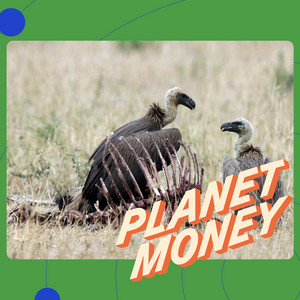
And so there is a fourth and final group circling above the bankruptcy Serengeti,
a flock of opportunistic investors who buy bankruptcy claims in order to extract as much profit as they can
from the feeding frenzy.
These are kind of your distress specialists.
Those are your vultures, right?
They specialize in spotting opportunity and distress.
And one of the big opportunities these vulture investors are looking for
are bankruptcies that may look hopeless at the beginning,
but actually still have a lot of hidden value inside.
In those cases, the vulture investors can make a bet.
They can buy claims on the cheap in the hopes that they'll get paid out more by the end of the bankruptcy.
And these bets can be extremely lucrative, especially in bankruptcies that begin in chaos and scandal.
Take and run the energy company that went to bankruptcy after massive fraud.
Or Lehman Brothers, the investment bank whose collapse helped fuel the global financial crisis.
Some distressed investors who bought bankruptcy claims for those two companies
were able to make at least two or three times their money.
When FTX filed for bankruptcy, it was folded into a new legal entity, the FTX bankruptcy estate.
And a few things made it an enticing will debased on the serengeti of bankruptcy.
First, the number of secured creditors, the lions, was relatively small.
And second, there was an enormous group of unsecured creditors.
Because tens of thousands of FTX customers became FTX unsecured creditors.
People like Begum Shikunogunlap are Larry David Lumbing, amateur crypto investor.
That meant that all of these former FTX customers were well positioned in the bankruptcy food chain.
In November of 2022, most people were watching what was happening at FTX as this
flaming hot financial wreck and hoping to stay as far away from it as possible.
But that is exactly the moment when some people's phones started blowing up
with frantic messages in the middle of the night.
Do you ever identify as a vulture investor?
Yeah, I don't have a problem with it.
I kind of liken it to economic dumpster diving.
Thomas Brazil runs a small distressed debt brokerage firm.
He makes his living, in part, facilitating trades between bankruptcy claim buyers and sellers.
Usually takes a commission.
At first, Thomas was getting offers to buy frozen FTX accounts for more than
$0.30 on the dollar.
But he wasn't interested because FTX's financial situation was still too unclear.
That was like, that's too much.
It was a total black box.
I can't do those kind of trades.
Like putting money into black boxes and shooting from the hip is a great way to like
get burned very quickly.
Thomas says that at the very beginning,
FTX hadn't disclosed a lot of the usual information that he would typically use to figure out
how much these claims might be worth.
FTX declared bankruptcy so quickly and so chaoticly that at first,
the company didn't even file all of the usual paperwork.
But for Thomas, that extra layer of chaos could mean more opportunity.
Some people have this mistaken impression that distressed investing,
and especially distressed crypto investing is the risk you think they've ever heard of.
But risk is really not a function of what you do.
It's the price you pay.
And I just sort of thought, like, you know, for the right price,
we would stick our toes in the water on this.
But in order to figure out the right price to bother putting his toes into it,
to start bidding for FTX's bankruptcy claims,
Thomas needs to figure out a couple of things.
First, there's the question of what he's actually buying.
Some FTX customers were arguing that they were owed the specific cryptocurrency
in their frozen accounts.
But Thomas knew that previous case law suggested that the ultimate payout would likely be based on
however much the crypto was worth in US dollars at the moment FTX filed for bankruptcy,
which was relatively low.
Next, he need to figure out what assets FTX might actually have to see if it could be in a
better financial position than it appeared.
So he does some online sleuthing.
Coke's around on Twitter looks for splashy investments in acquisitions by scouring through
the PR announcements from FTX and its sister company Alameda Research.
And he sees the FTX estate could have access to hundreds of millions of dollars worth of
Robinhood shares they might be able to sell and a bunch of other investments.
And Thomas is able to see they do still seem to have a lot of crypto.
All of those are things the FTX estate should be able to get their hands on.
And so I was like, there's assets here that are going to come back to the estate.
I'll bet this is at least five or ten cents.
So I'd be willing to buy these things for three and six cents.
In other words, Thomas is making an educated bet that it'll be worth the risk to buy the bankruptcy
claims at just three to six cents.
That help be able to get paid out more later when the bankruptcy pays its creditors.
Thomas starts bidding.
He closes one deal, an eight million dollar claim for three cents on the dollar,
and then two more multi-million dollar claims for six cents on the dollar.
And I actually did have like a big distress guy call me.
It was like, what?
You're bidding on FTX claims?
You're, you're crazy.
And I was like, I mean, look, I think you could get tensed on the dollar.
And I'm bidding five.
And he said, that's too high.
You're bidding too high.
And I was just like, I don't know.
But I know the only person even putting in a bid.
So that's usually a good place to start.
Thomas was offering just a few pennies on the dollar for bankruptcy claims.
Now, some people heard Thomas's offer and were upset.
They called him a vulture.
But he says other people were eager to make the deal so they could cash out as quickly as possible.
Around the same time, other brokers were getting into the mix,
which brings us back to our IT consultant,
But Gumshey Kahnagundla, and his frozen FTX account.
I was thinking I would have to wait like maybe four years before I get even some of it back.
But Gumshey says he quickly found a prospective buyer through that online marketplace,
XClaim.
The buyer offered him $11 cents on the dollar for his $170,000 bankruptcy claim,
which meant he'd be giving up a potential $150,000,
89% of his full claim.
Which sounds like a terrible deal, right?
Like the total value of the claim was already low because of the price of crypto at that time.
And on top of that, he was losing like almost 90%.
But he also knew it would likely take many years before any creditors got paid at all.
And he wanted the cash out immediately.
The cryptocurrency market was in free fall in the wake of FTX.
And he wanted any money he could get in order to reinvest.
I mean, Bitcoin was below 20 grand.
Ethereum was below 2 grand.
That's amazing.
So that's when I was like, I'm selling this bankruptcy claim because I will never see these prices again.
I'd be an idiot if I didn't take advantage of this.
So Gumshey sells his FTX bankruptcy claim.
And he gets around $19,000 in total.
Over the next several months, Thomas Brazil, the distressed asset broker,
starts to broker more and more deals.
Somewhere with amateur investors like Gumshey,
but a lot are institutional investors.
Whole crypto hedge funds are forced to shut down and sell off their claims.
And by early 2023, the price of claims starts ticking up.
Because the FTX bankruptcy estate led by emergency CEO John Ray,
who had presided over the Enron bankruptcy,
they start to announce that they've been able to track down assets that can be sold to payback creditors.
And this one, like, a lot of the distressed firms started getting interesting.
So they're like, oh, we know John.
We bought claims in in in-ron and did very well.
Thomas is helping to broker bigger and bigger deals.
By the spring of last year, a number of big distressed asset firms had started getting in on the
hatch. Eventually buying up hundreds of millions of dollars worth of FTX bankruptcy claims.
That helped drive the price of the claims from 20 cents to 30 cents to 45 cents.
And then there were the announcements from the FTX estate.
All of 2023 was nothing but goodness.
Every time you'd wake up, they're, you know, oh my gosh, we, you know,
they'd have this asset they didn't know about or they settled this for $100 million.
Or they recovered that and that's another $50 million.
It's like holy moly. Holy moly.
Could FTX bankruptcy claims actually be worth way more than even Thomas had imagined?
After the break, the crypto market starts creeping back towards the moon.
We tally up everyone's bets.
And what all of this actually means for FTX customers like the Gumshi Kenagun.
Support for this podcast and the following message come from Wise.
The app that makes managing your money in different currencies easy.
With Wise, you can send and spend money internationally at the mid-market exchange rate.
No guesswork and no hidden fees. Learn more about how Wise could work for you at Wise.com.
This is my voice. I can tell you a lot about me.
And I'm not changing it for anyone.
In MPR's Black Stories, Black Truths, you'll find a collection of MPR episodes centered on Black
Experiences. Search MPR Black Stories, Black Truths, wherever you get your pocket.
All that sitting and swiping, your body is adapting to your technology.
Learn how and what you can do about it.
I really felt like the cloud in my brain kind of dissipated.
Once I started realizing what a difference these little breaks were making,
there's no turning back for me.
Take MPR's Body Electric Challenge.
Listen to the series wherever you get your podcasts.
This election season you can expect to hear a lot of news.
Some of it meaningful, much of it not.
Give the up first podcast 15 minutes, sometimes little less,
and we'll help you sort it out.
What's going on around the world and at home?
Three stories, 15 minutes, up first every day.
Listen every morning, wherever you get your podcasts.
Okay, so it has now been almost 18 months since FTX filed for Chapter 11 bankruptcy.
Chapter 11, you will recall, offers a way for companies to either restructure and rise from the
ashes or to liquidate.
In the case of FTX, the estate announced a few months ago they could not find a suitable buyer,
and so they would not be restructuring and restarting the FTX exchange.
As for the prospects for how much all the FTX creditors are likely to get paid back,
there have been a few major changes since the bankruptcy process began.
First, the FTX estate managed to track down a surprisingly large amount of assets.
Pretty quickly.
Second, several of the investments that FTX and its sister company Alameda made in part
illegally using customer deposits.
Some of those investments have actually hit pretty hard.
For instance, in 2021, FTX bought a $500 million stake in an AI startup called Anthropic.
And as AI has taken off over the last year, so too has that investment.
A few weeks ago, the FTX estate announced they'd sell a portion of that stock for $884 million.
And the last big thing that sort of changed the game for the FTX estate
is that the crypto market has seen a remarkable rebound.
Bitcoin, for example, had been trading at about $16,000 around the time FTX declared bankruptcy.
It has recently shot to a new record high of over $70,000.
For people who made big bets on the corpse of FTX, like the stressed investor, Thomas Brazil,
this is pretty exciting.
FTX still holds some major crypto assets that have seen these big gains, like Bitcoin,
Ether, and Solana.
They owned 40 million Solana.
I'm looking at it right now.
Look at this, December 30, 2022, Solana was just under $10.
And now it's at $186.
Wow.
That helped a lot.
Finally, by January of this year, lawyers for the estate had announced that FTX had recovered more
than $7 billion in assets so far.
And that at this point, they could cautiously predict that they'd be able to pay back
the company's creditors in full.
Meaning, if things go according to plan, everyone holding valid FTX bankruptcy claims
will receive at least $100 cents for every dollar they are owed.
So they may receive 100% of their claim in the end.
All of it.
Which sounds pretty great.
So great.
In fact, that lawyers for Sandbank Manfred used the news to argue that he should get a lower prison sentence.
The judge, however, did not buy this argument.
He ended up sentencing Sandbank Manfred to 25 years in prison for fraud, conspiracy, and money laundering.
And others point out that FTX customers aren't really being made whole.
Yes, they may end up getting their full claims.
But the value of those claims were calculated when the crypto market was collapsing.
So some customers who sold their claims early, they won't benefit at all.
And some customers went into personal bankruptcy during this whole long process.
As for Thomas Brazil and the other distressed investors and brokers who got in on the action,
the FTX bankruptcy is shaping up to be a huge money-making bananza for them.
One that could potentially see 10X returns or more for people who bought in at the bottom of the market.
I think this is the biggest thing that ever happened to the whole like
Creighton backwater area of bankruptcy trade claims since the invention of the whole idea of buying these.
It looks a lot like Lehman.
Lehman, as in that Wall Street Investment Bank, Lehman Brothers.
When Lehman went under everybody thought, oh my god, this is horrible.
All the stuff is toxic waste.
Who's going to want to buy any of these assets?
And ended up for some distressed buyers.
The recovery of Lehman was about 140 cents on the dollar.
But it took 10 years.
And so we joked that FTX is like Lehman on speed.
Now, it still isn't clear exactly how much FTX creditors will end up getting paid or exactly when.
But creditors could potentially start seeing the first round of payments around the end of this year.
We should also say, in 2021, Thomas Brazil was accused of, among other things,
misappropriating funds from a bankruptcy estate he was managing.
He's admitted to making mistakes in the case, but he denies, quote,
actual or potential criminal liability.
As for Begum Shikana Gundla, the FTX customer who sold his $170,000 bankruptcy claim for just
$1.11 cents on the dollar, when I asked him, did he regret selling his claim for so little and
missing out on what could be big payments?
He told me he actually hadn't been following any of the developments in the bankruptcy case.
After I sold my claim, I don't even think about it.
You're like, I'm out of here.
I'm done. I'm done.
Because here's the thing, focusing on stuff that's been done doesn't allow you to move forward.
You let it go and then you move on to the next.
Did it feel like an emotional thing too of like if you could get rid of this claim that kind of
tethered you to this loss, you could actually kind of emotionally move on in a way that was better?
Yes. 100% correct. I didn't want to be stuck in purgatory.
When I released the claim and I got the money, I felt like as if a big weight has been lifted
off my shoulders. I don't have to think about it anymore.
The gum she says he used his claim money to reinvest into crypto, largely into Salana,
and he's been able to grow his $19,000 into about $60,000, which isn't close to erasing his FTX losses.
But he says, who knows? By the time the FTX estate finally pays its creditors,
maybe his new investments could be worth even more than his original claim.
What would Larry David say about that outcome?
That's pretty pretty good. Pretty good. I like the way you said it though.
Are you part of an international financial fiasco? Tell us about it.
Send us an email at planitmoneyatnpr.org. We're also at Planet Money on all the social media.
James Sneed and Sam Yellowhorst Kessler produced this episode. He was edited by Jess Zhang and
fact-checked by Sierra Huatis. He was engineered by Sina Lofredo and Alex Goldmark is
Planet Money's executive producer. Special thanks to Jonathan Lipson, Jake Thacker, Kate
Waldoch, Diane Dick, Arclay Walsh, and Andrew Glantz. I'm Alexi Horowitz-Gazzy.
And I'm Amanda Aronchick. This is MPR. Thanks for listening.
What does it mean to be Black in America? An MPR's Black Stories Black Truths,
a collection of stories that's very nuanced and dynamic as Black experiences,
you'll hear. It means everything. Search MPR Black Stories Black Truths wherever you get your
podcasts. What does it mean to be Black in America? An MPR's Black Stories Black Truths,
a collection of stories as varied, nuanced, and dynamic as the Black experience,
you'll hear. It means everything. Search MPR Black Stories Black Truths wherever you get your podcasts.
Last year, over 20,000 people joined the Body Electric Study to change their sedentary
screen-filled lives. And guess what? We saw amazing effects. Now you can try NPR's Body
Electric Challenge yourself. Listen to updated and new episodes wherever you get your podcasts.