Discussion keeps the world turning.
This is Roundtable.
You're listening to Roundtable with myself, He Young.
I'm joined by Steve Hatherly and Yuxun in the studio.
Coming up, fridge magnets are stealing the spotlight as the top souvenir choice these days.
From museums to scenic spots, they've officially outdone items such as canvas tote bags, notebooks, and so on.
Other trinkets. Or trinkets, I mean.
And what makes these tiny, colorful magnets so irresistible as cultural keepsakes?
And in an age where smartphone cameras are already packing a punch, crisp selfies, ultra -wide angles, and even pro -level night shots, you might wonder, why bother with an external lens?
Enter the external telephoto lens, a tiny clip -on gadget that elevates your phone's capabilities to a whole new level.
Why is this small accessory making a big comeback among younger users?
Our podcast listeners can find us at Roundtable China.
Now let's switch gears to another topic.
Ever notice those quirky little things that cling to your fridge and add a pop of personality to your kitchen?
Well, fridge magnets have evolved into much more than just decor.
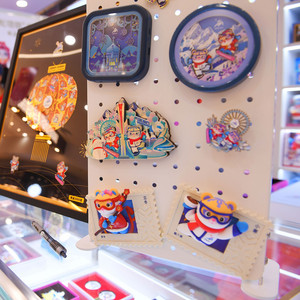
Now in China, the latest craze is the limited edition fridge magnets from the Asian Winter Games, which we discussed in the first half of the show, and also spring festival celebrations.
These tiny treasures have taken over the Internet with people scrambling to get their hands on them.
And what is it about these fun, colorful magnets that turn them into such beloved collectibles, sometimes with serious sentimental value?
So tell us what's going on, Yuxhun.
I mean, when this is like a big trend for young people, it's good to ask, Yuxhun.
OK, so even before the opening of this Asian winter games, fridge magnets at licensed to retail stores were already in high demand.
One particular magnet with a torch on it sold out completely in Harbing, which is the whole city of this game.
Another magnet, also with the event theme, saw sales reaching as high as 40 ,000 to 50 ,000 pieces per day.
You know, and it's also sold out in Beijing.
Other themed fridge magnets are also quite popular.
Another area is cultural creative fridge magnets sold from museums and other tourist attractions with themes related to holidays like Chinese New Year.
You know, many brands and museums have released various Chinese New Year themed fridge magnets.
You know, the magnets featuring the character Fu or Fortune in English.
Small couplets and other festive designs in red, which symbolize, you know, the hot and warm Chinese New Year elements and vibe.
Yeah, those Chinese New Year magnets are a hot commodity.
A lot of shops packed with shoppers.
They're trying to restock these magnets as quickly as they possibly can.
They've been selling out sales.
Daily sales have been exceeding 4 ,000 pieces in some spots in Yiwu, as a matter of fact.
That report came out in mid -December last year, and they were selling thousands a day.
and blind boxes too have also launched fridge magnet blind boxes featuring Chinese New Year's elements which is really cool I guess we should talk about that a little bit blind boxes that's when you're purchasing it's literally a box right but it's kind of a fun little game where you're purchasing it
but you don't really know what you're getting you don't know what's inside yeah mostly you will get a kind of a series of figurines or in this case fridge magnets but you don't know which exactly the one that you're getting.
So that is kind of, it sounds like a little bit of lottery effect, but you can get, but when you're getting, you know, maybe the special edition or the limited edition one from these blind boxes, you will get extra happy through this.
Yeah. And it's also fueled a secondhand market of people trading and reselling.
I didn't know that part.
Because you've got people who are actually collecting these things.
And it seems like when it becomes a collectible, then, of course, people, they want to get exactly the one.
And they go through great trouble in getting their hands on the truly coveted item.
Yeah, I understand it.
I have a small collection of fridge magnets on my fridge in my house.
Yeah, I do. So my wife and I, we've been traveling around China here and there a little bit so far.
And we didn't plan on this, but everywhere we go, we bought a fridge magnet.
And part of the reason was, of course, so that we could have a little souvenir from that location.
The first one we bought was in Xi 'an when we went to see the Terracotta Warriors.
We got this really cool little warrior fridge magnet That sits right in the middle of our fridge Like he's guarding the fridge or something But then we realized, hey, that was really cool So then when we went to Summer Palace We got one there When we went to the Temple of Heaven We wanted to get one
So all the places we're traveling around The one thing we get We don't go home without Is a fridge magnet And our goal is to create an entire fridge I don't know if the door is strong enough To support that or not But anyway, you see my point.
We want to create like a little art piece, an art installation in our home.
Especially when you're having a whole wall of fridge magnets.
You can absolutely feel that kind of feeling that, yes, I've created a lot of these memories through these fridge magnets.
And when maybe your friends are visiting your home, you can actually point this out.
Yeah, this is where it is.
Oh, 100 % true. True, yeah.
They're conversation pieces when people visit.
Well, these fridge magnets, as we know them today, have an interesting origin story.
The concept of using magnets as decorative items actually goes back to the mid -20th century.
But the idea of fridge magnets specifically began to take shape around the 1960s.
And apparently this popularity, well, was started by the inventor of such, and his name is Bernard Silver, an American inventor.
In 1962, Silver developed a process of producing magnetic -backed advertising items, such as small promotional pieces that could be stuck on the metal surfaces like refrigerators.
But it's only in the 1970s when this idea truly took off.
And I think everybody knows what these things are.
And usually you go to like any landmark place around the world.
You can buy these fridge magnets at a pretty affordable price.
And usually the designs is a little bit on the mundane side.
Just stick the landmark, the Alpha Tower or Statue of Liberty on it, and that's it.
But these cultural merchandise star items that we're talking about today that are so popular in China, the design goes beyond that.
So tell us about the most coveted fridge magnet that apparently has gotten people to fight tooth and nail over.
And line up hours before the shop opens.
Which one is that? Yes, this is one of the hottest fridge magnets, and its name is Phoenix Crown.
It is a fridge magnet launched by the National Museum.
Liao Fei, who is the deputy director of the museum's business development department, said that this Phoenix Crown fridge magnet has become an instant hit when it was launched, selling 1 ,700 pieces within just two hours, you know.
And also enthusiasts, as you said, lined up as early as 6 a .m.
in the drizzling autumn rain to get their hands on just one little magnet.
And in merely three months after its debut, the sales volume of this fridge magnet has approached 80 ,000 pieces, with the total sales of all cultural and creative products featuring this crown exceeding 10 million yuan.
That's about 1 .4 million US dollars.
And that number would be a lot higher if production capacity were able to produce a lot more of them.
And now I understand, Huyang, why you said these have become hot commodities.
on the second -hand market as well because if it's this competitive to get one very popular phoenix crown fridge magnet well then obviously people are going to be trading these things and then you've got a whole other i guess industry that's been created from this and also i'd like to go a little bit
more into the design and the making of let's just still stick with this particular example.
Because it has a long history behind it, maybe Yushin can tell us a little bit more about that.
But I just like to say, because I actually saw one of these magnets over spring festival period and was visiting a family member.
And that family member was very proud and showing it off.
How did they get it?
Did they line up outside at 6 a .m.?
She bought it in the second hand market the resell market and already she's paying extra sure yeah and also this magnet is actually quite large and it's exquisite and there's a lot of beads and rhinestones that go into the decoration so it's not some cheap stuff okay this is you know this is worthwhile
yeah uh well sorry tell us a little bit about the history and then i'll comment about the design more?
Yes, so the phoenix coronet or this crown unearthed in 1950 in the underground palace of Dingling Mausoleum, part of the Ming tombs in Beijing, and it is famous for its decoration featuring nine dragons and nine phoenixes.
It boasts a distinctive design and exquisite craftsmanship which vividly reflects the material and cultural standards of the mid to late Ming dynasty which uh can date it back to 1368 to 1644 yeah so just really really beautiful and really intricate in their design these magnet designers i don't think
we would typically think of them as artists but i do now because the the options that are available when you go into the shops they're not just your standard like you know if you go to new york city like i heart and why It's nice.
It's cool. It's iconic.
But these are designed in such a really, really intricate way.
And they're really pretty to look at.
And now, you know, it's the year of the snake.
And there's another opportunity for another design.
So designers have gone with a series of fridge magnets that have been designed in that fashion as well.
And those have been hot.
People want to get their hands on those.
So I guess if you see one, get one.
And also, I think another reason that it is so popular is not only it is so delicately designed.
Another reason is that, you know, they even integrated with technology into it.
There is a code behind this crown, and you can scan it.
And after it, you will get into a web page.
And in the camera, you can actually wear this crown.
Oh, yeah, right. Yeah, so they're interactive.
This is an AR effect.
Yep, yep, yep. Yeah, that's kind of a cool, fun little selling point, I guess.
I think so, too. And when we're talking about the super popularity of fridge magnets, this is also happening.
is that partially because of this sudden rise of popularity of cultural tourism altogether.
Because if you're traveling, if you're going to that place and you want to bring a souvenir home and therefore if it's so beautifully designed and you can't get it anywhere else, oh yes, you're spending the money to buy it.
Yeah, I think that's part of it.
You want to bring a souvenir from where you are.
and part of it as well is that you get the feeling that you're buying something that's a limited edition and even if it's not a limited edition it still feels like that and if you take it you know if i take that for example terracotta warrior off my fridge and i take it to nova scotia canada i guarantee
nobody else in nova scotia canada has one of those fridge magnets so that even though it might not be limited edition it can feel like that and i think that adds to the desire for people to want to take these home with them also i think you know the cultural foundation is the reason why these um you
know these companies can create such um delicately designed fridge magnets it's because we have these kind of things and history to i think um to integrate with modern technology and then you can have these designs and people are so loving it and they are confident with these kind of culture and that's
why they like to buy a lot of these fridge magnets and bring them home yeah when we were at when we visited the summer palace in the gift shop there we spent maybe well i should say i spent i'm super picky i spent about 20 minutes because there's so many different types of fridge magnets the designs
are all different and i spent 20 minutes like picking them up and looking at the different details and the different designs before finally making a decision it's quite a fun little thing to do i think i would encourage others to do it as well and you know these they're not going to be too expensive
relatively speaking they might be a little bit pricey but um they're not going to cost you you know hundreds and hundreds of dollars or something exactly and if you're traveling overseas or to a different province here in china and this thing doesn't take up a whole bunch of room in your luggage either
so it kind of makes sense to get one and keep it bring it home and put it on your fridge and And in recent years, I've seen like a few really prominent trends in cultural products.
One is every summer you'll see the landmark.
Okay, so you go to a specific tourist spot and you'll see a local landmark popsicle or that's shaped as the same landmark.
and you definitely need to take a selfie with it.
Quickly. That's what people do.
Oh, yes, before it melts and drips.
Yeah, and then fridge magnets.
Now it's like a default cultural souvenir that all tourist spots, all museums feel that they need to come up with a good one.
And do you see that maybe because of this popularity, because that everybody's doing it, Then next year, this time, maybe we no longer talk about it because it's not that popular anymore.
What do you think, Yushin?
I think it will be there.
It's not like the Popsicle.
It will melt and drip, you know.
The things is that people like the idea of all of these cultural and creative products.
And with the innovative ideas of these developers, they can even have even more designs on these things.
Not only adding the kind of AR effect into it, maybe glow -in -the -dark materials with all of these fridge magnets, you can always have new feelings and ideas from these magnets.
And people always visit, right?
I mean, you're going to get new people coming to visit the following year.
And you might get repeat customers, but if you do, then you can have different designs.
Because as long as you've got a good price point for the product, you don't have some boring generic design, then people would come back and maybe get a second one.
So I think this trend will continue for the years to come.
Well, I certainly like the idea of fridge magnets serve as miniature billboards for places, events, stories.
And from a business standpoint, they are the perfect blend of affordability, as we've talked about, and emotional connection.
It evokes the memory that, oh, what was it like when you visited this place, and making them a go -to choice for marketers.
Coming up, external telephoto lenses are back with a vengeance.
Since its initial success in the early 2010s was driving its resurgence, let's zoom in and find out right after this break.
Looking for passion?
How about fiery debate?
Want to hear about current events in China from different perspectives?
Then tune in to Roundtable, where East meets West and understanding is the goal.
You're listening to Roundtable.
I'm He Young. I'm joined by Steve Hatherly and Yushun in the studio.
Smartphones keep getting more powerful.
But have you ever wondered what would happen if we could customize them like Lego pieces?
External lenses, especially telephoto ones, are making a comeback, and they might just be the first step toward modular phones.
If these external lenses keep gaining traction, could we be looking at the future of personalized, modular smartphone photography?
We discuss this growing trend and its implications for the next generation of smartphones.
Because, let's face it, smartphones have been boring for the last many years, since there aren't really all that many new inventions that come with it.
So, yes, they've been popular about 10 years ago or 15 years ago, and now they're making a comeback.
Yuxun, do explain. Yes.
So actually, in the 2024 smartphone market, the telephoto feature has emerged as a major highlight.
A lot of these smartphone flagships has these kind of features in the way that you will have multiple cameras behind on the back of your smartphone.
Many, you know, they boast dual telephoto setups and but due to limitations in optics and material, built in telephoto lenses on smartphones still struggle to match the performance of professional cameras.
But still, this kind of comparison is not quite fair to a smartphone because they are smartphone, not cameras.
Yeah, right. Yeah, telephoto lenses, if you flip your smartphone on its back, you'll see some different circles there, right?
You can tell I'm not a camera person.
That's how I describe things, by shapes.
One of those circles is oftentimes a telephoto lens, right?
Right. So therefore, you might ask the question, if the camera has a built in telephoto lens, then why would I bother buying an external kind of snap on or click on or screw on telephoto lens?
What's the reasoning behind that?
So when you would like to capture something even further, of course, you have the built -in telephoto camera, but you would like to maybe take a picture of the mountain in front of you.
Then you may need an even stronger telephoto camera.
So you're putting a better sensor on top of an existing sensor to make the whole thing better and stronger.
Right. And in 2011, when these clip -on devices first became popular, yeah, I remember seeing people using them.
And then smartphone cameras just got a whole lot better.
So why now? Why are young people going through the trouble of, you know, putting one more thing onto your smartphone?
Yeah, right. Why the comeback?
one aspect that I can think of is I think in recent years more and more concerts are coming up and people will like to visit these concerts and they will like to see the clear face of their idols of their celebrities and then if you're using for most of the time you cannot bring a professional camera into
the concert and then a professional or higher quality photo telephoto camera is better that they're building in your smartphone but still uh as we said if you want to have a capture of further image and then you you may need to another clip on your smartphone and you can get another sight of your item
yeah and it's not just telephoto lenses either right there's different types of lenses that you can purchase for example anamorphic lenses that that gives you the kind of cinema quality the wide -angle cinema quality in your photos you can also get kind of a flare from light that gives you an effect
with your photo or on your photo that another lens can't provide or that your smartphone can't provide you've got the fisheye lens as well that you can snap on so i was looking at a video because i don't pretend to be as i mentioned a camera expert at all.
I was watching a video of a professional photographer, and he was talking about, you know, do we need these add -on accessories, these different lenses that you can snap onto your phone, or do we not?
Or do we not? Is this just clever marketing?
And he explained it like this.
You know, if you're a person who takes a picture with your smartphone and your smartphone only, okay, that's cool.
That's one area of the market.
If you're a mirrorless camera person, if you're a DSLR person that's another area but what these add -ons provide it's kind of like a bridge between the two and when you add these lenses onto your smartphone you can take different styles of pictures things that you can't achieve by taking a picture with your smartphone
and you can get these lenses some of them are really expensive some of them aren't but you can learn how to use them for people who are interested in learning about photography it's a good bridge on your way so you don't have to spend thousands of dollars on a really expensive camera or a really expensive
lens. It's kind of a good little middle ground, if you will.
That's how he described it.
And also, I think this is kind of a trend that the gap between professional cameras and smartphones are becoming more and more vague.
A lot of these phone manufacturers, they are trying to make their cameras more and more professional and camera -like.
One example that I can think of is Leica recently launched another device.
It's not an extended lens, but it's a gadget that you can stick behind your iPhone, and it will make you feel like you're holding a camera.
And they have that actual buttons that you can use to make you feel like you're actually holding a camera and taking photos.
Even though you're only actually taking a picture with your phone.
Yes. So that kind of idea of making your phone more camera -like is kind of a trend in this kind of industry.
And making people, of course, it's still quite niche, but still demand.
Yeah. And some people are talking about this is evidence to the potential rise of modular phones.
So basically, modular phones are designed with individual components such as cameras, batteries, processors, and displays crafted as separate modules.
So can you see a future for smartphones that you're kind of building it up like a Lego piece, each piece to your liking, as opposed to you get the phone now and not much you can do about switching it up?
Yeah. I mean, these external lenses these days, they've become a lot more versatile.
Some of them are small, but some of them are quite big as a matter of fact.
Some have built in lights.
And these developments can be kind of seen as a form of modular phones.
But past modular designs that came out, they failed to gain wide acceptance from people.
They didn't really catch on.
Yeah, most of the reasons are...
They're expensive, right?
Yes, they can be very expensive.
And also, the designer of your smartphone trying to make your phone as thin as possible.
And then, okay, let's add on another modular camera.
It got thicker and thicker.
And heavier and heavier.
Yeah, so maybe some people may choose to buy it.
Some people maybe stick to how fashioned these smartphones can be.
Yeah. I suspect that it still appeals to a certain type of person.
And they look pretty cool, too, I must say.
So if you want to show off and, you know, be, like, smartphone tech hip, then maybe you can attach that thing to your phone.
And that brings us to the end of today's show.
Thank you so much, Steve Hatherly, and Yuxi, for joining the discussion.
You can always find us on Apple Podcasts at Roundtable China or send us an email to roundtablepodcasts at qq .com.
I'm Ha Young. We'll see you next time.