the unmissable news stories of the day.
This is the Beijing Hour.
Examining the events that impact and shape China and the rest of the world.
This is the Beijing Hour, one hour of news and information brought to you every weekday.
Tianlu with you on this Tuesday, December 2, 2025.
You're listening to the Beijing Hour, coming to you live from the Chinese capital.
On today's program...
China's UN ambassador writes to the Secretary-General again rejecting Japan's claims.
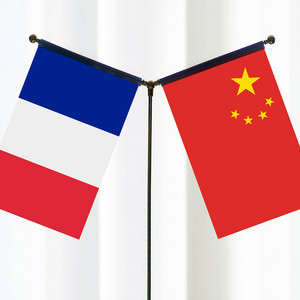
High expectations for French President Emmanuel Macron's state visit to China.
Ukrainian President Volodymyr Zelenskyy meets Macron to seek more European support.
In business.
China has invested 2 trillion yuan in rural road constructions over the past five years.
In sports, Chinese paddlers secure a second straight win at the Mixed Team World Cup.
In culture and entertainment, key archaeological finds at the Beijing section of the Great Wall.
Now checking today's top stories.
China's United Nations ambassador says the country firmly opposes Japan's latest letter to the UN.
Fucun accused Tokyo of evading key issues and attempting to shift blame.
Hona reports.
China's permanent representative to the UN Fusong, has delivered another letter to UN Secretary General, Antonio Guterres, rejecting Japan's arguments over Taiwan as unreasonable and reiterating China's position on the Taiwan question.
Fu said the direct cause of the current differences between China and Japan is Prime Minister Sana Takeuchi's provocative remarks that implied Japan would militarily intervene in the Taiwan question.
Fu's letter comes after his Japanese counterpart, Kazuzuki Yamazaki, sent a letter to the UN chief saying Japan's position on issues concerning Taiwan is consistent.
The Chinese envoy urged Japan to provide an explanation of its consistent position, citing multiple legally binding documents.
Fu said Takeuchi's remarks violate the commitments Japan has made.
Fu reiterated that Taiwan is Chinese territory and Takeuchi's linkage of Japan's quote survival-threatening situation with the Taiwan contingency goes beyond his passive defense strategy.
Regarding Yamazaki's insinuation at defensive element of other countries, Fu said the international community must remain vigilant against Japan's ambitions to expand its military capabilities and revive militarism.
He also said Takeichi's words and deeds have severely undermined mutual trust and damage the political foundation of China-Japan ties.
He urged Japan to demonstrate its sincerity with clear reaffirmation of the one China principle, immediate retraction of the erroneous remarks and practical steps to honor its commitments.
That was Honat reporting.
China Coast Guard says it has expelled a Japanese fishing vessel that intruded into territorial waters of Diaoyu Dao.
The Coast Guard stressed that Diaoyu Dao and its affiliated islands are Chinese territory.
A spokesperson urged Japan to stop any provocation and actions that infringes upon China's sovereignty.
China has slammed Japan's recent efforts to expand its military.
Beijing warns that the move betrays Japan's pacifist constitution and could resurrect militarism in the country.
Zhao Yunfei has more on the response from the Chinese foreign ministry.
China's Taiwan question has been consistent.
Here at the Chinese Foreign Ministry.
China once again calls on the Japan side to clearly state what is its statement and position on the Taiwan question.
Chinese foreign ministry, the spokesperson Lin Jian, says that Japan has always been been vague when it comes to Taiwan.
He cited the UN Charter that when it comes to international relationship, the member states should not use threat, but clearly the Japanese Prime Minister Takeuchi's statement is a threat, citing an excuse of survival situation.
Taiwan is part of China.
It's part of the international order and the post-World War II order.
This year marks the 80th anniversary of the victory in the Chinese People's War of Resistance against Japanese aggression.
Spokesperson Lin Jian urged the international community to stay alert of the re-emergence of militarism.
Japan has, step by step, hollowed out the provisions explicitly set forth for Japan in the Cairo Declaration and the Potsdam Declaration and betrayed its own commitments under the Japanese constitution.
It is Japan itself that is expanding its military power, coercing other countries and ignoring the opposition of neighboring nations, in an attempt to unilaterally change the status quo.
China firmly opposes Japan's retrogressive actions that challenge the post-war international order and its attempts to resurrect militarism.
That was a report on China's latest response to Japan's military expansion.
Japan's defense budget has increased for 13 consecutive years.
A latest report by the Stockholm International Peace Research Institute shows that the revenue of five Japanese arms dealers surged by 40 last year to over US13 billion.
The report said the surge is driven by strong domestic demands amid Japan's ongoing military build-up program.
Takai reviews how Japan's defense spending has evolved over the decades.
If we look at the Posthumous Proclamation and the Cairo Declaration, Neither document explicitly sets a ceiling on Japan's military spending.
What they did stipulate was the unconditional surrender of Japan's armed forces, the complete disarmament of the Japanese military, the prosecution of war criminals and the prohibition of industries that could enable Japan to rearm and wage war again.
Japan later made a commitment in its post-war pacifist constitution, pledging to forever renounce war and the threat or use of force as means of settling international disputes.
Tokyo also set a self-imposed cap on defense spending, keeping it at or below 1 percent of GDP, a bottom line designed to prevent Japan from becoming a military power again and posing risks to its neighbors.
Japan's constitution also restricts its military strictly to self-defense.
For nearly half a century successive governments generally adhered to this principle.
And when we examine Japan's defense posture over time, several key turning points stand out.
In 1951, Japan accepted the so-called Treaty of San Francisco, which restored its sovereignty.
Tokyo signed the Japan-US Security Treaty, placing Japan's security and the development of what became the self-defense forces within the US security framework.
China's foreign ministry has recently reiterated that the Treaty of San Francisco was signed without key World War II parties, such as the People's Republic of China and the Soviet Union, making it inconsistent with the UN Charter and fundamental principles of international law.
A major turning point came in 2014, when the Japanese government reinterpreted the constitution to allow the exercise the so-called right to collective self-defense.
This means Japan may use force or support an ally, even if Japan itself is not under attack.
This significantly broadened the mandate and operational space for the self-defense forces, providing political justification for increased defense spending.
Defense budget request finalized in 2022.
Military spending for fiscal year 2023 would surpass 6 trillion yen for the first time, exceeding 1 of GDP, and it's slated to rise to 2 within five years.
The Japanese government initially set fiscal 2027 as the target for reaching the 2 benchmark, but Prime Minister Takeuchi said in an October policy speech that she plans to meet the target in fiscal 2025, and that is two years earlier than originally scheduled.
That was Daikai reporting.
The Bank of Japan has signalled an interest rates hike at its next policy meeting in mid-December.
Governor Kazuo Ueda said a speech in Nagoya that the central bank is weighing the pros and cons of additional tightening.
Chris Gilbert. reports from Tokyo.
Bank of Japan Governor Kazuo Ueda is feeling cautiously optimistic.
He says that Japan's economy is recovering moderately and that the bank may be considering another move on interest rates as it looks to gingerly, over years, back itself up of its dovish monetary policy.
And of course, it's already taken a move earlier this year by ending its negative interest rates.
The question is, Where to from here?
Because several of the bank's key conditions for moving interest rates further have not been sustainably met.
The economic recovery from the pandemic is still fragile.
Wage growth is not guaranteed, but the Bank of Japan governor says that look, we're looking to keep business conditions accommodative.
We're looking to not reduce our support for economic activity but just to adjust the pace of it, especially considering that the economy contracted, the GDP contracted, over the July, the September quarter of this year.
But the governor again a reassuring voice, saying that he believes that it's just a temporary anomaly due to export timings at the time, but also that its goal of 2 inflation has not been sustainably reached.
The governor again saying that he believes it will, due to underlying price pressures fueled by the ongoing labor shortage, by previous round of wage rises and also planned and expected price, our wage increases in spring negotiations 2026.
So overall a very positive message from the Bank of Japan governor, not just to reassure and encourage business leaders in Nagoya but also to kind of drip a message out to the market and see how it will react.
The market did react, with the yen strengthening and government bond yields rising to multi-year highs.
Question is whether or not a decision will be made to make further moves on interest rates.
Governor Ueda is saying they'll look at the data closer to the time of their next meeting, to be held later this month.
That was Chris Gilbert reporting from Tokyo.
Japan's stock market tumbled sharply on Monday, with the Nikkei 225 dropping nearly 2 amid renewed expectations of a Bank of Japan rate hike.
Japanese government bond yields surged to their highest level since 2008 and the yen strengthened slightly after after BOJ Governor Kazuo Ueda signalled the clearest possibility yet of a rate increase this month.
To help us understand what's driving the sell-off and what it could mean for global markets.
Guo Yan spoke with Wang Yaojing, professor of School of Economics at Peking University.
Well, Professor, we have seen significant volatility in Japan's stock market recently.
What are the main factors driving this sharp decline?
The potential rate hike is definitely the most immediate catalyst for Japan's stock market plunge.
Because the rate hike is never really a standalone event but will lead to a series of changes in the market.
For example, bond yields are going even higher up.
In fact, the yield on the two-year Japanese government bond hit the highest level since 2008.
On those expectations,
And these higher yields tend to make borrowing more expensive, which is especially the case when the Japanese government is having a very large amount of debt and also reduce the valuation appeal of equity, which is already reflecting in the stock market.
And as the yield in Japan rises, domestic and Japanese institutional investors may find Japanese bonds more attractive and prompting them to repatriate capital from overseas holdings, for example in foreign equities and bonds, and they will, just after capital flow, reverse back to Japan and that case yen will become more attractive, which might lead to appreciation, and that will further impact trade and global capital flow.
So, in short, while Other structural and macroeconomic factors, such as inflation or corporate fundamentals or a global economic backdrop, they may still matter,
But this specific sell-off seems largely a policy shock reaction, which is a readjustment of risk evaluation in light of a possible end to decades of this ultra-low rate.
Looking ahead, how could Japan's market volatility, especially a potential stronger yen, like you have mentioned, affect the global equity markets and investor sentiment in the coming weeks?
Well mechanically, as yields in Japan rise, Domestic and Japanese institutional investors find Japanese bond more attractive, and then they repatriate capital back from foreign equity holdings.
And this could exacerbate downward pressure in international asset markets.
And also when expectation-wise, the sharp move in Japanese equities and bonds could stoke a broader risk aversion among global investors.
Especially if the move triggers sudden reallocation out of risky assets for example, equities and high yield bonds and even crystal holdings are risky assets and back into the safer assets, which are usually lower yield bonds, cash and safe haven currency.
So indeed, we are seeing reporting notes a broader slide in global stock and crypto currencies alongside the yen.
So in general, the Japanese market volatility spreads through bond yields, then currency moves and then the capital flow reversal, and it could feed into a broader global risk-off sentiment and tighten of volatility financial conditions.
So for global equity markets this could mean more downward pressure and also more volatility and a repricing of risk.
And for investors, a more cautious.
That was Wang Yaojin, professor of School of Economics at Peking University.
Coming up, high expectations for French President Emmanuel Macron's state visit to China.
China's new rule to seal public security violation records is being hailed as historic.
Yet, nothing has stirred more controversy than the plan to seal drug use records.
Why this issue?
How justified are the public's concern And, with millions speaking out online, could public pressure reshape how the rule is ultimately implemented?
Or, if not, what can be done to reduce potential risks?
All this and more on this week's Chat Lounge.
Tune in wherever you get your podcasts and on CGTN Radio.
Now it's 15 minutes past the hour.
Two former French prime ministers have shared their expectations for President Emmanuel Macron's state visit to China this week.
Jean-Pierre Raffarin hopes that the visit will bring bilateral ties closer.
This visit is something of a tradition.
Every year the French president wanted to go to China, and the Chinese president also comes regularly to France.
They have much to discuss, especially as we look ahead to 2026, when France will chair the G7.
That will certainly be one of the key topics.
Naturally, the international situation will be central to their talks, particularly the future of multilateralism, which faces challenges today.
Both France and China are committed to a multilateral approach, one that promotes peace and balanced global governance.
There are also many bilateral issues to address, such as economic and cultural issues.
This annual high-level dialogue is essential to advancing our shared projects and bringing our two countries closer together.
Laurent Fabius said a multilateral approach is important for addressing global issues.
If we want to solve problems, If we want to solve the world's main problems, we must have a multilateral approach.
None of today's major issues can be solved by a single country.
This desire to work together is the fundamental point of convergence between China and France.
Former French Secretary of State for Foreign Trade, Pierre Lelouch, said China will be a major power in the global system.
We're in a moment of great global upheaval with the balance of power shifting.
China will naturally be a major power in the international system.
So a new balance must be found, which requires statesmen with a long-term vision.
Macron is visiting China from Wednesday to Friday, his fourth state visit to China.
Chinese President Xi Jinping will hold talks with him to discuss bilateral ties and major international issues.
France has received a lunar sample from China's Chang'e-5 lunar mission as part of China-Europe space cooperation.
The handover marks a new milestone in international space collaboration.
Scientists in Paris are preparing to analyze the fragment, hoping it will reveal clues about the moon's volcanic activity and the early evolution of the solar system.
Sarah Coates reports from the French capital.
Under lock and key at France's most prestigious university...
This tiny fragment, barely a speck to the eye, is part of the 17 kilogram haul brought back from the moon by China's landmark mission in 2020.
Estimated to be around 2 billion years old, it holds clues to a chapter of lunar history we've never seen before.
Because most of the lunar samples we had were very old and we are basing our understanding of the surface of the moon
When you look at the moon, you have plenty of craters.
And we use the age of the rocks to try to calibrate how many craters you have at different ages.
I think these very young samples can really fit, fill up the gap for young ages to get a much better chronology of the surface of the Moon.
Inside these labs, preparations are underway to begin testing within weeks.
Professor Moiniere and his team are focusing on one of the Moon's biggest mysteries.
And so my science has been to understand why the Moon, which is so close to us, has no water, while the Earth is covered in water.
All my research before was based on Apollo samples.
And so what I want to do on this sample is look at my like water hydrogen volatile elements to try to understand better how the moon is formed.
The team will also compare this fragment with other lunar samples to map the moon's interior and reconstruct its volcanic timeline data that could refine future lunar missions.
This rare handover isn't just about science.
It signals growing collaboration between China and Europe when it comes to space exploration.
By handing over this very precious sample, China is showing that it's a major player in lunar science and diplomacy.
For France, it's a scientific win and a chance to make discoveries that could shape the future of planetary science.
I think because China and France right now they have a very good connection and relationship between the two countries.
So it is a good opportunity for our students to do such a research.
And while this type of exchange between China and France is a first, Professor Moiniere hopes it's just the beginning of a long and prosperous relationship as the world prepares for a new space race, one built on collaboration rather than competition.
That was Sarah Coates reporting.
Coming up, Ukrainian President Volodymyr Zelensky meets Macron to seek more European support.
Subscribe to Yellow River Mosaic on your favorite podcast platform or visit radiocgtncom for more in this program.
It's 21 minutes past the hour.
Ukrainian President Volodymyr Zelensky has held talks with French President Emmanuel Macron in Paris, seeking to bolster European support for the country.
The meeting at the Ilize Palace comes as Kiev considers the peace plan proposed by U.S.
President Donald Trump.
Many European countries are fearing that the plan could concede too much to Moscow.
Zelensky's visit follows Ukraine's talks with US officials in Florida, precedes a planned meeting between a US representative and Russian President Vladimir Putin in Russia.
Ross Cullen reports from Paris.
We've been watching that news conference between Vladimir Zelensky and Emmanuel Macron, the two men holding that conference after they had had a one on one talks inside the Elysee Palace a little bit earlier on.
Let me bring you some of those lines that have come out of that.
Emmanuel Macron saying that there will be discussions in the coming days between the United States and members of the Coalition of the Willings some 30 or so Western nations that back Ukraine about security guarantees, potentially the very next day after a ceasefire is agreed.
Could we see that reassurance force, that much discussed possible force of French and British troops inside Ukraine?
Agreed sign off on a NATO Article 5 style security guarantee for Ukraine.
So further discussions in the coming days confirmed by Emmanuel Macron.
Also, we heard from Volodymyr Zelensky, the Ukrainian president, thanking President Trump for the work the US administration is doing, thanking the European allies for their steadfast support for Ukraine, but also lamenting the fact that there are ongoing attacks at the moment in what Russia describes as the special military operation, what Ukraine describes as a war, and we know that Emmanuel Macron and Volodymyr Zelenskyy agreed that there has to be a just and lasting peace, and Volodymyr Zelenskyy saying that, in his opinion, Russia started this conflict, so Russia should end it.
That was Ross Cullen reporting from Paris.
The recent peace talks are once again raising some hope for a deal to end the Ukraine conflict.
But some residents in Kyiv say they are not optimistic, pointing to continued attacks and daily uncertainty.
Evangela Sipsas reports from the Ukrainian capital seem to be tired of all of these talks and what is going on here in the uh, in the country of ukraine, there are talks that are taking place.
The people here, of course, are looking to the news to see what is going on.
They're following these developments in the us, but also in france, But they're not optimistic that this will lead to something.
They're very cautious of how they're thinking about these talks.
They feel that no breakthrough will actually happen.
Tacks continue to take place.
Here in Ukraine, especially earlier on Monday, there was an attack in the Deep North region where four people lost their lives and several were injured.
So all these images of attacks, sirens going off, people rushing to the shelters, it's not really sitting well with regular people, especially here in the capital of Kyiv, who say that while these talks are taking place, I still have to cover myself and I still have to cover for my family, because I don't know when the next attack will happen.
It has become a pattern for them.
That was Evangeline Sipsos in Kyiv.
South African President Cyril Ramaphosa has dismissed a threat from his US counterpart to exclude Pretoria from next year's G20 summit.
Ramaphosa called the US remarks baseless, reaffirming that South Africa is a founding member of.
A few days ago, President Donald Trump made a statement to the effect that South Africa would not be invited to participate in the G20 in the United States.
He repeated untrue statements about genocide against Afrikaners and the confiscation of land from white people in our country.
We must make it clear that South Africa is one of the founding members of the G20.
And South Africa is therefore a member of the G20 in its own name and right.
We will continue to participate as a full, active and constructive member of the G20, despite the challenges and misunderstandings that have arisen between South Africa and the United States.
South Africa presided over the G20 summit in November this year, which Washington chose not to attend.
U.S.
President Donald Trump cited allegations of white genocide in South Africa as his reason for skipping the summit.
Ramaphosa called it misinformation.
Despite the ongoing tensions, South Africa has handed over the G20 presidency to the US for next year.
Ramaphosa said Pretoria values its ties with Washington and remains committed to dialogue.
Fierce fighting continues in Sudan between the army and paramilitary rapid support forces.
As diplomatic efforts hit setback after setback, a fragile ceasefire is on the table.
Daniel Aratmoy looks at what the US-led push for peace has achieved and the possible possibilities.
The US strategy in Sudan has been wide-ranging, from direct diplomacy and shutter talks to targeted sanctions.
Most notably, Washington has been leading a mediation strategy, referred to as the Quad, alongside Saudi Arabia, the United Arab Emirates and Egypt.
Recently, a proposal was put forward by US-led mediators calling for a three-month humanitarian truce that was to be followed by a nine-month political process.
We have appealed and we have asked repeatedly the two parties to accept this humanitarian truce as presented, without any preconditions.
However, Sudan's military chief, General Abdel Fattah al-Burhan, rejected the proposal, stating it was the worst one so far.
Another blow to efforts to stop a devastating conflict that has gripped the African country for over two years now.
They didn't look at our response.
They didn't consider what we say to them.
The proposal is the worst one presented.
This proposal eliminates the armed forces, dissolves security agencies and keeps the militia where they are.
It is very bad, and we do not accept it.
And I believe if the mediation continues in this direction, we will consider it to be biased mediation.
Human rights advocates say there is an urgent need for a regional consensus to stop the fighting in Sudan.
So if the US fails to secure a consensus within the members of the Arab League On the agenda of peace and stability in Sudan, US will never have an advantage, whatever US is doing.
They need to make sure there's a consensus within the Gulf states for peace and stability in Sudan.
Meanwhile, the U.S.
Treasury and State Department have also used targeted sanctions on individuals, entities and companies linked to both the Sudanese army and the RSF.
That was Daniel Arab Moy on the conflict in Sudan.
That's 29 minutes past the hour.
Checking the forecast before the break.
Beijing is down to minus 9 tonight.
Wednesday will be sunny and 2.
Nanchang will be overcast with a low of 10 tonight.
Tomorrow cloudy with a high of 14.
Elsewhere in Asia, Islamabad is 7 this evening.
Wednesday will be overcast and 19. is down to 17 overnight, tomorrow sunny with a high of 29.
Bonaparte will see light rain with a low of 24 tonight, then moderate rain and a high of 31.
In Africa, Nairobi will see light rain with a high of 25 on Wednesday.
It's time for a short break.
So far.
On this hour, China's UN ambassador writes to the Secretary General again rejecting Japan's claims.
High expectations for French President Emmanuel Macron's state visit to China.
Ukrainian President Volodymyr Zelenskyy meets Macron to seek more European support.
Tianlu with you, stay with us here on the Beijing Hour.
Can you hear the heartbeat of our world?
It's vibrant and pulsating with the essence of life itself.
From the stem of trees to the gurgle of rivers.
From the silent strength of mountains to the icy whispers of glaciers.
Even the solid ground beneath our feet.
And right there, in the midst of all, beats the heart. of humanity.
What if those other heartbeats were to stop?
Would ours keep on ticking?
Ever wondered what's actually going on in Africa through the perspective of an African?
How are things really going between China and Africa?
What's the narrative of this relationship?
Well, get a perspective with China Africa Talk.
Hear from African diplomats, entrepreneurs, academics, Chinese natives, and more.
Get on our wavelength every week to find out what's real with China Africa Talk.
Find us on your favorite podcast.
We'll see you there.
Examining the events that impact and shape China and the rest of the world.
This is the Beijing Hour, one hour of news and information brought to you every weekday.
Now here's your host.
Tianlu with you on this Tuesday still to come.
In business.
China has invested 2 trillion yuan in rural road constructions over the past five years.
He sports a Chinese paddler secure a second straight win at the Mixed Team World Cup.
In culture and entertainment, key archaeological finds at the Beijing section of the Great Wall.
To contact us, you can email radio at cgtn.com or follow our ex-account at cgtnradio.
But first, checking today's headline news.
General Secretary Xi Jinping of the Communist Party of China Central Committee has congratulated Laos on the 50th anniversary of its founding.
In a message to Tolun Sisilis, who serves as General Secretary of the Lao People's Revolutionary Party, Xi Jinping said said China is willing to make joint efforts to carry on the traditional friendship, strengthen communication and consolidate comprehensive strategic cooperation in a new era.
China's ambassador to the United Nations has written to the UN chief again rejecting Japan's responses to an earlier Chinese letter that expressed concerns about provocative remarks on the Taiwan region.
Fucun said the Japanese envoy's claims in his letter to that Secretary General are baseless.
China's permanent representative to the UN reiterated that Japanese Prime Minister Sano Takahashi's recent statements challenged the outcomes of World War II and the post-war international order.
He said in Japan's letter, the rhetoric about self-defense contradicts with Takahashi's insinuation about using force against China, who urged the international community to remain vigilant about Japan's military expansion and the revival of militarism.
A China coast guard says it has expelled a Japanese fishing vessel that intruded into territorial waters of Diaoyu Dao.
The coast guard stressed that Diaoyu Dao and its affiliated islands are Chinese territory.
A spokesperson urged Japan to stop any provocation and actions that fringes upon China's sovereignty.
UN Secretary-General, António Guterres, has presented a revised budget for 2026 proposing deep spending cuts.
The regular budget will see a 15% drop and staffing would be cut by nearly 19%.
Overall the regular budget, I am proposing to bring the resource requirements for 2026 down to US328 billion, a reduction of US577 million or 151 compared with the 2025 appropriation.
The proposed staffing table is revised to 11594 posts, including special political missions, a reduction of 2681 posts or 188 compared with the approved staffing table for 2025.
Guterres says these are difficult but necessary choices to streamline the UN structure and prioritise its most critical work.
The push for austerity comes amid a severe cash crunch.
The Secretary-General revealed, the UN ended this year with nearly 16 million billion in unpaid dues from member states.
He again urged all countries to pay their contributions in full and on time to ensure the organization can meet its global obligations.
The United Nations is warning that major progress against HIV is now at risk, as global funding for AIDS prevention and treatment programs continues to shrink.
The alert comes as UNAIDS marks World AIDS Day with the release of a new global report.
Cesar Antonio Núñez is the director of UNAIDS New York office.
This was launched last week in Geneva and it refers to the importance of overcoming the current disruption in the financing of the AIDS response.
The report highlights mounting pressures on health systems already struggling to maintain HIV services.
New News warned that funding cuts are hitting prevention and community-based programs first, noting that resources for prevention have flatlined.
He cautioned that, without urgent action, these setbacks could reverse years of progress, potentially leading to an additional 39 million new HIV infections by 2030.
While some governments are stepping in to cover funding gaps, Nunes said their efforts may still fall short.
He also emphasised the role of innovation, highlighting the role of out of the long-acting injectable drug, starting this week in Zambia and Eswatini.
Coming up in business.
China has invested 2 trillion yuan in rural road constructions over the past five years.
The Beijing Hour, your window on China and the rest of the world.
36 minutes past the hour, turning to business.
Here's Wang Zihai.
Thank you, Tianlu.
Stock markets on the Chinese mainland closed lower on Tuesday.
The Shanghai Composite was down nearly 0.4%, while the Shenzhen Component lost almost 0.7%.
Real estate services and forestry shares were among the top gainers.
Elsewhere, the Hong Kong stock market ended higher on this trading day. over 0.2%.
In Japan, the Nikkei remained almost flat.
Upgrading roads in the rural areas has been a priority in China.
During the current 14th five-year plan period that ends this year, The country has invested around 2 trillion yuan in rural road constructions.
By the end of last year, the mileage of China's rural roads increased 6 compared with the end of the previous five-year plan period.
Meanwhile, nearly 95% of major natural villages are now covered with paved roads.
The National Tertiary Road Network could reach almost 90% of small towns.
For more, Michael Wang spoke with Professor Zhang Quanhong from China Agricultural University.
Professor Zhang talk to us first about how China views the importance of investing in rural infrastructure when it comes to ensuring economic justice, when it comes to ensuring social inclusion and, of course, the future growth for the still hundreds of millions of people living in China's rural areas.
Investing in rural infrastructure is an essential foundation for China to ensure just a rural transformation, and is it central to China's national strategy of rural revitalization, with the aim to dismantle the structural barrier to rural urban divide.
Now in China, the infrastructure gap between rural and urban areas has been greatly narrowed.
Of course, the infrastructure here goes beyond transportation connectivity, such as roads, bridges and bullet trains.
Digital and energy infrastructure are also developed in rural areas to ensure rural people have access to broadband internet and participate in e-commerce.
Agricultural infrastructure, like a high standard farmland construction, You know these infrastructure can protect people from climate shocks.
China's latest national strategy prioritize the basic public service equalization, like the quality of schools hospitals, care centers for the elderly people.
All these will be upgraded to narrow the gap between the city and rural areas.
From a governance perspective.
What does this comprehensive approach to building not just more roads, but safer and better maintained roads signal about how China thinks about the responsibility towards people living in rural areas?
Of course, safety is key to rural infrastructure.
Without safety, all the efforts are meaningless.
That's why nowadays we emphasize high quality development in our national strategy.
When we talk about high quality, it does not just mean the road can be sustained or maintained, but it also means that no bad impact on the environment and cater to the demands of the local people.
This approach is to involve local beneficiaries in decision making at the construction process.
The local people are hired from the very beginning through the work relief program.
And this mechanism not only create job opportunities for the poor household from the government investment, but also ensures these people gain the capacity to maintain their roles.
Government provides investment in infrastructure projects and it forms a kind of virtuous cycle of rural infrastructure in China to ensure the safety and sustainability of these infrastructure under the livelihood of the local people.
That was Professor Jiangchuan Hong from China Agricultural University.
The China-Laos Railway has handled over 625 million passenger trips and more than 725 million metric tons of cargo since its launch four years ago.
The China State Railway says this has injected strong momentum into regional economic and social developments.
Stretching over 1030 kilometers from Kunming in southwest China to Vientiane, the railway has enhanced regional connectivity and served as a new driver of regional economic growth.
According to the company, the railway has cut logistics costs by up to 50 on the roads from Kunming to Thailand via Laos.
Transport costs within Laos have been down by up to 40%.
The China-Laos Railway commenced operations on December 3, 2021.
To meet growing cross-border travel demand, the two sides introduced international passenger train services on April 13 2023.
The growth of China's biopharmaceutical sector reflects the global impact of its domestically produced drugs.
Zhang Songwu explored companies in Shanghai to see how they are gaining ground internationally.
Official data shows China's domestically developed innovative drugs market has reached 100 billion yuan, or about 14 billion US dollars, since 2021, under the current 14th five-year plan.
The anti-PD-1 monoclonal antibody produced by Junxi Biosciences in Shanghai, used in cancer treatment, was the first innovative drug developed by a Chinese company to receive approval from the US Food and Drug Administration.
However, the scientists in the company were once unclear on which tumor to target in clinical trials, as PD-1 can be used to treat different tumors, and conducting the Phase III clinical trial was expensive.
In 2018, we were listed on the Hong Kong Stock Exchange and in 2021, we went public on the Star Market.
These listings have been crucial in raising capital for us, playing a key role in supporting our RD and production efforts.
National policies supporting the development of innovative drugs, like reforms in the review, have also provided substantial support.
Junshi's pd1 has received approval in 40 countries and regions.
Simsea, another leading company with experience in neuroscience and oncology, etc.
Has launched 10 different innovative products.
True innovation doesn't necessarily mean 100% new molecules.
You don't focus on the molecule itself.
The focus should be on patient value.
And we have done actually a lot of our research through that path.
China's outbound licensing dues for innovative drugs reached nearly 66 billion US dollars in the first half of 2025.
We don't think of ourselves as simply selling products.
We're thinking of ourselves as building the right platforms that can then create products that can be partnered outside of China.
For example, we developed a T-cell engager platform, our ADC platform.
All these things are established so that it can continuously provide products that can then be outsourced.
In July, China launched new measures covering drug research and development, clinical application and cost payment, reflecting the central government's robust support for the industry.
That was Jiang Sunwu reporting.
New Chinese investment in the United Arab Emirates is boosting infrastructure development in the country and the region.
China's Jianhua Holdings Group has officially entered the Middle East market with a US32 million investment to build the region's first pre-stressed high-strength concrete factory.
Located inside the RAG maritime city free zone, the factory is part of an industrial strategy centered on the new Greenfield port expansion.
Spending more than 46000 square meters.
It is expected to create up to 500 jobs and bring in advanced Taiwanese technology to meet the region's rising demand for green construction.
Shanghai Port is expected to maintain its position as the world's top container port for the 16th consecutive year, with its annual standard container throughput exceeding 50 million.
The port achieved this milestone nearly a month earlier than in 2024.
Since the beginning of the year, Shanghai has continuously expanded the shipping routes and improved transshipment inspection efficiency.
Shanghai Port has added 12 new international routes covering 50 major ports worldwide, while increasing shipping transshipment efficiency by 22 this year.
A notable example is Yangshan Port, where a bustling scene could be seen 12 international vessels simultaneously berthed for operations.
Its operations within Ningbo Zhoushan Port in Zhejiang Province has achieved an 18 yearly growth in annual cargo throughput.
Mixed team world cup.
Sideline story brings you all things sports related the hottest topics, latest events, juiciest stories, all with a very personal take.
Subscribe to Sideline Story Podcast for heated sports discussions covering events that are happening in China and around the world.
46 minutes past the hour, turning to sports.
Here's Yang Guang.
Thank you, Tianlu.
We start with table tennis from the mixed team World Cup in Chengdu.
Hosts China is to victory in their second group match by sweeping past Egypt 8-0 to secure a second straight win.
The world No.
1 mixed doubles pair of Kwai Man and Ling Shidong set a turn early, beating Bada Mustafa and Marwa Al-Hadabi 11-3 11-3, 11-7.
World No.
1 Sun Yingsha then stepped up for her women's singles match against Mariam Alhadebi.
Sun easily took the opener 11-4, but Alhadebi pushed hard in the second game.
The Chinese denied her opponent the chance to convert her game point opportunities and etched it 14-12 before wrapping up the third 11-4.
Man's vote No.1 Wang Chuqin closed out the contest in style.
He got past Yousef Abdelaziz in two quick games, completing the clean sweep and securing China's place in Stage 2.
It's very comfortable.
Meanwhile, Germany defeated France 8-4 to top Group 4.
Over to snooker at the UK Championship in York.
Ding Junhui is through to the last 16 after a 6-4 win over fellow Chinese player Xu Si, delivering a solid performance that included two century breaks.
Ding will now face Scott Donaldson in the last 16.
In another all-Chinese matchup, world champion Zhao Xintong swept past Long Zihuan 6-1.
He will meet compatriot Zhang Endang for a spot in the quarterfinals.
Over in the Spanish La Liga, Barcelona are preparing to welcome Atletico Madrid to the Camp Nou later on Tuesday for a match that could prove to be pivotal at the top of the table.
Barcelona enter the game top after a 3-1 win over Alaves on Saturday, following a poor showing at Chelsea in the Champions League last week.
Pedri made his return from injury off the bench, replacing Rafinha, who started his first game in two months since recovering from hamstring injury.
Coach Hansi Flick admits they will need to improve against an athletic side that now sits just three points behind them in fourth.
In basketball, China has fallen to South Korea for the second time in four days in Asian qualifying for the 2027 FIBA World Cup.
Coach Guo Shicheng admitted that qualification is now very difficult.
Losing two games in a row in the FIBA window is tight and it will be especially tough for us to advance to the World Cup.
We play very badly on both the fans and defence, where the OK play much better, and that's how we lost this game.
China has remained third in Group B after a 90-76 defeat.
World Athletics President Spashian Cole has credited China with elevating the sport's profile and expanding its global reach.
World Athletics recently honoured the Chinese Athletics Association and its 69-year-old boss believes the achievement was well deserved.
It's a very important player, a strong China. creates an even stronger platform.
There were many, many features that have distinguished the Chinese Federation for many years.
They have very, very good administration.
They are consistently hosting and being involved with the local organising committees of our key WOS World Athletic Series events in China just this year.
The annual honor recognizes a national federation that has made standout progress and impact.
China was selected from six nominees representing World Athletics Regional Associations, said China's huge running community, its booming marathon scene and its investment in elite training centers for sprinting, endurance and field events are strengthening the sport worldwide.
He also noted China's major commercial potential and its increasing role as a host of top competitions.
This year, China staged world indoor championships in Nanjing and world rallies in Guangzhou.
And in 2027, Beijing will host the World Athletics Championships, the flagship event of the sport.
And finally, a new event will make its debut at Milano Cortina Winter Olympics, with ski mountaineering set to feature for the first time.
Four events are typically contested during a ski mountaineering World Cup season.
The Olympics will just hold the sprint and mixed relay.
The sprint is a short, intense race with climbing and downhill sections, where athletes even carry their skiers on foot segments.
Races last about 3.5 minutes, progressing through heats, semifinals and finals.
The mixed relay sees each team comprising of one woman and one man.
Each athlete completes two loops of the course, with the race lasting 30 minutes to an hour.
18 athletes per gender will compete in the sprint, while up to 18 teams will battle for the mixed relay title.
The action unfolds in Borneo over two days.
The sprint finals will be on February 19, followed by the mixed relay on February 21.
Thank you very much.
That was Yang Guang with sports.
Coming up in culture and entertainment.
Key archaeological finds at the Beijing section of the Great Wall.
Footprints brings you the true life stories of their journeys.
52 minutes past the hour, turning to culture and entertainment.
Archaeologists in Beijing say they have uncovered major new finds at the Jiankou section of the Great Wall, including the largest cannon ever discovered in the area.
Researchers from the Beijing Institute of Archaeology said this year's work focused on three beacon towers and the walls between them.
They unearthed weapons, architectural fragments, and everyday objects.
The standout find is a late Ming Dynasty cannon, nearly 90 centimeters long long and weighing more than 110 kilograms.
Experts say its well-preserved inscriptions offer fresh clues about firearm production and military technology exchanges in the period.
Beijing has approved new regulations to strengthen the protection of its local sections of the Great Wall.
The new rules set out standards for safeguarding, managing and using the Great Wall in the capital, covering not only the ancient structure itself The Great Wall in Beijing's background, more than 520 kilometers, with sections dating back to the Northern Qi dynasty in the mid 6th century and continuing through the Ming dynasty, which ended in the 17th century.
In 1987, the Baodaling stretch in the the northern suburbs became the first part of the Great Wall to be inscribed as a UNESCO World Heritage Site.
A 13-year study of DNA samples collected from the ancient Shimao site has unlocked clues that could decode the population structure and kingship systems of the ancient people who inhabited the area in northern China.
The site is a gigantic complex of prehistoric ruins on the northern edge of the lowest plateau in Shanxi province.
Zhang Mengyuan reports.
Dating back about 4200 to 3700 years.
The Shimao site is a massive, clearly socially stratified late Neolithic settlement located in northern Shanxi province.
The basic layout of the Shrumao sites has been extensively confirmed.
Within the Shrumao city, numerous high-grade archaeological relics have been discovered, predominantly concentrated around a high ground called Huangcheng Tai, which is presumed to be the palace city zone of Shimao.
During our excavations, we observed tens of thousands of bone artifacts and evidence of bone tool production, indicating that Huangcheng Tai housed a large-scale bone utensil workshop.
The research team spent 13 years carrying out large-scale, high-resolution nuclear genome analysis on 169 ancient human samples.
The new findings were published in the Nature Journal on November 27, shedding light on the origins, population structures and kinship systems of the people of Shimao.
The Shimao culture predominantly derives from the late Yangshuo population in northern Shaanxi, demonstrating clear genetic continuity and confirming the region's deep indigenous roots.
In a minority of individuals, Yumin ancestry from the northern grassland and coastal rice farming populations from southern regions was detected, objectively illustrating the multicultural and inclusive nature of Chinese civilization from its inception.
Furthermore, the study offers the first direct genetic evidence for exploring power inheritance models and the composition of ruling families and social strata in the origins of early East Asian states.
That was Zhang Mengyuan reporting.
That's 57 minutes past the hour.
Checking the forecast for the day.
Beijing is down to minus 9 tonight, then sunny and 2.
Nanchang will be overcast with a low of 10 tonight, then cloudy and 14.
Elsewhere in Asia, Islamabad is 7 this evening, then overcast and 19.
In Africa, Nairobi will see light rain with a high of 25 on Wednesday.
Kampala will be the overcast tonight.
We'll be right back. rain on Wednesday with a high of 29 degrees Celsius.
That's it for this edition of the Beijing Hour Making News today.
China's UN ambassador writes to the Secretary General again rejecting Japan's claim.
On behalf of the staff.
This is Tianlu, in the Chinese capital, hoping you'll join us for the next edition of the Beijing Hour and open a window to the world together.
The Beijing Hour, your window on China and the rest of the world.
He can't live without the Yellow River in his eyes.
The Yellow River is so noble and elegant.
Both my grandpa and dad made a living from the river.
Would you like to move away from the Yellow River?
I don't think I will.
I love it so much.
The Yellow River.
The second longest river in China, is regarded as a shaping force in the history, economy and culture of northern China.
Today, about 100 million people live within its water basin, making up nearly 9 of the country's population.
How is climate change felt at its headwaters?
And what are the locals doing to cope with it?
What are the descendants of the boatmen doing?
What has kept some people from leaving their home village by the river?
And what has drawn others back?
Could the fading fishing community revive in a time of digital transformation?
From 2021 to 2024.
Our reporters visited the upper, middle and lower reaches of the Yellow River, talked to the herders farmers boatmen, fishermen and eco-activists who share a close bond with the river, and present their stories in pictures, podcasts and videos, all in our 12-part series, The Yellow River Mosaic.
Available only on CGTN Radio.