Hey History This Week listeners, it's your producer, Ben, here.
We operate History This Week as its own business, and in addition to churning out great stories for you every week, we also have to worry about business stuff, like marketing the show to get it to grow.
That's where Constant Contact comes in.
Constant Contact's award -winning marketing platform makes marketing way easier and way more effective for small businesses like ours.
The best part? You don't need to know anything about marketing.
With their all -in -one platform, you can create and manage attention -grabbing campaigns in just a few clicks.
Email, text, social media, events, landing pages, you name it, it's all in one place.
No more juggling dozens of different tools.
You get automated sending, real -time reporting, and tools that actually help drive sales.
So you're not just marketing your business, you're growing it.
That's why over half a million small businesses trust Constant Contact to stay connected, top of mind, and ahead of the competition.
So, get a free 30 -day trial when you go to ConstantContact .com.
Try Constant Contact free for 30 days at ConstantContact .com.
ConstantContact .com.
It's smart to always have a few financial goals.
and a really smart one you can set, earning cash back on what you buy every day.
And with Discover, you can.
Get this. Discover automatically matches all the cash back you've earned at the end of your first year.
Seriously, all of it.
And we trust you to make smart decisions.
After all, you listen to this show.
See terms at discover .com slash credit card. The History Channel original podcast. History This Week, June 28th, 1928.
I'm Sally Helm. Today we have producer Ben Dickstein in the studio.
Hello, Ben. Hi, Sally.
And yes, today I'm going to start by playing you a very famous recording.
It was recorded on June 28th, 1928 in Chicago in a studio that was owned by a company named OK Records, and they're ready to put out their next hit single.
This one is called West End Blues.
And the very first notes of this song?
Some people call it the most important 12 seconds in the history of jazz.
OK, well, sounds like we got to hear it then.
Let's do it. Wow, beautiful.
It's like a sort of virtuosic trumpeter.
Yeah, it's sort of like this jazzy fanfare.
It grabs your attention.
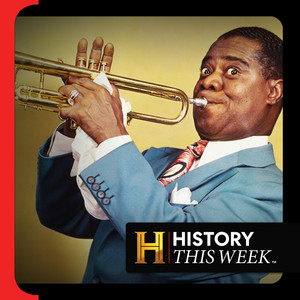
And that is the famous jazz trumpeter, Louis Armstrong.
Louis Armstrong. Okay, I've also heard Louie.
Yeah, he called himself Louis, so we're going to go with that.
And when he records West End Blues, he's at the top of his game.
It's the late 20s, he's already been on the scene for a while.
But this recording is not just a watershed moment for him and his career, it's a big moment in the history of jazz.
You could argue it kind of invents the jazz solo.
It's funny to think of that being invented.
I guess I kind of just thought it was always around.
Yeah, that makes sense.
But before this, jazz was kind of about the ensemble, the collective.
But West End Blues changes things.
It launches Louis Armstrong forward. It makes him a star.
And it totally changes the entire genre.
Now individual musicians start to become respected artists, not just an anonymous member of a band.
But this recording, which is all about Louis Armstrong, it actually has quite a crazy backstory.
Because yeah, we all talk about those first 12 seconds, that opening cadenza, and that is all Louis.
But the rest of the song was actually recorded as a favor to his much less famous mentor, a guy named Joe King Oliver.
Their relationship is really the foundation of Armstrong's career.
Oliver was like a father to him.
And like any father -son relationship, there was a lot of love, but sometimes there was some tension too and some hard times.
And I don't think you can really understand Louis Armstrong, arguably America's first black pop star, without understanding how his relationship with King Oliver really defined his career.
All right, Ben, and that is the story that you have for us in this episode.
Take it away. All right.
Today, the story of Louis Armstrong.
Before Hello, Dolly!
or What a Wonderful World, how did he get his start following King Oliver around in New Orleans?
And how did this complicated, sometimes fractured relationship give rise to an American icon?
new orleans around 1915 lewis armstrong is 14 or 15 years old and he's standing outside a bar a honky -tonk named pete lala's cafe it's in the heart of new orleans neighborhood called storyville where white patrons go to gamble visit prostitutes and drink black men like armstrong are allowed to work there and play music there, but… It was not open for African Americans.
They could not just hang out there.
No way you needed to have a job or a reason to be there.
That's Ricky Riccardi, author and director of research collections at the Louis Armstrong House Museum in Queens, New York.
And he says Armstrong has a good reason to be standing outside Pete Lala's cafe that night.
He works for the Karnofskys, a Jewish family who lives in the neighborhood delivering coal to all these illicit businesses in Storyville.
Morris Karnofsky would be on the coal cart, and there would be Armstrong, and he would have to deliver coal to the prostitutes, but he would hear this music.
And who is it? But it's Joe Oliver.
Joe Oliver. Standing outside the cafe, Armstrong overhears Oliver, one of New Orleans' top musicians at the time.
He plays cornet, very similar to a trumpet.
Armstrong was mystified, and he would be just staring at Oliver and soaking in these sounds.
To the point where the prostitutes would catch him and say, hey, boy, what are you doing there?
And so they would kind of wake him up out of his stupor.
But once he heard that music, I think he realized, yeah, I don't think he thought that he'd ever be the world's greatest trumpet player and there'd be a museum named after me one day or anything like that.
But I think he thought that that's something that I would love to do.
Armstrong had actually been playing the cornet himself since he was young, but not super seriously.
He was not an in -demand musician.
He was not a child prodigy by any measurement.
And Armstrong has to make money.
He's supporting his mother, his younger sister, and eventually one of his nephews, too.
But, he thinks, maybe if I hitch myself to Joe Oliver, music could be the way out.
If you've ever been to New Orleans, or even if you haven't, you probably know that parades are a big part of the culture.
They never need an excuse to have a parade.
There's always a parade, there's always a brass band.
Oliver would play in the onward brass band and would march through Armstrong's Third Ward neighborhood, and Lewis would follow the parade in the second line.
He's basically following his musical idol, Oliver, around like a lost puppy.
He began asking Oliver if he could hold his cornet.
And so they're out in the hot sun. And Oliver would finish a tune.
He would need a little break.
And he would give the cornet to this little kid.
And Armstrong said that it was almost like the cornet had magic powers.
Because usually the police would run him away from these parades.
If he's in the wrong part of town or ever get away here.
But then all of a sudden he was holding Joe Oliver's cornet.
And the police would let him march with the parade.
Soon he starts working for Oliver, running errands for him and his wife.
He said Stella Oliver would fix them red beans and rice, and she would put out three little buckets.
He said, look at the three little bears, and he would eat over at the house.
Armstrong loved red beans and rice.
So much so that later in life, he'd sign letters, Red Beans and Ricely Yours.
But he's getting more than beans and rice out of this relationship.
relationship. He's getting musical training from Joe Oliver.
Yeah, you're dividing it wrong and this is how you play him.
Oliver always had that kind of sensibility about him that, you know, this is a music to be shared.
And I think there was something about little Louis.
I mean, you hate to get all misty eyed, but it's like, you know, Oliver never had a son and Louis barely knew his father.
And so there was something there that the relationship between Armstrong and Oliver.
It was special. Eventually, Oliver decides Armstrong is ready.
He should play inside that cafe that he used to stand outside of, Pete Lala's.
Oliver sends in the 16 -year -old kid who needs to borrow a pair of long pants, probably doesn't even have a pair of shoes, and his first night does not go well.
Pete Lala tells him do not come back the next night.
Soon enough, he gets another gig at a notorious honky -tonk with a back room for gambling, and Oliver sometimes stops by to watch. Every night there's gunfights and bullets whizzing past his head and pimps and prostitutes and gamblers and hustlers, and it is like a dangerous scene, but those nights playing this rough and tumble honky -tonk from, say, midnight night till 4 in the morning with Joe Oliver, by his side.
That's really when he becomes a musician.
In the summer of 1918, New Orleans police raid a club while Oliver is performing.
He's thrown in jail just for being there.
Oliver was just so disrespected that he was disgusted with the city.
Never stepped foot in New Orleans again.
again. Oliver was sick of the South, sick of the city's racism and segregation.
And this is the time of the Great Migration.
Thousands of African Americans are going up north, and a lot of New Orleans musicians had been going up to Chicago and kind of wiring back and saying, hey, you got to come up here.
You know, it's a whole different vibe, a whole different lifestyle.
They love our music, and they treat us like human beings.
So Joe Oliver goes to Chicago.
According to legend, He's an instant hit.
Apparently on his first night, he's crowned king.
He does a blues, he plays with the mute, and everybody goes crazy and they call him King Oliver for the first time.
Louis Armstrong leaves New Orleans too.
He finds himself on a riverboat traveling up and down the Mississippi playing waltzes and rumbas and foxtrots for white audiences in cities all across the Midwest. And sometimes they had never seen an all -black band wearing tuxedos, reading sheet music arrangements, playing the style of music with this drive, with this swing, with this energy.
Sometimes the first night would be rough, you know, racial epithets and all this kind of stuff.
But he said by the second night, He said, they loved us, and he stressed it in his writing.
He said, they loved us.
And I think it was a big moment for spreading the sounds of jazz into the Midwest of America.
During this time on the riverboat, Armstrong catches a cold, and his voice gets hoarse.
Apparently, it stays that way for the rest of his life.
And after a while, he moves back to New Orleans.
His career is thriving.
He is an in -demand musician.
He's a full -time musician.
He's playing parades.
He's playing with brass bands.
He's really doing well as a musician.
In July of 1922, Armstrong is playing in one of these brass bands at a local funeral when he gets a message, a telegram from King Oliver.
He says, Lewis, come to Chicago.
Join my band. The other musicians say, don't do it.
They might have just been jealous.
and Armstrong said listen whatever Joe Oliver wants to do I want to do it too this was the moment he had been waiting for Armstrong was asked for the rest of his life you know what was the highlight of your life what was the your greatest gig what was the best moment and every time he always answered the same way getting that telegram boarding that train and joining Oliver in Chicago that was the climax Louis Armstrong knows what he has to do he gets gets on a train bound for Chicago's Illinois Central Station.
He had never been on a train ride this long, so he's on like a 25 hour train ride, gets off in Chicago, and he's immediately lost. Armstrong is all alone in the big city.
Oliver was supposed to meet him, but he came in on a later train, and now he's lost. He has no idea where to go.
And he starts to think, maybe this was all a very bad idea.
History This Week is now in its sixth season.
Kind of crazy. And we love bringing you these stories.
All of our work is supported by the ads you hear on the show.
But if you don't want to hear those ads, we're now introducing History This Week Plus, available exclusively on Apple Podcasts.
For just $2 .99 per month, you'll get all of our new episodes without any of the ads.
And we'll be adding ad -free versions of our older episodes, too.
So subscribe now and get your first week free.
History This Week Plus, exclusively on Apple Podcasts.
don't want to take it off.
And with endless style options, you don't have to.
Shop in -store or online at lululemon .com.
Psst, your payments are showing.
But with Apple Cash, your payments are private by design.
There are no public feeds, awkward reactions, or unnecessary payment drama.
Apple Cash lets you send cash and messages right in the conversations you're already having.
Or, with tap to cash, pay someone next to you without looking up a username or scanning a QR code.
Just hold Hold your iPhone near someone else's to send.
Switch to Apple Cash and start sending privately.
Apple Cash services are provided by Green .Bank member FDIC.
That first night in Chicago, Louis Armstrong eventually finds his way to a taxi and arrives at the Lincoln Gardens where King Oliver is headlining.
He hears the music from outside and he becomes so overwhelmed that he doesn't even want to go in.
him. And I think he's almost starting to regret the whole thing.
Like, I might not be good enough for this.
But he works up the courage and heads inside.
The theater is huge.
Just the lobby, he said, felt like it was as long as a city block.
Then he goes backstage and reconnects with his mentor, who's thrilled to see his protege.
But King Oliver said he looked greasy, you know, out of date suit.
And, you know, he was not he was a country boy.
There's no way around around.
He's a country boy now in the big city.
But all the musicians, they were so happy to see him.
It turns out Chicago's not so unfriendly.
There are a lot of people here that Armstrong knows from New Orleans.
He watches the show and he's blown away by Oliver's Band.
The next day, Armstrong goes out exploring.
We're talking south side of Chicago.
We're talking 1922.
It's a thriving black neighborhood.
He goes to the musicians union and people he hadn't seen in years.
And that's when he realized kind of the effects of the Great Migration.
That all of a sudden, you know, he was so afraid of being a fish out of water, being in a place he wasn't going to know anybody everybody had the same story as him you know, they were bonded by this experience they had grown up in the South some in New Orleans, some in Alabama some in Mississippi, whatever, but now they were all together and they were, you know black businesses and everyone well dressed and everything else and so all of a sudden he really kind of falls in love with Chicago Soon enough Armstrong does what he came to Chicago to do He starts performing with King Oliver.
And from that first moment on, they started playing duets together.
They could kind of read each other's minds, and Oliver had secret ways of signaling Armstrong what he was about to play.
Man, the walls would tumble down, people screaming and cheering, and like I said, this was the climax of Armstrong's life.
The band starts recording together too.
Tracks like the one you just heard, Dipper Mouth Blues.
Dipper Mouth was one of Armstrong's many nicknames.
And other tracks, like Snake Rag.
Snake Rag is probably my favorite example, but there's a bunch where you hear the magic play out, where the band is just wailing and wailing and wailing, and all of a sudden, boom, there's just Armstrong and King Oliver.
overhead. But at this time, we're still not really hearing jazz solos as we know them now.
Most people think of a jazz musician today, they probably have this image of a soloist expressing themselves using their voice telling a story.
And that wasn't really what the music was about in the early days.
You know, early on, it was mostly ensemble -based music.
But nevertheless, Armstrong Armstrong is starting to shine.
In 1923, after the band lays down some tracks, they have a playback.
They listen to the record together.
When they listen to the record, all you heard was Armstrong.
His tone, his natural tone was so golden and so strong and so much bigger than Oliver that he overwhelmed the band.
That's partly because of the recording style at the time.
There were no microphones yet, just a bunch of horns, like from old -timey phonographs sticking out of the walls.
So they ended up putting Armstrong about 15 feet away from the recording horn.
And Armstrong was pretty sad about them.
But someone else in the band takes notice.
Lil Hardin, the piano player in King Oliver's group.
That's when Lil, she said, that's when she had her lightbulb moment.
Lil Hardin is a classically trained pianist. And she'd been one of the first people Armstrong noticed in King Oliver's group.
The first time she met Louis Armstrong, Armstrong was giving her the eye.
And she had no desire.
She had just gotten married.
She said, uh -uh. Well, you know how these things go.
Eventually, Lil's marriage falls apart.
She starts dating Armstrong.
Their relationship really starts after she notices during that recording session that Armstrong could be a star.
They get together soon after that, and Lil starts making some changes.
Ever so slowly, you know, first updating his wardrobe and then second asking him about his money.
Because Joe Oliver was pretty much acting as Armstrong's bank.
You know, he would save his money and give it to him as needed.
And Lil's like, nope, not anymore.
You're going to get your own money now.
Louis Armstrong still loves his mentor, but Harden can see something he can't.
There's no two ways around it.
Oliver starts holding Armstrong back.
Oliver knew that Armstrong was in such awe of him and had so much respect for him that he wasn't going to try to show him up or anything.
And he knew that Armstrong could play louder than Oliver, he could play higher than Oliver, he could play faster than Oliver.
But Oliver would say, you know, as long as little Louis stays with me, I'll always be the king.
Lil and Louis eventually get married and she issues an ultimatum.
Listen, I didn't marry no second cornet player, So either you're going to quit King Oliver or this marriage is not going to go anywhere.
And that's really the crossroads moment for Armstrong.
He chooses Lil and his own musical future.
He hands in his notice to Oliver.
It's an actual piece of paper.
Lil helps him write it.
According to Armstrong, Oliver just sits there in silence.
The funny part is Lil doesn't put in her notice.
And so, and so Oliver's like, you didn't hand in your notice.
and she's like, well, I'm not quitting.
Lil stays in Chicago, and Louis needs a new opportunity.
He finds it in New York City.
First, the New York musicians, who all kind of fancied themselves as intellectuals, they kind of laugh at him, they look down at him, they make fun of his suit, they make fun of his shoes, the way he talked, the whole thing.
Then they heard him play, and it was like, oh, OK.
Armstrong joins Fletcher Henderson's orchestra.
Henderson is the piano player and band leader, and this tune Armstrong records with them is Shanghai Shuffle.
Which kind of sounds like every 1920s dance band.
It's this kind of quasi -exotic arrangement, but then Louis solos.
And for 30 seconds, it's like the sunshine coming through the clouds.
And then it goes right back to the kind of corny sound of that time.
The jazz solo, it's still an emerging concept and Armstrong does record some tracks that help make his name but he's not getting the credit he feels he deserves.
During those 13 months Armstrong is not happy.
His name is not in any advertisements, he's making all these records and nobody knows his name.
He's not happy, Lil's not happy and she delivers the second big ultimatum that you know now you have to quit Fletcher Henderson and join my band back in Chicago.
Lil has since quit King Oliver's group and started her own act.
Now it's going to feature her husband.
She calls the owner of the Dreamland Cafe and said, listen, I want to bring my band here and I want you to hire my husband.
You're going to pay him $75 a week, even though he's making $55 in New York, and you're going to bill him as the world's greatest jazz cornetist. And the manager of the Dreamland was like, what?
No one's ever heard of your husband before.
What are you talking about?
about. She goes, trust me, it'll be great.
And so she reports this back to Louis.
And at first, Louis thinks she's crazy.
But sure enough, first day on the job, there's a big sign out there, come hear the world's greatest jazz cornetist. And Louis, he is embarrassed by that.
He is not the type to go out bragging, but he can't deny the power of marketing.
The group is a hit.
They sell out the Dreamland Theater and start recording, too.
Louis Armstrong and his Hot Five.
He records a song with them called Heebie Jeebies that puts scat singing on the map.
It's not the first example of scat singing.
People always have to point that out, but it was the first time it was marketed that way.
Again, the power of marketing, and it became Armstrong's first hit.
Then there's Cornette Chopsuey, which Riccardi says is named after Armstrong's love of Chinese food and features the kind of melodic solo you might find in later jazz in the 30s and 40s.
He's moving things forward. Once they heard Cornette Chopsuey, they said, well, that's a whole new way of soloing, and nearly 100 years later, we're still dealing with those records.
but soon things between lewis and lil become less than harmonious well in april of 1926 armstrong and lil they start fighting you know the marriage is starting to run out of gas and the whole concept of him being a side man in his wife's band the other musicians are making fun of him they're calling him henpecked and all that stuff so he quits lil's band and he decides to go back to what he knows best. He agrees to rejoin King Oliver.
And the Chicago Defender newspaper actually reported that Louis Armstrong is going to rejoin King Oliver.
But then, one day, Armstrong's walking down the street to rehearse with King Oliver, and here comes the piano player Earl Father Hines.
Hines is one of the most influential jazz pianists in history, and he He and Armstrong had become recent friends.
And Heinz says, hey, where are you going?
And Armstrong goes, oh, I'm going to rehearse with King Oliver.
And Heinz goes, oh, you don't want to play with those old men.
Why don't you come join us and play with some youngsters?
And for whatever reason, Armstrong says, OK.
And he leaves King Oliver in the lurch. We don't know exactly why Armstrong jumps ship.
He could have made maybe the more comfortable choice and gone back with Oliver.
And I do wonder how the history would have changed at that point, because would they have fallen into their old dynamic?
You know, would Oliver have said, hey, remember, I'm the king.
You know, you play your second parts.
Maybe I'll feature you here and there.
But Armstrong joins the younger band instead.
Their theater, the Sunset Cafe, is right across the street from King Oliver's Theater, the Plantation Cafe.
And even though they're cordial to each other, they're rivals at this point.
You could kind of call them frenemies.
They're competing for crowds, but they also do respect each other.
And soon, Armstrong takes over as the band leader.
He's a sensation. By the spring of 1927, Armstrong is now the king of this block of 35th and Calumet in the south side of Chicago.
And he admitted later on, he said he felt really bad taking King Oliver's crowds away.
King Oliver, no longer the King of Chicago, heads to New York to try to reestablish his domain.
He does okay at the Savoy Ballroom, but then wants too much money, his engagements fall through, plus he's having trouble with his teeth, which makes it extremely difficult to play a brass instrument.
And by 1928, not only is Armstrong becoming a budding superstar, but King Oliver can barely put a cornet up to his lips and it looks like it's the end of old Joe Oliver.
He's attempting to make records, and the records are almost getting unanimously rejected, but he's still in the game.
And in the summer of 1928, he writes a little song called West End Blues, one that will go on to be extremely famous, just not the way that King Oliver has written it.
It's the summer of 1928, and Louis Armstrong is riding high in the Chicago jazz scene.
His mentor, King Oliver, is trying to scrape by New York, and he writes this song, West End Blues.
He actually records it before Louis Armstrong.
Oliver sounds pretty good on it, but it's a sleepy little blues.
You wouldn't say, wow, that changed jazz history.
or whatever. It's just a fine little blues.
But Oliver is proud of his composition and shares it with his old pupil.
Oliver handed him the sheet music for his new composition and said, hey, you know, if you ever have a recording date, you know, maybe you could record my tune knowing he'd get some royalties, he'd get some extra money.
On June 28th, 1928, Armstrong is recording.
And maybe as a favor to Oliver, he decides to play West End blues.
He just adds a little something extra at the top.
The opening of the record is an unaccompanied improvised trumpet cadenza.
It's been called the most famous 12 seconds in jazz.
And where Armstrong came up with this, when he came up with this, why he came up with this, it's all conjecture.
Everybody has different theories.
Lil says he got it from some of the classical studies.
these zuri singleton said oh yeah they rehearsed that at his house before the record date lewis he kind of just said i needed to make an introduction that's the introduction i played so it's it's this murky thing but it came from him it didn't come from king oliver that was something inside that he had to get out and damned if i say it myself it is high art it is high art up there with mozart and Bach and anything that's come before it.
And when he ends it, I love it because Zutty Singleton, he clops down his hand cymbals.
And to me, it always sounds like he's kind of closing a time capsule.
Like what we've just accomplished right now will be talked about till the end of time.
So let's just remember this moment.
West End Blues is a smash hit.
it. It's still one of the most important recordings in the history of jazz.
Oliver's reaction to the song doesn't seem to be jealousy or anger.
It's pride in his protege, Little Louis.
Oliver, when he heard Armstrong's recording of West End Blues, he was so touched by it that he wanted to re -record West End Blues to get it to sound like Louis Armstrong's version.
Oliver, still dealing with his dental issues, hires a different player to take a crack at the introductory solo.
Which doesn't sound great.
But, Riccardi says, it's a way for Oliver to honor this relationship.
This was a tribute from one king to another, mentor to mentee.
Like, you know, like, I'm really proud of you.
And even though Oliver could not even dream of playing anything like that again, he wants his band to put their name on it.
And so it's really kind of a beautiful gesture.
These two men have moved beyond musical rivalry.
The final phase of their relationship is actually quite touching.
West End Blues becomes a staple of Louis Armstrong's repertoire, including what become legendary performances at the Savoy Ballroom in New York.
People in the audience would scream.
It was like going to see the Beatles.
To the point where the patrons of the Savoy, sometimes they would carry him off the stage on their shoulders, just like, you know, the conquering hero.
But the very first night of these performances, for Armstrong, is the most memorable.
That first night in the audience, there's King Oliver.
Armstrong said that King Oliver had tears in his eyes.
He said he could hear the music that they had made together when he was a teenager in New Orleans.
He looked right out into the audience, and we're talking about a sea of people.
But all he cared about was that Joe Oliver was there.
Louis Armstrong goes on to be Louis Armstrong, beloved American icon.
Joe King Oliver isn't known by many people who aren't deep into jazz.
He has ups and downs for the rest of his career, and dies in relative obscurity in 1938.
Armstrong sends him money towards the end of his life, and even decades after Oliver's death, Armstrong always made sure to credit his mentor for his role in his success.
Ricky Riccardi says you don't have to look farther than one of Armstrong's favorite later -in -life hobbies, which may be surprising, collaging.
Yes, Armstrong made these little collages, these art pieces on the boxes of reel -to -reel audio tapes that he used to document his life.
We have a collage here in the archives of the Louis Armstrong House Museum.
It's a picture of Armstrong playing cornet, and it's all people he admired.
He cut out little pictures of Bing Crosby and Sid Catlin and Jelly Roll Morton and Duke Ellington, and he scotch -tapes them all around.
But he takes a little tiny King Oliver head, and he cut out Oliver's head, and he scotch -taped it directly in the center of his brain.
So just like at all times, he is thinking of King Oliver and King Oliver only.
Thanks for listening to History This Week, a Backpocket Studios production in partnership with The History Channel.
To stay updated on all things History This Week, sign up at historythisweekpodcast .com.
And if you have any thoughts or questions, send us an email at historythisweekathistory .com.
Special thanks to our guest, Ricky Riccardi, Director of Research Collections at the Louis Armstrong House Museum in Queens, New York, and author of several books on Armstrong, including his most recent, Stomp Off, Let's Go!
The Early Years of Louis Armstrong.
Strong. Also, congrats to Ricky, who just won his second Grammy award. This episode was produced and sound designed by me, Ben Dixie.
It was also produced and story edited by Sally Helm.
Thanks, Sally. For BackPocket Studios, our executive producer is me, Ben Dixie.
From the History channel, our executive producers are Eli Lehr and Liv Fidler.
Don't forget to follow, rate, and review History This Week wherever you get your podcasts, and we'll see you next week.