Discussion keeps the world turning.
This is Round Table.
You're listening to Round Table with myself He Young.
I'm joined by Yuxian and Steve Hatherly in the studio.
Coming up, we share with you what's brought us sheer delight this week.
Join us for a dose of positivity, laughter and all things that make our hearts sing.
A Round Table's happy place.
And every thought about turning your weekend stroll into a treasure hunt.
Chinese city dwellers are diving into the wild, collecting everything from edible plants to unique rocks.
But what's the thrill behind this newfound hobby and could it be putting nature and themselves at risk?
Your voice matters.
We would love to hear in a heart -to -heart segment.
Got a question? Something you're itching to share?
Please fire up that voice memo and hit us up at Round Table Podcast at qq .com.
Our podcast listeners can find us at Round Table China on Apple Podcast.
Now, welcome to the happiest corner on the airwaves.
Round Table's happy place.
Delivery, delivery, delivery.
What is it? Happiness from Round Table.
Yuxian, what's your happy place this week?
Oh, my happy place is, well, it sounds so common and random but it's a gathering with my, well, friends from previous job.
So it's a thing between us.
So I had these previous colleagues who are also my friends that we just gather on the annual basis.
We gather maybe once or twice a year but it's such a big thing for us that's been there for three, four years, if not more.
And then the recent one, the very recent one, why it's my happy place is that, well, one, actually two of them are moving to Shanghai in one month's time, which means that this might be the last gathering of such for, between us, for a foreseeable long period of time.
And for me, it's something to be joyful and thankful about, not because I'm not seeing them anymore, obviously, but that they're choosing to...
Oh, thank God. They're moving.
Nope, not like that.
But that they're choosing to move out of Beijing to experience a different life pace in a different city that may personally have no idea what life there will be like.
And then in the meantime, they're receiving more opportunity for themselves to make a change in their lives.
And also, this gave me such a feedback, which reminds me of something I read before, which is like, life is like riding on a bus.
There's always people coming up and getting off but the bus will always start from its starting point between each stops and then stops at the destination.
So it's like a line and like a cycle of bus travelling in your life.
And you have to allow people to get on and get off and know that you'll see them sometime in the future, not as, you know, sophisticatedly fixing in such a routine as you used to know.
But in the future, things may change and when you guys meet again, they're going to share more, if not richer things that they've experienced in life.
The next time they get on the bus.
Yeah, exactly. In this scenario, in this metaphor, you are the bus driver.
You're the bus driver of your own life and people get on your bus and people will get off your bus.
Yeah, sometimes you'll kick people off your bus.
Oh, yeah. Yeah, that's a nice that's a nice way to think about life.
Yeah. So you had a good meeting.
Oh, yeah, a good gathering with big feast of meals and everybody drank a little bit as well as just to, you know, celebrate someone's leaving of Beijing and receiving a new opportunity.
So, yeah, it's a sad thing to part with your friends.
But when you think about what it may bring you and to them in the future, it's something to appreciate and, you know, being thankful about.
That's very cool for them, too, because they're moving to Shanghai.
I don't think they're going to move together, but they're both going.
Right. So that means that they'll have a friend there.
Oh, yeah. Someone who's going through the exact same experience of moving to a different city.
So they'll be able to relate to each other.
Right. That's kind of exciting for them.
Yeah, that's really nice.
And also, this just kind of makes me think about how life is kind of different for the younger generation as opposed to older.
How so? In the sense that let's say for our parents generation, it'd be kind of it'd be a super big deal if one switches jobs and location.
But for younger generations of Chinese people, those born especially, I suppose, you know, in the 70s, 80s, 90s or even younger, moving to different cities, places to work is really increasingly common.
And maybe even moving to different countries to work is increasingly common.
And that makes these farewell, temporary farewell parties, maybe more often.
And also, you know, because I don't know, maybe I'm just a dinosaur.
And I'm also very clingy to long term emotional, emotional attachments with people.
And, and, well, Beijing is my home.
And it's just, it's just when I see friends go to other places, yes, in a way, I'm like, yeah, this is what people do nowadays.
But if I were at the party, I'll probably cry or whatever it is.
Yeah, because yeah, it's really interesting.
Like, I suppose for today's younger generation, the way you see your future, how you arrange these really important sometimes milestone events in your life and take action.
Yeah, that's changing.
And I applaud you for doing that.
If you could, maybe if you could see the world in more of a macro way, as opposed to a micro way, maybe it would help to deal with that emotional hardship in a sense.
I don't view when people talk about the world and moving to a different country, it sounds so, it sounds so exotic and strange and far, doesn't it?
But I think of the world as that place is over there.
And then that place is over there, but a little bit further over there, because I think of the world as a really small place.
I was talking with my parents on the phone a couple of days ago.
And my dad, who is one of those people that you just described, you know, he stayed as a teacher for 34 years, and, you know, he said, Oh, my goodness, my son's living in China, my daughter is traveling all over Africa right now, like, I couldn't even consider that the mind blowing, right?
To think about that type of thing.
But if you think of China as, Oh, you just hop on a plane and you're there and half a day, you know, it's not that big a place if you think of it like that.
So therefore you'll see your friends again very often.
Yeah, I'm sure. Yeah, thank you so much for sharing your happy place.
And Steve, what is yours?
Oh, well, speaking of traveling, I could not be happier about this.
I am gearing up to take my world's first business trip.
I have been in broadcast for, oh, my goodness, 20 years, over 20 years, but oddly, somehow I've never had the chance to take a business trip before because traveling when I lived in Korea for so long and I had to go to another city to do a show or something like that.
I didn't really consider that a business trip because I was taking the train and, you know, it's like three hours or something, but I'm getting on an airplane this time and going somewhere and it's going to be cool.
I get to stay in a hotel, which is, you know, for work purposes.
Now, this is all very everybody listening and saying, oh, yeah, we do that all the time.
I don't do that all the time.
So I'm really looking forward to it.
Yeah. So work assignments.
Work assignments. And am I also kind of I believe you're on that trip.
Okay. Yeah. So we'll see what happens, but it's going to be exciting.
And we're going to bring you fresh content from this mysterious place on this mysterious business trip.
I don't even really know where we're going yet.
I was too excited to even ask the questions that I was supposed to ask.
We're going to somewhere a little bit north than Beijing.
Don't give too much away.
I'm not. We're going to use it for Roundtable, I think.
Right. Yes. For the record, I have no idea what you guys are talking about.
Everything's under wraps, but you get a little preview.
Anyway, I'm really excited about that.
I'm really happy about it.
That's fantastic. And I will tease you.
I'm sure you will. As you should, as you should.
What's your happy place this week?
Well, if you're looking for a good laugh and some bold, unapologetic humor, you're well, in my opinion, you absolutely need to check out Ali Wong's latest comedy special, Single Lady.
This special dives into her life after a divorce.
And let me tell you, it is a raunchy and real show that I absolutely enjoyed.
And that's my happy place.
The stand -up comedian, Ali Wong, who is of Chinese -Vietnamese descent, brings a unique perspective that resonates deeply, especially for those of us who appreciate humor that challenges societal norms.
One of the stand -out moments in Single Lady is when Wong talks about her, quote unquote, divorce mom energy.
She hilariously compares it to someone being released from prison after a long sentence.
And she talks about her shift from trying to trap a husband.
Well, if you've watched her earlier comedy specials, you'll get the reference to simply enjoying life and dating.
And here's something I find to be a cultural, definitely a cultural difference, because, of course, the cultural context is different here and the U .S.
But let's not forget the way she navigates her romantic escapades as a 42 -year -old divorced mom as she shares in this comedy special.
She shares stories about her dates with various men from 55 to 25.
And these anecdotes are not only hilarious, but also serves as commentary on modern relationships.
And she also takes a sharp jab at gender dynamics in dating.
She points out how men's expectations change as they age, saying, in your 20s, all you want is to date a 10.
But when men become 40, they want a kind six who earns at least 50K U .S.
dollars a year. And it's just both funny and thought -provoking, highlighting the ridiculousness of a lot of the double standards while encouraging us to laugh at them.
And also, I'd like to give you a heads up about the world of Chinese stand -up comedy.
Yang Li, a talented female comedian in China, has been known to ruffle some feathers among male audiences for her humor.
Yang famously said, how can he be so average yet so full of confidence?
And that was years ago.
And this lady has put out so much content.
But this seems to be something that's haunted her.
And as funny as some of us find, but it also sparked backlash from men who felt targeted while both Allie Wong and Yang Li are incredibly talented.
In contrast, Allie Wong takes her raunchy and fearless approach to a whole new level, and her comedy is tackling taboo subjects with shocking candor that makes her stand out in the comedy scene in the U .S.
and internationally as well.
I understand it's important to read the cultural context because for comedians to perform, they want their content to land and for people to appreciate.
So without saying further too much, I think you know you can compare contrast and read some of the interesting social cues from the different treatment of these female comedians in both countries.
Comedy, after all, is about pushing boundaries and finding that sweet spot where laughter meets discomfort.
So if you're in the mood for something that's both bold and laugh out loud funny and an hour of entertainment that challenges traditional narratives about femininity and empowerment, give single lady a watch.
You won't regret it.
And that is my happy place.
Coming up from wild greens to funky stones.
City dwellers in China are rediscovering nature's bontie.
Well, let's take a look at the delight of wild harvesting right after this break.
Looking for passion?
How about fiery debate?
Want to hear about current events in China from different perspectives?
Then tune in to Roundtable, where East meets West and understanding is the goal.
Here's the Hour of Roundtable with myself Hee Young.
I'm joined by Yu Shen and Steve Hatherly.
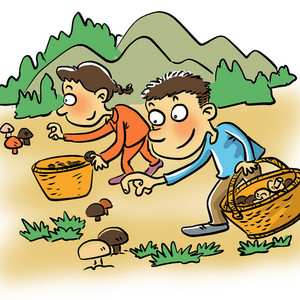
From gathering edible plants to appreciating the beauty of the wilderness, urban adventurers are eager to escape the concrete jungle and dive into the wanders of nature by wild harvesting.
Yet be mindful when you do that, because not everything can be picked up and taken away, how to forage in the wild the right way.
So what are urban dwellers doing in wild harvesting?
And I'm sorry to say, there are a million ways this could go wrong.
So that activity that's kind of popular among Chinese netizens these days is something called wild harvesting.
And it sounds to me that it's just a hiking, but with purposes.
And what is the purpose?
It's to gather natural goods like fruits, like vegetables, herbs or other natural products like stone ores in some cases, or even just pick crickets from the grass.
And it's just to gain a sense of nature, to rebuild your connection with the natural environment in a way.
And such activity has gained popularity among outdoor enthusiasts here in China.
Also videos documenting these experiences have just sparked a significant number of online discussions.
But like you said, when we're enjoying ourselves in the nature and receiving such just richness in whatever the nature has to offer, there are people worrying about the legal concerns of these wild harvesting behavior.
For example, a viral video of a man looking for minerals in Ailao Mountain in Yunnan province, southwest China.
We talked about that on Roundtable, yeah.
Right, that mountain is so abundant for natural resources.
And there are just netizens getting inside and photographing themselves, or live streaming themselves, picking or plucking things from the mountain, and just give people a sense of how it's really nice to rediscover the fun of picking treasure from the nature.
But as a result, that man was warned and criticized by the local government for taking the ores.
And he was demanded to return the ores with further investigations going on as well.
And when you said you could imagine a million things going wrong, that is one example of how things can go wrong, the legality of things.
There are a lot of benefits to foraging, though, to harvesting.
You're connecting with nature.
You're getting that relationship back on track with the environment.
There's adventure. You're going to places that you're not familiar with.
You're looking at trees and plants and rocks that you've never even looked at before in your life.
There's education that comes along with that as well.
You can get a chance to learn more about the ecology or botany of the place where you live, which I think is a really cool thing.
I love plants. I love learning about plants, how they grow, how they live, things like that.
And then it just gets you out of the city for a mental break.
Oh, that's so important.
Which is also a great reward as well.
So there are a lot of benefits to this.
Definitely. And also it's maybe really helpful for us to sort of forge an environmental friendly attitude if we actually have been in the arms of Mother Nature in an immersive and appreciative way.
So this is one of those chances for you or one of those purposes and activities for a person to get out of the city and sort of get the sense of belonging and connection to the natural world.
And this interaction can maybe even reduce feelings of isolation or not feeling great mentally, those kind of things.
So yeah, I can see some psychological benefits from it too.
I was reminded of a previous interview that happened long ago.
So I interviewed this lady who is building an NGO, running an NGO here in Beijing together with her husband.
What they do is something that's about glacier protection, but they also love the nature and love to go hiking, go boating, and just travel around all over China.
And they're bringing their kids into the woods in Yunnan Province in South China every year to pick mushrooms.
For them it's the best way to just educate their kids.
Like you mentioned, Steve, how to recognize different types of mushrooms.
Some are poisonous, some are good for you, some are really worth a lot of money.
And yeah, just indulge in such experiences of having such a childhood in nature.
But in the meantime, know how to protect the nature and know more about the coexistence between the nature and human beings.
Sorry, but what you said is like a really good example, but I suppose for most people because we lack the knowledge of differentiating the million types of mushrooms, for example, then you could commit the innocent crime of sometimes you're not supposed to pick these.
Sometimes it's like endangered plants or sometimes poisonous plants.
And I was talking about Ali Wong, actually a silly flashback of watching Beef, this TV series that she starred in in the last episode.
Well, yeah, there was food poisoning when the two leads were, what were they doing?
Picking wild fruit?
Out in the forest. Yeah, looking for food.
Don't listen to Round Table today and then go out in the forest and just put something in your mouth.
Don't do that. Please know what you're doing first.
But yeah, doing this, you talk about the family going out together.
That's cool. And doing this, I think, as a group activity is something that would be fun as well.
Right. An opportunity to meet new people.
Do they have groups like that?
Oh, yeah. I was searching on an app called Da Jeong Dien Ping here in China.
And apparently there are tons and tons of WeChat groups or just online groups about foraging or just workshops and, you know, nature classes where people can work together as well, just hang out together as a group and perhaps hire a guide to take them into the woods or into the jungle, not jungle,
but into the mountainous areas.
Depending on where you, no jungle in Beijing.
No jungle in Beijing.
No. But yeah, we have a lot of mountainous areas surrounding Beijing.
So what they do, what those groups that I observed did was to hire people to take them inside the mountains and to show them say this creek has a lot of beautiful stones that you can pick where this area is known for growing wild yam or say potato something or wild grapes.
Yeah. Go with an expert who knows not only knows about all the plants in the area, but also knows the rules because China has rules about things that you can take or things that you can't take.
Oh, yeah. So for ordinary wild fruits or nonprotected species that's growing in nonprotected areas, we can basically collect those in moderation without harming the ecosystem, of course, or trespassing onto private lands.
However, if the wild harvesting leads to significant ecological damage, such as over harvesting affecting species that's surviving there or causing soil erosion, then it may violate environmental protection laws.
And so which reminds us that group wild harvesting really need to put into their mind what they can do, what they can pick or plug and what they cannot.
And well, recently when I visited California, which has a lot of national parks and all of these natural sceneries for people to appreciate.
And I've seen so many times these signs of warning make memories and don't leave a trace and do not disturb anything that includes not picking up stones, not take picking up nothing going away.
So, sure, I understand the joy of some city folks out there rediscovering the joy of the connection with nature.
But do you have to pick something and keep it and take it home?
And I mean, is there like a different attitude or towards this?
Yeah, well, it depends on where you are in the world.
But I looked at some different countries in Canada.
You're permitted to forage on most public land, but not in national parks.
If you do want to forage, they encourage you to do it in moderation, you know, take what you need, not necessarily take everything that's there.
And that's what they say in the UK as well.
They have a rule about this actually in the UK.
It's in reference to the theft act from 1968.
Very dramatic. It says a person who picks mushrooms growing wild on any land or picks flowers, fruit or foliage from a plant growing wild on any land does not steal what he picks unless he does it for reward or for sale or other commercial purpose.
That sexist. It only mentions men there.
But remember, it was 1968 when they wrote that rule in the UK.
But I kind of giggled when I saw that because I thought, goodness me, lawmakers are very busy.
They have a rule for everything, don't they?
So back to your question yet, just be aware of what the rules are in your area if you're going out to do this.
And it also has something to do with what you are picking as well, because I've seen in some of those videos that went viral on social media that people are taking, say, minerals or ores.
But just for your information, minerals in China, according to the law, that's even stricter on what you can take.
Literally, it's recommended that you don't take minerals here.
So it's stipulated that any mineral discovered, regardless of location, belongs to the country.
So individuals or entities cannot collect or reclaim these resources privately.
And exploring and collecting minerals resources requires permission from the government.
So yeah, people just don't follow blindly.
Sounds like in Italy a few years ago, tourists were charged and fined for taking white sand and shells from Sardinia, the beaches of Sardinia, fines of up to, converted to Yuan, 26 ,000 Yuan, for taking sand and shells from the beach.
Please be aware of what you're allowed to do and not allowed to do.
And please respect the nature of where you are as well.
That's such a great point.
And I have to admit, I kind of struggle a little bit to understand why we feel the need to own a piece of nature while harvesting is about bringing...
Well, I suppose, because if there's harvesting, then you are taking something.
Then that's kind of bringing a piece of nature home.
But why can't the joy of that experience exist in our memories or in photo galleries on our phones?
And there are so many intangible ways to appreciate nature that can just be as meaningful.
And don't forget, you're there.
You're a part of that nature.
Yeah. And that's the most beautiful, important thing.
And don't leave a trace, please.
And that brings us to the end of today's Roundtable.
Thank you so much, Yuxuan and Steve Hatherly, for sharing your wonderful thoughts.
And thank you for tuning in.
You can always find us on Apple Podcasts at Roundtable China.
And if you so feel like it, reach out to us.
Roundtable Podcasts at qq .com.
I'm He Yang.