If you want to be balanced, then you're going to get balanced results.
That's just the truth.
And I think that work-life balance is kind of a scam.
That's fascinating.
So what do you do?
When you are obsessed, when you are all in your brain starts to filter your reality for more opportunities to get it done.
You need that in order to get what you want.
Today's guest is one of the most followed neuroscientists in the entire world, Emily McDonald.
She's gonna help you.
Use neuroscience to rewire your brain to win.
Destroy the negative loops you get stuck in and the things that sabotage you.
There's a really cool study.
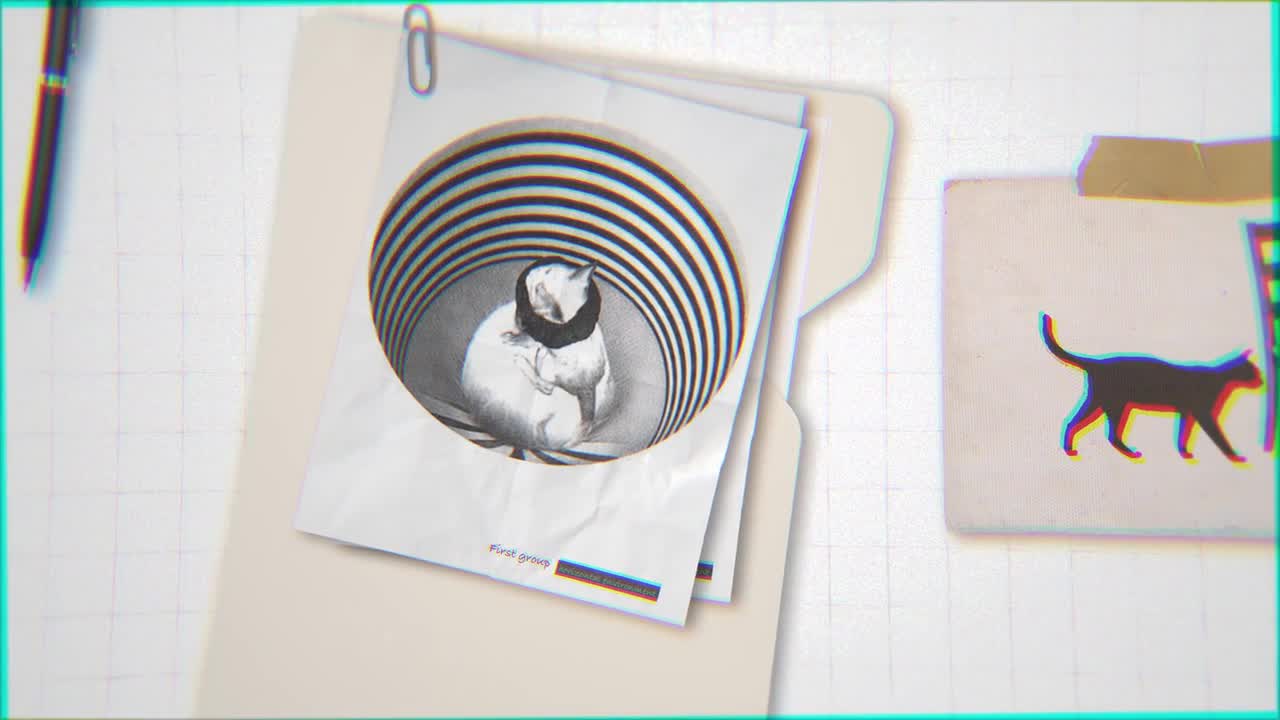
They would put this one group of kittens in an environment with only horizontal black and white stripes and they put different kittens with only vertical black and white stripes.
And then at the end of that, they put them into a normal environment with everyday objects.
They would bump into them.
They didn't perceive them the same way that a kitten that was raised to see vertical stripes did.
Our brain constructs our entire experience of reality.
Just like the table legs.
A lot of the things that we want are actually right in front of our faces, but we can't experience them if our brain isn't wired for them.
If people use AI frequently now, are we seeing anything in brain science about that having a negative effect?
It trains dependence, not intelligence.
A practice that I have in my life that is extremely helpful is Let's talk about attractiveness.
You had this one video that I thought was so interesting, and it was about that actually discipline can make you more attractive, and the science has data to back that up.
There are studies that straight up show that traits like self-control and reliability and the ability to follow through on your word, those are all traits that are seen as more attractive by the opposite sex, which are, that's kind of obvious, right.
Like yes, when I'm looking at even a friend or a romantic partner.
Yeah, reliability is something that I value in someone.
When we think about discipline, we think about forcing things and forcing yourself to do things.
For me, I've never thought of discipline that way.
I remember when I was in my PhD and my friend were at the grocery store and she has a mad sweet tooth and she'd be like em.
Like i just don't get how you're so disciplined when it comes to your nutrition and for me it's never been about controlling myself, it's about looking out for future emily.
Like what would future emily appreciate me do right now, because nutrition plays a huge role in how i feel.
Biologically, discipline is nervous system regulation.
How would you feel in a room full of people that don't follow through on their word, are not trustworthy?
You cannot rely on them.
Your head is going to be on a swivel because you don't really feel safe in that environment.
Versus if you were in a room full of people that you know have your back, you know you can trust and rely on, you're going to feel a lot more comfortable.
And it's the same with your brain.
If you're not following through on your own word, if you're not doing the things that you said that you were going to do, you tell yourself you're going to wake up tomorrow morning and go to the gym and you don't do it.
Now your brain is on a swivel with you.
It's not trusting you and you then don't have that self-trust.
People can actually feel that like other people can feel the state of your nervous system.
They were doing a study where they were recording one monkey's brain activity and the monkey that was actually getting recorded was looking off at his friend eating.
And then they saw that this monkey's brain activity looked like he was eating even though he wasn't, and it was because he was watching his friend eat, synchronized swimming or dancing, things like that or like mob mentality.
Our brainwaves tend to sync up with the people well, with anyone we're in communication with.
So even us right now, our brainwaves are syncing up.
And if we were best friends, they would be syncing up even more.
And that's why, when you're with your best friend, you feel like you can finish each other's sentences, because your brains are actually syncing up with each other.
And then there is chemo signals, which are kind of chemical signals.
Chemo signals, chemical signals that leak through the air, especially when you're stressed.
And they've done studies where they've had people watch a scary movie that stressed them out and then they left the room and then they had a group of people walk in and report how they felt in that room.
But what they found was that you could actually feel those chemical signals that people leave behind, and so we can feel other people's states of the nervous system.
So that's kind of the longer explanation for another reason why lack of discipline is unattractive because you can kind of feel that lack of self-trust, that that dysregulation.
They don't feel like that and it's the opposite is also true.
You can feel when someone's very confident and very certain in themselves and you walk in and you just know you can trust them.
You can feel that too.
And so that is why lack of discipline is unattractive.
So fast.
There's so much to unpack there, but one of them that I've definitely felt we just.
We moved into this office not too long ago and we're looking for a new office if this isn't big enough anymore.
And so I've been touring a bunch.
And the weirdest thing, I went to this office, it was beautiful.
I mean, everything I want in an office, perfect for us.
But the second I walked in it, I was like, ooh, I feel weird about this place.
Nobody was really in there, because usually they clear you out before I bring in a team and sort of measure it and do whatever.
And what I asked the real estate agent, I'm like, what's the deal with this one?
And they're like, the startup's going under.
And I was like, I can feel it.
I can actually feel it.
And a lot of people on the internet.
We live in Austin, so people in Austin would be like well, that's because you're super empathetic or you've got crazy powers.
And it's like no no no, it's actually chemicals.
Probably stress anxiety, a little sadness, a little fear.
It bled out and I could feel it in that office.
Why is it so important that you choose the people that you spend the most amount of time with?
Can you talk about brainwave synchronization?
We have neurons in our brain, right?
And they're kind of organized into these ensembles.
And you can think of like, I mean, I used to be an orchestra. when I was in middle school.
So you know, there's different ensembles and there's like groups of five that'll play at a time right.
And so, as you're thinking and communicating, you have these ensembles of activity kind of going off in your brain and what it looks like is waves.
So as their kind of their neuron groups are firing and there's different patterns firing, you kind of just start to record and it looks like brain waves, right?
It looks like waves.
And so when you kind of record two people in communication with each other, you start to see these brain waves synced up.
This has so many implications for your life and when people that you surround yourself with.
And you know I to me it's one of the most important things is the people that we surround ourselves with.
I am a huge supporter of cut them off, make them feel it.
I'm very swift with the scissors.
I've always said that.
And I've also say, you don't have to cut people off.
You can love them from afar.
Because I have a lot of people come to me and they're like, but I can't.
And you can love people from afar.
And if they're not serving you, if the relationship isn't serving you, it's really important because you can block your blessings, block opportunities, block the job or the relationship.
A relationship is the simplest example, because if you're in a relationship with someone that's not serving your best self or your best reality that you want to live, then you're not going to be able to get into a relationship with someone even better.
And if you did, then you'd be cheating, right.
And so it's kind of like the simplest example.
But this happens with the content that we consume, to not just people in our physical reality, but people in our virtual reality as well.
You can feel this when you're scrolling on social media and how you feel afterward, which is why it's really important to not just curate your friend groups, but also curate your feed.
I mean, in the age of AI, I'm kind of obsessed with that.
That's why I'm so excited you're here today, because I feel like we have to become sort of superhuman in order to combat this technological superhuman that is coming into our existence.
And one of the only ways to change your brain is first to have awareness on it, right?
And so that, like awareness that you have, that you talk about where, if I know, for instance, when I'm on X, I find it stimulating, more sophisticated in some ways, lots of interesting things happening, but immediately when I get off there I feel terrible.
Whereas I've curated my Instagram, I'm a happy little clam on there.
I got you.
I got some animals on there.
I got business advice.
I'm great.
And so it's really interesting.
And I think I didn't realize how much taking in that negativity from places like an ex actually even affects me and I'm a little bit older and maybe I'm not on social that much.
So I was wondering you've had shown some science previously about complaining and if complaining actually hurts your brain.
Yeah.
So complaining does, it will.
First thing I want to say, also kind of from the social media point that you were saying, is that there is also something called automatic goal contagion, where we subconsciously pick up on the goals or the focus of others without even realizing it.
So is that like a subset of mimetic desire, but this is the neuroscience behind it?
Yeah, sort of.
And then that's kind of where that feeling of unfulfillment comes from, where we just don't feel fulfilled because we're chasing someone else's dreams, someone else's desires, and they're not aligned with our own values.
And then we might not achieve it.
And even if we do, then we're not feeling the fulfillment that we thought we would feel.
It wasn't our goal to begin with.
Yeah, so that's another thing.
But back to the complaining piece.
Yes, so neuroscience shows that complaining judging, criticizing it can actually change your brain, and for multiple reasons.
I mean the first is that it leads to stress.
Right when you're complaining, you are, you're well.
You're also activating neuroplasticity, so you're training negative thought patterns and you are training your brain to look for more things to complain about.
So you're kind of also entering into this cycle where you're just going to continue to look for more things to complain about and feel even worse, and then your brain's going to filter your reality for more things.
But then there's also the other component where this kind of stress, where you're always negative thoughts in general not just complaining judging criticizing, but negative thoughts in general They lead to this stress that actually can shrink your prefrontal cortex.
And then the prefrontal cortex is kind of the boss of your brain.
It's what makes us human.
Also, research shows that there's no form of venting or complaining.
That is positive, unless you re-evaluate and kind of tell a new story at the end.
Like you reappraise the situation at the end of the venting session.
So there's no amount of people like, oh, but I just need to get it out.
Sure, okay, but when you're done getting it out, you have to tell a new story.
You have to kind of reappraise the situation.
If you just complain and then leave it at the complaint, you're actually only training your brain to look for more things to complain about.
That's fascinating.
What do you do?
What does that look like?
If I'm like listen Kyle, real nightmare at work, terrible at his job, filming us, barely going to make it every time blah blah, blah.
And then what?
Then I go but he's got great dad jokes, so you could do, you could.
You could do it that way um, or you could be like okay, if that's the truth, then what are you going to do about it?
Ah, so it could be action-based, right?
It doesn't have to just be a pollyanna sandwich, yeah.
It doesn't have to be like oh, i'm just gonna think positive and tell a new story.
It can be okay.
Then what are you gonna do to change it interesting?
Every time you complain, do you catch yourself and then say, all right, but what are we going to do about it?
Yeah.
I think one question that I like to ask myself is am I reinforcing my current reality or creating a new one?
Because we're always doing one or the other.
And when you think of it from the neuroscience standpoint, right?
Like with every thought, with every action, with every behavior, we are either activating the same old pathways we've always activated in our brain we're activating new pathways in our brains and when we activate new pathways now we're changing our brain and our brain is what constructs our entire experience of reality and yeah I mean there's been times when I'm standing in the kitchen and I'm either stressed or being negative or complaining and I have a vivid memory of the first time I ever used this on myself and I was walking to the kitchen I was like wait m are you reinforced you're reinforcing your current reality right now and i was like damn it okay i need okay like what do i want to do and sometimes it is just kind of changing my train of thought because there's nothing that i can really do and a lot of times we're just thinking negatively and not every feeling has a deep meaning, like not every feeling has a deep meaning.
Sometimes we're just tired, stressed, or hungry.
Need to walk.
Vitamin D depressed.
When you're tired, stressed or hungry, your prefrontal cortex can't really do its job to the best of its ability.
And so I think a lot of times too, because I think people are like oh, are you emotional bypassing?
Or are you just ignoring your feelings?
But I think it's important to recognize.
And a few weeks ago, I was in my car, and I caught myself like...
Kind of thinking about something.
I forget what it was.
I was kind of getting annoyed with someone.
And then I was like, I'm hungry.
I was like, Em, you're just in a bad mood right now.
Everything's fine.
You just need to eat something.
You're in a bad mood.
I'm like, oh, yeah, I'm in a bad mood.
And just identifying it, actually labeling it, activates the prefrontal cortex and then you bring your logical brain back online and you're like okay yeah, and that doesn't mean i need to change a bad mood, but it's just like you should stop thinking about important things right now because you're not in the place to be doing that.
It's so good.
My friend and I a long time ago when we started hearing ourselves kind of cycle like that.
We now just send each other a Snickers meme.
Because it's like, remember that commercial?
It's like, grab a Snickers.
And I'm like, bitch, you need a Snickers.
And so anything you can do to have that little moment of pattern break or pattern interrupt is so helpful.
Because your brain's also really powerful.
So I give it some credit.
I'm like, I don't know if I would be able to fight you right now, but I think it's Snickers.
I like to ask myself like, what would the version of me who has it all do right now?
Like if I had everything I ever wanted, what would I do right now?
And I think that's where I maybe am a little different from a lot of the discipline, you know information out there, because there's a lot of like forget your feelings, just stick to the plan, and all of that.
And there are times when, yeah, you should just stick to the plan.
But I think that's where asking yourself what would the best version of me do right now or what would future me appreciate.
Because sometimes it is just being like all right, you're being a wimp, you're being too soft, like get up and get it done.
But then there are other times when it's like actually you'll be able to get a lot more done tomorrow or later today if you do rest for a second or go for that workout or go for that hike, because you'll be recharging yourself and then you'll be able to do better later.
You know, I was really good friends with this guy who was former CIA.
And I remember he told me, I was like, how could you figure out if somebody's lying to you or not?
And he said, there's a really easy recipe for this.
He's like, first of all, you never get them in the beginning of the day.
You always catch them towards the end of the day.
You don't catch them after a coffee, you catch them with a wine.
You catch them after something as hard and tiring and intense because if they just have had a super long day and they're super beta, it is so much easier to slip.
And he's like so.
If that's true for a CIA guy who's trying to find a lie, imagine how we are with big decisions at the end of the day.
And so I think you're right.
I think a lot of, especially for women, I think a lot of this stuff And I do it too.
I'm like, shut up, keep going.
I mean, and look, being self-critical is, in my opinion, is not a bad thing at all.
And I remember, you know, in the past I've been on the phone with my manager and I'm like oh, you know, he's like I'm the greatest performer, like the greatest, like achievers, the highest achievers, like most successful people, like they are like the most critical of themselves, and he's like that's just what they are.
I'm like yeah, and it is true, and i think i.
So i think that being critical of yourself and evaluating yourself is is not a bad thing at all.
I think it turns bad when it starts to drain our energy and when it starts to defeat us and and discourage us.
And that's kind of the line that i like to draw is am i, am i, you know, criticizing my, am i kind of evaluating myself so that i can grow, or am i actually just depleting my energy?
And that's where The line is on discouraging myself.
That's where the line needs to be drawn.
And it's for the same reasons of complaining, judging, criticizing other people.
Except when you're doing it to yourself, now you're also kind of destroying your belief in yourself.
And science shows just again and again that belief in yourself and believing in yourself and your abilities improves your performance.
It gets you closer to achieving your goals.
There are so many studies that show that.
There are studies that show that it's even more important than talent or intelligence.
And so your self-talk is so, so, so important.
And I mean, you flip it in the opposite direction.
It's also a performance enhancer.
Like something that I've done kind of subconsciously, not even thinking about the neuroscience of it is, you know, ever since, even when I was in grad school and my PhD, I'd be, you know, grinding all day long at the desk just working, and the only time i would let myself get up is either to refill my water or go to the bathroom, and so i was very motivated to drink a lot of water, and every time i would get up to go to go to the bathroom or to get water, i would be like you're doing such a great job and i'm like, i'm so proud of you, like you got this, like you're killing it.
And that boosts dopamine.
And that also is a little bit of that positive reinforcement, right?
Like, if you're trying to train your dog to sit, you're not gonna be just, it's not gonna learn to sit and or want to learn to sit if you're just yelling at him the whole time.
But if you're giving him that positive reinforcement and telling him hey yeah, you're doing a great job, he's going to have a lot more fun doing it, and actually having fun and enjoying the process actually does improve learning and improve the speed at which you can learn it.
It makes it more enjoyable, makes the journey more enjoyable, and that's what life is.
It is the journey.
I think it's important for a lot more than just your brain.
It's important for your performance as well.
Are there studies that show that we actually get more out of others when we do positive reinforcement as opposed to negative reinforcement in the brain?
Yes, especially, I mean, I'm thinking specifically about relationships.
And especially like men and women in relationships, you're actually more likely to get what you want out of the other person if you kind of focus on the thing that you are wanting and almost priming them to like think, feel or behave in the way that you want.
So rather than just being like, oh, you never do this for me, be like, I love it when you do this.
And that actually makes them more motivated to make you feel that positive way, because we want to make each other feel good.
And so it motivates us to treat other people in that way and kind of almost fit that mold for the identity that we want to have basically in the relationship, and so we're kind of priming them to fit into that mold of who we would like them to be.
Um, and so yeah, i mean that's specifically in relationships, but absolutely i mean, and i'm sure you've you've noticed that in life, when someone's just criticizing you like, does that make you want to, Does that make you want to show up for that person or be better?
If anything, it makes me just want to spite them.
That's just me though.
I have a little bit of a rebellious nature.
No, I don't think that's just you.
I mean some of the most successful people I know who also talk about their partnerships and how important they've been like talking like Dean Graziosi and his wife when he was on here, and Tony Robbins, and they talk a lot about how one of the reasons their partnership is so strong is they actually never allow certain words to come into their, their equation, about their partners, for instance, so like that saying of, like the old bond chain, like that not in their vocabulary whatsoever.
In fact, it's always pretty positive, like my wife, the mother of my children, my life partner, like these things that have really durable meaning.
And I always really responded well to that, because this day and age it's so much cooler to be like my husband's been in such a pain this week.
Or he doesn't get it, or men you know.
And it's so easy to do that.
And that's why actually, there was one video I really liked of yours that was about this is a little bit about pessimism versus optimism, but about how negativity can actually shorten your lifespan.
Is that true?
And I found one study that was wild.
It was like a Harvard study that had 70,000 women, I think, and it was over like decades.
And basically the study took these 70000 women over, let's call it, 20 or 30 years and had some controls around weight and socioeconomics and background and genetic disposition and age and ethnicity and whatever.
But they took these couple control groups of women and they ran, screened them for pessimism versus negativity in the way that they communicated.
And over this 30 year period, the women who were labeled as more optimistic, not pessimistic.
They lived like 11 to 20 longer than the negative communicating women.
And I thought that was fascinating.
Like just by us saying negative words, we could actually live less long.
And I would assume that has something to do with the brain.
Right.
Well, I mean, so there's actually some interesting things beyond the brain.
I mean, we can think about it from the brain perspective, of course.
And you know, we're kind of getting into this theme here where yeah, I mean, it all comes down to stress.
And when we're negative and pessimistic, we are more stressed.
And chronic stress ages us.
It ages our brain.
There's kind of another branch of research on loving-kindness meditation, specifically in women as well, where they've shown that it actually can lengthen telomeres, which are kind of the endings of our chromosomes.
And there is like a little bit of research in kind of a field, looking into kind of like, As we age, basically our telomeres and our chromosomes kind of shrink.
And so if it's lengthening them, they're kind of thinking that that could be a mechanism by which we are lengthening our lifespan, that specifically in women.
And so i don't know if maybe there's there's kind of an enhanced effect of positive thinking and optimism in women versus men, or maybe they just haven't looked at it as much in men uh, but yeah, and so there's.
There's the neuroscience component of it, but then there's also the kind of like the chromosome and telomere component as well.
Yeah,
And loving kindness.
Meditation is basically where you meditate and you sort of meditate with this vision of loving yourself and loving other people, like as you walk past them and like you can do it live.
I remember, like Tim Ferriss, a friend of mine, explaining to me that like that changed his life when he did it.
Is that right?
Yeah, so it's a practice of you sit down and you imagine someone that you love.
You start with someone that you love, that's the easiest.
And you think you know, may you be happy, may you be healthy, sending basically like good vibes to them and love and joy and health to them.
And then you bring up strangers, and then you you send that to kind of or acquaintances right acquaintances and then you actually bring up somebody that you're not on good terms with and you do it with that person as well.
And that one, you know, that's why you gradually get tougher.
But it's it's a wonderful practice and it's really beautiful.
And when I do it, it brings tears to my eyes because of the love activates.
But I actually have kind of a fun little practice that I do.
I actually will imagine myself sending beams of love through my eyes at random strangers.
So I'll just be standing in the gym and, like you know, if I'm like stretching or whatever, I'll just look around at random people and just like send beams of love at them.
And it never fails to bring tears to my eyes.
Like it always makes me... You're just crying in the gym.
Yeah, yeah.
I'm a little different, but it's cool though.
And I think it kind of gets a little bit, it's that neuroscience also of you get what you give.
And this is kind of another part of complaining judging, criticizing other people and thinking about what's wrong with other people.
Your brain has to simulate whatever trait it is that you're focused on.
Whether it is at other people or at yourself, your brain has to simulate that trait in order to understand it fully.
And so if I'm sitting here sending beams of love at random strangers, my brain has to be focused on love.
It has to be, there's no other way to do it.
And then in that meditation you kind of flip that emotion around on yourself and you're just like that's how it feels to be loved unconditionally, because i think most people don't know how it feels to love ourselves unconditionally.
We know how it feels to love others, but not necessarily ourselves.
And it's that is an overwhelming feeling.
But that one's a little that one can be a little trickier.
But the going out in public and just sending beams of love as strangers through your eyes um, that one, that one's a really good one and if you're ever sad, or just go out there and do it and also you know you'll be, you'll be raising your own energy, you'll feel really good, you'll feel more positive and i've had just great things happen also in my life.
Whenever i do that, like i'll be walking down the street waving, smiling at random strangers, and then you know i'm like, oh wow, it feels so good to like send love and joy to other people.
And then i'll like open my email.
I'm like oh, new Deal.
Come through.
You know?
So it's like when you raise your energy and you focus on the good, it's like more good starts to come.
You know, it's really funny because one of my favorite mentors told me pessimists sound smart and optimists make money.
And I think it's so true.
You know, it sounds so touchy-feely.
And I'm a pretty spreadsheet girl, so I'm in the math.
But what I like about you is you bring the data to these things that a lot of people think are just too esoteric.
They're like, whatever, you two beams of light.
But one of my favorites is when I'm in the airport, which is one of the most annoying places to be for me.
People don't walk fast enough.
Everything's not on time.
There's loud noises.
I'm like, I need to get in and out of here immediately.
And so it annoys me.
But one of my little plays if you're ever somewhere where you're really annoyed and stressed, I just picture one thing on every person that's walking past and I'm like that is so cool.
I'm like, whoa, look how cool those are.
I wonder if they hurt.
They're really beautiful.
And every single human.
And so it's actually really crazy.
I haven't yet found one human that I'm like, the whole package, there's nothing good there.
And so my husband and I will be at the airport and he'll be like, I am so annoyed.
And I'll be like, I noticed she has an incredible purple hair splash.
You know, and it's like, what is wrong with you?
So I love that.
Now, one other thing that I think maybe comes back to this is that we actually get to craft our reality, according to neuroscience,
And so you were explaining this to me pre-podcast and I was like this is fascinating, because you actually did all of this in a lab.
And I had no idea what a vision lab was, Or I certainly have felt before like probably you know, if you're listening you felt this like no no, I saw this and you saw that.
And why are you gaslighting me?
And this is my real reality.
But there's actual neuroscience maybe that says that we don't live in the same realities.
Can you talk about that?
Yes.
There's clear science that shows that no two people see color the exact same way.
That we know.
I can get into that in a second, but zooming out and color I love the example of color because it just really showcases how literal this is, that our brain is what constructs our entire experience of reality.
Our brain constructs our entire experience of reality.
Actually, there's a really cool study that really shows this, and it's a kitten study.
It was a long time ago, late 1970s or maybe 1970 actually.
But two scientists.
They ran this study where they had these newborn kittens and they raised them in complete darkness, except for two hours a day.
They would put this one group of kittens in an environment with only horizontal black and white stripes and they put different kittens in an environment with only vertical black and white stripes.
And maybe a couple hours a day they would do that until their visual systems completely developed.
And then at the end of that, when they were developed, they put them into a normal environment with everyday objects like tables and chairs.
And what they found was that the kittens that were raised only ever seeing these horizontal stripes.
They did not respond normally to table legs.
They didn't react to them normally.
They would bump into them.
They didn't perceive them the same way that a kitten that was raised to see vertical stripes did, and it's because their visual systems developed differently.
Right, their brains were programmed differently according to the environment that they grew up in, and so now they're grown up and they're thrown into the real world and they're not able to perceive anything outside of what they saw as they grew up.
And i remember when i learned that i was like whoa, like if these kittens can only see the real, their reality, based on what they saw as they grew up, like what am i missing?
Because i grew up, you know, thinking like hearing money doesn't grow on trees and you know all like the lack limitation, like pessimistic and all that um, and so i was just like what, what am i missing?
Because of the way that my brain is programmed, And I've come to find that yeah, just like the table legs, a lot of the things that we want are actually right in front of our faces, but we can't experience them if our brain isn't wired for them.
And I like using the example of color as well, just because it shows so clearly that reality is a construct.
Color actually, and the reason why no two people see color the same way is because color doesn't actually even exist as a physical property of the world.
It's a construct made up by the brain in order for us to decipher different wavelengths of light.
The brain made up color so that we could know that this chair is different from this table.
And so it's interesting because that's just color, right?
It's true for all of our senses.
And I remember when I was on the phone with my grandma and I was telling her about this, she was like that's terrifying.
And I was like no, maybe it's actually so cool and so empowering because that means that if our brain is constructing our entire experience of reality, you can change your brain to change the reality that you experience.
That's exactly what I did to myself.
That's why I'm so passionate about sharing all of this is, you know, I went from struggling so badly with ADHD and mental health issues, physical health issues, all these things, and then, you know, studying neuroscience and epigenetics and all of these different things.
I was like, whoa, let me get to work on my own brain.
And I remember when I first started doing work on my money mindset specifically and just seeing the changes in my own kind of like finances pretty quickly, when I had kind of started to get rid of all of my lack mindset and my limiting beliefs around it and all the kind of conditioning right.
The stripes that I saw growing up and become aware of, like where am I being the kitten in my own life, based on the way I grew up?
That's when you can start to really change.
And I think it's especially important to look into that because I mean I've been diving into this new I haven't even made content about this kind of yet but identity-based motivation theory.
And our brain actually only allows us to dream up and imagine things that are congruent with our current identity.
And so we tell people, dream big, be delusional.
But if their identity does not align with that, their brains won't even allow them to come up with a big goal or dream.
And that's sort of where i was too.
I was like i didn't even know what i wanted to do with my life or what i like what, what my purpose was or any of that.
And then, when i started to do the work on my self-concept and all that, that's when all of a sudden i had all these big dreams.
Uh, and my first big dream was going to get my phd in neuroscience and i fully went to.
I wanted to cure drug addiction and win a nobel prize for that.
Like that's what.
That's what i was studying in the phd, and so um, i i think working on sort of where like your brain first really is that first step, because that's when you start to unlock all the possibilities.
It's fascinating.
There's this um thing in in business that we call the wallet trap, but basically, If you were to put a couple hundred marketers, there's a great study.
If you were to put a couple hundred marketers in a room and again you had a couple control groups but you were to ask them how much I don't know this iPad was worth.
But they didn't know what the cost of the iPad was.
They had no market knowledge and they would say okay, how much is this worth?
Marketers who are supposed to be the best at pricing in the world, like they're pricing experts.
They're like, I know how to market, so if I set the right price, more people will buy it.
The best people in the world.
Basically, what they do every time you give them an option to price things is they price it slightly below what their wallet is capable of buying at that moment.
So they basically assume that most people are just slightly less rich than them.
And that's how they price on average.
So like 70% of people would just price this according to right below what they could buy, right?
And then they basically did some of your work, which is worked on sort of historical bias and their limiting beliefs around money.
And then they were able to predict the price of things at a 50% better increase after doing it.
And so we find that most owners have what we call poor owner mindset, which I don't love the words because it's kind of got a negative connotation.
But they price things below what they would pay for them.
They don't price them based on outcome.
They price them based on wallet.
And that's really dangerous in business.
That's why probably most businesses die because they don't have enough margin to play with.
And so I think what you're talking about is really, really important.
And maybe this comes into some of the work and videos that you've talked about, according to, like reticular activating systems and how we prime our brain basically to determine things.
You wanna talk about.
What is reticular activating system?
Why does it matter in your brain and how might you be priming your things good, bad or otherwise?
Yeah, priming your brain, to me, that's one of the easiest ways to start practicing your powers.
And when I tell people oh, you have superpowers and you've never witnessed that in your own life, I think priming your brain and using your reticular activating system to your advantage is one of the easiest and first ways to do it.
Um, and you know, in in Minecraft, in my business um, we have people like I'll just say like, choose a random object.
And after listening to this episode, if you're out there listening like literally, choose just a random object, anything.
Like people choose feathers, they choose shapes.
Someone chose a purple unicorn, something a purple unicorn, and then that day they found a hat full of purple unicorns.
So it can be anything, but when you do that, right, you're priming your brain.
And your reticular activating system is a system in your brain that sits deep in the brainstem.
And it actually just sort of acts as a filter.
So we have around 11 million bits of information per second that arrive to our brain.
And only about 50 bits per second actually come through to our conscious awareness.
That's 10.99999 million bits of information are being filtered out per second by the brain.
The reticular activating system is one of the key players in that.
Basically what you do is you're priming your brain.
There's many ways to do it.
I was just reading a study about how they actually had people.
They asked people to write about a time where they felt very powerful, and then they had another group write about a time where they felt powerless, and then they had them go and do an interview to get a job.
These people that were interviewing them had no idea that, even of the conditions of the study about power powerless, any of that.
And they ranked the people that did where they wrote about a time they felt powerful.
Those people performed far better than the people who wrote about a time where they felt powerless.
Because you can speculate that these people, their brains were primed for power.
And their brains were primed for, oh, I'm great, I'm powerful.
And they went into that interview feeling great and powerful.
And so they performed in a great and powerful way.
And so this will affect your performance, your behavior.
But also, like we were just talking, about how your brain constructs your entire experience of reality.
The visual system is so cool.
I think that that's one of the coolest sensory systems we have.
I might be biased, but we don't see the world with our eyes.
We see the world with our brains.
Our brains are what construct that image.
And color is one example.
But even people with, let's say, body dysmorphia.
They've actually found that there's differences in activation in different areas that are responsible for putting together the image that we see.
So their brains are actually putting together a different image of themselves.
So you tell them, oh, it's all in your head, but it's not.
Their brain is actually constructing a different image of themselves.
And that's why I remember I told this to my friend when I first went to my PhD too, and I was like.
I told her.
I was like you're never going to love your body until you love your body, because your brain is what constructs the image of you.
You can get all the surgeries and fitness and the diets and the nutrition, but if you don't love yourself, you're never going to like the image that you see in the mirror.
And that's because the image you see in the mirror is not an objective image.
It's the image that your brain puts together.
And the point of me sharing this is because when you prime your brain, you change the way that your reticular activating system filters that information arriving right.
Over 99% of the bits, the information bits per second are being filtered out.
And when you prime your brain for like that in that study power, now your brain is gonna be filtering everything that comes through for power and it's like oh, i look in the mirror and i'm seeing myself as more powerful.
You will literally see yourself differently in the mirror.
You will feel differently, um and so, and even like if your interviewer, like talking, you talking to me, all of a sudden, now i'm gonna be like she thinks i'm more powerful and i'm gonna be hearing you differently, and so you start to experience reality differently, the way that you feel, the way that you behave, the way that other people are coming across to you, and then that that changes your entire experience.
But then it also changes what you see, and i was i think i was talking to my brother about this yesterday.
But There's like this red car kind of example where, if you're walking down the street and I ask you, how many red cars did you see in the past five minutes?
You would not be able to tell me probably.
Definitely not.
You would not be able to tell me.
Because you're in your head and you're thinking about something else.
But if I told you okay, now walk down the street and tell me how many red cars you see.
You'll be able to tell me exactly how many red cars you see, because your brain was filtering your reality for them.
And so that's kind of the power of priming.
You prime your brain and now you're going to notice those things in your reality.
So good.
So let's play this out.
Let's say you're listening right now and you don't love your body.
You know?
I've been there.
I'm getting older.
I like notice that today i went to the gym.
I usually go pretty early, but i went and ended at eight, and eight o'clock is like this boxing class and fucking.
Those chicks are hot.
Everybody's tan, they've got six packs, everything's perfect, they've gotten all the work done.
I'm like, oh my God, you guys look great.
Simultaneously, I'm like, I haven't gotten a tan in a minute.
I'm not working on my fitness in that same way.
So I have a minute almost every time where I'm like, I wish I looked like that.
And I think that's part of a lot of women today.
I'm sure there's levels to the game, right?
If I say that to some people, they'll be like, Cody, you're crazy.
If I say that to a person who's at a level I wanna be, they might be like well, you could do this and this and this right.
Levels.
So what do you do when you hate your body or when you hate a part of your body?
How do you as a neuroscientist reprogram that?
I love this question because someone in my group actually just came to me with this and he was like, should I start going to the gym with a giant sweatshirt on?
And when I look in the mirror, just I'm like imagining it changing.
And I actually have, I think a bit of a different approach when it comes to fitness.
And I think I kind of have been manifesting and priming my brain and placeboing myself on accident, without even realizing it.
I think I learned about this in a business course actually which is that there's a minimum and a maximum to which we will allow ourselves to fluctuate between.
If you're trying to reach a level of fitness that you've never been at before, you have to break through that top ceiling that you've ever been at before.
And I think a lot of that comes with identity work.
And I know for me personally, I was doing P90X in middle school.
Like I've always been fit, always.
I've had abs literally my whole life.
And it's just, that's just who I am, right?
And as I say that, I'm like, yeah, exactly.
That's who you are.
And your brain works work works 100% of the time to keep you consistent with who you are.
The first step is, you know, shifting your identity to.
I'm the type of person that I'm like those girls.
Like you said, you want to be like those girls and go and you're like that then.
Like that's the type of person that I am.
And you just start identifying as that type of person.
And now what kind of things do those girls do?
They go to that boxing class.
And so now it's asking yourself, what are the kind of activities and habits that women like that do?
And it's that they're going to that boxing class.
They're probably pretty serious about their nutrition too.
Probably get their full 100 or whatever ounces of water a day.
They're probably doing a lot of things and that's just who they are.
But when you start to identify as that version, then it's very simple to ask yourself okay, how do women like that move?
And then you just start moving like that.
And then you know you'll fluctuate, as everyone does, and it's all about just giving yourself grace and bringing yourself back as frequently as possible.
But then I think placebo effect is a real effect.
Your brain triggers biological changes in your body.
I think we've been talking about that with negative self-talk and criticism and hate and judgment.
You know that triggers cortisol and all that in your body and that ages you.
But you can do the opposite where you look in the mirror and I literally.
We were snowed in in Dallas this past weekend.
And we went on a family gym trip.
And we all walked out.
And we were in the car.
And I was like, guys, we all just paid our hot tax.
We're all skinny right now. in the car, I'm like, congratulations, everybody.
You're skinny.
And that's just the way that I think.
I'm a very, I guess, just dramatically positive person, at least most of the time.
And I think something that I don't realize until now that my brain's filtering reality for kind of those examples like yeah, what was I doing?
I was priming everyone's brains and almost placeboing all of us to be like, yeah.
And they've done studies on that where they've told women like hey, your job of cleaning this hotel is actually a workout.
It actually is a workout.
And they told other women, you know just, they didn't tell other women anything.
And the women that were told hey, your job is a workout, they burned more calories, like they actually burn more calories, because they, their brains, were primed and they believed it.
And who knows, they might have been cleaning with a little extra.
You know they might have been, you know, flexing their core when they were doing it.
We don't know that.
But the point is that when you start to have that mindset as you move, your brain is going to be filtering everything that you're doing.
And another thing that I like to do is, even when I'm eating, something I've always done on Thanksgiving is i will hit glutes the day before or the day of thanksgiving and i'm like every single calorie i eat is going straight to my glutes, and that's just the way that i think, and you know, is that accurate.
Does it actually work that way?
I have no idea, But in my mind it does.
I'm almost placeboing myself.
One of my students in Minecraft.
It was a couple of weeks ago that he came to me and he was like how should I go about this?
I was like, You need to be eating with the mindset and placeboing yourself.
And you know, that's an ancient practice of praying over your food, right?
So just set intentions into your food.
And then as you're working now, when you're looking in the mirror, every single rep, right?
Mind muscle connection. is a real thing and it does improve your results.
So have the mind muscle connection, be like every single rep is like, yes, I'm building my muscles.
And he came back two weeks later and he was like I've literally seen a bigger difference in two weeks than I've seen in so long.
And so that's sort of my in a nutshell way that I would start going about it.
You're good.
Next time you see me, I'll be at the boxing class.
I'll be, I'll be Jersey tan.
You know, I heard some Jersey come out right there.
I heard that.
That was good.
I'm from upstate New York.
Yeah.
You know, one of the things that has helped me is I just always try to set like one PR every time I go to the gym.
And it could be little, like last time I did 10 reps at this amount, next time I'm gonna do 11.
But every time to have some tiny forward progress.
Hey, last time I was only here for 59 minutes, I'm gonna be here for 60 minutes.
Have some personal progress I think is so cool.
This is maybe to go the opposite side, We're giving ourselves some love.
We're being positive towards ourselves.
But I think there's also data that you found to show being obsessed and actually a bit delusional helps you be more successful.
Is that true?
And what does the science tell us about that?
Yeah, absolutely.
So neuroscience shows that being extreme and going all in.
You need that in order to get what you want.
You really do.
And when you think about it from just beginning from the perspective of we were just talking about the reticular activating system your brain filters your reality according to what you're focused on right, and we're just talking about priming.
And so and i i love to use the example of you know, back in the day when i first started creating content, i was posting an affirmation picture every single day.
I would post a picture of nature.
It was a nature photo that i would take and then a little affirmation on there on my story, every single day, And everywhere I went I would be like oh, that would be a good affirmation background.
And my brain was literally filtering my reality for opportunities to take a picture for the affirmation tomorrow.
And when you are obsessed, when you are all in, when you're doing something every single day, your brain starts to filter your reality for more opportunities to get it done.
And so that's kind of the first example, right?
And then, of course, there's the neuroplasticity kind of component to this as well, right?
If you want to live the life that you want to live, if you want to change your reality, you have to change your brain first.
I hope that's very obvious through this episode.
Your reality and your experience of it depends on the way that your brain is wired.
So if you want to change your reality, you need to rewire your brain.
And the way that you do that is neuroplasticity.
Neuroplasticity is the ability for your neurons to basically change and adapt.
And that goes on, right?
They've shown that now that you can do this throughout your life, not only when you're a little kid.
And so when you are kind of extreme obsessed, all in well.
Neuroplasticity depends on repetition over time and it's improved with kind of emotional intensity.
And so when you are kind of like obsessed and devoted I mean the word obsessed, it can go different ways.
It might trigger some people.
But the way that I think about it is devotion to something devoted to your purpose and your passion.
And I think that being an extreme about who you are, those are the people that make it.
Those are the people who are extreme about being themselves and their goals.
Those are the people that make it.
And it's because exactly like I was just saying, it changes your brain.
It activates neuroplasticity to do that. because you are focused on it all the time.
You're strengthening those pathways for what you want.
And then your brain is then filtering your reality for opportunities, people.
Like I might meet a person and be like oh, that person you know, or an opportunity, or a person, or a place, a location, an object, whatever it is.
And so I start filtering reality for it more.
And then you start to get momentum, right?
And it becomes your life.
And so yeah, that's sort of the neuroscience behind why kind of like being extreme and going all in?
And I think that you know I've talked about this before and people will be like oh, but what about balance?
And I'm just, if you want to be balanced, then you're going to get balanced results.
That's just the truth.
And I think that work-life balance is kind of a scam.
I think the balance actually happens between the waves of life.
And I would not be sitting here where I am today if I wasn't.
When I was in my PhD I was getting up at 6 AM.
I was working out, or even earlier.
And I was working out, and then I was going to the research lab, doing research in the lab.
And then I would go to my own courses, and then I would go TA, undergraduate courses.
Then I'd get home, do my homework, then grade undergrads exams and then read research papers for my research.
And then I would create content on the side because I was living like Hannah Montana at the time.
And I was also a content creator by night.
So there was no balance about that.
How often did I see my friends?
How often was I?
I was not burnt out.
That was one of the happiest times of my life.
I was so happy and it was because all of that was fueled by purpose.
Then I graduated and I moved to Florida, to the beach, and I had a little bit of that like okay, let's enjoy what got me here for a second.
And then I'm like, all right, now I'm good.
Let's get after it again and get to the next level.
And so we're going to have periods of growth and output, and then we'll have periods of input.
But I think that if you're trying to balance everything all at once, then you're not going to be able to give your 100 to anything.
And personally, I'm going through that currently with writing my book.
You have to let some of the balls drop on the floor in order to give your 100% to anything.
And I think that like hearing that almost makes you be like, it's like a relief.
Like, okay, like I don't have to, like you're talking about fitness.
Like if I'm focused on, like the fitness has taken a back seat, like we don't have to be bad, balanced with everything right now.
Like there can be things that I'm going to let drop on the floor for a little bit while I'm in the pursuit of something purposeful and meaningful to me.
Yeah, it's like, are you burnt out?
Are you just spending too much time on things you don't really like to do, with no reason why you're doing them?
And I think half the time, people just don't have a why big enough.
And if their why was bigger, they would actually be able to do the thing that they needed to do that was right in front of them.
So I totally agree.
It's kind of funny too.
We teach people about buying businesses a lot.
And I actually use in one of my slide decks the reticular activating system because one of my favorite mentors, he said to me this incredible line
He's like, imagine you're walking on a path, and the path is littered with rocks.
And he shows me a picture of a rock.
It's a very ordinary looking rock.
And I go, yeah, that's a rock.
He goes, did you pick this rock up on your walk?
I go, I don't know, probably not, seems heavy.
And he goes.
Well, if you were to crack this rock open, There's all these indicators on this rock that inside of this rock is a diamond.
And so when they crack it open, they show that there's a diamond in the rock.
And he goes.
The problem with you is your opportunity will always be limited by your ability to recognize it.
And so if you can't recognize opportunity around you, you'll never even realize it was there.
And that's what it's like when you're looking for a deal.
If you're trying to find a business, if you're trying to buy something it isn't going to like, come up and slam you in the face and you don't even know what it looks like yet.
So how can you find it when you don't know what it looks like?
I think a lot of reticular activating system.
That's interesting is life, the things in life that are going to make you successful.
They're not a Toyota red car, which we already know what it looks like.
You have to have the reps to realize what is activating and then go after it.
Just like the first time you saw a lion in the savanna.
You really maybe didn't have the word for a lion.
You had to explain this thing's going to murder you.
And so I think it's so important that people understand this rewiring of the brain, because you can change your entire perception about what's around you, with everything from success in life to buying a business, which is the weirdest of things.
Yeah, I was going to say, like, it's a perfect example because it's true for buying a business.
But then also my mind immediately goes to relationships and people and you're like oh, how do you meet your soulmate?
How do you attract the love of your life and all that?
I mean, I dated like a scientist and I had a very clear effort with every person I dated.
Like it was what I don't like and what I would do.
Like that I want to carry forward, that I want to add to my list of traits that I want in someone.
And my fiance that I'm with now, like he checks every single box on the list.
And so what you're saying with the rock is like how would I have known who I was looking for if I had not specifically described who that person was?
And I think it's true for not just business, but so many different things in life, like the job that you want or the relationship that you want to be in.
You need to be so clear about it.
And exactly like you're saying, if you don't know what that looks like, then it could be right in front of your face and you won't even realize it.
That's why it's so important, especially in this age where AI and everything is trying to distract us every seven seconds.
We're in a distraction machine nonstop, basically.
So if you can't take your brain back from this reality around us, I think you're going to be in a world of hurt.
So I think it's so important, the work that you're doing.
I know a lot of people are like, oh, she's a beautiful girl on the internet talking about mindset.
It's like, no, no, it's way deeper than that.
Like, if we can get people to actually take control of their brain and recognize it, then we can take our power back from a series of machines that are incredibly adept at stealing it from us.
So I'm glad you're doing the things that you're doing.
And I wanted to hit on like two other really specific things.
Which is in this world, with all this information?
You're a scientist.
You just said you date like a scientist, but there are so many studies.
There's like a study for every side of everything.
Are there tricks that you use to try to determine like this is real information, this is fake information.
This is a good study.
This is a bad study.
I will say, when I was in my PhD we had a whole class where it was literally just different person would present a different study every single week and we would just tear it apart.
Every study has flaws and I was one of the I've been the person doing them.
So and I know personally that they're done by humans and humans are by definition imperfect.
And so every study is going to have its flaws, which I think is why it's important.
I think even more important than looking at one study versus another is looking at many. over the same topic and so for me when I am wanting to dive into you know like a topic I read many studies and many articles and if possible a meta-analysis which is sort of like a summarization of a ton of different studies and I think that's the way that you can actually and then there are journals that are quote unquote better than others.
Like if it's published in Nature Neuroscience, then it's probably pretty good.
It's probably a pretty cool study.
But then also there have been studies like there was this one study that we looked at that was in Nature, Neuroscience.
That was a rat hide and go seek game.
And so it's not so clear cut.
I think sample size is extremely important.
And so when you're reading a study and you want to know whether or not it's good, you can look at sample size.
And if it has less than I don't want to give a specific number, but if there are a few participants then it's more like there are outliers in every single study.
I think it's important to look at studies with giant sample sizes.
Those are better.
And if it's a small sample size, then I think it's also just important to be aware of that.
It doesn't mean that oh, this study is wrong.
There's this one study that I really like, and it's a very small sample size, but also I recognize that it's on the frequency 528 hertz, which is a solfeggio frequency, and in the spiritual side of things it's correlate, like we think of the heart chakra and in the spiritual world that's what that is, and so of course there's not going to be a ton of studies on that, but there is a very small study um, that shows that actually it can have the ability to reduce cortisol and relieve anxiety and stress, and i've actually found in people that i work with that it's extremely effective with people, and so i think that It's important to recognize also that, like I said, there are outliers in every single study.
And I like that you bring up AI.
And I think in this age, it's not just about AI.
It's just about information in general and being tuned into your own intuition and knowing that okay, there might be a meta analysis and a billion studies showing this one thing, but actually my intuition is telling me this and this other thing actually works for me better.
That's okay too.
That doesn't mean that you might just not fall into this specific category.
I think being able to listen to your intuition and being in tune with yourself is one of the most powerful things that you can do.
Yeah, I like it.
And checking your facts, too.
I saw a video the other day.
I don't know if you saw it.
It was kind of like an old Eastern European, maybe Japanese-looking monk.
And he had this study that he was talking about, about how, When a woman in feng shui philosophy, if a woman is laying often in her house out of laziness,
I know exactly what you're talking about.
Sleeping too much and lazing about that actually according to feng shui, This is good.
She is bringing like calm and peace to her household and blah, blah, blah, blah, whole study.
I watch it and I'm like, This can't be true.
And then I see how many, it's like 3 million views, 300,000 shares.
And I look at the comments and everybody's like, oh, exactly.
I knew it.
You know, so it's a lot of confirmation bias.
And lo and behold, one, the study's not true.
I look it up online.
Of course, there's no such thing as like feng shui lays about strategy.
And then two, it's AI.
It's not even a real human.
It's actually created.
It's just like some AI derived monk who now has two million followers online.
I've seen those videos.
I know exactly what you're talking about.
Well, I've seen them rip yours off.
So I've even seen one where there's like, you know, I've obviously seen it with me, too.
Like I've seen.
Well, they'll take something that you say, twist the word slightly, recreate it, but it looks just like a woman.
There's just something tiny bit off where I can kind of tell it's AI.
But increasingly, that idea of intuition and then double checking is so important because, holy hell, they're going to be able to just take information from everywhere and really make us question things, which is why I think it's important that you've trained you have a background in this.
I don't think that's the only way we should judge people, but man, we gotta have some sort of color.
Yeah, and I think that's where in my content especially.
I love a good study here and there to describe something that I'm talking about.
But a lot of my content I would say most of it is really more on the scientific principles and foundations of the way that the brain works.
I'm not over here like, this study.
I do have some content like that when I'm finding out something cool.
I really like to talk more about, for example, the default mode network and kind of what we know about the way that it works, and then extrapolate that to something that we go through in life.
And I'm like this is what neuroscience explains about the brain, and then this is how we can use it, rather than just being like oh, this study shows this, so this is the way that it is.
Yeah, it's smart.
Let's end on two things.
If people use AI frequently now, are we seeing anything in brain science about that having a negative effect on their brain?
Are you tracking this at all?
Yes.
So there is a kind of, I mean, it's got to be recent, right?
It's kind of new, but it's a study out of MIT that's shown that they had people use AI versus Google, versus nothing, to write essays.
And what they found was that over time, it led people that used AI specifically like less engagement in their brain, less activation and overall, less critical thinking.
Yeah, it shows that over time, we have a decrease in critical thinking abilities.
And I make that point specifically and I like that study because I talked about on social media about how AI is cooking our brains.
And people were like, oh, but how is that different from Google?
And it's a lot different because when you're Googling something, you're having multiple sources come up and multiple results.
And you have to read through those results and then come to your own consensus.
That takes critical thinking ability and logical thought, and ai doesn't work like that.
It's ask a question and here you go.
This is it.
Um, even if you ask it for multiple things, multiple kind of sources, it's still summarizing these multiple sources.
It's doing all of the critical thinking for you and taking any of that out of the equation.
And i think you know beyond that one step further, kind of tying in the intuition point of it as well.
And this is from my own experience, most of my content is from my own experience.
And then i'm like huh, i wonder how this is affecting my brain.
I i remember i was sitting and i was actually trying to make content and i was like, why am i blanking?
And i had realized that you know a practice that i have in my life that is extremely helpful.
It's helpful for my creativity, for being in tune with myself, for making content, but also just being ordered in my own brain is talking to myself.
I always, if I'm driving, if I'm going for a walk, I will straight up be like Em.
How are we feeling?
And I'll be like, oh, it's how I feel right now.
I'm like, okay, where are you on your way to?
I will literally talk to myself like I am talking to my best friend and be like oh, I'm feeling a little anxious right now, a little overwhelmed.
Oh, why are you feeling that way?
And literally have a conversation with myself.
I stopped doing that kind of when AI and chat GPT came out, because there's this external brain that I can go and have a conversation with.
And so it doesn't have to be by myself.
And at first that was great.
But what I started to realize was, over time, that takes you out of connection with yourself and your own intuition.
And it trains dependence, not intelligence.
And so I stopped doing that.
And I'm back on talking to myself when I realized that.
Just babes of life talking to yourself crying in the gym is how I'm picturing you now.
It's incredible.
That's literally me driving in the car.
I'm like, oh yeah, and people definitely think i'm on the phone, but i'm not, and sometimes if i'm going for a walk i'll put headphones in, so people think i'm on the phone, but i'm fully just talking to myself and it's.
It's so powerful, you know, and um, it's great, and i, i come to the most amazing realizations and like um, so resolutions to things, and you know, and just thinking about just so many different things about life doing this and i'll have the most incredible yeah, realizations.
And i remember i mean i tell my fiance i'm like oh, like i had a realization.
He's like oh, what a surprise, because i, i have, at least before ai, i would have one at least once a day that was life-changing, Like literally life-changing, shifting the way that I think.
And then after that, so yeah, I don't do it anymore.
I actually talk to myself.
And then, if I want to, I'll kind of do a voice memo recording of that whole session.
Talking to myself,
And you can just copy the transcripts put in a chat GPT, and then just have it bullet point everything out.
Because I still do like to have it visually, because I like to analyze myself. like that.
But yeah, I think, outside of reducing our ability to critically think, it trains dependence on something outside of ourselves.
And something that I tell people in Minecraft all the time in my program is all of the answers are within you.
If you are in tune with yourself and your own intuition.
People will ask me and this whole such thing is a dumb question, but people will ask me questions
And I'm like, why are you asking me that?
That is a question for yourself.
And that's a question that only you can answer.
I can't sit here and tell you what to do.
You need to do what's aligned with your own intuition.
And I think with AI, we're almost training outsourcing ourselves.
I think, yeah.
I'm actually, I have a couple friends that have like therapy apps, I guess, that are AI based.
And I just can't get on board.
I just can't.
And even if they're talking back to you, I do think that you know this idea of being able to work through your own thoughts and then maybe you could go later to something and say like is there a historical precedence for this?
Right.
What does this mean in my brain?
Are there some ideas?
But the idea that every time you're feeling something, you talk to a machine that is already pre-programmed to be relatively narcissistic and that it wants you.
It basically is like, as my friend Arthur Brooks would call it, a dark triad narcissist, which is it wants attention because it is programmed for more use.
That's how it makes more money, aka how the platforms make more money is you use it more.
It's programmed to actually give you positive feedback because that increases your attention loop.
It's also programmed for confirmation bias because then you'll use it more.
I remember I was using Cloud the other day and I'm a huge AI fan for building things.
Building things, it's unparalleled, nothing has ever existed like it.
It will remove human like monotony in a way that I don't think we're ever prepared.
We're not prepared for it.
But when it comes to critical thinking, I would never use it.
I mean, I went to Claude the other day and it was when the Claude Code or Claude Co-Work just came out, which is basically, It's a way for you to code without actually coding.
And so anyway, if anybody wasn't aware.
And so I went in there and I started using it.
I'd never used the thing before.
I'd used Claude intermittently, so it couldn't be very trained on me personally.
But I was asking for some sort of data on something in the business.
Like, hey, this is happening.
I think it's this reason.
We need to go deeper into, I don't know, lead capture, like whatever.
We're not having the conversion that we want.
Let's just pretend like that was it.
And so it gives me this whole thing and I ask it to look at a bunch of data.
It gives me a bunch of data back and a lot of opinions.
And I didn't ask it for opinions.
I asked it for data.
And the opinions were really fascinating.
They were very strong.
And at the end, and I said, give me multiple different modes of this, lots of different pathways.
What do we think these things could be?
And at the end, it literally gave me an opinion.
And it was like, you need to stop planning and worrying about this so much and make a decision.
You're fully capable of this.
And I was like, the fuck am I asking your opinion for?
And then I was like, please cite your sources.
I don't see any of the sources cited.
Where are these from?
And you're like, and it apologized.
It was like, you're right, I'm sorry.
I made those numbers up.
And I screenshot it.
It was so ludicrous.
I sent it to the CEO.
I was like, the fuck is this?
And he's like, we're working on it.
No, I mean when I was fresh out the PhD and I was doing something.
I remember I was talking to it about something about like one of the research projects.
I think actually it was while I was in my PhD and it straight up was wrong.
And it will straight up. answer incorrectly.
And yeah.
So I think, when it comes to certain things, I mean, it's definitely like it's not always correct and you need to double check it.
But yeah, I think it's, and I don't want to demonize it though because, like you said it is, it can be very helpful.
Like I know, like my business partner uses it a lot for different things and it's great, and it's even been great for me and it's helpful.
It's helpful for even like organization and things like that and, like you said, like monotony and just different like admin tasks.
It's very helpful, but when it comes to yeah, being doing the things that humans do best, which is also like being creative and thinking critically, it's really important.
And I think also we're moving into this new age where imperfection and I think one of the greatest things that AI is actually teaching us is the beauty in imperfection
I think when we hear a video or a script that's written by AI, we don't feel as connected.
It feels a little disconnected, and it's almost showing us that imperfection.
We've always heard oh, imperfection is beautiful and all that, and we've heard that.
But I think AI is actually showing us that, that there actually is so much beauty in imperfection.
Yeah.
Well, okay, here's what I want to close out on.
This is selfishly for me, but it's been so fun watching your content journey.
And I was curious, you know, you're at like basically 2 million followers now on Instagram.
You've been doing this for two years, right?
Like two and a half.
Two and a half.
Amazing.
And you're growing like crazy.
You have incredible engagement.
You take complex topics really simply.
And I was wondering how much of your content do you use like neuroscience and how we think about things, into even the way that you communicate?
Not at all.
Really?
Not at all, surprisingly.
And I have people that have asked me like, oh, is there a reason that you move this way?
And I'm like, no.
Like I said, throughout this episode, like I was diagnosed ADHD in high school.
And so the way that I share content is very much how I would want to hear it.
And that's just I make it for me.
And I like my assistant.
My full-time assistant is my best friend since high school and she loves my content too, and so if i have an idea or something cool that i learn, i will literally call her up and tell her about it, and the way that i tell her is the way that i make the video, because if i can make her understand it and keep her engaged, then I know it will work for the audience.
And so for me it's yeah, I've been kind of people have asked like oh, are you using like psychological?
None of it at all.
It's really just whatever I'm excited and lit up about.
And I found that the content that does best is the content that I'm the most excited about.
It's whenever I'm energized behind an idea, those are the ideas that do great.
Like the extreme one, the one about the neuroscience, why I need to be extreme.
Like I had just done a whole coaching call on that and I got off the call and I was like I didn't make a video about this.
Didn't even really think it through, just recorded it and then it hit like 12 million views.
So yeah, there's no real kind of like psychological tricks But that's a good roadmap.
The idea of you need to be excited about what you're creating.
If you don't want it, nobody else probably will.
And I love testing it past another human and having one human that you're talking to.
As opposed to, you know, you're talking to two million people.
Well, that's kind of like this amorphous thing.
Yeah.
I think the type of people and this is true for not just me content creating, but anyone having goals or in general, is definitely important.
The type of person that you run it by, like my fiance, for example.
He there's been times where he's completely not on the same page.
He's just and I'll say it and he'll be like I don't know about that like there was one video I wanted to create, like I call it my armpit video.
But it's about, you know, like your armpits don't stink because of sweat.
They smell because there are, there's bacteria that lives in your armpits that breaks down the sweat into smelly molecules.
That's actually why And knowing that for me personally, I have very sensitive skin, at least in my armpits
And so I've always I've had to use like either special deodorant or just straight up hand sanitizer.
And if you use hand sanitizer, it actually kills the bacteria on your skin.
And then your sweat doesn't get broken down into those smelling chemicals and you, just straight up, don't smell.
And so I wanted to make a video about that.
And he was like, why would you make a video about that?
But that video like popped off and it did great.
And I was like, because I'm excited about it.
And I'm like, it's a little cool scientific fact.
And so yeah, I think I just say that because there are people that you're going to tell your ideas, to your goals, to your dreams, to who are not going to get it.
And that doesn't mean that it's not a good idea or a good goal.
I think that's where And that doesn't even mean it's a bad person, right?
Like this straight up my fiance that we're talking about and he loves me.
And so, but my best friend, she's on the wave, right?
Like she thinks about things the way that I do.
She's very into, you know, spirituality, neuroscience, manifestation, all of that.
And so it's also, you know, running it by someone who can gets it, and i think it's also okay right, that there are people that aren't going to get it too.
That drives engagement, and so that's where you know.
You know, i think i was reading the creative act by rick rubin and he was saying, like the best art polarizes people, and if everybody um, if everyone thinks it's beautiful, then you probably haven't gone far enough.
And there's a quote that I love.
And it's like if everyone you tell your dreams to can understand them, then you're dreaming too small.
And it all kind of goes hand in hand, right?
And so it's actually like, a great thing if people don't get it.
It means that you're on the right track.
So good.
Yeah.
If your parents understand what you do for a living, you're probably not thinking big enough.
I love it.
M on the brain on all the socials.
Is that right?
Is it M on the brain on YouTube too?
Yep.
Yeah.
Oh, well on YouTube, it's mainly just my podcast, which is Planet M. That's what it is.
Yeah, so I do have an M on the Brain YouTube channel.
They're really old videos from when I first started out, which maybe you want to go and see.
The beginning of my journey.
But yeah, if you want to watch my podcast on YouTube, then it's Planet M. That's amazing.
And the business is Minecraft.
Minecraft.
Thank you so much for coming on the podcast.
This is amazing.
Thank you for having me.
I've had so much fun.