Getting an auto quote from Progressive Insurance.
Drivers who save by switching to Progressive save nearly $750 on average.
Plus, auto customers qualify for an average of seven discounts.
There are discounts for having multiple vehicles on your policy, being a homeowner, and more.
And just like your favorite podcast, Progressive will be with you 24-7, 365 days a year.
So you're protected no matter what.
So multitask right now.
Quote your car insurance at Progressive.com to join over 28 million drivers who trust Progressive.
Progressive Casualty Insurance Company and Affiliates.
National average 12-month savings of 744 by new customers surveyed who saved with Progressive between June 2022 and May 2023.
Potential savings will vary.
Discounts not available in all states and situations.
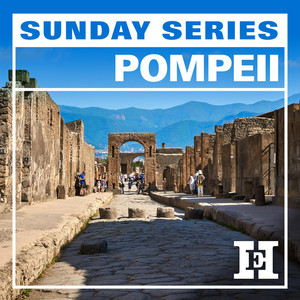
Today on the History Extra podcast, we're going to return to Jess Venner and Kev Lotchin with our latest Sunday series, exploring the dramatic, catastrophic final days of Pompeii.
Once a thriving Roman city.
Life stopped suddenly in Pompeii in AD 79 when the volcano Vesuvius erupted, burying its inhabitants and preserving the city under layers of ash.
I'm Kev Lutchen and I'm joined by Dr. Jess Fenner, a Roman historian and a Pompeii expert.
Jess, welcome back.
Thank you.
It's a slightly darker episode today.
It is a bit, yeah.
This time we are talking about the 24 hours in which everything changed, in which Vesuvius erupted.
Jess, as a way to start, we're going to be telling the story with the help of two men who we've heard very briefly about already.
Both of them are called Pliny.
Could you introduce us to him?
Who are they?
It gets a bit complicated, doesn't it?
Pliny did this, Pliny did that.
We've got two men called Pliny.
So we've got an uncle and a nephew.
Pliny the Elder, who was around between 23 and 79 AD, and he was a Roman naval commander.
He wrote The Natural History, and it's his 37-volume encyclopedia about everything in the world.
He literally said, I want to cover everything in the world.
Ambitious.
It was ambitious and he did pretty well.
And it's one of my favorite things.
Most people find it incredibly boring, but he talks about things like geography and geology, and volcanoes is one of them.
But as we discovered earlier, he did not recognize Vesuvius was a volcano.
No, he did not, even though he lived right next door.
So yeah, it's a really interesting text and very, very, very useful.
But main thing is that he went out to help the relief effort which we will talk about.
And then we've got Pliny the Younger, who was born in 61 and he died in around 113 AD.
So he's younger and he was his nephew.
He's very similar to him.
He's very studious.
And he watched the eruption from across the Bay of Naples in Mizunum at his uncle's house with his mother.
So they watched the whole thing unfolding.
And he later, about 20 years later, wrote two letters to the historian Tacitus, who's very famous.
And he talked about what happened during the eruption, which we will discuss, and how everybody reacted to it.
And he did survive it.
And those letters are incredibly important to us, right?
They are our main only eyewitness account?
Yes, exactly.
Yes.
So we don't have any other eyewitness accounts that we know of.
You never know, we might find something.
But yes, they give us an incredibly detailed rundown.
And he is the reason that that in volcanology we now call this type of eruption a Plinian eruption because of the way that he described it.
We'll come on to that description in a moment.
But for now, it's the morning of whichever day it is.
I know we talked about some debate on the day.
It's the morning of today's eruption.
What are the first signs that something is amiss, perhaps more than a usual tremor?
Yeah, so we've had tremors for many days up to this point.
But, as Pliny tells us, the people of Campania weren't too worried about this because they were very used to it.
But then we get to noon and something starts happening from Vesuvius.
So I don't think they're too, I think they would have been terrified, actually.
I think if you see a strange towering cloud come out of Vesuvius, you're going to panic.
This was different, you know, and not at this point, we weren't seeing pumice fall.
That happened in about an hour.
So at about 1pm, we know that the pumice started falling.
And it would have been really hot pumice as well.
It would have been cooling to some extent, but it would have been petrifying.
And it was quite light at this time.
The thing that he's describing, Pliny, is the shape of this column.
The shape of the column goes up directly, and then it goes out like an umbrella pine.
And he describes this very specific tree.
Now, if you've been to Italy...
You'll have seen this umbrella pine because it goes up and out like an umbrella.
And they used to use it for shade.
So this is a bizarre eruption.
It's almost like it's hitting a ceiling in the sky and it's just going out like smoke does.
And it's got very, very heavy and it went miles high.
How big?
Can we compare it to anything?
Yeah, 20 miles high.
I don't know what is 20 miles high, but it's so big.
It's so, so, so, so high.
I think like it's multiple Burj Khalifas.
Yeah.
I mean, it's a new landmark, isn't it?
Oh, it's ridiculous.
You're going to see it from miles and miles.
Yes, you are.
We have that quote from Pliny the Younger.
The cloud could best be described as more like an umbrella pine than any other tree, because it rose high up in a kind of trunk and then divided into branches.
I think that's a really interesting thing, because when we said like pine, I was like initially thinking, like you know, a northern European pine, that kind of isosceles triangle facing down.
And obviously it's not at all.
It's that very stripped up and then straight out.
When you see that, like when I had that description of this like Italian pine, that's like that my first kind of thought was like mushroom cloud.
Does that kind of give that sense?
It is a bit like that.
It's more straight than that, I would say.
Yeah.
The column is literally like directly up and then it goes out.
It is like if you had smoke in a room and the smoke would hit a ceiling and it would go outwards.
Yeah, almost flat.
It's more like that.
It's a very destructive version of an eruption.
It's one of the worst that you can have is a Plinian eruption.
And it's because this effect happens.
And it must be quite terrifying to the Pompeians, because you know we talked about they've not known as a volcano.
They've not.
It's not erupted for 700 years, 700 years.
Yeah, it's entirely a new phenomenon.
How does this progress, in the sense of this entirely new thing is happening?
When do people kind of start making that decision?
It's like this isn't normal.
When do i hide?
When do i flee?
Yeah, like what's going on?
Yeah, so we've got a good rundown of the timeline from plinny and then volcanologists and archaeologists have been able to reconstruct, like to the hour, pretty much what was happening during.
So I've said about the lapilli falling out of the sky at about 1pm.
So it's been an hour.
And then for the next seven hours we have that happening, but it's getting thicker and heavier and they're getting bigger and bigger, which means that they're all landing on the roofs, which means that the roofs are then collapsing in.
Yeah.
So during this time and this layer, we've got people perishing in this layer because they're being crushed mostly, or they're suffocating from the ash if they're particularly sensitive to that and it's still rising.
So we it gets to 32 kilometers, i don't know.
I think that is about that in miles, and then we're having partial collapses.
So i'm sure we'll talk about herculaneum, but at 7 pm herculaneum is destroyed.
This is really really early.
So this is where the column has got so heavy that it's collapsed in on itself.
And that's like, what, seven hours?
It was noon at kind of... Seven hours, Herculaneum's gone.
Yeah, it's gone.
So there's not really any time to think about it, to be honest.
So for many years we thought everybody had escaped Herculaneum, because there wasn't really anyone found there.
Tragically, 300 or so people were found in the boat sheds at the front.
So it was on the harbour directly, and mostly the elderly, women and children inside the boat sheds, and then we mostly have men on the beach and soldiers trying to help them escape.
So they're hiding in these chambers and then suddenly a pyroclastic flow hits them and they would have perished immediately.
Thankfully thankfully yes, that's worth doing a lot of heavy lifting, isn't it?
Yes, it is yes yeah exactly, because it's not a great thing.
But um yeah, it's a small consolation that they wouldn't have been very aware of what was happening hopefully, but research is still being done and and it's very gruesome we'll come back onto herculaneum.
Yeah, in those early stages of the eruption, the pumice is falling down.
I mean, do you have a sense that you can paint for us of what that was like?
I mean, i kind of envision some kind of like almost ashy blizzard.
Yes, that's a good way to describe it.
So the, the pyroclastic flows are like that, or surges, and there's different types.
It's very confusing, But the pumice is raining.
It's literally like a rain of pumice.
It's like hail.
So you know how hail can get really aggressive.
Some quite big hail, right?
Yeah.
Yeah.
Some people were, there were like huge rocks falling towards, you know, the later stages.
So it was a really scary, scary thing to be happening.
There was smell of sulfur from the volcano as well.
And that would sort of preempt a worse bit was about to start.
So that wasn't great either.
So it must have just been petrifying.
And it's this column, as we said, it's spreading out like branches, like Pliny said, and it's blocking out the sun.
So all of a sudden, later on in the eruption, it's pitch black.
You cannot see a thing.
And as Pliny says, it's like someone's shut a door in a room and the light's gone out.
You just cannot see.
So they're all trying to scream for each other.
There's chaos.
They're trying to find their children, they're trying to find their parents whatever, and they're trying to find a way out, but they don't know where that way out is, and I personally think they must have just thought that they were saying apparently, that the gods had abandoned them.
Pliny's hearing them scream this and yeah, it's just gut-wrenching yeah, it's horrifying yeah, and we haven't touched on that before.
That, of course, is like the middle of the day, but so black yeah, so so black, yeah.
I mean, they really did think that this was the end of the world.
Because they have no idea.
They've not seen this volcano before.
Probably know it's a worldwide cataclysm happening at this moment.
Yes, exactly.
That's what Pliny says.
He says, the only consolation for me was that the world is ending for everybody else as well.
So he was a very rational man.
You had to be very rational if you were an elite Roman.
And that was his rational view of it.
He was like, well, what are we going to do?
This is a good time to go back to Pliny.
So we've had the early stages of the eruption and you know ashes falling down, but nothing has been destroyed quite yet.
Pliny, by this point, is in a boat in the middle of the Bay of Naples.
What's he doing?
Yes.
So Pliny the Elder was in charge of the fleet at Mizunum and they used to protect the south of Italy.
So he was a really, really important man while he was writing.
So he was very busy too.
But he basically received a letter and he's told to go and help everybody because it's getting really bad.
So just imagine the sea at this point.
There is, you know, there would have been tsunamis of some description.
It was incredibly choppy, very, very hard to get across.
And there's also loads of boats coming away from that.
So they are in these ships going towards the danger.
Pliny the Elder is quite pleased about this.
It's very noble.
Yeah.
Yeah, he's very noble.
He's very brave.
And he was really like yes, I'm so keen to go and see what's happening, because he wanted to write about a volcano.
So, yeah, the waters are just choked with like debris and shipwrecks and things.
It's chaos because obviously they're being hit by the pumice as well.
So it's really, really bad.
So he diverts to Stabiai and then he finds that his friend Pomponianus, that's a mouthful, isn't it, is trapped and he's waiting for the wind to change so that he can escape.
So again, with the wind, like there's all these things going on that are diverting people's fates.
You know, something else, like he's struggling at sea.
The pumice isn't just kind of causing problems on land, is it?
It's actually in the sea.
It's actually forming, not icebergs, pumicebergs?
I don't know if that's a word.
They're like pummeling the sea.
The force of these rocks falling from the sky is dangerous.
And so, yeah, he has to divert and he takes a little rest.
Yeah, he ends up in Stabii.
He's met his friend.
Pomponianus.
Pomponianus.
So, I mean, they have a nice chat, I suppose.
How is Pomponianus feeling about things?
He's not too happy.
He was trapped, so he wasn't really pleased.
But, you know, Pliny, younger at this point, is trying to portray his uncle as rational and heroic.
So he's writing it.
So he may well have been petrified, but he's trying to idolize his memory in the Roman way.
So he's writing about him as being a man of science.
He's curious.
He's disciplined, you know, even in disaster.
So he's the right man for the job to be in charge of this fleet.
So he's OK.
Apparently, Pliny's not too bothered.
I imagine Pomponianus wasn't too pleased, though.
There's a quote from one of the letters which I found.
So, I mean, so bougie, really.
My uncle soothed the fears of his companions by saying that they were nothing more than fires left by terrified peasants.
This is off the volcano, presumably.
Or empty abandoned houses were blazing.
He went to bed and apparently fell asleep, for his loud, heavy breathing was heard by those passing his door.
Exactly.
I mean there's a question I have to ask about how reliable a narrator we think Pliny the Younger is at this point.
Yes, exactly.
So like I said, he was trying to make him look really rational.
But I do think... that that would have been a typical part of an elite man's day.
Having a nap.
Yep.
I mean, I'd have a nap.
Yeah, exactly.
You'd have a nap.
You'd have a walk.
You'd be very healthful and balanced.
That was the thing.
You're trying to achieve balance in your body.
It's a very philosophical view of science.
So, yeah, I can very much believe that he would have gone to bed.
But then I think he realised that it was getting much worse than he thought.
And that's when we see the pumice sort of blocking everybody's rooms in.
And we do see this in Pompeii now.
So recently we've had a very grim example of this where we've got a couple that are stuck in a room because the pumice they'd blocked themselves in to hide, but the pumice had stopped them getting back out.
So that was happening.
So I think that at this point they're like oh dear, this is actually getting way, way worse than we thought.
The buildings are swaying back and forth, he's describing.
And they're shaking with more violent tremors.
So it's getting even worse.
And that's the turning point that's playing out in Stabiae, but also for the inhabitants of Pompeii, presumably Herculaneum.
It's like, we cannot stay here anymore.
Yeah, exactly.
So I think it was around this point.
I reckon, you know, like a couple of hours people could have been escaping from, like we said, from 12 noon.
But at 1pm, when the pumice started falling, and then it's getting heavier and heavier and heavier and heavier.
The thing is, people wouldn't have known that anything bad was going to come necessarily.
But I do think people like Pliny the Elder.
I'm surprised that they wouldn't have looked at it and thought about the winds, the fact that it would have things that go up have to come down.
Right.
So I reckon there would have been a logical thing of some people that were more in tune with that sort of thing from their jobs.
Perhaps they would have thought, wait, this is not going to end well here.
That has to come down.
It's right above us.
So.
Yeah, so it was really, really black at this point.
Before these kind of decisions are made to, you know, abandon dwellings.
Or, in Pliny's case, you mentioned to me earlier that he did something else for balance.
I wonder if you could just tell us about that.
I can.
So he's a really interesting person because he's very specific about what he likes to do in the day.
And if you were a Roman elite man, you would have nice gardens to walk around in.
So Pliny the Elder is talking to his friend in a letter and he's sending a letter to him and saying this is the best way to be balanced, as a Roman man, to achieve your health.
So he's saying that Sporina is said to rise one hour before dawn before taking a three mile walk naked, around his Hippodromus of his Horti?
So he's going around his lovely verdant gardens and they're more like a park.
They're beautiful.
Very wealthy people have these.
And this is done in the morning sunshine.
And then he takes two further walks and engages in some ball throwing in the sunshine.
So he's throwing around a ball.
I don't know who with.
Should it not be too windy.
All activities deemed by Pliny to be beneficial to Spirina's mind and body.
And we kind of can reasonably believe that Pliny would engage in this himself.
I mean, there was something in one of these letters which may be a translation.
Fig is about him also having a bath while this is all going on.
Yes, that is one of them.
Yeah, so again, that is something that rational men in charge of their mind and therefore they are, you know, a good Roman man they would be acting in a rational way.
Why shouldn't they continue to do the things they would usually do?
It's not like the world's ending.
Exactly.
Got to take a bath.
Got to relax.
It's like he's going the full Archimedes, like bath and then a stroll.
Yeah.
They're not barbarians.
That's what they say.
Definitely not barbarians.
Heaven forfend a Roman citizen.
No, exactly.
Must, must bath and have a nap and all of these lovely things that the elite do.
This History Extra podcast is brought to you by Rocket Money.
Throughout history, experts have offered various solutions for ensuring your financial well-being.
In the medieval era, for instance, carefully managing an unlikely resource eels could ensure that you had an effective, if unusual, way of paying your debts.
For steely-eyed Victorian industrialist Andrew Carnegie, ruthless efficiency was key to balancing the books.
But it's not always easy, as my own attempts to keep track of my finances suggest.
But help is at hand.
Rocket Money is a personal finance app that helps find and cancel your unwanted subscriptions, monitors your spending and helps lower your bills so you can grow your savings.
Rocket Money automatically categorises what you're spending across your accounts, letting you choose the categories and tags you need to successfully manage your finances and track patterns in your outgoings.
It also consolidates checking savings, loans and investments into a single helpful dashboard, offering a crystal clear view of your financial picture.
Let Rocket Money help you reach your financial goals faster.
Join at rocketmoney.com slash history extra.
That's rocketmoney.com slash history extra. rocketmoney.com slash history extra.
This kind of more lighter hearted moment is perhaps a good time to bring in our graffiti of the week.
So Jess, every week I've asked you to nominate a piece of graffiti you found in Pompeii that you found particularly illuminating.
What do you have for us this time?
So I have one that isn't actually a written piece of graffiti and it's actually a huge painting of the ship of Europa.
Thematically appropriate.
Pliny's just sailed over the Stadio.
Exactly.
So it's absolutely wonderful.
And I'm going to try and describe this for you because, as we said in the first episode, we were talking about how long it would take to scratch these things into a wall.
It would take an immense amount of time.
The house of the ship Europa was a house.
But at the time of the eruption it was a vineyard, a huge vineyard that had two massive vegetable plots and had trees as well, producing fruit and nuts.
And so we know that there was trade going on here because they're producing this food.
OK, so someone has taken the time to draw this incredibly detailed ship, this merchant ship.
So now we have firsthand evidence of what these ships would have looked like.
There's people actually in this ship.
So we've got tiny people on sort of like the dock.
We've got a tiny little ship that's moored to the, is that the right word?
So they can go back and forth.
So we've got a tiny little one there.
So it's exactly like it would be today.
And then we've got a guy on the top of the mast at the top, waving his hands around.
It's just fabulous.
And On the bottom of it, it says Europa.
So this was literally a ship that would have been coming into Pompeii.
And we've got the drawing of it right here, and the people that would have been giving stuff to this ship.
It's a beautiful kind of like piece of art.
How do you feel it kind of like reveals something about Pompeii?
They were clearly very proud of their merchant occupations.
And I think that this shows it because, like I said, the energy that this would have taken the time.
And they were very familiar with this.
So this also tells us about Pompeii, the fact that it was the melting pot that we were discussing.
People were coming from all over the known world, the known Roman to the Romans, and they were traveling on ships like this.
So it's telling us that these people, even if you were from the lower classes, you would be very well traveled potentially, if you were in this occupation.
And I just think that's wonderful.
And the fact that they were so proud of it that they thought I'm going to take the time to hours upon hours upon hours to draw this thing.
It is huge.
It is like.
How big are we talking in situ?
I think in situ, it's about a meter wide.
So it's massive.
Yeah.
And that's, and you know, that's all etching.
That is hours and hours of person etching.
Exactly.
It's so detailed.
Even the mast and the sails have like the individual ropes on them.
It's just like.
It's like he's looking at it and doing it, but he's not clearly because he's in this house nowhere near the harbour.
But I just think it's wonderful.
I really do.
It's a gorgeous piece.
We're going to move on to the later stages of the eruption.
But if you would like to be able to read a timeline to follow along, then we have exactly that in the History Extra app.
It's one of my beyond the podcast picks.
You'll find that in the episode description.
OK, we're getting to the evening on that first day.
Things are about to get really dire in Herculaneum.
Can you tell us what happens?
So originally we thought that Herculaneum was taken out by these pyroclastic flows, which I should probably say what they are actually a pyroclastic flow.
So it's a very, very, very fast flow of ash and pumice and gas that comes out of a volcano that usually comes from it collapsing on itself, this column that we were talking about.
So these pyroclastic flows, you can't outrun them.
And the temperature, well, it varies, especially because the further they get, the cooler they get.
But it's like 300 to 500 degrees Celsius, I think, is the estimate.
That's incredible.
Almost like an unfathomable kind of temperature.
Oh, yeah.
Yeah, yeah, yeah.
But also I was speaking to somebody, a geologist, the other day and he said actually that's not that hot.
And I, you know, in the grand scheme of things, and I thought, crikey.
So, you know, we're still doing research on what this did to people.
And it's different in Pompeii and Herculaneum.
And that's due to the distance.
Yes, because of the distance.
Because Herculaneum is so much closer.
So we mentioned that it's about six kilometres as the crow flies from Vesuvius.
So it is really close.
So it's being hit faster. and with hotter heat.
So the top layer of Herculaneum is just wiped out.
And it's buried under 20 metres of this pyroclastic material, of volcanic material.
And so you'll go there today and you can stand looking down at the harbour below you and you are on the volcanic material looking down, which I think is just so humbling because it's so far.
It's a huge amount.
So it just, and it also pushed the coast out.
I think it's about like 400 metres or something.
So it's really, really fast.
So that's how much material was coming out of this volcano.
It was insane.
So this happened at about 7pm.
We think Herculaneum was taken out and that was it then.
Herculaneum was buried.
And just to be really clear, this is coming back to what you were saying about what goes up must come down.
So this is the column collapsing and all of that kind of material.
Essentially, it washes over Campania, right?
Is that what we're saying?
That's exactly it.
It washes.
So they sort of fall in direct routes towards these cities.
So the whole thing isn't collapsing necessarily at the same time.
You're seeing these different partial collapses is what it's usually called.
Almost like an iceberg calving from the oh yes, it is a bit like that, it's exactly like that and there's nothing you can do about it.
Or uh, when rocks fall down the face of a mountain, it's a bit like that, an avalanche type effect yes, and then you were talking about earlier the boat sheds in herculean.
So this is where people had gone to hopefully wait out what was happening to them, and this is the point.
They're huddling there.
This surge hits yes, so that gives us a good indication of what people were thinking.
So obviously we thought that there was about 4000 to 5000 people living in Herculaneum at this time.
There are just over 300 people found in these boat sheds.
And they were, to be really graphic, their brains were essentially boiled.
So they would never have known what was happening to them, because the rooms that they were in turned into ovens, essentially by this heat, because this material has gone over the.
So some scientists say that it wouldn't have been immediate for them their death.
That's horrific.
Yeah, because of the fact that they trapped themselves in these boat sheds, essentially.
So the materials coming from behind them and over them.
But I think that they would have been.
I mean, that's a huge amount of heat.
So one hopes.
But their skulls come apart in some parts.
But they were exactly where they were.
So they're all huddling.
They're hugging each other.
They're sort of spooning.
Some are sitting up.
So they're caught in that exact moment.
They are caught in their last seconds.
I don't know whether I feel kind of comforted in this idea that they would never have known it coming to be instant, or also kind of like horrified that they would never have known it coming.
Yeah, they would have heard it.
Really?
It's fairly silent. a pyroclastic flow, but they would have heard something.
Also add to this the screaming, the darkness, the tremors that were ongoing, petrifying awful awful awful, awful.
Most of the people on the beaches were found and they were men.
We've got a soldier who had his like weapons and his pouch of money around his waist.
And he had the physical makeup of a soldier.
His bones show that he was quite muscly.
And then the women and elderly and children were inside the boat sheds.
So we've learned a lot about people from their skeletons now.
So there's a lot of work being done on their nutrition and their lifestyle and the sicknesses they may have had.
For example, we know that quite a few people made it past menopause, which is interesting because we've always thought of them as having a short lifespan.
It doesn't seem to be the case, particularly in Herculaneum, but they were quite wealthy and well fed.
They mostly had a diet of fish, which makes sense because the sea was right there.
And they repaired well from injury.
So any injuries they've had, they seem to have done pretty well because of their nutrition.
So all in all, they lived lovely lives, it seems.
In Herculaneum.
Even the lower classes had a really good diet.
They were eating things like eggs, which you wouldn't necessarily associate with lower classes, but they were eating a very diverse diet.
So overall, the lifestyle seems to be pretty well.
But this is what we're learning from them because they haven't died of disease.
They've not died of anything like that.
They've all died at exactly the same time from the same event.
This one pyroclastic flow.
This one pyroclastic flow.
So it's really interesting from that point of view.
I think it's very interesting as well, this idea that there's no lava in these eruptions, right?
And that's a kind of classic thing in volcanoes.
Oh, it's lava that gets them in.
It totally wasn't, right?
No, no, no, no, no.
That's a different sort of volcanic eruption.
This is a Plinian eruption where the column is collapsing and it's causing these pyroclastic flows.
Lava's much slower as well, so it would have been very different.
And we wouldn't have what we have.
It was literally.
There were so many different conditions that caused Pompeii and Herculaneum to be preserved as they were.
This is why we have the frescoes that we do, buildings.
A lot of the buildings, like I said at the top layers, were taken out by the force of these flows because they're very, very fast and heavy.
But underneath that, it was sort of just encased in this volcanic material that solidified.
And so we have this perfect preservation.
Yeah, volcanic bubble wrap.
Yes, essentially.
Yeah, yeah.
It is a bit like that.
Yeah, yeah.
And like I mentioned, the wind, the wind that pushed all of the volcanic material towards Pompeii.
And, you know, and it did a different part of the year.
It would have been blowing the other way.
We'd have had different cities potentially preserved.
This terrible thing has happened in Herculaneum.
Hmm.
How is that seen around the rest of the Bay of Naples?
Because obviously this event is happening everywhere.
Would in Pompeii and Mizunin, would that have been visible?
Oh my God, Herculaneum's gone.
Potentially, because it was supposed to be very dark at this point.
So what you're seeing up there is flashes of lightning and fire inside the column.
So that would have been giving off light anyway.
So potentially they would have seen, I think they would have seen these collapses happening and they would have known roughly that, oh God, that's where Herculaneum is, because they're very familiar with their environment.
So I think, yeah, I think they would have been seeing this happen, which is horrifying.
Just like this helplessness of watching this happen.
Yeah, absolutely.
And, you know, for this one, it's dark now, like it's nighttime and it's black.
Yes.
So the noise, the tremors, this is all going on.
We get to daybreak.
Certainly the sun's risen.
Is there light?
What's daybreak reveal for the people of Pompeii?
Oh, it would have been like a, I think he describes it as like a twilight.
So it's not really a daybreak.
It doesn't really come in a sense.
It would have elsewhere.
But yeah, in the bay, it would have been later.
It would have seemed later, the sunrise.
And the eruption is still going on.
You know, it's still putting these pyroclastic flows out.
And they start happening in the early hours, I think around 6.30.
Pyroclastic flow reaches Pompeii, but it hits the north wall and it only comes about 200 meters into the city.
So the people of Pompeii that were still there trying to help people.
There'd been a lull, by the way, in the pumice fallout.
So you almost might think that they thought it was over.
Yeah.
They were starting to think, okay, right, fine.
It's probably over.
And in those situations, as humans do, we would go back and go, well, there'll be people to help.
We need to go back.
I need to go get my stuff.
I need to go and get, you know, my horse, whatever, if he's still around.
So people came back to the city.
This is the most tragic bit for me, actually, I think, because they had already escaped.
They thought they'd escaped.
And they got out and then they came back.
Yeah.
And you know even the villas outside of the city.
As you get further and further away towards, like Sorrentum, it's getting less and less and less this fallout you're.
You know it's much less aggressive, but yes, so they were in the city 6 30 ish.
This pyroclastic flow hits the wall, doesn't quite make it over, it does a little bit, and then not long after that.
So we're probably on about 7 am at this point.
That's when the, the big one, hits and this is the end of Pompeii.
Yes, some think that Some would have survived, but I just don't understand how there would be anyone left.
There's some journal papers that I've read where they say that there would have been some survivors for following pyroclastic flow.
If you're hit by a pyroclastic flow, it's end of story.
But what they're probably getting at is that it might not have made it the full way into Pompeii's hinterland.
Right.
Essentially, it was game over at this point.
That was it.
And then there were a few more pyroclastic flows.
And then the tremors kept happening.
And then eventually the pumice stopped.
But this takes a long, long time to stop.
There's some records of like a couple of days for everything to just literally stop.
I didn't realize it was that long, actually.
Yeah, no.
And I think everybody sort of thinks it's this frozen in time thing with Pompeii.
And as we can see, it's not frozen in time, really, because it happened over a long period of time.
It was about 24 hours before it started to gain any normalcy in the city.
And I say normalcy as in not being pummeled with pumice and pyroclastic flows.
But it would have just been so quiet after that.
I just think that's awful.
God, the silence.
Yeah, I hadn't even thought of that.
Yeah, once that stopped, it must have just been... Probably had like hours of screaming just then.
Yeah.
Yeah, yeah, yeah.
You mentioned about the pyroclastic flows being different depending how far away you are.
Would the end in Pompeii being quite different from Herculaneum in that case?
Yeah.
So we have different preservation.
So the end would have been different for them, yes.
Although, like we said, if you're hit by one of these flows, you're done.
It's end of story.
You are sort of preserved in the position that you were in.
So we have a guy that's in a tree, for example.
He was found... He was in a tree?
Yep.
Incredibly.
He was literally preserved in a tree.
Yeah.
What happens is when the volcanic material solidifies, it becomes very cement-like.
And over time, rain goes on it and it gets harder and harder and harder.
And then people decay in there.
And then that's when you fill it with plaster, which I think we're going to talk about on another episode.
So that will be... We will go into that.
But...
The point is that they are preserved in that moment in Pompeii and Herculaneum, but their bodies were affected in different ways.
So we get the box pose in Pompeii where your body contracts, the muscles contract under heat.
So they usually look like they're boxes with their fists up.
But yes, the ends were different, definitely.
And we have different levels of preservation as well.
So we've got carbonized wood at Herculaneum.
We don't have that at Pompeii because of the ways that It was affected by heat.
So Herculaneum is really interesting because we've got wooden shutters.
We've got sort of wine storage cupboards and all these amazing things.
We've also awfully got a baby's cot.
And this always makes me want to cry.
We've got a baby's cot with a baby was found inside.
So in that respect to them, it was kind of sudden.
But you probably with a baby, you're like, where am I going to go?
How am I going to get away?
We know that we've got a pregnant woman as well, with what seems to be her parents or some elderly people that she knew.
And she was very pregnant.
So she wouldn't have been able to escape necessarily.
So, yeah, it's very different and very similar.
Well, I feel sad now.
Yes, it's rough, isn't it?
While this is all going on, plenty of the younger, he's still missing them.
I think.
So he's been kind of watching this.
Yes.
What's going on with him?
There's a point where he presumably thinks this is too much.
We need to get out of here.
Yeah.
So Pliny the Younger's been sort of reading.
He's been trying to read.
Some stoic Roman citizen again.
Again with the, yeah.
He's with his mother and they're watching all of this unfold across the bay.
They're trying to be a bit normal about it, but they're like, oh my God, this is getting way worse.
We cannot stay here.
So they try to start leaving.
He's describing people with pillows on their heads to stop pumice hitting their heads.
How effective do you think that would be?
Fairly.
Yeah.
Depends on the size of the pumice, I suppose.
But for the little ones, because you know, like in a hailstorm, sometimes it's really aggressive, isn't it?
So I think that it would actually really, really hurt, obviously.
So putting pillows on your head, I guess that would do something, i suppose.
Um, so they're.
They're doing that, they're trying to get out, and then obviously, it's dark and there's different stages, as we've been talking about.
So it's getting worse, it's getting a little better, it's getting worse and they are basically holding hands trying to get out of this situation because they can't find each other otherwise.
So you're going through the dark holding hands in this line.
There's people screaming around you.
There's people just giving up and you know, calling on the gods, or others are saying the gods have gone.
They're punishing us.
You know, it's just horrible.
So they're trying to get out.
I think the sea has receded at this point at Mizunum.
So they're describing seeing sea creatures on the beaches, because this is an effect of the volcano erupting.
There's a quote here that Pliny writes about, doesn't there that?
Then we saw the sea sucked back, apparently by an earthquake, and many sea creatures were left stranded on the dry sand.
Exactly.
So we're saying the entire topology of Capania is changing as a result of this.
Yeah.
So in the situation of when a tsunami happens, that happens.
It's not good news if the sea's retracting, and he would have probably known, oh dear, this is going to get worse now because of his uncle being in that area and having written an encyclopedia of nature.
So yeah, so we've got his uncle over there investigating it.
And then they're like well, we need to get out, we've got to go.
So yeah, they're trying to get out, but it's so dark.
And there's another quote that i wonder if i could bring in.
I think really encapsulates this.
We could hear women shrieking, children crying and men shouting.
Some were calling for their parents, their children or their wives and trying to recognize them by our voices.
Some were so frightened of dying, they actually prayed for death.
Many begged for the help of the gods, but even more imagined there were no gods left and the eternal night had fallen on the world.
So it's just so bleak.
Oh my God, yeah.
It really is.
And yeah, the only consolation is that everyone else is going through it with you, but it's not a consolation whatsoever.
You have no idea in that situation what's happening.
Even the most educated person of that time, with some idea of what you know, Vitruvius and all these different people had been writing about potentially this being a volcano.
Nothing could prepare you for this.
Where do you go?
You know, where do you escape to?
Normally, like it's the sea, isn't it?
But there is no sea.
It's gone.
Exactly.
Exactly.
Yes.
So they're saying like the waves are too high.
We can't go out.
OK, we'll go by road.
And then can't see.
And there's people everywhere.
There's carts stuck in pumice, you know, like the pumice is getting higher and higher and higher.
Some people are blocked in rooms and there's still buildings falling down.
It's utter chaos.
And where would you go?
Where would you go if you think that the world's ending?
There's nowhere to escape to.
There's that hopelessness about that statement, isn't there?
Yeah, exactly.
And I just and how would they know where to go because they can't see?
So I think a lot of people think, oh, that's silly.
Like, why didn't they leave?
How?
How would you go?
Yeah, it would have got to a stage in the eruption where it wouldn't have been an option.
They would have just had to ride it out and make the most of it.
You'd probably just hide in a building and the buildings are falling down.
So then you'd get out into the outside.
But the pumice is falling down.
It's just.
It's a situation with. no good choices.
That being said, Pliny the Younger manages to survive.
So there are survivors.
Yes, there are survivors.
So it's interesting, actually, there's quite a lot of survivors in this situation.
We don't know where they went, though, and we don't know the names of any survivors.
Recently, there's been a study on the specific survivors of the eruption.
It's not generally accepted yet because the Evidence isn't specific enough, in my opinion.
It's sort of based on epitaphs and things like that.
There's many John Smiths.
You can't say John Smith survived an eruption because he ended up having an epitaph in Rome.
It might not be the same person.
There's a fairly good argument for the fish sauce family getting out.
Oh, really?
Okay.
Yeah.
So it's in Puteoli, I think, where fish sauce pops up again a few years later with similar branding on it.
And there's also a tomb of their family.
So, okay, that one seems fairly reasonable to believe that they got out.
I would say that's probably the only one that I do accept.
We have about 1,600 or so bodies.
That's not very many in Pompeii.
No.
How many was the population you were saying?
About 20,000.
Yeah.
So the mortality rate is probably like between 8 and 11.
I think is probably reasonable to compare.
But it's very hard to say because a lot of people were caught on the roads out of Pompeii.
So we think about Pompeii and we've excavated two thirds of it.
Still a third to go.
So that's why I'm accounting for that in the mortality rate there.
But we don't know.
You know, there's all this countryside that people would have been in.
Yeah.
They could all be there.
You could say that.
There might not have been any.
We don't know, essentially, because like we said, it got to a point where they couldn't escape.
So there's many, many bodies that have been found going out in the roads and also in the harbours as well.
We've got a lot of people down by the River Sarno, like the man in the tree, for example.
The people were hiding up high.
They're all over the place.
And now people have built over the volcanic material in the years following.
So we'll never know.
For sure.
How many people survived?
We started this episode with Pliny the Elder.
I feel like we should finish with Pliny the Elder.
Last we saw him, he had escaped from Pompeianus' villa at Stabii.
What do we know happens to him?
He ends up on a beach.
And we think that Pliny the Elder had asthma, actually.
So he's not going to fare very well here.
He ends up having a very sad life demise where he is found on the beach, where he's passed away and there's sort of been depictions of this in art where he's sort of surrounded by a couple of soldiers and he's he's just had this very sad, slow sort of death, where his body's just given up during this eruption.
So he's just he, quietly.
Yeah, it's really sad and i think they find his body when it all died down this eruption.
Pliny talks about well, the younger Pliny he's very complicated talks about them finding his body just lying there as if he's asleep.
So, you know, of all the deaths there were, I don't know what's the worst one.
They're all equally awful, but sort of dying on her own.
Yeah.
Maybe he didn't.
I don't know.
He might not have.
He might have been surrounded by people and they obviously had to get away.
They can't just sit with him.
You know, they have to get away.
There's nothing they can do in that moment.
But yeah, his body was just found there the next day.
That seems like a terrifyingly bleak but sensible place to draw our story to a close.
Jess, thank you so much.
Yes, you're so welcome.
Thank you.
Next time, we'll be talking about the aftermath of the eruption.
But until then, head over to the History Extra app to go beyond the podcast.
There I've curated some links around Pompeii, Vesuvius and the wider Roman Empire.
And you can find a link to that in the episode description.