Discussion keeps the world turning.
This is Roundtable.
You're listening to Roundtable.
I'm Niu Honglin with Steve and Yuxuan.
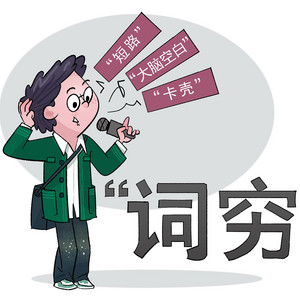
Across the world, people are becoming unexpectedly self-conscious about something we rarely notice in real time the tiny sounds and pauses and phrases that sneak into our sentences.
In the US, Google searches for filler words have surged.
In China, young professionals worry about saying in meetings.
In France, Uh has become a national punchline, and everywhere social media challenges people to speak without hesitation markers.
Today we explore why filler words universal, ancient and deeply human have suddenly become a linguistic insecurity.
And you have probably sent one yourself, the polite maybe to a dinner invitation.
A text that buys time, keeps your weekend open.
But new research in social psychology suggests that this tiny word carries more weight than we realize.
Across multiple studies, researchers found that people misjudge how their decision, how their indecision is received, believing they're being considerate, when in fact maybe often feels like rejection in disguise.
How do you feel about having maybe for an answer?
Let's talk about it.
But before that, 然后 like chuggy, so but um all in every language there is this different versions of verbal cushion.
While Americans debate the legacy of the valley girl, like speakers elsewhere, struggle with their own linguistic crunches.
But these habits didn't emerge overnight.
They reflect cultural norms, speech temple, and the pressure to perform fluently.
As self-awareness around speaking skyrockets, so does the question.
Are filler words a communication flaw or a feature of how humans think?
What do you think?
They call them filler words, yeah.
And they do serve a purpose in speech.
They're not completely useless.
But when overused, then people tend to get a little annoyed. by that or they tend to judge as well.
I'm talking about the English words like um or uh or like or you know.
Actually.
Yeah, they've been around for a long time, right?
And they function either as placeholders in the sentences.
That means like sounds that the speaker will make to signal to the listener that they're planning their next thought, or what they call discourse markers.
Those are words that are used to kind of structure or organize.
Organize the conversation like they are introducing a new topic coming up next.
The um and the uh those are probably um, uh and like are probably the three most common that I can think of.
And it's just a clue to the listener that you're not finished speaking just yet.
Something else is coming.
So that's what I meant when I was saying they do serve a purpose in speech.
The first time I encountered the word filler words or fillers is when I was learning.
See, I said that.
Yeah, we do it.
We do it all the time.
We do.
Languages across the world.
Yeah.
And my language needed to be cleaned up.
That's what my teacher said.
I was learning interpretation and they say, you have a tendency.
We have.
There are many students there, but they say specifically to me you have a tendency to make sure there's no blank in your sentences.
I thought
Yeah, that's called dead air in my profession.
I cannot allow that to happen.
And one very specific but not as typical example in the filler words world is that, having taken it into consideration,
My teacher was very confused.
He was like, what is that?
Is that a fixed term in Chinese and you are translating it into English?
What is that?
You don't have to say that.
That Part is not useful in the sentence.
These are just useful tricks that you're going to use when you're doing a lot of these oral tests.
I'm using it to buy time.
So I think my filler was more useful to me.
But there is this one filler that is very annoying even to me that is like filler.
I really, really don't like using like.
Yeah, and Americans are now getting tired of using like as well.
There was a pre-ply survey that found that 40 of employed Americans are consciously trying to cut out these words.
Pardon me, like, like, and um.
It has a long history, though, and it's deeply ingrained into the English language.
It goes back...
To the 1980s.
That's when the Valley Girl California like started to come about.
There was a song in 1982 by Frank Zappa.
I know you don't know who that is.
But the song was called Valley Girl, and it mocked the dialect and the associated stereotype.
Oh, it's been that long?
Yeah, this goes back to the early 1980s, if not before.
Yeah, I mean, filler words existed in English before that.
It's not like um and uh and like started to appear in the language at that time.
But they were replacing things like well, or you see, or you know, which were the more common filler words before that time.
Some of them you cannot even realize that you said that just when we're speaking.
Especially for me, I say a lot of actually or absolutely, that kind of thing.
That's, as you said, is buying me or us time to think when it's probably your second language to speak.
But it's only recognized when people are re-listening to their recording or your listeners is telling you that you're speaking too many.
You know and definitely filler words exist in every language.
In Chinese it's not only your second language, in your first language you also still use it, and I remember when I was young this is a funny thing, but I'll say it a bit later when I was young, my grandmother was working in education industry.
She was not exactly a teacher, but she's in the education system.
And one day, when I shared an anecdote to her, she said you used 然后, which means and then in Chinese, six times in just two minutes.
That's too many and then.
And I realized that I didn't, like Yuchun said, realize that I was using it that often.
And that's the thing.
According to a research, more people are aware of other people using the filler words in Chinese than when they are speaking.
And 37 of people over the age of 40 would even find a speech full of these Chinese filler words a bit too diluted, with not enough information.
And some of them would even count how many fillers this person used in five minutes or in one speech as a way to mock them, which is a little mean.
I mean, children often speak like that.
We went to the park and then we got ice cream, and then we saw a dog, and then we pet the dog, and then, and then, and then.
But when you get older and you're supposed to be a better speaker, then people will judge you on that.
They don't judge you when you were a kid.
Just for the sake of having a little bit of fun.
Yusheng, what are some very common Chinese filler words?
Yeah, there are many.
And one of the most common filler words, similar to 啊, 嗯, is 那个.
Oh, that one.
Yes.
And it can sound really, really offensive to a lot of people.
And because when Chinese people are saying this, it can sound like 那个.
Because it is...
Of course, as I said, it's one of the most common hesitation fillers in Chinese.
And it's used all the time.
All the time.
On the telephone, too.
Yes, but it doesn't carry any offensive meaning in Mandarin, despite sounding similar to that English slur.
So that is when people are thinking about things or just implying something, they will say 나거 or 저거.
That means, 나거 means, like literally means that one.
And 저거 literally means this one.
That's really interesting because in Korean, a common filler word is 저기, which means over there.
But in the context of the conversation, when people are saying like 저기 저기 저기 저기, it doesn't mean over there, over there, over there.
It's like a filler word.
It doesn't necessarily have a meaning, but it does serve a purpose.
It's kind of like, you know what I'm saying?
Like you're saying the first half of the sentence and you forgot or you do not necessarily know exactly what is the second half, but you hope the listener know what the second half is.
And that is some Chinese or Mandarin filler words.
And we also have something like...
Besides 那个, that one we also have 就是, which is 然后, and then I think, in every language they have their own ones.
怎么说呢?
How to say this?
How should I put it?
Do you understand me?
These are all considered filler words.
So we are already kind of aware of the fact that Americans are a bit fed up with their filler words.
And how about Chinese people?
Do Chinese people hate filler words as well?
To be honest, when I was using these kind of things or when I was listening to people using these kind of words, I don't recognize them, especially when you are not using them very, very frequently and repetitively.
But in a speech, when it is very important or very formal and professional.
You're listening to these things too often.
That may make you perceive this person to be unprofessional, or they are not well prepared when they are just keeping thinking what they want to say.
And I think most adults in China are carrying the similar kind of notion or habit or concept, as Yusheng said.
That is, they don't care unless it's to a certain extent.
And there is another scenario that is about kids.
One, they are teaching kids to speak or listening to kids.
They would more actively assess the kids' language quality, the way they speak, whether or not they are on the right path to be a better speaker.
Starting at what age?
Very young.
For five-year-olds.
If they stutter a little bit, the parents would worry about the kids stuttering a little.
But In the adult's world, it's not as extensive as the Americans.
For instance, we see that in one month, Google searches for filler words shot up 144%.
Yeah, and also people are searching for phrases such as this, how to stop saying like.
They're really worrying about that.
Yeah, this is from the New York Post.
This is from an article from the New York Post.
And that shows that dramatic increase in searches shows that people are looking to eliminate filler words as not just a linguistic filler that's comfortably used every day, but for a major personal or maybe professional goal as well.
Because it's the same in English.
It depends on the context of of the situation and it depends on how often they are used.
We can sit here on the radio on our podcast, where we are expected to be better speakers than the average speaker.
And we can say things like pardon me, um and like a little bit, but if we overuse that and we started saying like yeah, and and that he was like and she was like and I was like, we're annoying our audience.
Absolutely.
Then, on behalf of filler words.
I know it sounds weird, but we have been existing in human society for as long as we can remember.
We have helped people buy time.
We have helped people finish their sentences.
And is there no benefit at all to have us in your languages?
They can be cognitive signals that indicate the speaker is present. pausing for mental planning.
And they can often appear right before the most complex part of a sentence or when the speaker is selecting an uncommon word.
And this means the filler is not a sign of a lost mind, but of a mind that is actively planning a complicated linguistic output.
Yeah, because if somebody says like... I'll use that example.
He was like...
No way.
You're paraphrasing.
So you're not directly quoting the speaker.
You're just paraphrasing what they said.
So when I was making that joke, and then he was like, no way.
Well, that's actually a more efficient way of speaking.
Yes, yes.
Right?
So it doesn't signal a lack of intelligence.
It may signal a lack of creativity in the way that you speak, but there's something to be said for efficiency there.
Yeah, when you are speaking like this, you don't have to finish the whole sentence, because the other side has already understood what you are trying to say.
So you don't need to finish, okay, he is going to speak in a way that is blah blah blah blah blah.
Instead of that, you can say like he was blah blah blah.
So you just save that time and energy of thinking about the whole sentence.
100 agree but again it's the context of the situation imagine a world leader speaking yeah to the media saying we were like negotiating tariffs and i said like i want to increase your tariffs and he was like no way dude don't increase my tariffs and i was like bro we're gonna right then then we're thinking uh who did we elect here and also there's the thing that when you are in a daily conversation, sometimes silence is a bit too powerful.
If you're in the process of cleaning up your language, you're trying to use a bit fewer fillers.
You ended up just bluntly Say goodbye to all your fillers and replace the time when you want to use the filler to buy time with silence.
It might be a little weird.
Well, it's a viral trend right now happening in the West.
The 30 second or one minute no filler challenge.
So people on the Internet, on socials, on their socials, they're challenging each other to speak for 30 seconds without using any filler words whatsoever, or up to a minute.
Hmm.
And I think it is an excellent exercise if you are a person who over relies on filler words because whether you're a broadcaster or not, being able to use your words in an effective manner where you have an impact on your audience is never a bad thing it doesn't matter what industry you work in.
Yes, and if you really really care about it, you can also record a speech that you didn't write down.
You just think about what to say, having some talking points, and start recording yourself expressing that idea or delivering that speech, and then listen to the record.
You may notice more fillers than you expected and you may improve your ability to speak by.
After 10 practices, you will feel much better.
Only 10?
Maybe 10 would be a good starting point.
I'm like, no way.
And that's Steve.
You're listening to Roundtable coming up next.
Why do some people hate the answer?
Maybe.
Don't go away.
Looking for passion?
How about fiery debate?
Want to hear about current events in China from different perspectives?
Then tune in to Roundtable Where East meets West, and understanding is the goal.
It's Roundtable with me, Niu Henglin, Steve Hatherly, and Yu Shun.
So, maybe.
Have you used maybe as an answer?
Or have you received maybe as a reply?
Totally.
And I would say maybe is the word that I'm kind of starting to understand the adult world.
That was basically the first street interview that I went to and I asked a lot of people whether you can answer me with some questions to something like that.
And well, that day I learned so, like millions of ways of rejection in a polite way.
You know, people are being polite because I'm a stranger, but they're trying to refuse, but in a very polite way.
So maybe is a very frequent word that I get that day.
Yeah.
It is kind of a problematic word, they say, because it causes more harm than what is intended.
If we think about what maybe functions, as it's an avoidance tactic, sometimes because you don't want to hurt the feelings of Of the person who has posed a question to you.
I'll give you an example.
My wife and I were going out to a social event and one of the kind people who lives near our neighborhood.
We ran into him and I said oh, if you're not busy next weekend, come and join us.
And he said, um, filler word, um, maybe I'll check.
And immediately I knew the answer is no, right?
So...
It depends on your perspective.
Sorry, I'll just finish my thought.
Does it hurt you when people are directly avoiding giving you a direct answer, or are you okay with that?
Sorry to interrupt you.
Yeah, I feel like that's becoming a kind of consensus, that when you're saying maybe you're just trying to say no, but in that scenario or environment you're not trying to make the environment awkward.
So people, you understand that it is actually a no, but you don't feel bad.
Yeah, but what would you rather hear?
Like, if you invite me somewhere and I say yeah, maybe I'll let you know which is such a common response these days.
Would you rather hear that or would you rather hear a direct no?
No, thank you.
I'm not interested.
I'm thinking about the Chinese language because, to be honest, I've never given the answer.
Maybe because in my dictionary, maybe is a direct no.
Maybe is not avoided, kind of no, it's a direct no.
This is a language culture difference.
That's why I'm trying to ask Yushun when you were conducting the street interview, was one of the answers?
Really maybe
Maybe.
Because I was doing it in English, so I got maybe a lot.
But I do understand what you're saying because in Chinese, people don't say these kind of things.
But they do say ambiguous phrases or sentences saying that we should.
Oh, that's another example that I started to realize that we should hang out sometime.
That is also...
But that is the sometime part of it.
It's the sometime that's saying not sure.
And I understand the concept.
The concept is that, instead of giving a perfectly clear yes or no, you're choosing something in between, which means you're not choosing anything.
It's noncommittal.
It's noncommittal, and you're not giving any additional information to that person.
When you are asked, are you okay with this?
You say, kind of.
When you're saying, okay, A or B, which one would you like?
You choose, I think both are fine.
Both are kind of okay.
See, you're not really making a decision.
And a lot of people believe that having the open possibility or possibility, the possibility that everything could happen, is even worse than a definite no.
And that is the core issue in this maybe as an answer kind of discussion.
I learned this.
This is part of Korean language culture as well.
Saying no directly to someone can be considered rude.
Therefore saying maybe or ooh, that might be tough or something like that, which is also noncommittal, but maybe in that way means no.
No.
But when I first moved to Korea, to Asia, for the first time and I asked a question and I heard maybe, I thought well, that's great.
That's a 50 percent.
This actually might happen.
Yeah.
When the answer was actually.
Personally speaking, would you like a possibility of a 50% yes, 50% no?
Or would you like to be right down, shot down at the scene?
Well, it just depends on what you're used to, I think, and what you're expecting.
In English, maybe truly does mean maybe a lot of the time.
So therefore, I understand how maybe can be hurtful to your listener sometimes because of what they are expecting as a result.
If they are aware that maybe probably means no, then it's okay.
So it's a cultural thing.
It's just what you're used to.
It's a cultural thing.
I want to talk quickly about this, though.
We've been speaking about adults thus far, but the word maybe can be damaging to use to your kid as well, because it can undermine trust and teach some poor communication.
So when parents use the word maybe to a child, they'll often use it so that they can avoid the child having a tantrum.
So for example, the kid might ask, can we get some ice cream after school?
And the parent doesn't want to say no in that moment because they might be facing the kid screaming or getting upset.
No, I don't want ice cream.
So they'll say, oh yeah maybe maybe, let's see.
Oh, so there's a problem with that, because the child hears the same thing i heard when i moved to korea.
They hear oh, that's actually possible.
But then when it doesn't happen, the the child learns two things.
Number one the parents words are unreliable.
And number two, throwing a tantrum might work better to achieve my goals of getting ice cream.
And in the Chinese speaking world, not only do we stop using maybe as an answer, we also don't like the answer, whichever or whatever, even if it's in a positive sense.
In the case that if you're in a restaurant and you ask, oh, what would you like to have?
Whatever, whatever you choose.
We do not like that.
Oh, really?
We think it's not to get engaged enough.
Yeah.
And also.
Not responsible.
Not responsible.
It's irresponsible.
No.
And also.
Wow.
That's a lot of pressure.
Yes.
And we.
We are making plans.
We do not like you to say, oh, whatever you plan, I will jump right along.
We do not like that because that's also not getting engaged enough.
We just want people to take responsibilities, be engaged and also enjoy all of the things that we plan together.
And maybe that's also a cultural thing.
Maybe.