This is The Indicator from Planet Money.
I'm Waylon Wong, joined today by Indicator producer Angel Carreras.
Welcome, Angel.
Waylon, it's so nice to see your face.
They've released me from the producer holding cell.
Oh, well, we are very happy to have you as co-host.
And Angel, you are here to commemorate another edition of Jobs Friday, our monthly look at how workers in the US are doing.
We have the latest numbers from the Bureau of Labor Statistics.
This was a rough month.
The economy lost 92,000 jobs in February.
The unemployment rate ticked up to 4.4 percent.
The BLS also revised its jobs data for December and January.
These numbers now show that the economy added 69,000 fewer jobs than previously reported.
On our show.
We follow the jobs market closely because it's really about the people in that market, the workers.
We want to know how many people have jobs, what industries they're in and how much they're earning.
For this month, we wanted to look at when people are working.
Are they bakers who start making the donuts at the crack of dawn?
Are they office workers typing at a cubicle during traditional business hours?
Or do they start their work days at 11 p.m. like John Cloyd?
He's 26 and he's a welder in the natural gas industry.
I've always been a night owl.
So on the weekends, I'd end up staying up till like 3 or 4 in the morning.
And I figured...
If I'm awake, I might as well put my talents to use.
People like John, however, are becoming increasingly rare in the U.S.
That's according to new economic research on the decline of night shifts.
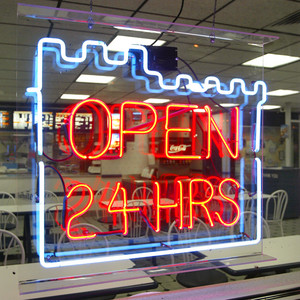
Today on the show why there's a smaller share of workers in the graveyard shift and what that tells us about the transformation of the American workforce.
This message comes from Capella University.
You know that feeling when there's a spark building inside you, that you were meant for more?
That's your own drive pushing you towards what's next.
Capella University gets that.
With their FlexPath learning format, you can set the pace and earn your degree without putting life on pause.
You've built experience and know what you're capable of.
Now, this is your time to turn that momentum into more.
The only real question is, what can't you do?
Learn more at capella.edu.
This message comes from Serval AI.
With Serval, you can cut 80% of your help desk tickets.
Serval AI writes automation in seconds.
Your IT team describes what they need in plain English and Serval generates production-ready automations instantly.
Serval powers some of the fastest-growing companies in the world.
Get your team out of the help desk and back to the work they enjoy.
Book your free pilot at serval.com slash indicator.
Angel, are you a morning person or a night owl?
McDonald's breakfast ends at 10 o'clock a.m.
PST, so I'm a morning person.
Oh, you love that product, don't you, Angel?
I love egg products.
Well, you would probably cross paths with Dan Hemmermesch.
He's a emeritus professor of economics at the University of Texas.
I am a tremendous morning person.
Only once in my life have I worked past 10 p.m. of all 60 years since I got my Ph.D.
Dan has spent much of his career studying the labor market, including the times of day when people work.
Earlier this year, he and economist Jeff Biddle at the University of Notre Dame published a paper on this topic.
Yeah, and their headline finding is that there's been a 50-year shift from night work to daytime work in the US.
The two economists drew this conclusion from studying BLS and census data going back to 1973.
They looked at industries like manufacturing, construction, retail, and health services.
Basically, very few people have ever worked in the middle of the night.
But it's lower today than it was 50 years ago.
How much lower?
Dan says it could be 25% or more for certain hours of the night.
That means around 25% fewer workers toiling away during the 10 p.m. to 5 a.m. timeframe.
Dan describes these working hours as undesirable, and that's not his personal opinion.
We let the data tell us whether it's desirable on average or not.
And the fact that the people who work at night are disproportionately low-educated people either quite old or quite young suggests it's not something that people who are at the height of their earning power would like to do.
So, inferentially, from behavior of people, working at night is a generally undesirable thing.
Now, of course, this is a general observation.
People have lots of reasons for working at night.
You know, some professions like firefighters, nurses, sometimes even us journalists.
That can require being on call 24-7.
Right, Waylon?
Yes, I had some early internships at newspapers where I had to be on overnight call covering cops.
So you just picture me terrified, listening to the scanner, hoping nothing happened.
You're so strong, Waylon.
Well, no, not really the right adjective for me.
But if you take John Cloyd the welder we heard from earlier, he lives in Florida and he works on equipment that converts natural gas into a liquid.
Basically like a hot glue gun, but thousands of degrees just fusing metal together with a filler.
I should not be trusted with anything like that.
John went to trade school and got this job a couple years ago.
And he actually requested the night shift because he prefers those hours.
His typical schedule is to wake up at 8.30 p.m.
And then he starts work at 11 p.m. with plenty of caffeine coursing through his system.
So I'll do energy drinks.
So I'll switch it up between Red Bulls, Bangs, Monster, that kind of thing.
He's hitting up the Holy Trinity of energy drinks.
John says that working the night shift pays $2 an hour more than the day shift.
And this tracks with economist Dan Hammermesh's findings.
He says that over time, employers have needed to pay more to entice workers to take on these undesirable hours.
We show that when the economy willingness of people to work night went down as they got wealthier, employers had to pay a higher premium for night work.
Dan and his fellow economists tracked long-term changes in the makeup of the American workforce.
And they looked at how these changes led to a decline in night work.
One change is in the structure of the U.S. economy.
Dan's paper says that in 1973, 27 percent of workers were employed in manufacturing.
That's down to 13 percent now.
The American economy has shifted away from manufacturing and more towards services.
Another change, and this is the important one, is an increase in education.
According to Dan's research, in 1973, 16% of workers had a college degree.
Today, it's 46%.
Dan says this increase in education is the big factor behind the decline in night work.
People who earned degrees had better job opportunities.
This is what Summer Crawford hopes will happen.
She's 27 and lives in Atlanta.
Right now she works the night shift at a hospital doing what's called internal patient transport, basically taking patients where they need to go, like from the emergency waiting room to get labs done, and then back again.
It definitely can be hard on the body and having like a day off.
And your day off doesn't really feel like a day off because you're spending that whole day asleep, basically.
Summer got this job when she relocated to take care of family after her mother died.
The night shift at the hospital was what was available.
And sometimes it's quiet.
But other times, it can keep her really busy.
One of the weekends for night shift, they only have four people to transport.
And mind you, our trauma hospital has like 16 floors.
And like... over sometimes like 200, 300 patients in the emergency room.
So it can be a lot.
Summer says taking the night shift can pay one or two dollars more than daytime work.
Still, she's hoping her current situation is temporary.
She's currently in school to learn how to be an ultrasound technician, specializing in echocardiograms.
When you work night shift, you have like your incentives.
You know pay differences or whatnot, which is a great thing.
But I already know, I already told myself yeah, I'm working daytime once I actually finish my program.
Economist Dan Hammermesh says that in the last 50 years American workers have been very willing to give up higher nighttime pay.
In some other countries, including Poland and Cambodia, premium nighttime pay is mandated by law.
It's not the case in the U.S.
Dan says that here, the pay differential tends to be smaller.
He attributes that to lower unionization rates.
And Dan says the American labor market is more defined by classic supply and demand.
Employers don't have to pay a high premium for the night shift if there are enough workers willing to take those jobs at current wages.
Dan also says that people in the U.S. generally prioritize working desirable hours.
When you get a job, you get a package.
Wages, benefits, but also schedules.
And people are willing to give up a little bit of wages in order to get a better schedule.
With a daytime schedule, maybe someone no longer has to worry about walking to their car after work when the neighborhood is dark and deserted.
Or a parent can make sure they're around for school drop-off and pickup.
Summer Crawford says she's looking forward to a work schedule that lets her get enough rest between shifts and lets her have more of a social life.
And by the way, we found John and Summer after putting out a call for nighttime workers.
We love connecting with listeners this way and having them share their experiences in the economy.
So if you've got a job or a work situation you want us to tackle on a future Jobs Friday, please get in touch.
Send an email to indicator at NPR dot org.
This episode was produced by Julia Ritchie with engineering by Robert Rodriguez.
It was fact-checked by Sierra Juarez.
Kaking Cannon is our show's editor and The Indicator is a production of NPR.