Hello, welcome to Roundtable where we serve up piping hot debates on the issues that sizzle in China and beyond.
I'm Niu Honglin.
A city reveals its values not through slogans, but through how it treats leftovers.
When surplus food is thrown away, waste becomes invisible.
When it's redistributed with care, it becomes a mirror reflecting how a society understands dignity, responsibility and shared life.
Food banks are not new.
They exist across the world, filling gaps left by fragile social safety nets sometimes.
And what's different in places like Shenzhen is not the idea of food aid itself, but the way it's been reimagined.
Less as a last resort and more as a normalized part of urban life.
For this episode, I'm joined by Xin Yu and Steve Hatherly.
Now grab your virtual compass and follow us to the heart of the discussion.
What happens when a leftover meal becomes a shared urban resource?
In many Chinese cities, more and more food banks no longer look like charity counters.
They look like smart lockers operating around the clock, where dignity is protected not by speeches, but by design.
When charity starts thinking like a product manager focused on user experience, efficiency and dignity, does it change how cities take care of their people?
We are digging in with the first example that we mentioned already, that is, the food bank in Shenzhen.
Tell us how it works.
Yeah, Shenzhen's 24-7 food banks, they have captured a lot of public attention lately.
So basically, it's a public welfare model.
And take Shenzhen's food bank as an example.
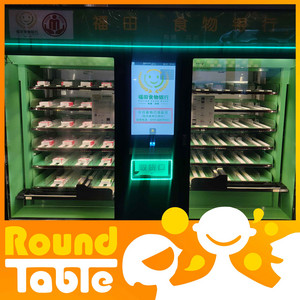
From the outside, it looks just like a giant vending machine, except it doesn't sell things.
But it stores surplus or near-expired food donated by local businesses and give to those in need for free, so that it can reduce food waste and also it can help people who are in need of these foods.
You can think of it because it looks like a big vending machine, but for free food.
And instead of taking your money, it's taking surplus bread and fruit and vegetables from local shops and then it holds them securely until they can be picked up.
It comes from different sources.
It can be supermarkets.
It can be catering businesses and other partners that donate unsold surplus or near expired food that would otherwise, of course, be wasted.
There are safety measures in place.
The food is transported via cold chain and then it's stored in these 24-hour smart cabinets.
And these smart cabinets maintain a constant temperature below 10 degrees Celsius.
The cabinets themselves kind of remind me of the food pickup cabinets.
Sometimes, if you order food and they don't bring it directly to your front door, they'll drop it off at a food cabinet and then you use your QR code or whatever to unlock your particular door.
They kind of look like that.
You mentioned it's a 24 hour food cabinet or food bank or food refrigerator on the street.
Does it mean I get to?
If I want to, I get to.
You know I'm not going to do it every day, but can I just taste what it's like?
Can I just go grab it whenever I want?
Yeah, because it's a welfare model.
So the initiative is aiming to help those in real need of this food first.
So before 8 p.m., free food is prioritized for specific vulnerable and low-income populations.
And that includes local low-income and low-subsistence families, the elderly people and families who lost their only child. or families with a disabled member and people with disabilities and workers, especially sanitation workers.
But after 8 p.m., if there are still... You qualify.
I can try it.
I'm not going to do that, but yeah, it makes sense.
If there are still items remaining after 8 pm and that's the stipulation, only if there are items remaining.
They don't restock it.
For the 8 p.m. crowd, only what's left.
That's open to all citizens, who can ensure that all the resources.
They do this to ensure that all the resources are used.
So it's like a refrigerator in the city.
I can open it whenever I want, as long as I qualify.
Or is there a certain procedure I should go through?
So the recipients they access the food by making an online appointment or a reservation and then they use what they call the iShenZhen app to collect the food and then also reserve it.
And that makes the process similar to picking up an express delivery, kind of, doesn't it?
It's intentional, by making collection feel like retrieving a package from a smart locker, just like I described before, and it eliminates the need for really complex application processes or public registration.
And it helps to quietly relieve as well I think you mentioned it in the opening the psychological burden and perhaps the feeling of shame not that there should be a feeling of shame, but some people might have that feeling associated with seeking charity.
Yes.
And we well.
I wish I'm in Shenzhen right now and can see how are people getting the food, how are they reacting to it.
And maybe after 8 p.m., if there's something left, I can have a taste of it.
But we did ask around and see how Shenzhen citizens are reacting to this.
On the pre-order page there's a selection of bread, fruit and vegetables and you can choose whatever you like.
Shenzhen is a wonderful city.
It treats its workers with genuine care.
I've picked things up here a few times before.
It's very convenient.
I think it's wonderful that our society shows compassion towards families and individuals in genuine need and provides a way for kind-hearted people to channel their goodwill into action.
See, they're enjoying it, of course, when the city is trying to take care of their people, especially the relatively vulnerable group.
It's always some initiative that would be welcomed by the general public, not only those who are receiving the help.
Yeah, this isn't necessarily new.
It's just recently gotten attention online and it's gone a bit viral.
The food bank in Shenzhen first launched back in May of 2022.
So it's been running for over three years now and they've benefited nearly 500000 individual redemptions, if you want to call them that.
And people are talking about this online.
It went viral.
People are talking about it internationally on X.
I was reading some of the comments from international users.
One said brilliant idea backed by equally good execution, to ensure access is managed with priority.
Another person said, much better solution for food that would otherwise have been thrown out, yet still ensures public safety.
And a third one said China good.
The third one is accurate as well.
And I agreed with all of those.
And actually, Shenzhen is not the only place that has been doing this experiment.
Actually, Shanghai, they have this Oasis food bank.
That was China's first of its kind.
And it's run by a nonprofit organization.
And it started exploring how to set up local food banks as early as 2014.
And it also collected surplus food from supermarkets and businesses and redistributing it to local low-income families and sanitation workers.
And if we look at the data, according to the annual report released by Oasis Food Bank in 2024, the organization saved over 8000 tons of surplus food between 2014 to 2024.
And during the 10... Isn't that amazing?
Yeah, it's just amazing.
And it helped nearly 9 million times of people who benefit from this initiative.
So from Shanghai to now Shenzhen, they have been operating for years, actually.
And we are seeing they collaborating with more donators and business and as well as social organization.
Sanitation workers you mentioned really take advantage of this because they work late hours into the night so they will often get food from these locations and it helps you.
I was reading about it from another company.
It helps to build a a stronger sense of community.
That was one of the feedbacks that came and I thought that was kind of a lovely side effect that maybe was a little bit unpredictable.
But, you know, you get to know the people in the community.
You might bump into people there.
You know the businesses that have donated.
It creates bonds, and it's just an overall good feeling.
Yes, and in China's social media, we've seen individual cases.
For example, little eateries, they would provide food, really low budget kind of food for the kind of vulnerable group and they can come in and using only five yuan to order a bowl of noodle or something, and that would make that community feeling also happen in that little neighborhood.
And that is the individual effort which makes me thinking about When you describe it as a vending machine, that it's a food bank.
I thought okay, those who are getting food out of the bank sure, but we can put food in the bank as individual.
Can I put some of my bread into that fridge?
I'm afraid not yet.
These food are strictly sourced from these trustworthy supermarkets.
Oh, that makes sense.
I see.
You're asking about food safety here.
I thought you were just trying to unload some groceries.
So the products that are donated, and this is all under the category of food safety.
They're categorized as surplus or near-expired foods.
But of course, food safety is at the top of the priority list.
So what they've done the program is they've customized a complete set of safety assurance solutions.
And they only partner with qualified enterprises like well-known supermarkets.
And I've never shopped at the Nyohonglin supermarket chain before, so I'm afraid you don't qualify.
The program also prioritizes receiving food categories that are considered safe and controllable.
So what that means is vegetables, fruits... breads.
They prohibit the donation of highly perishable foods.
That would be things like meat or soy-based products, as well as high allergy risk ingredients, which is really, really considerate to do.
Yes.
And it's also smart, because even I'm only asking this out of my very good heart it still might not be that safe.
I don't acquire the knowledge of how to store those steal a little bit leftover or near expired kind of food properly and safely and make sure that when I put them in the fridge there's no contamination to other food and stuff.
So yes, doing it this way is securing the food safety.
Yeah, and there's an extra step as well.
I think we mentioned already about the constant temperature of the refrigeration below 10%.
That's kind of a granted.
But the extra step is that corporate donors.
They conduct a secondary quality screening of surplus inventory each morning before they hand it over.
So the third-party operational team.
They perform that secondary sorting and verification before stocking the cabinets.
So there's a check to make sure the food is safe, then there's a double check to make sure the food is safe, and all of that is done before it gets in the fridge.
Makes a lot of sense.
And also every item is traceable, so you can trace the source of the food when it goes wrong or you can have a better idea of where it's from, so that you can feel safer or more secure.
And also I have seen one of the examples, which is the manager of the ETN outlet of Hema Fresh, or called Fresh Shippo, and the manager said the the supermarket donates 20 to 50 portions of food daily and um unsold items from the supermarket are stored overnight and inspected the next morning and they're typically placed in the food bank refrigerators by 8 30 am in the morning.
So, besides the hippo fresh, any other lucky and also kind-hearted retailers participating in this initiative, I think major Chinese retailers have participated in changing the game, except Freshipo.
And we also have Meituan Dingdong, Maicai these grocery chains in China and also Various supermarkets.
They have participated in this.
One way is to reduce the waste and also it can benefit the locals.
So it's a win-win situation.
And also for these retailers who have participated.
They can obtain tax deductions through their donations.
Yeah, I mean it's really good for the businesses because okay, if you only want to think about the financial side yeah, they can receive tax benefits when um tax time comes during the year, and these would have this would have just been considered a loss if they had had thrown away all of that food so you get the tax benefit.
But if we're also strictly thinking from a business point of view, then the reputation of the business get a boost as well, because companies will benefit from that public recognition and the social recognition where people know that they're donating, people know that they're participating in these types of programs, and it creates a nice image for the companies who are a part of this.
Of course.
And that is why these kind of initiatives, the food bank idea and notion, has been practiced in a lot of different cities here in China.
And that is only one of the trying we are or one of the initiatives we're rolling out here in the country to first to prevent food waste and to try to help those relatively vulnerable groups and those with a relatively humble background.
In Shanghai.
We know, Besides the food bank idea food bank happening in Shanghai as well there are also local community canteens selling their leftovers in lower lower, really low prices, like 10 yuan for a share with several customers, different dishes on the box a food box and it's targeting mainly targeting the elder generation with a humble background in the community, and that is happening in Shanghai and also in some other places.
We see that the leftover blind box has also been quite trendy, but that one, I feel like, is more towards the The leftover blind box lovers or enthusiasts who are trying to prevent food waste instead of also helping the vulnerable crew.
I remember we talked about that on the show.
And if I remember correctly, even office workers were taking advantage of those.
So those weren't necessarily programs. designed for people who need it.
This is different.
And when it comes to food waste, we also have China rolling out different laws and regulations preventing food waste.
In the case, especially in the occasion of a large group of people eating in a canteen, like in companies or universities, they wanted to provide smaller share of food also in restaurants.
They want to make sure that if you are getting your food in a canteen in university yes, you can refill it if you feel like you want more, but try not to waste it, and there's regulation there.
But Besides all that food bank, it is still something that is widely practiced, not only in China but around the world.
But my feeling is that when they are being or taking roots in different societies, different countries, the results can be a little bit slightly different.
Well, yeah, you're right.
Food banks are well established in a lot of different countries around the world.
Food banks or food pantries.
But the way that they operate is a little bit different, because your traditional food bank kind of works like a wholesaler of food.
They'll connect the donations from farms or grocers or manufacturers.
They'll store them in large warehouses and then they'll distribute those goods in bulk to local frontline organizations like soup kitchens or shelters or things like that.
So it's a little bit perhaps more complicated in terms of the distribution.
They're all over the United States.
They go back to 1967, I think, is when the first one opened in America in Phoenix, Arizona.
Canada, we have a lot of food banks as well.
I was a little bit surprised.
I did a little bit of digging to find out how things are working there now.
We have a widespread network there.
It's coordinated by an organization called Food Banks Canada, and it supports over 5500 organizations around the nation, and millions of Canadians use them annually, and this is due to rising food insecurity.
And I found these statistics to be a little bit alarming.
The use in Canada of these food banks has surged with nearly 2.2 million visits in March of 2023.
Now, the reason I bring that up is because that was a 90% increase From 2019.
In four years, the use of food banks by Canadian citizens surged almost 100%.
And this is a sign of inflation.
It's a sign of rising food costs.
And it raises the number of vulnerable individuals and vulnerable families in places that we don't necessarily expect to find them.
And here in China, in the, I think, recent decade or two decades, we see people's idea and people's notion towards these kind of charity changing or shifting a little bit as well.
I remember, maybe when I was a kid, to start with, I would be told by my parents not to eat anything from strangers.
And when I grow a bit older, I'm also told not to give others food because especially, or even if, for example, there's the case that if you're entering an airport and you would lose a perfectly good bottle of water or drink because you're entering the checking points and you're not allowed to take it in.
And there's also the situation i've encountered this precisely in one of my business trips, that is um, i ordered food, i ordered three different dishes from one restaurant and i didn't know that that restaurant would give you boxed rice with each and every dish, which means I ended up having three different yeah, too many boxes of rice and cannot finish it, and I asked the assistant in the hotel whether or not she'll be so kind to take them home, so prevented from going to waste.
But that change actually reflects a change of social awareness or social consensus.
That is, to start with, can you trust other people's kind heart?
And also, if you're in need, would you seek help from others or from the society?
I'm saying that because if it's 20 or 30 years ago, I'm not really sure if this idea would be that popular, in the sense that people trust.
Trust is one thing, and another thing is can we?
Well, on one hand, can we trust that the food security is because of the development of technology and also the fact that all the food are traceable and everything.
We want to know whether or not we can trust the food safety issue here.
And another thing is can we trust that People that are not the vulnerable group would not take the food?
Those who are taking the food are those in real needs.
If we have these kind of initiatives, is it a kind of practice that can actually benefit those who need to be helped?
So I think that being able to see these kind of practices happening in different cities and actually helping people and receiving a good reply
And the transparency.
Yes, that too.
That's also quite interesting.
It's a little bit like seeing nowadays in the front gate of your neighboring area.
There would be several shelves with a lot of delivery boxes and no one is taking them away.
They're just there without anybody guarding it.
You can just take your delivery package and go home without worrying that if the delivery man leave it there for an entire day or 10 hours it will be stolen.
So it's all of these little phenomenons happening in the society.
I noticed something in society after I moved here.
I didn't notice it right away, but then I saw a little tag when I was ordering food.
You open up your app on your phone and you order from wherever and, And there's a little message on your screen that says don't order too much food.
That too.
And I kind of laughed when I saw it and made a joke like, oh, how does this app know about my belly?
But that's a national kind of awareness thing, isn't it?
To remind people don't order in excess because of food waste.
Also a shift in behavior or in phenomenon.
That is nowadays, if you order in a restaurant, to start with you can see the sign do not waste food or do not order too much, on the wall of the restaurant as well.
And another thing is if you order too much, because I do this all the time.
I take my food away, by the way, my leftover, away to my home so that I can have them for the next meal.
But I do this all the time.
So I know almost all of the waiters, if you're ordering too much, they'll say it's too much.
Just, you know, stop ordering.
Yeah, that probably wouldn't go over too well in North America or some Western countries, that type of advice.
From your server, but well, without the context.
Just like I said when I saw the message on my phone, without the context, I didn't get it.
I thought it was kind of a weird thing to see on my phone, But now I completely understand.
These types of initiatives are amazing And I was curious to know if these types of initiatives would work in other countries, for example the United States.
I found an article.
It's just days old, as a matter of fact.
It's from China Daily, and it talks about KFC's surplus food program.
Are you familiar with this, what they do here in China?
They have a nationwide network of what they call food stations.
And it's been growing.
They actually have 1,000 stations nationwide with community engagement.
In April of this year is when they opened up their 1,000th station.
And what they do is they give away unsold but still safe food.
So it's still within the safety window.
And what they do is they flash freeze it, they package it, they label it under very strict procedures.
And then it's stored in dedicated freezers for designated pickup times at the stores.
And the recipients, and again, they talked about sanitation workers.
That's what I was mentioning before.
They're instructed to reheat it and consume it on the same day.
They also do something like integrating educational events.
They have children packing care boxes.
They did that on Food Day, International Food Day.
And it's all part of this national anti-waste campaign.
And I was curious, can they do this in the United States?
Or do they do this in the United States?
That's an American company.
And the answer is no, they don't.
And there's a couple of reasons for that.
One, there's something called the Good Samaritan Act.
It was went into effect in 1996.
And that's a federal law that protects donors from liability when donating food in good faith.
The donors would be restaurants or supermarket chains.
But even though that act went into effect in 1996, companies still have a major fear of lawsuits.
Legal action
Because of what?
Because if they get sick.
Yes.
So that kind of puts the onus directly on the donor themselves.
So in China, KFC is the direct owner.
People pick these up from the KFC shops.
But in America, you just don't see that, from what I understand.
There's another major reason, too.
That's one of them.
There's another one, too.
So in America, most of the KFCs are individually owned.
So there wouldn't be any kind of nation.
Yeah, they're franchised.
So I could own one, you could own one, and everybody could own one.
But in China they're operated under one company, a publicly traded company that also has other American fast food restaurants as well.
So it's easier to put a nationwide kind of program into place.
Well, this is also, I think, because of the different consensus, of the collective awareness or culture of different societies.
I kind of get both parties' idea where they're from in the very beginning.
It's all to promote the charity work of a society, of a city, the good heart of a city trying to take care of its people, to protect that good heart and to make sure that it can continue.
It can be a sustainable kind of initiative that happens.
That is being more and more frequently seen.
It can be more common.
But I guess we need to definitely decide which path to go after doing research and understanding and studying the society's collective conception about all of these issues.
What are more likely to happen after?
You have the donors directly sending out food or you have the donors joining a certain fund and a certain organization and have the organization do the exact work?
It's not that American companies don't do anything related to food donation programs.
It's not that.
It's just usually it's passed on to a third party.
Like I said, food banks, your traditional food bank, they operate like food distributors.
So therefore, it kind of passes the legal onus away from the businesses.
That's what I understood from the reading I did.
Yes.
And another thing is how, one, we have something like this.
How do we ensure that those who are really in need would know about the situation, would find the courage to do that?
Steve mentioned about the shame of getting the free food, but there should not be shame.
And it is very important to make sure that they're receiving the help with dignity.
And we are all equal here, no matter if it's the donor or donor alone receiver.
Yeah, they do something um along those lines in singapore as well.
I think it's called the food pantry 20, and that's where eligible individuals or families will receive kind of like a credit card and that card will have credits on it, and then that can be redeemed you use it to shop with.
So, as far as i understood, there are even local businesses involved where you can go into the supermarket and use that card to make purchases within the store, and then one of the things they talk about is exactly that the dignity of being able to go shopping yourself.
Yes, and in Chinese universities we have long had the policy of helping those who are from a humble background, but instead of helping those who talk about their stories in a more moved way and apply for that kind of subsidy, what many universities here in China are doing is They would quietly monitor how much money you've spent this month, because all of the university, many of the universities, they would have a card and you can swipe the card.
It's kind of like a credit card as well, but you can directly charge them.
And when they monitor how much money you use for the month, if you're using it under a certain threshold, they would directly charge some money into your account so that you can pay for the food in the canteen.
You can go to the supermarket not even without your student, your peers knowing.
Oh, wow.
And you don't even have to register.
It just automatically gets credited to your account.
Yes.
So I think, yes, we want the society to be more and more care for its people.
But what's happening is or what's being what's very comforting is that we see they're doing it, even doing it in a better way.