Support comes from our 2025 lead sponsor of Planet Money, Amazon Business.
With smart business buying get everything you need to grow in one familiar place.
From office supplies to IT essentials and maintenance tools.
Ready to bring your visions to life?
Learn how at AmazonBusiness .com.
This is Planet Money from NPR.
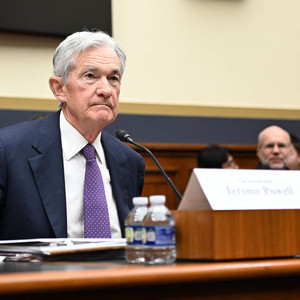
Over the past week, President Donald Trump has gone from threatening threatening to oust Jerome Powell, the chair of the Federal Reserve, to saying he has no intention of firing him.
And this is not the first time Trump has raised this possibility of interfering with the Fed or even firing Powell.
Trump has been loudly critical of Powell for years now, and since January, the President has accused him of playing politics by keeping interest rates high.
And though so far Trump hasn't taken any action to dump Powell, every time Trump's anger at the Fed chair flares, markets quiver, and economists start flipping out.
Because they say the Fed has to be independent.
It has to focus on keeping the economy healthy, and that process must be free from politics and pressure.
It needs to just focus on what's right for the economy.
But why exactly? Hello and welcome to Planet Money, I'm Darien Woods.
And I'm Waylin Wong.
Why is the independence of the Federal Reserve so sacred?
Why does just the idea of Trump interfering with the Fed send economists into a tizzy?
So today on the show, a primer on the Fed.
From The Indicator podcast, we have three ways of looking at our question for you today.
We'll look at what the Fed does, why its independence is so important, and one quietest step President Trump has taken to influence the Fed this year.
Amazon Business takes the familiar Amazon buying experience and adds tools that help you save costs and make insights based decisions.
Ready to bring your visions to life?
Learn how at amazonbusiness .com.
The Federal Reserve, the US central bank has two big goals, keeping prices stable and jobs plentiful.
The Fed can do things like change interest rates to address inflation, raising interest rates can bring down prices, but could also make new mortgages more expensive and it can put people temporarily out of work.
Economist Carol Abinder of the University of Texas told us these can be unpopular moves for a politician.
If their goal is to get elected in a few months or even a few years, they're not gonna worry about the long run consequences of their policy actions.
So lower interest rates, maybe they boost the economy right now, but in the longer run, maybe lead to inflation.
The Fed has more credibility.
Investors and the public generally believe it will try to do what it takes, and that's important in getting the job done.
And when we say the Fed is independent, we don't mean it's completely separated from democracy.
While the president can't say lower interest rates when they feel like they're getting too high, the Fed is accountable to the public in other ways.
Right. The president appoints the members of the Federal Reserve Board. The Federal Reserve's goals, low inflation and high jobs, are set by Congress, and the agency is accountable to Congress.
Last summer, Republican Senator John Kennedy grilled Fed chair Jerome Powell.
I got two seconds. So when are you going to lower interest rates?
I'm today not going to be sending any signals about the timing of any future actions.
As much as politicians might want to control interest rates, they can't.
And that's thanks to an accord between the Treasury and the Federal Reserve in 1951.
In the U .S., inflation was running high after World War II and during the Korean War, but the Fed had a problem.
It was effectively controlled by the Treasury Department, which was led by the president's treasury secretary.
And that got in the way of the Fed doing its main job, influencing the money supply, keeping inflation down, aka monetary policy.
So it's called the Treasury Fed Accord of 1951 is when the Fed finally was kind of granted independence to be able to conduct monetary policy the way we would think of it today.
That didn't mean that presidents didn't try to influence the Fed like think of Arthur Burns Fed chair in the 1970s.
Most famous would be Richard Nixon when he was pressuring Arthur Burns for looser monetary policy to try to help his re -election chances.
Lyndon Johnson also twisted the screws on his Fed chair at the time.
And through the 1970s and 80s, a consensus started to emerge among economists.
The job of central banks to bring down inflation was a lot easier without politicians getting in the way trying to pressure the lever down.
And in return for more autonomy, central banks could be more transparent about their decision -making.
As economists came to recognize the benefits of transparency and of independence, it kind of became more accepted and more part of the culture at the Fed and even the culture at central banks around the world.
The Bank of Japan, the Bank of Mexico, and the Bank of England became independent in the 1990s.
The European Central Bank was built as independent from day one and the evidence suggests that independence works to control inflation.
Carolina Garriga is a political science professor at the University of Essex in the UK.
Carolina and her co -authors' research finds that countries with more independent central banks have lower levels of inflation.
But like all good social scientists, she's quick to note that correlation doesn't always equal causation.
It's not causation, but it's a pretty strong correlation that holds across time from the to two years ago and across different kinds of governments.
A very strong correlation that is definitely pointing in a direction and winking.
Karolina also talks about countries that have eroded their central bank independence.
You can see central bankers being fired and then inflation spiking.
I'm from Argentina and I can give you many examples.
And this has happened not only in Argentina, has happened in Turkey, has happened in Hungary.
say, when an attack to central bank independence becomes public, you can see these facts in inflation going up.
Carol Abinder at UT Austin says in the U .S. the consensus grew that central bank independence was a good thing.
And this led to a norm.
Presidents were letting the central banks do their thing.
Until the 2016 election, when Trump started publicly and loudly criticizing the Federal Reserve, that continued into his presidency.
He appointed Fed Chair Jerome Powell but started making these public swipes against him from 2018.
This was a major shift in the president's relationship with the Fed.
There had been a norm for many years that the president wouldn't, well I don't know which presidents had Twitter but they wouldn't go on Twitter or something like that ranting about the Federal Reserve.
So that was a shift in kind of what was seen as acceptable for president to do.
Carla says these comments are revealing.
You frequently have presidents who disagree with what the Federal Reserve does.
They almost always disagree on the side of, we should have looser policy, we should have lower interest rates.
So it shows you, well, if we had left monetary policy in the hands of the president, we would have had more inflation.
That said, Carla says the public does want accountability.
Like, how did we even get such high inflation?
What went wrong? How can we avoid that happening again?
The Fed should give them that kind of accountability, should be transparent about the mistakes they made and what they've learned and what they might change.
Carolla does think there is a grain of truth there in the frustrations that might lead someone wanting a politician to strong -arm the economists.
Think about what we've been through.
The high inflation, the pandemic and then the global financial crisis before that.
The Fed was scrambling to help, of course, and that meant expanding its role and taking on unconventional new action, like buying up tons of mortgage securities and bonds.
You can see why there is kind of more calls for more oversight of the Fed or calls to kind of constrain it if it's seen as maybe going beyond what its original intentions were.
That raises the question, how did the Fed become so powerful?
Here with me now is Gina Smialek, reporter for the New York Times, who wrote a book called Limitless.
The Federal Reserve Takes On a New Age of Crisis.
And the key thesis of this book is that, for better or for worse, the Fed has amassed a huge amount of power over the economy.
That is correct. And there's this key moment at the peak of the early pandemic chaos where this becomes really clear.
Right. right. This is the morning that the Fed rolls out a bunch of details on several Market Rescue programs that it is setting up that it has never set up before.
And then Jerome Powell goes on a webcast with the Brookings Institution, and the host of it says, you know, What are the limitations here?
You know, what are you capable of?
And Chair Powell replies, But there really there's no limit on how much of that we can do other than that it must meet the test under under under the law.
There is no limit. There's no limit and I think that's kind of a mic drop when it comes to the world of central banking because he's basically Saying that here at the Fed we have this ability To sort of at least temporarily print money out of thin air and we can use that to really safeguard Every important market.
A mic shop moment indeed.
So let's start with why the Federal Reserve tries to be politically independent So if you had a Federal Reserve that was super linked up with politicians who are worried about re -election They might really not focus on the inflation side of their mandate.
And did you come across any stories that reveal how Fed Chair Jerome Powell personally considers his role?
Yeah, so Chair Powell will often say things like this is a matter for Congress to decide, this is a matter for politicians to decide, it's a great example of how Chair Powell was really trying to keep the Fed limited and within its lane.
You know, there had been some appetite on the Hill to see the Fed get into municipal lending leading up to the pandemic.
You know, we saw some Democrats saying, back when the financial crisis hit, banks got bailed out, but, you know, Detroit didn't get bailed out.
And how is that fair?
Why isn't it equally important to ensure that state and local governments have access to credit?
You know, we don't have authority, I don't believe, to lend to state and local governments.
I think we try. That could be a tool.
I don't think we want that authority.
I think that's something for Congress to do.
So these ideals of the Fed and these ideals of Jerome Powell are all very well in what we call beast time.
But let's think back to the early days of the pandemic, early 2020.
I think it's easy to forget now, but at the same time that we were all trying to figure out how to do work from home and how to adjust to maybe some job losses in our families, and those kinds of challenges, the markets were trying to adjust to a world where we didn't know if people would ever come back to offices.
And we didn't know which government debt was going to be safe.
And what this resulted in was just a run for the exits.
People wanted cash.
They thought cash was the only thing that was safe.
And they were selling everything else.
And so we saw huge breakdowns across a whole range of markets that usually are very safe.
And this is the kind of thing that's going to hit not just Wall Street, but almost certainly Main Street, if it continues.
But as Jerome Powell has a habit of saying, there are no atheists in the foxhole.
Sometimes you change your mind in a crisis.
Yeah. And I think sometimes you change your mind when not changing your mind is going to cause the worst problem.
And when we're talking about the Fed pushing past its previous boundaries, it seems to me, there are two key dates with two key sets of policies that forever changed what the Fed was capable of.
So tell me about that first Fed bundle of programs in late March of 2020.
So we get to March 23, 2020, and we see the Fed jump into a bunch of markets that it hasn't previously touched it rolled out a corporate bond buying program and a program that was sort of promising to help out Main Street companies.
So not just the big multinational companies but I guess aimed at mid -sized or even small businesses.
Yeah and I described this in my book as somebody described it to me which is, it was really about covering the waterfront.
They wanted to make sure that they were trying to service sort of every place that you might see borrowing and lending break down in the economy.
Jerome Powell appears on TV pretty soon after.
He's on the Today Show to explain this package.
Is that unusual for a Fed chair?
It's pretty unusual.
You know, the Fed chairs tend to stick to the more business -oriented publications and TV shows.
I think they were trying to reassure the country that they were really bringing out the big ones.
So you're saying, no, it's not a blank check, but yes, you're prepared to spend an unprecedented amount.
We certainly are, it's not a blank check.
And then it seems like that had an effect, it calmed the markets, but even that huge response didn't totally resolve all the jitters, so let's go through the second big fire hose in early April 2020.
So, April 9th, 2020 rolls around, and the Fed rolls out a big new package that includes a municipal lending program and it also adds in junk bonds to the Fed's bond purchase program.
And those are two pretty uncomfortable things for the Fed to do.
The Fed has openly said that it doesn't want to be involved in the municipal bond market and the junk bond market is also pretty unattractive because it's this big market of people who took on, in some cases, a pretty significant amount of risk and no central bank wants to feel like they're bailing out the junk bond market.
But the concern is, these are big companies.
Because if you leave this market completely closed, if it fails to operate the way it should, if it becomes impossible for people to issue debt at rates that they can afford to manage to stay in business, you could have a huge round of layoffs just because this market is flailing.
And so that day Jerome Powell crosses another one of his kind of personal lines.
He seems like he's kind of recommending things for the politicians to do.
In many cases, what people really need is direct fiscal support rather than a loan, and what we can do is loan.
So there's a big need for fiscal policy.
Let's say, tell me about that.
Yeah, so what he's saying, basically here, is, Dear Congress, we're trying to help people, but people need money to keep their businesses open or money to make up for the fact that they're not going to work, et cetera.
And we've just had the CARES Act pass, but the CARES Act was always meant to be pretty short term.
And this is Jerome Powell being clear that like, the Fed cannot solve every problem here.
Congress needs to act.
The Fed does in general try to stay in its lane or at least operate under the powers given to it by the Federal Reserve Act.
But it is enormously powerful and has been lending to all kinds of areas of the economy.
And in doing so it was kind of picking winners and losers.
That is not apolitical.
So now it finds itself firmly in political crosshairs.
Gina Smialek, thank you so much for talking to The Indicator.
Thank you for having me.
After the break, an Executive Order that lays the groundwork for more presidential control.
This message comes from the Hartford. Every day, they make business insurance easy, or easier anyway.
And when it comes to business insurance for mid -size and large businesses, they know just how complex it can be.
And businesses rely on them to make the complex challenges less so.
That's why at each step from quotes, to claims, to everything in between the Hartford is devoted to making it easier.
Connect with your underwriter at the Hartford or visit the Hartford .com.
This message comes from ServiceNow.
People should do the creative work they actually want to do.
Not boring busy work.
Now with AI agents built into the ServiceNow platform, you can automate millions of repetitive tasks in every corner of your business.
IT, HR and more so your people can focus on the work that they want to do.
That's putting AI agents to work for people.
It's your turn. Get started at servicnow .com slash AI dash agents.
This message comes from NPR sponsor Acura.
The all -new Acura ADX is a compact SUV built for versatility.
Available all -wheel drive for weekend escapes, Google built in for seamless connectivity, as well as a Bang & Olufsen premium sound system for high quality audio.
The all new Acura ADX is crafted to match your energy.
Visit Acura .com slash ADX to learn more.
Google is a trademark of Google LLC.
This message comes from Stamps .com.
How much is an hour of your time worth?
Whether you're a realtor, lawyer, accountant, or even a content creator, Stamps .com gives you the ability to focus your time on what you do best, not on tedious mailing and shipping tasks.
print stamps, shipping labels, or certified mail forms in seconds.
More than four million customers have relied on stamps .com.
Go to stamps .com slash npr for a special offer.
No contract. Cancel any time.
That's stamps .com slash npr.
This message comes from Grammarly.
From emails to reports and project proposals, it's hard to meet the demands of today's competing priorities without some help.
Grammarly is the essential AI communication assistant that boosts your productivity at work so you can get more of what you need done faster.
Just a few clicks can tailor your tone and writing so you come across exactly as you intend.
Get time back to focus on your high -impact work.
Download Grammarly for free at grammarly .com slash podcast. That's grammarly .com slash podcast. So ideally the Fed's decisions on interest rates should be independent.
That's where we started when Trump was inaugurated in January.
But since then, a lot has happened.
President Trump has signed more executive orders than any president this early in the term.
He has been spilling the presidential ink.
And as we know, many of these orders will be tied up in court for the foreseeable future.
But we want to focus on this one executive order as it relates to the Federal Reserve.
Trump signed an executive order in mid -February to make sure agencies follow the president's priorities.
It put tighter control on how these agencies spend and regulate.
And it applied to agencies like the Securities and Exchange Commission, the Federal Trade Commission, and the Federal Reserve.
Now there's one big asterisk here.
The executive order says it only applies to the Federal Reserve's role in safeguarding the financial system.
It doesn't apply to the Fed's raising and lowering of interest rates to fight inflation and protect jobs.
You know, monetary policy.
Kathryn Judge is a law professor at Columbia University.
There is an effort to signal, look, we don't want to mess with monetary policy, so it seeks to provide a little bit of calm and status quo maintenance.
Kathryn says it's widely accepted that less independent central banks end up with higher inflation.
Research backs this up.
The evidence is less clear about the effects of having the Feds' bank supervision and regulation role under the grip of politicians.
And so it makes sense that President Trump specifically carved out the Fed's monetary policy as staying independent.
But the big question is how this division would work in practice.
It also raises questions over how the Fed might intervene when something goes wrong.
For example, when Silicon Valley Bank ran into financial trouble in 2023, the Fed stepped in to lend it money.
Would those decisions now be subject to White House review?
Katherine says the problem with this approach is if the White House begins to meddle in some functions of the Fed, it would undermine other decisions made by the individuals at the Fed.
So the core challenge is you have these individuals who are playing multiple roles, and how credible is it that they're going to maintain independence on one front and not others?
Fed chair Jerome Powell has been fielding more questions lately over whether his decisions on interest rates will be influenced by Trump, or for that matter, Elon Musk.
Here's what Powell told a House committee in February about potential executive branch interference.
What we're going to do at the Fed is keep our heads down and keep working, wait to see what new policies emerge and try to make a thoughtful, sensible set of policies on our part once we understand the implications of those.
Classic Powell, keeping his head down, doing the work.
Please don't bother me.
I would not expect anything less from him.
You know, we reached out to the White House to ask how this division would be managed.
According to a senior administration official, the Office of Management and Budget will oversee all the Fed's regulations not related to monetary policy.
We also asked if it could erode the credibility of the Fed's decisions to raise or lower interest rates.
The same statement said no and to, quote, include that accusation in your story would not be accurately reporting the executive order.
Jerome Powell's term as chair expires next year.
So if Trump wants to go in a different direction on monetary policy.
That would be his earliest opportunity.
Unless he decides to take unprecedented, and possibly illegal, actions sooner.
The original episodes from The Indicator were produced by Corey Bridges, Brittany Cronin and Julia Ritchie.
They were engineered by Sina Losfredo, James Willits, and Ghaleem Moon.
They were fact -checked by Sierra Juarez.
Kate Kincannon is the editor of The Indicator.
Follow us wherever you get your podcasts.
This episode of Planet Money was produced by James Snead and edited by Mary Ann McCune and Mary Childs.
Alex Goldbach is our executive producer.
I'm Dorian Woods. And I'm Weiland Wong.
This is NPR. Thanks for listening.