
[Executive Orders, Fed Independence, and the Limits of DOGE-Style Cost Cutting]-[Can the Federal Reserve stay independent?]
📋 Summary
Executive Power and the Economic Landscape: Analyzing Recent Trends
In the early stages of his term, President Trump has set a historic pace by signing 76 executive orders, a figure that far exceeds the output of his predecessors. As the podcast The Indicator from Planet Money highlights, this aggressive use of "presidential ink" has sparked significant debate regarding the boundaries of executive authority, particularly concerning the Federal Reserve and federal spending.
The Delicate Balance of Federal Reserve Independence
A primary point of concern involves an executive order issued in mid-February, which mandates that federal agencies align more closely with presidential priorities regarding spending and regulation. While this order encompasses a broad range of agencies, including the Securities and Exchange Commission (SEC) and the Federal Trade Commission (FTC), it notably includes the Federal Reserve.
However, the administration has included a critical caveat: the order applies only to the Fed’s role in "safeguarding the financial system," explicitly excluding its "monetary policy" functions—the mechanism of raising and lowering interest rates to manage inflation and unemployment.
Maintaining the Status Quo
Law professor Catherine Judge suggests that this exclusion is a calculated effort to "signal" that the administration has no intention of interfering with monetary policy. By carving out this specific area, the administration aims to provide "a little bit of calm and status quo maintenance." The economic consensus, supported by extensive research, holds that "less independent central banks end up with higher inflation." Consequently, the President appears to be avoiding actions that would "stoke fears" of persistent inflation or suggest an attempt to "dictate interest rates."
The Practical Challenges of Oversight
Despite the clear delineation between regulation and monetary policy, the practical implementation of this oversight remains ambiguous. The podcast raises a poignant question: how will this division function when the Fed must act as a lender of last resort? Using the 2023 collapse of Silicon Valley Bank as a case study, the hosts question whether future emergency interventions would be "subject to White House review." If the Fed’s regulatory and supervisory roles fall under the "grip of politicians," the traditional "arm’s length" relationship between the central bank and the executive branch could be fundamentally compromised.
The Reality of Federal Cost-Cutting
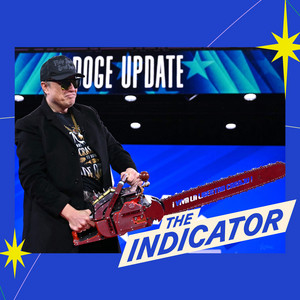
The episode also touches upon the broader context of federal spending and the ongoing discussions regarding efficiency. While there is significant political momentum behind the idea of aggressive cost-cutting—often associated with the "Doge" (Department of Government Efficiency) initiative—the analysis suggests that these efforts are "not likely to make much of a dent in federal spending."
Conclusion
The intersection of executive orders and economic policy presents a complex challenge. While the administration seeks to exercise tighter control over regulatory agencies, the preservation of the Federal Reserve’s independence remains a cornerstone of economic stability. The distinction between "monetary policy" and "bank supervision" is theoretically convenient, but as experts note, the practical application of this duality could lead to unprecedented friction between the White House and the nation's financial gatekeepers.
Deep Learning with ListenLeap


