Discussion keeps the world turning.
This is Roundtable. Hello everybody, welcome to Roundtable.
Coming to you live from Beijing, I'm a young, good to have you join us.
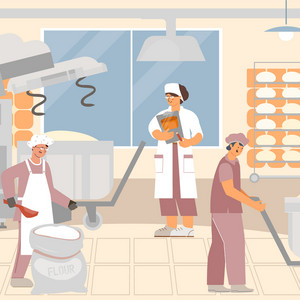
On a day's show, with automation stepping in for everything from cooking to serving, the food industry is evolving rapidly.
How do you envision this technological shift affecting restaurant operations, food factories, customer interactions, and job opportunities in the coming years?
And we're all years for your burning questions and epic stories.
Grab your smartphone, record a voice memo, and let's make on-air magic.
Center thoughts to eZFM aroundtableatfoxmail.com.
You might just steal the spotlight in our next Heart to Heart.
For today's program, I'm joined by you, Shun, and Steve Hatherley in the studio.
First on a day's show. At the recent 2024 Food Trade Fair featuring Beijing, Tianjin, Hubei, and Cuisine, we saw a tech, savvy foodies paradise come to life.
Remember when making dumplings used to feel like a complex process reserved for a skilled kitchen professionals?
Well, those days are over.
Now machines can whip up thousands of dumplings in just minutes and skewer kebabs in lightning speed.
This year's Food Fair was packed with amazing high-tech gadgets and machinery that are not just speeding up food production, but also taking quantity, quality, and efficiency.
To a whole new level. Let's go to you first.
You shun, Xiaoze, Baozze, all these flowery, doughy delicacies in China can all be made by machines.
Oh, yes. So this Food Trade Fair showcased a range of new and impressive machinery transforming the whole food industry with automation.
Machines on display included Chinese dumpling makers, Baozze, or steamed bun makers and knife-cut noodle machines, highlighting their remarkable efficiency compared to manual labor.
I get how they did the knife-cut noodle machines, right?
That makes sense to my brain.
I get how they do the dumplings because maybe a machine can just maybe fold that over.
You wouldn't have the same thing as a human touch there.
But the buns, I wonder how they do the buns because the buns have fillings, right?
Well, dumplings too. Yeah, that's a fair point.
These machines are quite impressive, aren't they?
Anyway, they're just using all of these arms and everything to make these food so quickly.
One example is that the dumpling machine can produce up to 30,000 dumplings per hour or eight per second.
Eight per second? One misses a few.
Can you eat eight dumplings per second?
A plate of dumpling is already wrapped in just one second.
Goodness me, that's impressive, isn't it?
Yeah. Yeah. So hold on. But you have to sort of have the dumpling wrappers done already.
Fillings be put in and folded within how many eight dumplings done in a second.
That is unbelievable. That is unbelievable.
Yeah, right. The technology is amazing.
The shape of the dumpling is still the same shape that we expect the dumplings to be.
Yeah, of course. Or more standardized.
Yeah, standardized. Consistency.
Yes. And also look at the bouts of machines.
It can make 3600 to 8,000 bouts per hour.
That's a lot. It's not as many dumplings as they can make, but it's still an impressive number.
Also aside from all of these food preparation, there are automated machines in almost every step of food production from washing to cutting vegetables and bones to even some specialized machines like stir-fry machines, while machines can even cook for you.
And then finally to packaging and storaging.
Various machines meet diverse and customized needs.
And this actually means to greatly enhance the efficiency of the whole production line.
Yeah, when we think about food automation, right, we might think of things like kiosks where we could order our meals from AI included in that part of the process.
But washing vegetables.
I don't know about you, but I never thought of a machine being able to do that.
Flipping a burger or something like that, maybe making dumplings okay.
But it is every step, almost every single step of the process now is being automated.
Right. And as a Chinese person and also a proud northerner, I am astounded.
And also I have suspicion about how good these dumplings turn out to be.
Why? Steve, I don't know if you've noticed this thing.
Well, the southerners in China used to still do to some extent make fun of us northerners that the only delicacy we see in life is dumplings.
Whenever it is a festival or some solace solar terms has occurred, it's time to have dumplings.
So I mean, I, okay, personally, I would fiercely content to that notion.
We have other delicacies too.
But dumplings really is something special to us.
And also in my memory, making dumplings is very difficult.
It's supposed to be done by family members together during spring festival.
One family member is rolling the dough and another one is making the wrapper.
And then it's like a family assembly line.
And it should be done by hand.
I see your point. Yeah. For me, I don't have any cultural connection to dumplings, right?
So if a machine wants to pump out eight dumplings per second, I'm okay with that.
But if dumplings were a part of my family culture or where I'm from, if they were a big part of our food culture, I totally see where you're coming from.
Yes. And this I want to check with our in-house tech guru.
That is, okay, I'm going to challenge you.
Whether these dumplings, when they're machine made, they're actually that good.
One thing that in my family and my dad's homemade dumplings, well, because he took the mantle from my grandma and it is the best in the world.
Period. In my dictionary, in my book.
So what makes his homemade dumpling super great is one thing.
Let's just start with this one thing.
That is the wrappers. It has to be handmade.
Although I know people sometimes buy it from the store, but when it's handmade, the wrappers can be sealed tightly without additional water.
That is machine made when they have to use the water.
I feel like you're talking to you should like, he's the person who designed this machine.
He's the representative of all robots in AI and tech today.
And ready to defend for the machines.
Hold on one second. The handmade wrappers are just a little bit chewier, a little bit smoother.
And also when your is handmade is made entirely from wheat flour without added starch.
And that is one thing you don't want if you are a dumpling snob.
Guess who's not going to the robot dumpling restaurant for dinner tonight?
All of the beijers will not accept all of these machine made dumplings.
Well, when you've got your dad in my mind being the dumpling chef, and then I think there are some questions whether a lot of this flavor could be lost when it's machine made.
Well, if we like it great, if we don't like it, maybe it doesn't matter because food automation in the restaurant industry is growing too.
Yeah, of course, and the thing is, you know, all of these machines, they are not only doing these automatically, but also they are designing very delicately.
For example dumplings, they, you can actually design the size of the wrappers or the thickness of the wrappers.
And also the sauce, maybe it can even go down to like 0.5 gram of the sauce.
So so that you can actually control maybe the taste and even the texture of the food that they made.
So question. Sorry. So what you're sorry to interrupt you as well.
Wait, so what you're saying then you should is that you could perfect a dumpling with a machine.
Yes. And I think what they're trying to say is that even though it is automated machine made dumplings, but they taste like handmade.
Sorry, I interrupted you.
Go ahead. Yeah, let him some more.
What were you going to ask him?
Let me collect my thoughts.
Well, the thing about the texture of the dumpling wrapper is important because if it's made by machine, then sure you can design how thick you want it to be, but it's evenly distributed.
And in the world of delicious dumplings, that's bad.
Because for us with the hand rolled dumpling wrapper, it has to be thicker in the middle and sort of thinly distributed as concentric circles to the outside.
And then that's what makes you know the texture really great when you're taking a bite from the final dumpling.
And I'm afraid so far the robot arms cannot do that to sort of it can only evenly distribute and repeat and do the same thing.
Yeah. So if I'm really picky and you are.
Yeah. But like I said, it's not just it's not just replacing people though is it?
I mean, there are plenty of examples where robots are working alongside people.
There is an example from New York City.
There's a restaurant they're called Colonel.
It's a vegan fast food spot in New York.
And they work with a robot arm that places the food in the oven and then they put it on an assembly line for the employees to finish preparing.
The robot arm in that restaurant is seen as a welcome member of the family.
There's a lot of talk about whether robots will replace humans in the restaurant industry.
And I think that is a legitimate fear, but the people who are in support of having robots in the restaurants, they say they're not there to take the jobs of people.
They're there to help support.
And maybe in this case where we're talking about that bun production or dumpling production from the company standpoint.
If there's a large demand for their product, this would help them better meet that demand thereby serving their customers better overall.
That's a really good point, but also I just tend to look at the food industry in general and think often this is the industry that employees people who don't need a whole bunch of education.
And if you have a dexterity of your fingers, then you can do this.
And after a few days, if not a month's training, you're good to go.
You can make fabulous dumplings and bouts or steamed buns or whatnot.
And for a lot of the restaurants in the northern parts of China, especially dumpling restaurants, I know that or some of these dumpling food factories, some of these or a large number of the employees, the workers are, let's say, older aunties and uncles, they're doing this job.
With the replacement, once you introduce a robotic arm or automation into this business, then these folks who are maybe a little bit older, who might not be so fast in learning new tech or whatnot.
And then taking the jobs of these folks, it just makes my heart sank like further because if you're talking about taking the jobs of let's say 20 or 25 year olds or whatnot, I think sure there's the talk of retraining up skill and all that.
But for these folks, I just feel, this leaves a really bad map.
Yeah, go ahead. From another perspective, this machines are trying to help maybe the shortage of the, you know, employment in this area, you know, the main, one of the main drives of restaurant or all of these factories are using these automation is the labor shortage issue, actually, according to a 2022 report of 100 most demanded jobs nationwide by the China Employment
Training Technical Instruction Center.
Restaurant service are the fourth most in demand job nationwide.
So the trend of automation, maybe could help restaurant owners to alleviate this kind of issue.
And that's exactly what I was going to say to young, you're not wrong.
I think inevitably as we advance forward with new technologies that replace things that people can do, there are going to be some downsides.
But you should, you had a great point right there and it's true.
Those statistics hold true in the United States as well.
The fast food industries average turnover rate in 2021 was 144%.
It's difficult to find employees.
My friend owns a burger restaurant in Nova Scotia.
He has a hard time finding people to work there.
So going in a mechanized direction for the restaurants is not only for them to save money so that they can line their pockets with more cash, but it's also it seems a little bit necessary because they can't find people to take the jobs.
Is it that they're not paying people enough or is that that maybe there's maybe a aging population or many factors in place?
For California, if we took it, if we look at California, for example, California just raised their minimum wage for the fast food industry to $20, I believe per hour.
Is it Canadian? American dollars, which is a pretty pretty good salary.
Right. It's a pretty good job, you would think.
But even still, you know, post during the pandemic, nobody was eating out.
Right. And people weren't going to fast food restaurants or restaurants in general.
So restaurants really suffered as a result and going in this robotic direction is one of the solutions for them.
Right. And you guys both mentioned that, oh, this is increasing efficiency.
This is the restaurant trying to save up on cost.
Safety also, right? Not not as many accidents.
Right. That would hurt people.
I mean, okay, no need to let's say cut up the meat by human beings.
Maybe those kind of things.
But also right now, apparently employing, if I may use that word, of technology and machinery comes with high costs actually.
And not all restaurants, if we're looking at the restaurant slice of the food industry as an example, then not all restaurants can bear that cost either.
So humans are actually cheaper to some extent right now.
Well, I mean, yes, and no, on average, replacing an hourly worker in the United States.
And this is from people keep media outlet there.
The replacement cost is about $1,500 to the company.
So if you have a high turnover rate consistently, I mean, if we think about that, it makes sense, right?
If an employee quits someone new has to come in, you have to train that person.
So you have to have people there to train that person, all of this stuff costs money.
There's no turnover rate with robotic arms in the kitchen.
They will never quit. Well, not yet.
I shouldn't say that. And if they become sentient in the future.
But as of right now, they can't.
And they won't. So there are benefits to the company, obvious benefits to the company there.
But the thing is, you know, compared to the efficiency of, you know, human laborers, one second for eight dumplings, that's, I don't think human is possible to do that.
You know, so that is why I think, you know, a lot of factories are trying to use this or utilize this as the booster of their efficiency.
And we can see that not only in these areas, but also in even restaurants, they're using maybe robots to deliver the vegetables to the tables and also using machines to order things.
And then that is, you know, I think supplementing the shortage of, you know, waiter and wages.
And they're trying to use these kind of robots to not only make the restaurant to be futuristic, but also increase their efficiency.
Have you ordered from a robot in a restaurant before or had a robot deliver anything to your table before?
It is becoming quite common, I think, in a lot of maybe hot pot restaurants and also in hotels.
Yeah. They try to send a robot to deliver a lot of these essentials for you, like, you know, kids, I mean, toothbrushes, something like that.
Yeah, I find the hotel robots to be a little bit rude.
I was on the elevator with one a few months ago, and it got off first, and I don't know why, but I was offended, like, shouldn't you wait for the customer of the hotel to exit the elevator first?
Like this robot needs some customer training here, I think.
That's another level of image recognition.
Oh, yes. Well, you're expecting quite a lot.
Yeah. I think in China, at least, people are increasingly familiar with having a robot servers or waiters or at least work with the human waiting staff in restaurants and in hotels as well.
And a lot of these robots are designed kind of like, I'm not a store star wars fan, so I can't really name the character, but kind of similar to the machine thing.
This is R2D2 or C3PO. The little one.
Anyway, so this is increasingly common here in China, and as opposed to if Moore's law still applies, then in the long run, the machinery as well as the technology is only going to reduce its cost as efficiency improves and as it becomes more and more widespread.
So what do you see as the possible, maybe the future?
Yeah, what does this future hold?
Do you think that, well, at the moment, it seems like food automation can greatly enhance standardization.
But when everything is automated and then the focus might turn to flavor and differentiation, I mean, do you agree with this kind of prediction?
Flavor and differentiation, I think what they're dealing with in some restaurants right now is just getting the order correct McDonald's in the United States had experimented with their AI drive through system, and they just discontinued it, they canceled it.
And because what they had found was that it was just not ready yet because there were two major problems that the AI was having.
Number one was accents in the United States.
People speak with a lot of different accents, but the AI was having trouble recognizing that.
The AI didn't know what to do.
For example, if you ordered a cheeseburger, but you didn't want ketchup and you said to the AI, can you hold the ketchup please?
The AI would say nothing, you know, they wouldn't know what to do beyond that.
So that restaurant chain decided to discontinue.
So I don't think we're there yet is you know, looking at that example, I think restaurants are still trying to figure it out.
You know, how to do this perfectly because they still want to serve their customers to the best of their ability, right?
Yeah, and can I also direct more to the food production aspect of things.
The automation is it's a big talking point here in China right now, and this is definitely affecting the kitchen a lot.
Because I suppose for sous-shaps for example, maybe now you don't really get so many opportunities to work on the quote unquote basic cooking skills, because that can all be automated.
Now what about the future of you know, Michelin starships?
I mean, this is affecting the kitchen so much.
And do you see that this can really effectively one day with all this automation, standardized cooking Chinese cuisine?
And what happens next? You know, I think that is that actually depends on you know, different demands because for all of these factories that are using these automation, they are trying to produce a huge maybe you know, instant or frozen food factory or industries.
But for restaurants, you know, if you are going to a three star mission and restaurant, do you want to be informed that okay, this dish is made by a robot?
No, thank you. That is, you know, qualified as a three star.
Oh, well, what's the dish?
Let's find that out first, shall we?
Anyway, maybe. You know, a lot of people are questioning whether you know, dishes may through such you know, standardized processes can really taste better than those prepared by human chefs.
Especially I think Chinese people, you know, we can even tell if the dish was cooked using an induction cooker or a real gas flame.
People call it guoti or you know, the smell of the pot, smell of the flame.
Personally, you know, when I go to restaurant, it's to enjoy the food cooked by a good chef.
But you know, when everything is made by machines, it feels like eating pre-made or instant food.
So I think a lot of people are still questioning and the usage of machines.
It might depend. In Seoul, I went to a robot coffee shop.
And what it was is you paid, you ordered and then you could watch the robot.
The robot would spin around and get the cup and then put it in the water machine and then press the button for the grinds and I did everything.
Did it taste any different than the person making that coffee?
No. Was I thinking, how dare a robot make my coffee?
No, I was happy. Why? It was cheaper than going to a different shop.
That was what was important to me in that moment.
But if you're talking three-star Michelin restaurant, then obviously that's a whole different ball game.
Yeah. And this reminds me of last time when I went to Shanghai via high-speed rail departing from Beijing connected to the next topic.
Segway, Segway. And yes, I went to this eventing machine of a robot-made ice cream shop.
And then you can see the robotic arm making the ice cream and then after you pay, you get the ice cream cone.
And I do wonder maybe in the future that we might see more and more food factories, they're just going to go all automated.
But with these restaurants and with services that actually need to face people, restaurant tours or these business operators are going to make this cautious decision.
And how much automation they want to involve into their business process and also maybe the human touch becomes the real money maker.
And if you want it to be top notch, more expensive stuff, then it's artisanal, probably human-made.