
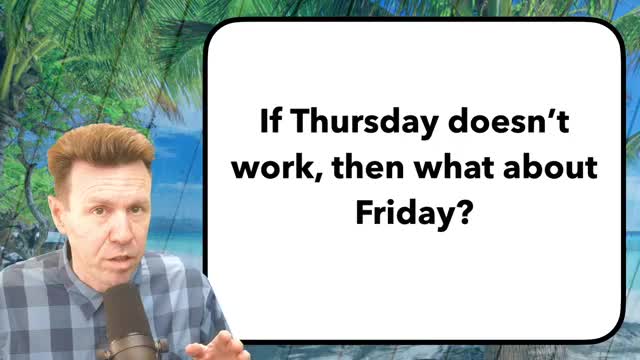
[Mastering Natural English: Phrasal Fluency and Connected Speech]-[Fast Connected English Speaking Practice Native Speaker]
📋 Summary
Mastering Natural English: Phrasal Fluency and Connected Speech
Improving English fluency is not just about vocabulary; it is about mastering the rhythm, linking, and natural flow of native speech. This guide breaks down key phrases and common expressions discussed in the podcast, providing practical examples to help you "flex those English speaking muscles."
1. The Versatility of "What about?"
One of the most common ways to introduce a suggestion or ask for an opinion is the phrase "What about?" As noted in the podcast, this is functionally equivalent to "How about?"
- Suggestion context: When planning, you can use it to offer alternatives: "If Thursday doesn't work, then what about Friday?"
- Exploration: It is also used to pique interest in new experiences: "What about the new pizza place that just opened? Should we check it out?"
By using "What about," you keep your conversation flow smooth and conversational, making it a perfect tool for proposing ideas without sounding overly formal.
2. The Nuances of "Check it out"
"Check it out" is a highly versatile phrasal verb. Depending on the context, it can mean to investigate, to test, or to examine something for quality.
- Testing for quality: "I wanna check it out before I decide to buy it." In this sense, checking it out implies a trial period or an inspection.
- Inspection for defects: "I’d like to check it out for defects." Here, the speaker highlights how native speakers often reduce the word "for" into a quick "fer" sound when speaking at a natural pace.
3. Connected Speech: The "With Me" Flow
Native speakers rarely enunciate every syllable in isolation. Instead, phrases like "with me" often get "squished together."
- Examples of usage:
- "He was with me the whole time."
- "Would you like to take a picture with me by the waterfall?"
- "Do you want to come with me to the rental shop?"
As the podcast demonstrates, practicing these clusters—where the final sound of one word blends into the start of the next—is essential for reaching a native-sounding cadence.
4. Contrast and Emphasis with "But this"
Using "but this" effectively helps a speaker contrast past experiences with current circumstances.
- Contrasting experiences: "I’ve been to a lot of Indian restaurants in Tokyo, but this is the best."
- Managing expectations: "I wanted to buy more, but this was all they had."
In these instances, the transition from "but" to "this" happens rapidly. The podcast emphasizes that while you should practice clarity, acknowledging the speed of these transitions is key to sounding natural.
5. Taking Action: "Go and see"
Finally, the phrase "go and see" is a staple for encouraging action or discovery. It is often followed by a clause to explain the purpose of the visit.
- Discovery: "Let’s go and see what that noise is all about."
- Social obligation: "I think you should go and see him in the hospital; he needs some company."
Whether you are verifying the source of a sound or visiting a friend, "go and see" provides a natural, active framework for your sentences.
Conclusion: Keep Moving Forward
Learning a language is a workout for your brain. By practicing these phrases—"what about," "check it out," "with me," "but this," and "go and see"—you are actively training your speech muscles. Remember to practice these in connected, fluid blocks rather than robotic, isolated words. Keep moving forward one step at a time, and you will find your English becoming increasingly natural.
Deep Learning with ListenLeap


